Guide · 13 July 2026 · 5 min read
Bid/no-bid is a portfolio decision, not a bravery test
Firms lose margin one reasonable-sounding bid at a time. The fix is deciding across the portfolio, with the reasons recorded.
Almost every wasteful bid looked sensible on its own. The client was real, the work was winnable in theory, and someone senior wanted it. The problem only appears in aggregate: six live bids, three of them poor-fit, and the two genuinely strong pursuits starved of the partners and authors they needed.
Decide against the book, not the bid
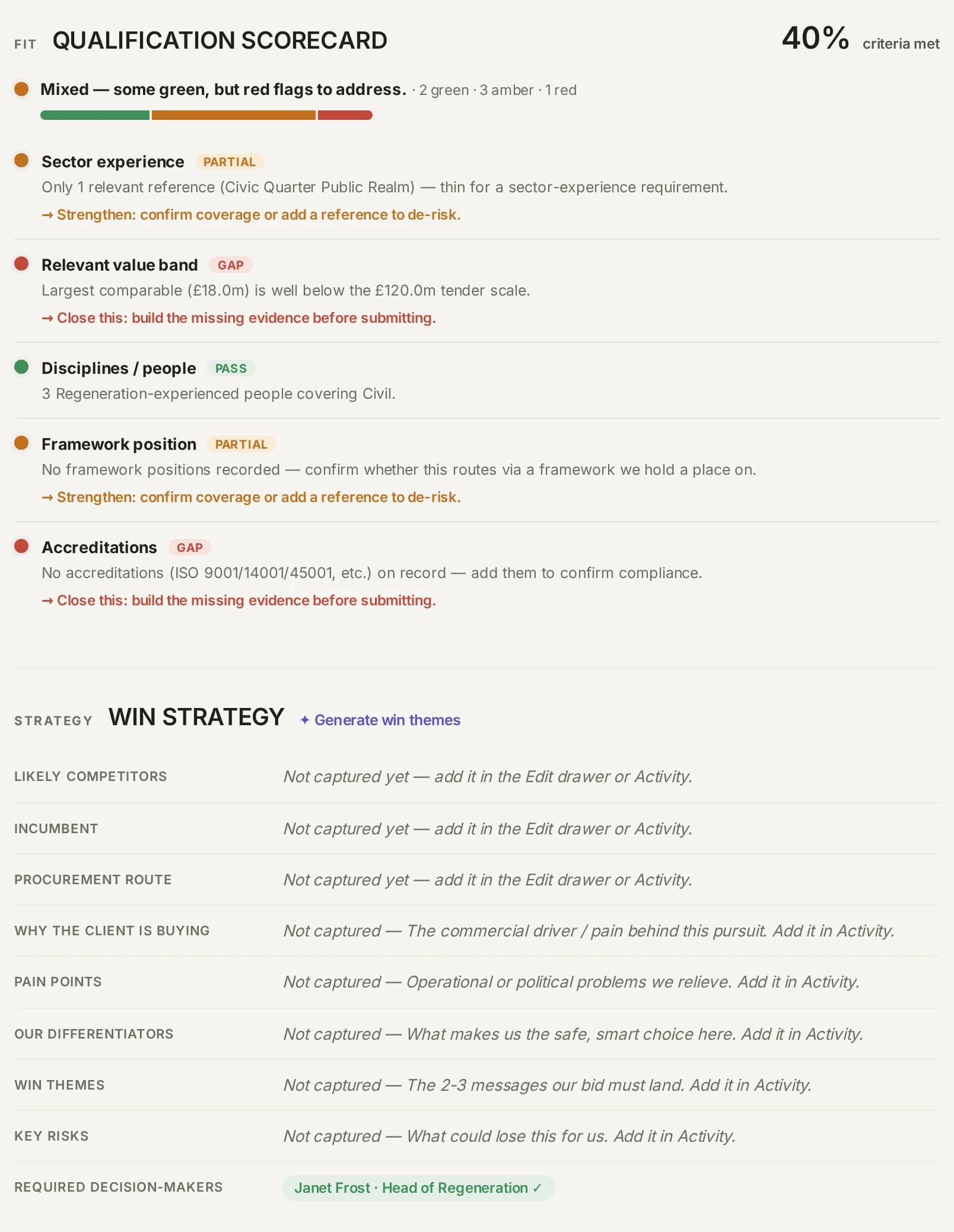
A bid/no-bid call made in isolation answers the wrong question. The right question is comparative: given everything else that is live, is this the best use of the next hundred hours of bid effort? That requires seeing the live portfolio in one place, with fee, probability, deadline and team load side by side.
- Strategic fit: does winning this move a sector or account we have named as a priority?
- Relationship position: do we know the decision-makers, or only the procurement inbox?
- Evidence: can we cite delivered work at comparable scale without stretching?
- Capacity: who exactly writes this, and what do they stop doing?
Record the reasons, not just the verdict
The decision is worth little if the rationale evaporates. Write down why you bid and what would have made you decline, then read it back at the win/loss review. Firms that do this stop having the same argument every quarter, because the argument is on the record.
A no-bid with a reason is a strategy. A no-bid without one is a mood.