TL;DR
- In a job, compensation means the combination of pay and other benefits that an employee receives for doing the work. It is wider than salary.
- Total compensation has four parts: base pay, variable pay such as commission and bonuses, benefits such as pension and paid leave, and deferred or long-term pay.
- In job adverts, DOE means that pay depends on experience, and OTE means on-target earnings: base pay plus the variable pay you would earn by hitting the stated targets.
“Compensation: competitive, DOE.” “£70k OTE.” “Generous total compensation package.” Job adverts are full of phrases about pay that do not quite say what you will be paid.
This article gives a plain definition of compensation, sets out the four parts of total compensation, explains DOE, OTE and deferred compensation, and ends with five principles for employers who want their pay system to be fair and understood.
Pay decisions are only as fair as the performance evidence behind them. See how New Dynamics performance reviews bring goals, feedback and ratings together before pay is discussed.
What does compensation mean?
The word has two common meanings, and it helps to separate them.
In a job. The Cambridge Dictionary defines compensation in its business sense as “the combination of payment and other benefits that an employee receives for doing their job”. This is the meaning used in HR, and the subject of this article. You will also see “pay and benefits”, “remuneration” and “reward” used for the same thing, particularly by British employers.
For loss or harm. Cambridge's other definition is “money that is paid to someone in exchange for something that has been lost or damaged or for some problem”. That is the meaning in a phrase like “compensation for unfair dismissal”, and in the American term workers' compensation, which pays employees for time lost through work-related injuries.
The open textbook Introduction to Business, published by OpenStax, puts the HR meaning in one line in its section on employee compensation and benefits: “Compensation, which includes both pay and benefits, is closely connected to performance appraisals.”
The four parts of total compensation
OpenStax divides compensation into two basic types. Direct pay “is the wage or salary received by the employee”, and indirect pay “consists of various employee benefits and services”. In practice it is useful to split these into four parts.
- Base pay. An hourly rate or a salary. OpenStax calls it the “amount of pay received by the employee regardless of output level”.
- Variable pay. Pay that depends on results: commission, bonuses for reaching goals, and profit-sharing, in which employees receive some portion of the firm's profit.
- Benefits. OpenStax's examples of indirect pay include “pensions, health insurance, vacation time, and many others”. Some benefits are required by law, and these differ by country.
- Deferred and long-term pay. Pay that is earned now and received later, such as employer pension contributions, deferred bonuses and share schemes.
Add the four together and you have total compensation, sometimes called the package. Many organisations also talk about total reward, which adds things that are not money: flexibility, development, recognition and the quality of the work itself.

A worked example
These figures are invented for illustration.
| Part | Amount per year |
|---|---|
| Base salary | £40,000 |
| Bonus, if goals are met | up to £4,000 |
| Employer pension contribution at 5% | £2,000 |
| Private medical cover, value to the employee | £900 |
| Total compensation, if the bonus is paid in full | £46,900 |
Two offers with the same salary can differ by thousands of pounds once the other parts are counted. So can two offers with the same total, if one is mostly guaranteed and the other mostly variable.
Six pay terms in job adverts
- DOE. Usually “depending on experience” or “dependent on experience”. “Compensation is DOE” means that the employer will set the pay according to what the successful candidate brings. It tells you nothing about the range, so ask for it.
- OTE. On-target earnings. The Cambridge Dictionary says that OTE is “used in job advertisements to show how much money it is possible to earn if the person doing the job sells an amount of goods or services, or does an amount of work, stated by the employer”. It is base pay plus the variable pay for hitting target.
- Base, or basic. The guaranteed part of pay, before any commission or bonus.
- Pro rata. In proportion. A part-time role advertised at “£30,000 pro rata” pays the share of £30,000 that matches the hours.
- Package, or total compensation. Base pay plus everything else. Ask which parts are guaranteed.
- Competitive. A word that carries no information. Ask for the range.
Questions to ask about OTE
An OTE figure is a promise with conditions. Before you rely on it, ask:
- What is the base, and what is the variable part?
- What is the target, and who sets it?
- How many people in the team reached target last year?
- Is commission capped, and when is it paid?
- What happens to commission if you leave?
OpenStax gives an example of how such a scheme can be built. A salesperson receives a base monthly salary of $1,000, then earns 3 percent on the first $50,000 of product sold, 4 percent on the next $30,000 and 5 percent on any sales beyond $80,000.

What is deferred compensation?
Deferred compensation is pay that you earn in one period and receive in a later one. Pensions are the most familiar form. Others include bonuses paid in instalments over several years and awards of shares that vest over time.
In the United States the term also has a specific tax meaning. The Internal Revenue Service describes 457(b) deferred compensation plans, which are available to certain state and local governments and tax-exempt organisations, as plans that “allow employees of sponsoring organizations to defer income taxation on retirement savings into future years”.
Employers defer pay for two reasons: to help people to save for retirement, and to encourage them to stay. The rules and the tax treatment differ between countries and between types of plan. This is general information, not tax or financial advice.
What decides how much a job pays?
OpenStax names two groups of influences.
- Internal. “Wages, salaries, and benefits are based on skills, experience, and the level of the job.” Jobs of equal importance to the firm are compensated at similar rates. Our job evaluation guide explains how to compare jobs.
- External. An employer has to consider what competitors pay, and “can decide to pay at, above, or below the going rate”. The level also depends on what the firm can afford.
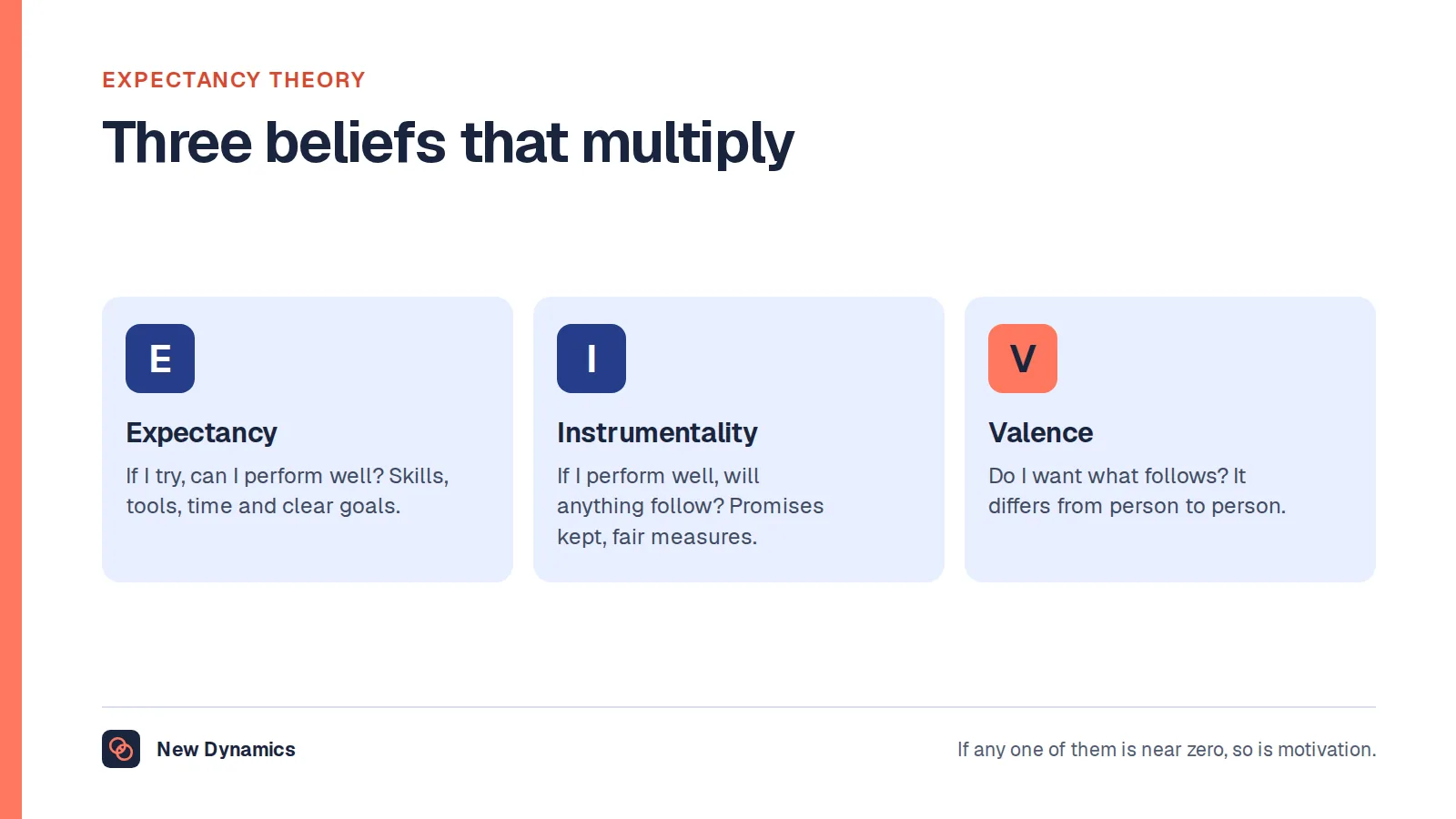
A third influence is individual performance. OpenStax notes that employees “who perform better tend to get bigger pay raises”. That link only motivates people if they believe that it is real and fair, which is the argument of expectancy theory.
Five principles of a fair compensation system
- A clear structure. Group jobs into levels, and give each level a pay range. People should be able to see where they sit and what the next step pays.
- Market data. Check your ranges against what comparable employers pay, at least once a year.
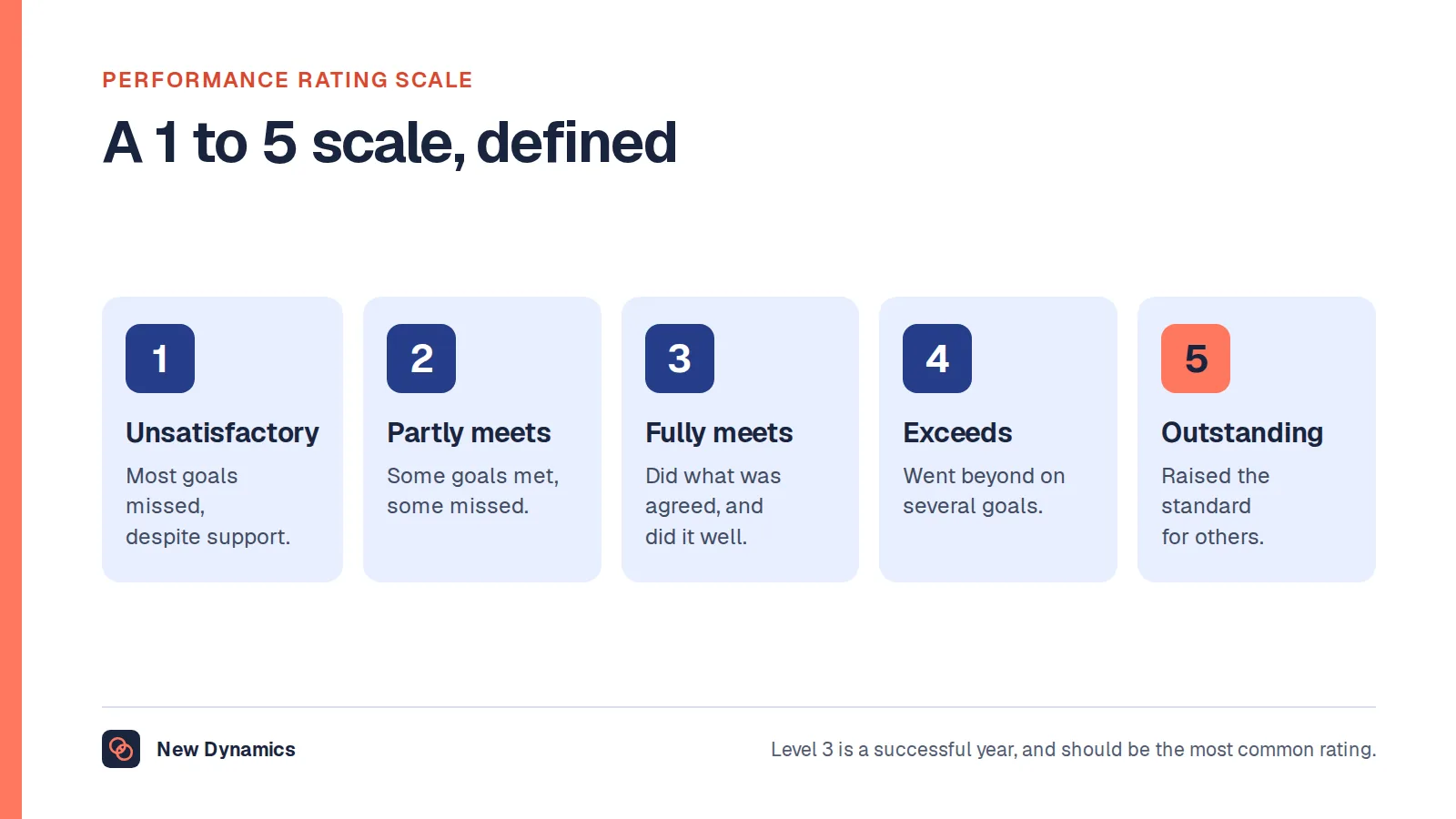
- An honest link to performance. If pay rises depend on ratings, the ratings have to be fair. Our guide to the performance rating scale covers the design, and a calibration meeting checks consistency between managers.
- Equal pay. Acas states the law in Great Britain in one sentence in its equal pay guidance: “By law, men and women must get equal pay for doing equal work.” Check your data for unexplained gaps. This is general information, not legal advice.
- Transparency. Publish ranges in job adverts, explain how decisions are made and tell people what they would need to do to earn more.
Separate the conversation about pay from the conversation about development where you can. People tend to stop listening to feedback once a number is on the table.

Frequently asked questions
What is the definition of compensation?
In employment, compensation is the combination of pay and other benefits that an employee receives for doing their job. It includes base pay, variable pay such as bonuses and commission, benefits and deferred pay. The word can also mean money paid to make up for a loss or an injury.
What does compensation mean in a job advert?
It means the whole of what the employer offers in return for the work, which may be wider than the salary. Look for the base pay, any bonus or commission, the pension and other benefits, and check which parts are guaranteed.
What does DOE mean in compensation?
DOE usually stands for “depending on experience”. “Compensation: DOE” means that the employer will decide the pay according to the experience of the person hired. It does not tell you the range, so it is reasonable to ask for one before you apply.
What does OTE compensation mean?
OTE means on-target earnings. It is the total you would earn in a year if you reached the targets set by the employer: base pay plus commission or bonus. Ask how the figure divides between base and variable pay, and how many people reach target.
What is deferred compensation?
Deferred compensation is pay earned now and received later, such as pension contributions, bonuses paid over several years and shares that vest over time. In the United States, the term also covers specific tax-favoured plans, such as the 457(b) plans described by the Internal Revenue Service.
What is the difference between compensation and salary?
Salary is one part of compensation: the fixed pay for the job. Compensation is the whole package, which adds variable pay, benefits and deferred pay. Two jobs with the same salary can have very different total compensation.
Your next step: write down the whole package
- If you are comparing job offers, list all four parts for each one, and mark which amounts are guaranteed.
- If you are an employer, write a one-page total compensation statement for one role, and see how much of it your advert mentions.
- Replace “competitive” and “DOE” in your next advert with a range.
- Check when you last compared your pay ranges with the market.
For a structure you can adapt, read and download our compensation policy guide. The guide is free to read, and the PDF uses our short download form.
Want pay decisions to rest on fair, consistent performance evidence? Book a New Dynamics demo and bring your current review cycle. You can also email contact@new-dynamics.com.