Better performance starts with a shared understanding.
Understand the performance management process, manager responsibilities, goals, feedback, reviews, development and the role of technology.
What is performance management?
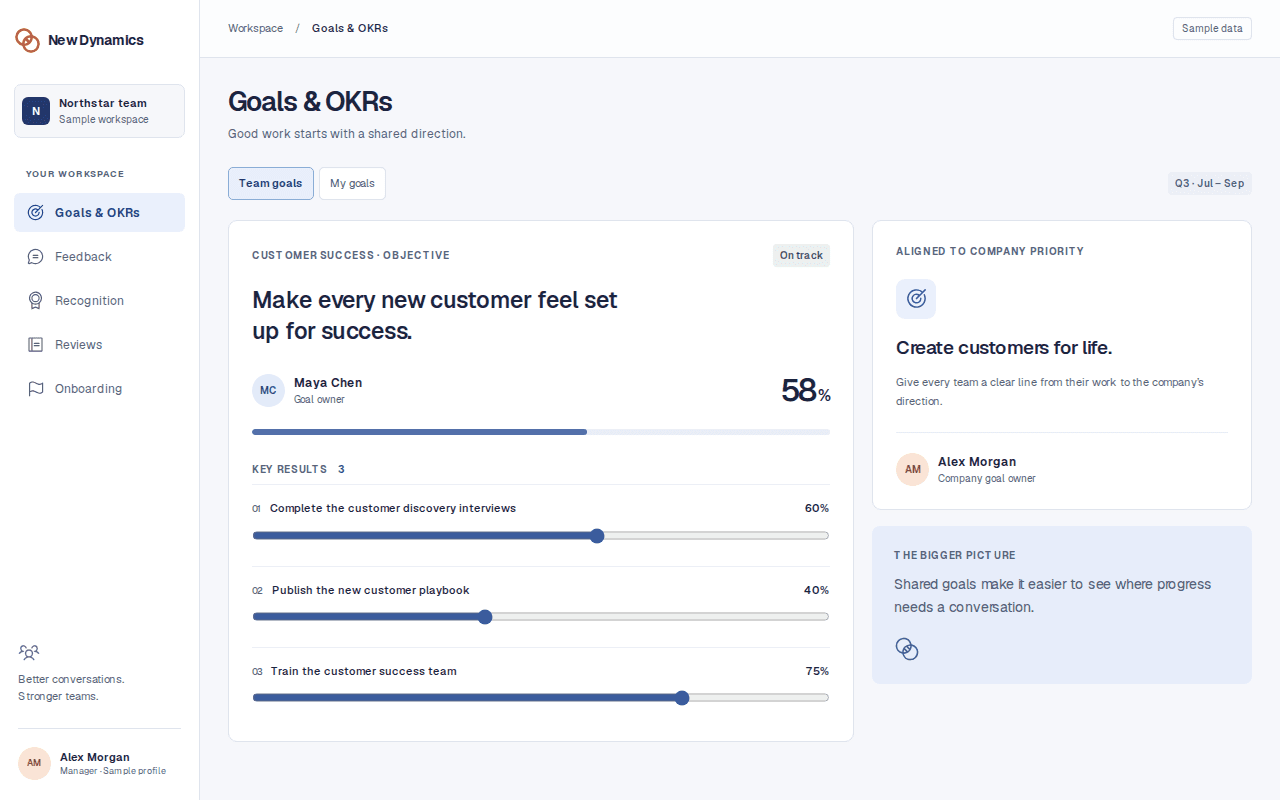
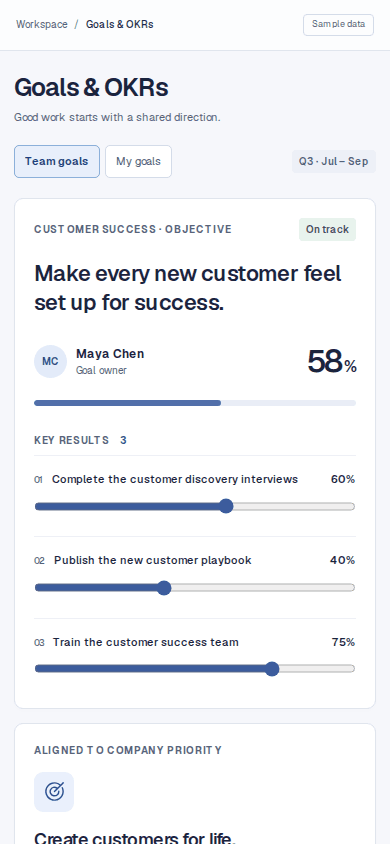
Performance management is the ongoing work of setting expectations, discussing contribution and helping people develop. It connects the organisation’s direction to an individual’s work. A review is one part of that process. The everyday conversations, choices and support between reviews are equally important.
Why the process matters
People need to know what is expected, how their contribution helps and where they can improve. Managers need enough context to give useful support. A clear process creates room for those conversations and records the decisions that should be followed up. Without that rhythm, expectations can drift and feedback can arrive too late.
A practical performance management process
Begin with role expectations and current priorities. Agree goals and useful evidence of progress. Hold regular check-ins to discuss changes, feedback and support. Recognise specific contributions. Use a formal review to reflect across the period, then choose development actions and return to the next set of goals.
Continuous and annual approaches
An annual review provides a defined reflection point, but it cannot carry every conversation a person needs during a year. A continuous approach captures context near the work and uses regular discussion to adjust direction. The two can work together: check-ins keep expectations relevant, while a periodic review identifies patterns and longer-term development needs.
Goals and feedback need each other
A goal gives feedback a reference point. Feedback tests whether the goal and the approach still make sense. For example, a team trying to improve project handovers may learn that a missing decision record causes more friction than the time taken to complete the handover. That evidence should influence the next action and possibly the measure itself.
Recognition and development
Recognition makes the contribution behind an outcome visible. Development asks how a person can build on a strength or practise a needed capability. Connect the two by discussing a real example, the skill it demonstrates and an upcoming opportunity to use that skill in a new setting. Agree support and a follow-up date.
What managers are responsible for
Managers explain expectations, gather context, listen to the employee’s view and follow through on agreed support. They should describe observed actions and impact rather than infer motivation. In a matrix structure, the accountable manager also brings together relevant perspectives and explains how they informed the assessment.
Where technology and AI help
Software can connect goals and feedback, coordinate stages and make relevant context easier to find. AI may help prepare summaries and discussion prompts. Neither replaces accountable judgement. Check source evidence, access permissions and the route for correcting inaccurate information. Confirm a supplier’s actual capabilities before relying on them.
An example in practice
A new project manager agrees a goal to improve cross-team handovers. During check-ins, they discuss blockers and feedback from receiving teams. A colleague recognises a clearer decision log. At review time, the manager and employee consider those examples, acknowledge a changed project scope and agree to practise facilitating a complex handover with a mentor.
Start with a manageable change
Choose one team and one recurring conversation. Explain the purpose, agree a short agenda and test the process for a defined period. Ask whether employees leave with clearer expectations and whether managers follow up on support. Use the guide and template library below to make the process concrete before expanding it.
Put the ideas into practice.
Your questions, answered.
How do we choose a performance management process?
Start with the decisions and conversations your organisation needs. Define shared expectations, relevant participants and a manageable cadence, then test the process with one team.
Does continuous performance replace the annual review?
Regular check-ins and a formal review can work together. Ongoing conversations keep expectations relevant; a periodic review provides a wider reflection point.
How can we evaluate the platform?
Bring a representative workflow, your reporting relationships and your HR system requirements to a demo. Ask for current evidence on each capability and use the RFP template to record what is confirmed.
Bring out the best
in your people.
See what performance management could look like for your organisation.
Book a demo