TL;DR
- Expectancy theory says people put in effort when they believe three things: effort will lead to good performance, good performance will lead to an outcome, and the outcome is worth having.
- The three beliefs multiply. If any one is close to zero, motivation collapses, however strong the other two are. A generous bonus nobody believes they can earn motivates nobody.
- Use it as a diagnostic. When someone seems unmotivated, ask which link is broken: can they do it, will it be noticed and rewarded, and do they value the reward?
A company launches a generous bonus scheme, and nothing changes. Another promises promotion for top performers, and the best people leave anyway. Managers conclude that people “just aren't motivated”. Expectancy theory offers a more useful explanation, and a way to find what went wrong.
This article explains the theory in plain language, works through the formula and gives workplace examples. It ends with three questions you can use to diagnose low motivation in your own team.
One of the three links in the theory is whether people value what they get for good work. See how New Dynamics employee recognition makes appreciation specific and timely.
What is expectancy theory?
Expectancy theory is a theory of motivation usually credited to Victor Vroom, who set it out in 1964. It treats motivation as a choice. People decide how much effort to put in based on what they expect to happen as a result.
According to the theory, a person will work hard at something when they believe three things:
- If I try, I can perform well.
- If I perform well, something will follow.
- That something is worth having.
It belongs to a family called process theories, which explain how motivation works. Content theories, by contrast, list what people need.
The three parts: expectancy, instrumentality and valence
The open textbook Organizational Behavior, published by OpenStax, gives clear definitions in its chapter on process theories of motivation.
Expectancy: can I do it?
OpenStax defines effort-performance expectancy as “the perceived probability that effort will lead to performance”. It is the person's belief that trying harder will produce a better result.
Expectancy falls when people lack skills, tools, time or clear goals, or when results depend mostly on things outside their control.
Instrumentality: will it lead to anything?
Performance-outcome expectancy, often called instrumentality, is “the perceived relationship between performance and outcomes”. It is the belief that good performance will be noticed and will lead to something, such as pay, recognition, promotion or interesting work.
Instrumentality falls when rewards seem arbitrary, when everyone gets the same whatever they do, when promises have been broken before or when performance is measured badly.
Valence: do I want it?
Valence is “the degree to which we perceive an outcome as desirable, neutral, or undesirable”. It is personal. One person values a bonus. Another would prefer flexibility, a development opportunity or simply a sincere thank you. Some outcomes have negative valence: a promotion that means longer hours may be unwelcome.

The expectancy theory formula
The simple version of the formula is:
Motivation = Expectancy × Instrumentality × Valence
OpenStax gives a fuller form, in which the force to act equals expectancy multiplied by the sum of each outcome's instrumentality times its valence. The important feature is the multiplication.
Because the three beliefs multiply, a very low score on any one of them drags the whole result towards zero. Strength in one link cannot make up for weakness in another.
A worked example
Imagine a sales bonus. We can put rough numbers between 0 and 1 on each belief. The figures are illustrative.
| Person | Expectancy (can I hit the target?) | Instrumentality (will I really get the bonus?) | Valence (do I want it?) | Motivation |
|---|---|---|---|---|
| Asha | 0.8 | 0.9 | 0.9 | 0.65 |
| Ben | 0.2 | 0.9 | 0.9 | 0.16 |
| Carla | 0.8 | 0.3 | 0.9 | 0.22 |
| Dev | 0.8 | 0.9 | 0.2 | 0.14 |
Ben thinks the target is impossible. Carla remembers last year, when the rules changed in December. Dev would rather have Fridays off. The same scheme motivates one person in four, and each of the others needs a different fix.

Expectancy theory examples at work
The stretch target nobody believes in. Leaders set a goal to double output. The team thinks it is impossible, so expectancy is near zero and effort falls. A target that stretches people but still looks achievable would work better. Our 50 SMART goal examples show how to word one.
The promotion that never comes. A manager says strong performance leads to promotion, but the last three promotions went to external hires. Instrumentality collapses, and good people stop trying or leave.
The training course. Someone is sent on a course. If they doubt they can apply it (expectancy), or nobody notices when they do (instrumentality), the learning fades.
The one-size-fits-all reward. Everyone who hits the target gets a dinner voucher. For some it is a treat. For a parent who cannot go out in the evening it is worthless. Valence differs, so ask people.
The rating that ignores results. If review ratings seem unrelated to what people achieved, instrumentality falls for everyone watching. See performance reviews: the good, the bad and the ugly.
How managers can apply expectancy theory
OpenStax lists practical implications for managers. In summary, they are to:
- strengthen expectancy through selection, training and clear responsibilities;
- strengthen instrumentality with policies that link desirable behaviour to positive outcomes;
- find out which outcomes employees value;
- clarify how effort translates into performance;
- make sure outcomes are appropriate, through reward schedules and job design;
- check that outcomes are fair compared with what people put in and with their peers;
- measure performance accurately.
Translated into everyday management:
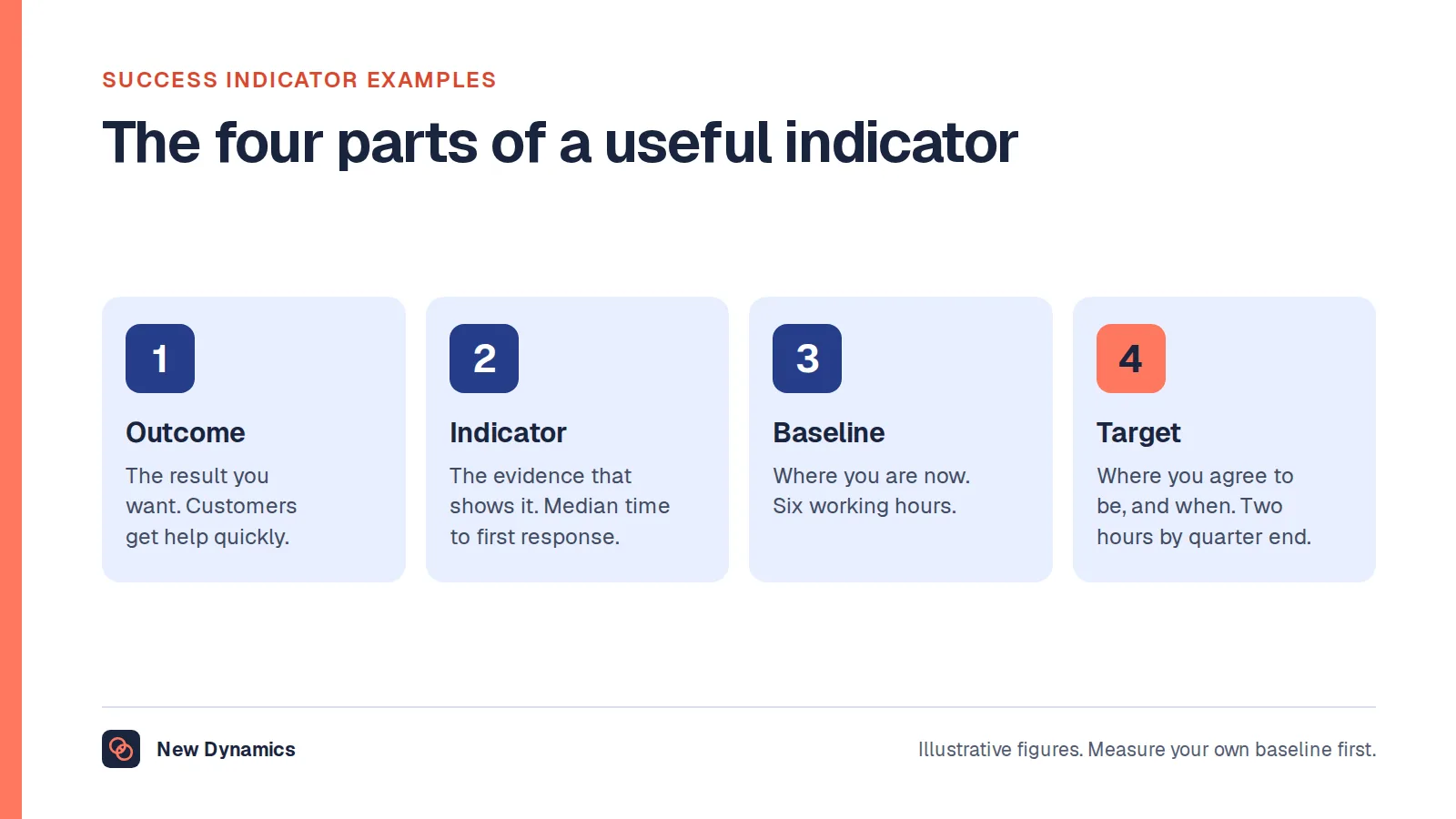
- Make goals achievable and clear. Agree the goal, the support and the measure together. See our success indicator examples.
- Remove obstacles. Much low motivation is really low expectancy caused by poor tools, unclear priorities or too much work.
- Keep your promises. Every broken link between performance and reward teaches the whole team a lesson.
- Notice good work quickly. Recognition close to the event strengthens the belief that performance leads somewhere.
- Ask what people value. Do not assume that everyone wants what you want.
- Be fair and transparent. People compare. If rewards look arbitrary, instrumentality falls for everyone.
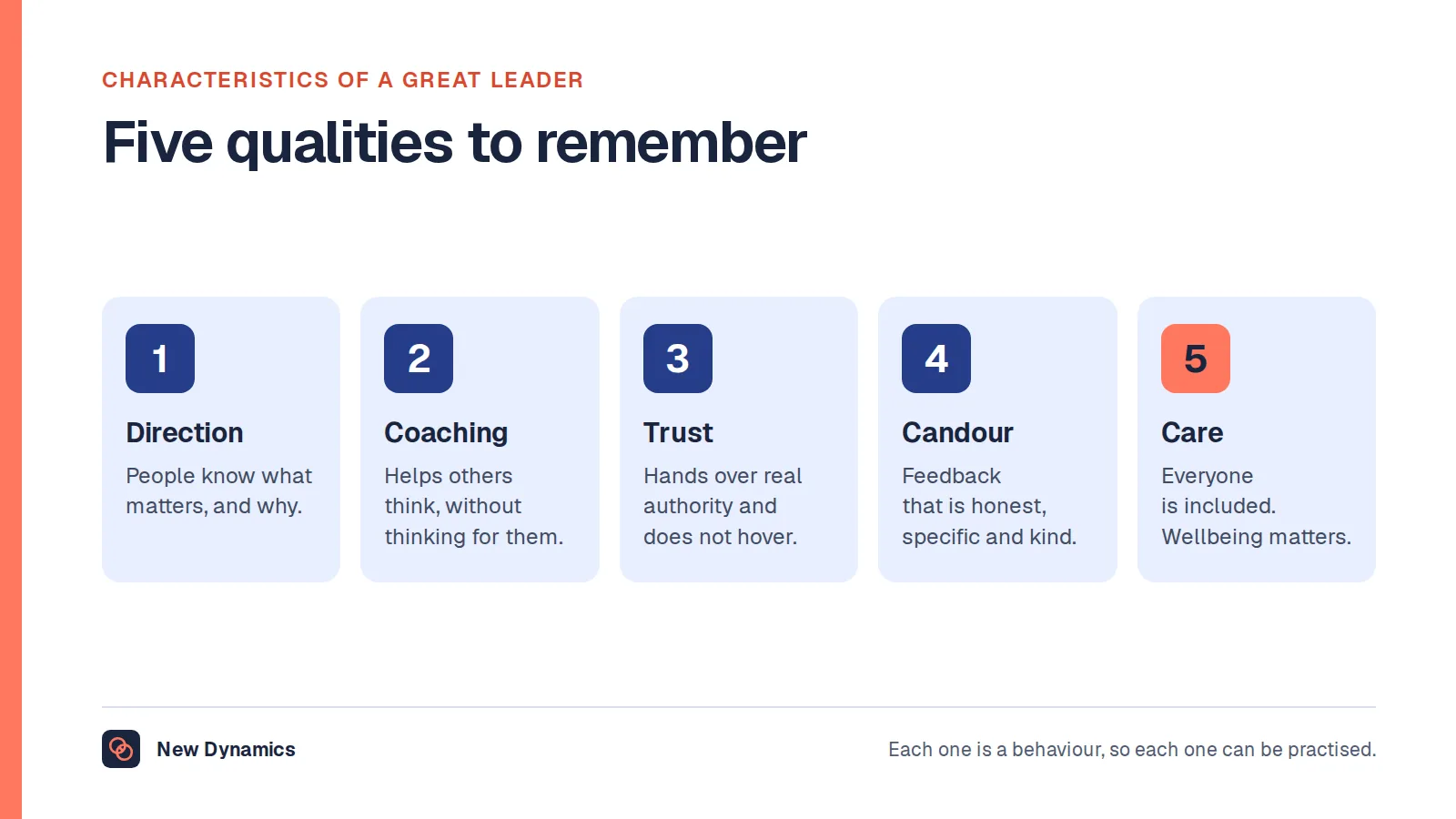
Many of these are simply good leadership. See the characteristics of a great leader.
Diagnose low motivation with three questions
When someone seems unmotivated, resist the urge to label them. Ask, in order:
- Expectancy: do they believe they can do what is being asked? Do they have the skills, time, tools and clarity?
- Instrumentality: do they believe that doing it well will lead to anything? Has it in the past?
- Valence: do they want what is on offer? Have you asked?
Then fix the weakest link. Raising the reward is pointless if the real problem is that people think the target is impossible.

Limits of expectancy theory
The theory is useful, and it is incomplete.
- People are not calculators. Few of us weigh probabilities before deciding how hard to work. Habit, mood and loyalty matter too.
- It underplays intrinsic motivation. People often work hard because the work is interesting or meaningful, with no external outcome in mind. The CIPD factsheet on employee engagement and motivation notes that autonomy significantly influences motivation.
- It focuses on the individual. Team norms, fairness and culture shape effort as well.
- The numbers are hard to measure. Treat the formula as a way of thinking. It was never meant as a calculator for real people.
- Rewards can backfire. Paying for one narrow measure can lead people to chase the number. Pair each measure with a safeguard.
Expectancy theory and other motivation theories
| Theory | Main idea |
|---|---|
| Expectancy theory | Effort depends on beliefs about effort, outcomes and their value |
| Goal-setting theory | Specific, challenging goals with feedback lead to higher performance |
| Equity theory | People compare what they give and get with others, and react to unfairness |
| Needs theories | People are driven by needs, from basic security to growth and achievement |
| Two-factor theory | Some factors prevent dissatisfaction, while different ones create motivation |
| Self-determination theory | Autonomy, competence and relatedness sustain intrinsic motivation |
These are complementary. Expectancy theory is the most practical of them for one specific job: working out why a particular incentive or goal is not working.
Frequently asked questions
What is expectancy theory?
Expectancy theory is a theory of motivation usually credited to Victor Vroom in 1964. It says people put in effort when they believe that effort will lead to good performance, that good performance will lead to an outcome and that the outcome is worth having.
What are the three components of expectancy theory?
The three components are expectancy, the belief that effort leads to performance; instrumentality, the belief that performance leads to an outcome; and valence, how much the person values that outcome. Motivation depends on all three together.
What is the expectancy theory formula?
The simple formula is motivation equals expectancy multiplied by instrumentality multiplied by valence. Because the terms multiply, a very low value for any one of them brings motivation close to zero, whatever the other two are.
What is an example of expectancy theory at work?
A company offers a bonus for hitting a sales target. One salesperson believes the target is impossible, so low expectancy means little effort. Another doubts the bonus will really be paid, so instrumentality is low. A third would rather have time off, so valence is low.
How do managers use expectancy theory?
Managers use it to diagnose low motivation. They check whether people believe they can do the work, whether good work reliably leads to recognition or reward, and whether people value what is offered. Then they strengthen the weakest link.
What are the criticisms of expectancy theory?
Critics point out that people rarely make such careful calculations, that the theory underplays intrinsic motivation, habit and team influences, and that its terms are hard to measure. It is best used as a practical way of thinking, without expecting precise predictions.
Your next step: test one incentive
- Pick one goal, bonus or reward scheme that is not having the effect you hoped for.
- Ask three people the three questions: can you do it, will it lead to anything, and do you want it?
- Find the weakest link.
- Fix that link before you change anything else.
For ways to make appreciation specific, timely and fair, read and download our employee recognition guide. The guide is free to read, and the PDF uses our short download form.
Want goals, feedback and recognition connected, so that good work is noticed? Book a New Dynamics demo and bring an incentive that is not working. You can also email contact@new-dynamics.com.