TL;DR
- Disciplinary action is a formal step that an employer takes in response to an employee's misconduct or poor performance, such as a written warning, a final warning, demotion or dismissal.
- UK guidance expects a written procedure with four steps: a letter that sets out the issue, a meeting, a decision and a chance to appeal. Acas advises employers to try to resolve problems informally first.
- A warning should name the issue, the change needed and its timescale, the consequences, how long the warning lasts and any support. The aim of disciplinary action is improvement.
Few managers enjoy it, and few employees forget it. Disciplinary action is the moment when a problem at work stops being a conversation and becomes a formal process, with letters, meetings and a record.
This article explains what disciplinary action means, when it is used, the possible outcomes, the steps of a fair procedure and what a warning should say. It follows guidance from Acas and GOV.UK, so the detail applies to Great Britain. The principles of fairness travel well. This is general information, not legal advice.
Many disciplinary cases begin as small problems that nobody raised. See how New Dynamics continuous feedback supports regular check-ins.
What is disciplinary action?
The Cambridge Dictionary defines disciplinary action as “a method for dealing with a worker who causes problems or does not obey company rules, for example, by removing them from their job”.
In practice the term has two senses. It can mean the whole formal process. It can also mean the outcome of that process: the warning, the demotion or the dismissal. GOV.UK uses the first sense in its guide for employees on disciplinary procedures and action at work: “Your employer could start formal disciplinary action against you if they have concerns about your work, conduct or absence.”
Acas, in its step-by-step guide to the disciplinary procedure, describes a disciplinary procedure as a formal way for an employer to deal with two things.
- Misconduct, which is “unacceptable or inappropriate behaviour”.
- Capability, which is “the ability to perform the job properly”.
Acas notes that some employers use a separate capability procedure for performance problems. It must still be in line with the Acas Code of Practice.
Try the informal route first
Acas is clear about where to begin: “Before starting a disciplinary procedure, the employer should first see whether the problem can be resolved in an informal way. This can often be the quickest and easiest solution.”
It suggests privately talking with the employee and any other staff involved, listening to their point of view, agreeing improvements to be made and, for a performance issue, setting up a training or development plan. For capability problems, it lists mentoring, coaching and training as things to try before a formal procedure.
GOV.UK adds a caution for employees. An employer may try to raise a matter informally, but it can go straight to its formal disciplinary or dismissal procedures.
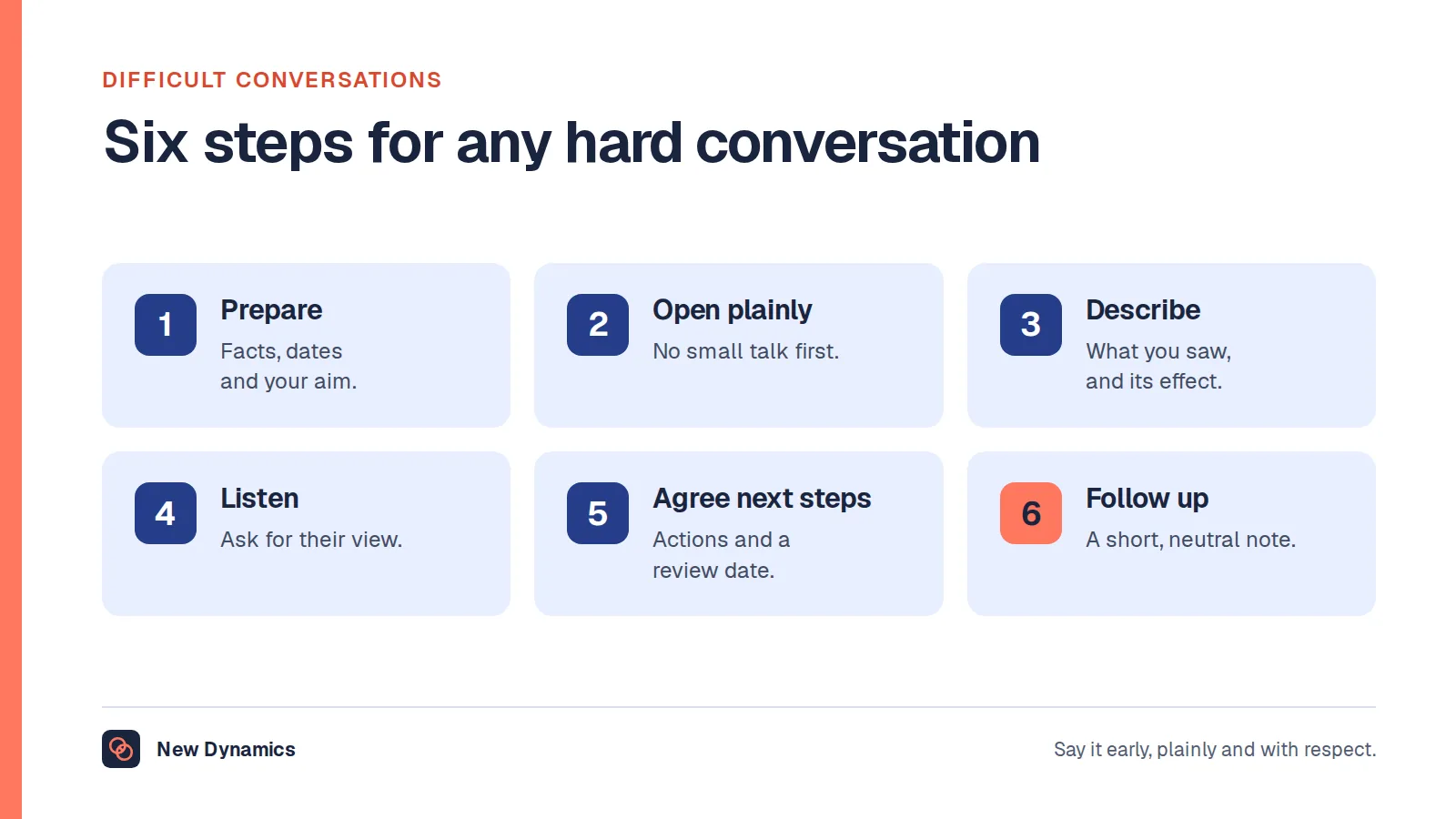
Our difficult conversations examples give wording for that first, informal talk.
Examples of misconduct and gross misconduct
Acas gives examples of misconduct:
- bullying;
- harassment;
- insubordination, for example refusing to do work;
- being absent without permission.
Some acts are gross misconduct, in Acas's words “because they are very serious or have very serious effects”. Its examples are fraud, physical violence, gross negligence and serious insubordination. Acas adds that what is seen as gross misconduct can depend on the organisation, which may have its own policy with examples.
Two points are often missed. First, misconduct outside work can count. Acas gives the example of behaviour in front of external clients at a work Christmas party, and says that it depends on how serious the misconduct is and whether it could affect the business. Second, gross misconduct does not remove the need for process. Acas says that the employer “must still carry out an investigation and a fair disciplinary procedure”.
The four steps of a fair procedure
GOV.UK tells employers, in its guide to taking disciplinary action, that they should have written disciplinary rules and procedures and must tell their staff about them. For employees, it lists the steps that a procedure should include.
- A letter setting out the issue.
- A meeting to discuss the issue.
- A disciplinary decision.
- A chance to appeal this decision.
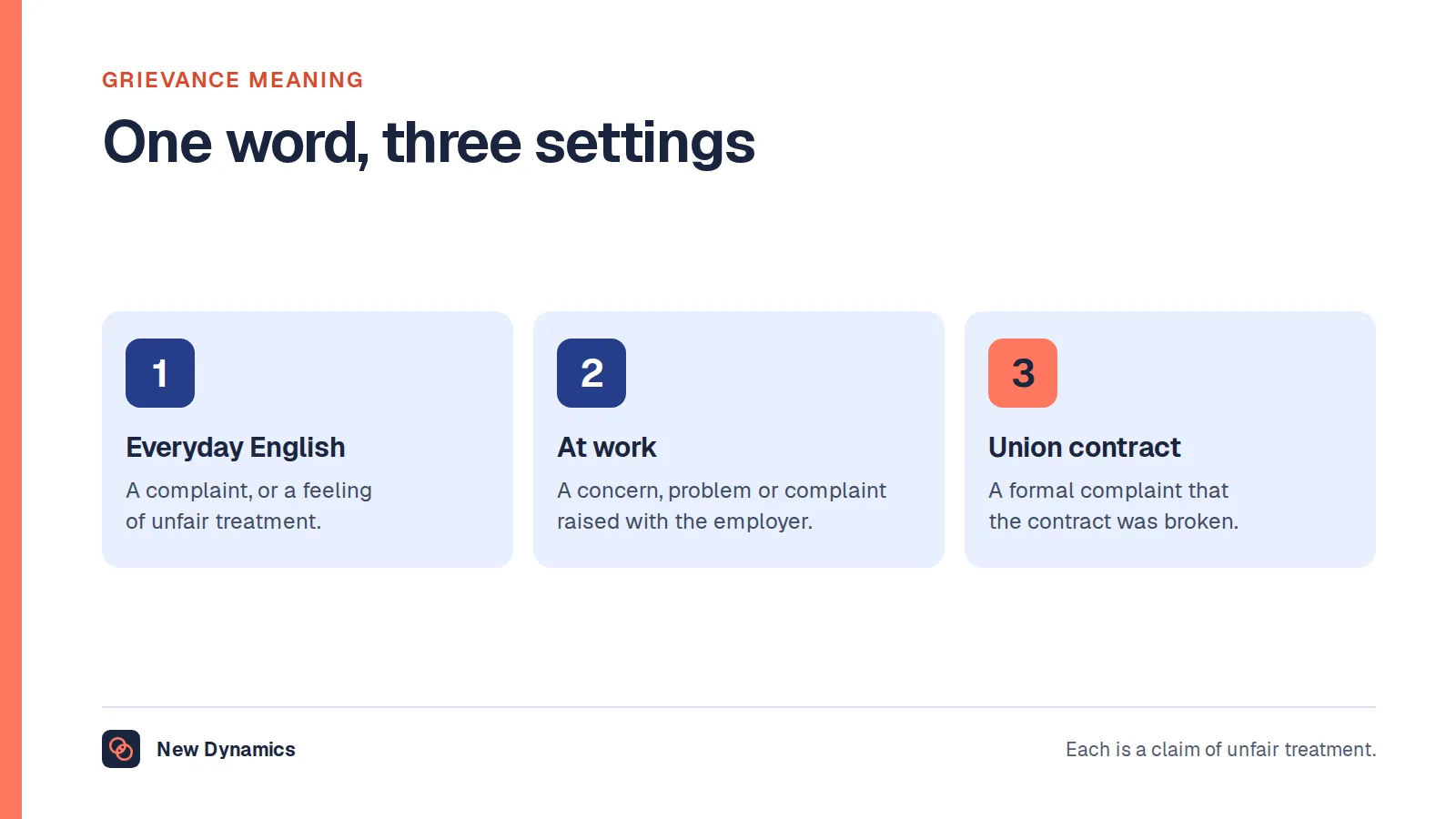
Acas fills in the detail. The written notice should include information about the alleged misconduct or poor performance, and the possible consequences, and the employee should have it in time to prepare for the hearing. Employers should check how similar cases were handled before, because, in Acas's words, they “must follow the procedure and policy in the same way for each disciplinary case”. And they should keep talking: clear, regular and confidential communication helps to avoid misunderstandings, stress and further disputes. If the employee raises a grievance during the process, the employer can pause the disciplinary and deal with the grievance first. Our guide to the meaning of grievance explains that procedure.
Why the Acas Code matters
GOV.UK says that an employer's procedures should follow the Acas Code of Practice on disciplinary and grievance procedures. It tells employers: “Not following the code is not illegal. However, if someone wins an employment tribunal against you and you did not follow the code, then their award could be up to 25% more.” Acas calls the Code “the minimum an organisation should follow”.

Six possible outcomes
Acas says that the employer should decide on the best outcome based on the findings from the investigation and meetings, what is fair and reasonable, and what the organisation has done in any similar cases before. Its guide to deciding on the disciplinary outcome describes six.
- No action. If there was no misconduct or performance issue, the procedure ends. The employer should make clear that there is no longer anything to worry about, and help the employee to get back to work as normal.
- Informal warning. For a small issue, the employer might just have an informal talk. Some organisations call this a verbal warning. Acas says that a confidential written record should still be kept.
- First written warning. Usually the first step when misconduct or poor performance is confirmed.
- Final written warning. Given if the employee repeats the misconduct, or does not improve, within a set timeframe. In serious cases an employer can go straight to a final written warning.
- Other action, such as demotion. Acas says that employers must first check what the employment contract allows, and discuss it fully with the employee.
- Dismissal. Either for gross misconduct, or where the procedure has had to be repeated and the employee already had a final written warning. Acas says that dismissal should only be decided by a manager who has the authority to do so.
Whatever the outcome, Acas says that the employer should tell the employee as soon as possible and in writing, and should offer the right of appeal.

What a written warning should say
Acas lists what a first or final written warning should say. In five points:
- The issue. What the misconduct or performance issue is.
- The change needed, with a timescale.
- The consequences. What could happen if the changes are not made, or if there is further misconduct or no improvement.
- The duration. How long the warning will stay in place.
- The support. Any support or training that the employer will provide, if the warning relates to performance.
Acas adds a point that managers often forget. For any outcome short of dismissal, the employer “should give the employee specific goals and timeframes for improvements”. A warning that does not say what good looks like is a threat. It is not a plan.

The employee's side
If you are facing disciplinary action, GOV.UK's guide sets out what to expect. The procedure should be in writing and easily available. There should be a hearing at which you are given a chance to explain your side of the story, and a chance to appeal against any action that your employer decides to take. The procedure should name someone you can speak to if you do not agree with the decision.
Acas notes that going through a disciplinary procedure can be very stressful, and that employers should consider the wellbeing and mental health of their employees. If you are struggling, say so.
For managers: six habits that prevent many cases
- Raise small things early. A two-minute conversation now saves a hearing later.
- Make expectations clear. People cannot meet a standard that nobody has stated.
- Keep short, factual notes of what was said and agreed.
- Be consistent. Treat the same behaviour in the same way, whoever it is.
- Separate conduct from capability. Someone who cannot do the job needs support and a plan. Someone who will not follow the rules needs a different conversation.
- Ask HR early, before you promise or threaten anything.
Common mistakes
Skipping the informal stage for a minor issue.
Deciding before the hearing. The meeting exists to hear the employee's side. If the outcome is fixed, the process is a sham.
Inconsistency. One person warned and another ignored for the same behaviour.
Vague warnings. No change stated, no timescale and no end date.
Using discipline for a capability problem without any support, training or time to improve.
Forgetting the appeal.
Poor confidentiality. Acas reminds employers that they must keep all personal information confidential in line with data protection law.
Frequently asked questions
What is disciplinary action?
Disciplinary action is a formal step that an employer takes in response to an employee's misconduct or poor performance. It can mean the whole formal procedure, or its outcome, such as a written warning, a final warning, demotion or dismissal.
What are examples of disciplinary action?
Acas describes an informal or verbal warning, a first written warning, a final written warning, other action such as demotion, and dismissal. A procedure can also end with no action, if no misconduct or performance issue is found.
What are the steps in a disciplinary procedure?
GOV.UK lists four: a letter setting out the issue, a meeting to discuss it, a disciplinary decision and a chance to appeal. Acas adds an investigation before the hearing, and advises employers to try an informal resolution first.
What is gross misconduct?
Gross misconduct is behaviour that is very serious or has very serious effects. Acas gives fraud, physical violence, gross negligence and serious insubordination as examples. The employer must still investigate and follow a fair procedure before deciding on dismissal.
Does an employer have to give a warning before dismissal?
Usually a first and then a final written warning come first. Acas says that in serious cases an employer can go straight to a final written warning, and that dismissal may follow a finding of gross misconduct. A fair procedure is needed in every case.
Can I appeal against disciplinary action?
Acas says that the employer should offer the right of appeal, so that an employee can appeal if they feel that the outcome is too severe or that any stage of the procedure was wrong or unfair. GOV.UK also lists a chance to appeal as one of the steps.
Your next step: read your own procedure
- Find your written disciplinary procedure. Check that every employee can find it too.
- Compare it with the four steps above and with the Acas Code.
- Check that your warning letters cover the five points.
- Ask your managers when they last raised a small problem early. That is where cases are prevented.
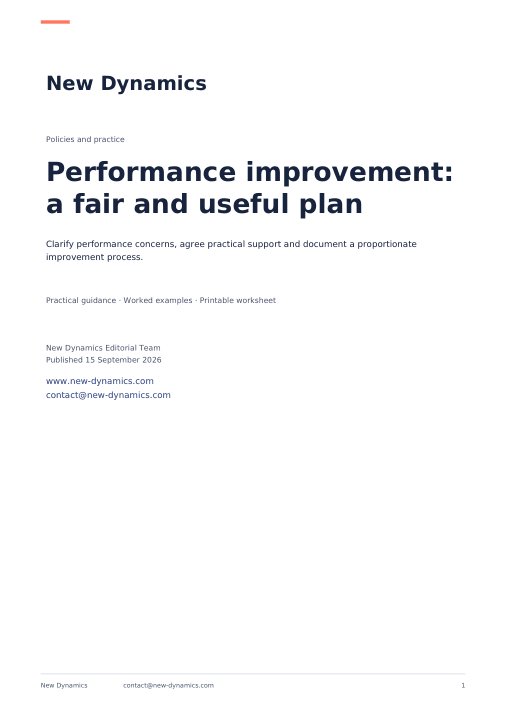
To handle performance problems with support before discipline, read and download our performance improvement guide. The guide is free to read, and the PDF uses our short download form.
Want problems raised early, in regular conversations? Book a New Dynamics demo and bring your current approach. You can also email contact@new-dynamics.com.