TL;DR
- Background screening is the checking of a candidate's past, such as identity, right to work, work history, qualifications and criminal record, to confirm that they are suitable for a role.
- The rules depend on the country. In England and Wales, criminal record checks go through the Disclosure and Barring Service, which offers four levels. In the US, checks bought from a screening company fall under the Fair Credit Reporting Act.
- Fair screening checks only what the job needs, applies the same standard to everyone, tells the candidate first and lets them respond before a decision is made.
The offer letter says “subject to satisfactory background checks”. For most candidates that is a formality. For some it is a week of worry about a county court judgment from ten years ago, a gap in a CV or a conviction that they thought was behind them. For the employer, it is a legal process with rules about what may be checked, what must be said and what may be done with the answer.
This article explains what background screening is, what a background check can cover, the rules in outline in the UK and the United States, and how to screen fairly. It is general information, not legal advice, and the law differs between countries and between states.
Checks end when the person starts. See how New Dynamics onboarding brings tasks, early goals and manager conversations into a clear path for a new starter.
What is a background check?
The Cambridge Dictionary defines a background check as “an examination of someone's past, especially their educational and work history and whether they have ever committed any crime, in order to see if they are suitable for a job or position”.
Background screening is the same thing seen from the employer's side: the process of carrying out those checks, often through a specialist company. Other names are pre-employment screening, pre-employment checks and, in the UK, vetting.
The US Equal Employment Opportunity Commission and the Federal Trade Commission describe the practice in their joint guide, Background checks: what employers need to know: “some employers might try to find out about the person's work history, education, criminal record, financial history, medical history, or use of social media”.
Six things that a background check can cover
- Identity and right to work. That the person is who they say they are, and may lawfully work in the country.
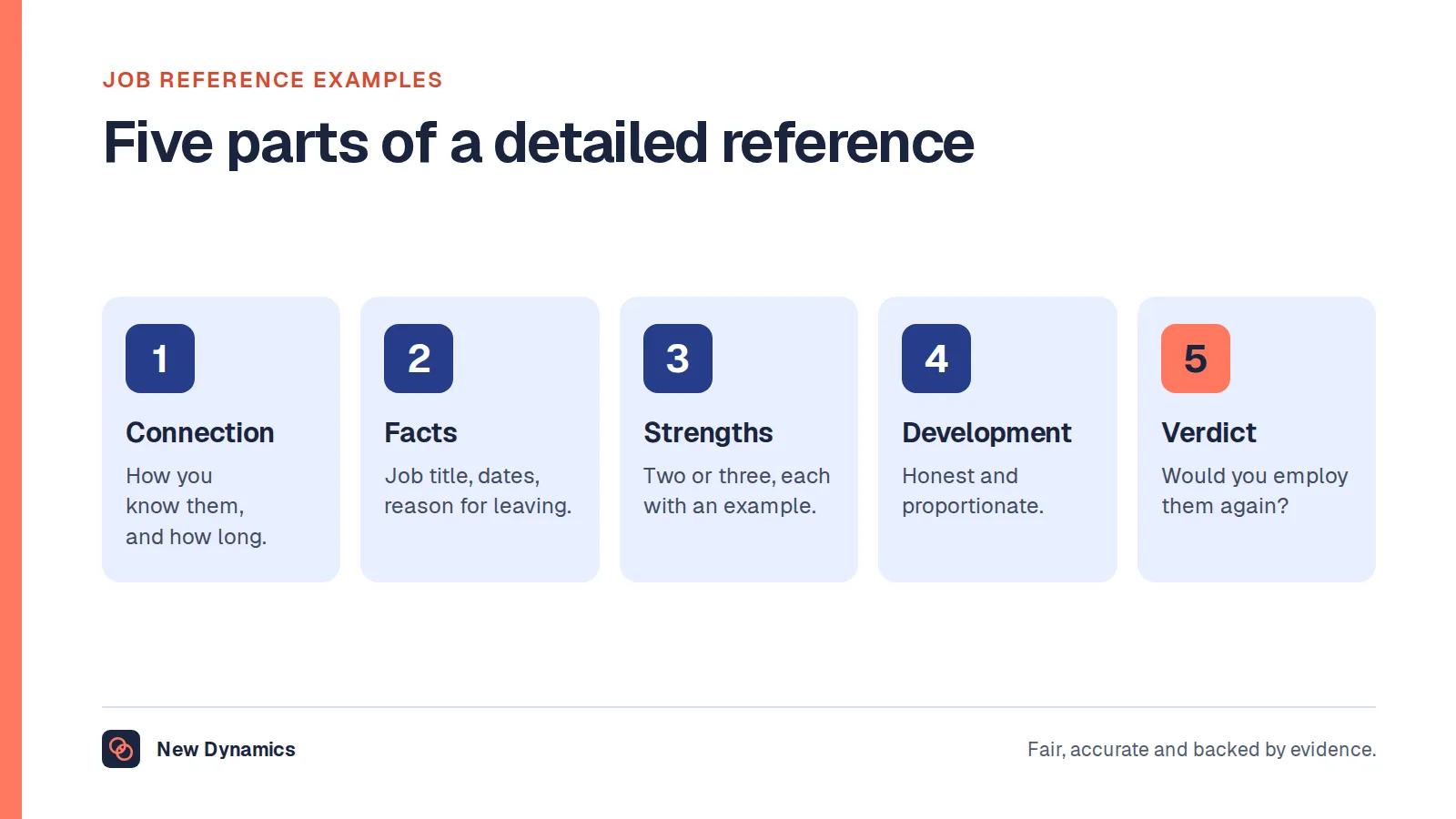
- Work history and references. Dates, job titles and, where a referee will give it, a view of performance. Our job reference examples show what a useful reference says.
- Education and qualifications. That the degree, certificate or licence exists.
- Criminal record. Within the limits that the law sets for the role.
- Financial history. Credit and insolvency checks, which are normally kept for roles that handle money or carry financial risk.
- Professional registration. That a nurse, accountant, engineer or driver holds the registration or licence that the job requires.
No employer needs all six for every job. The test is relevance. A criminal record check for a care worker is essential. A credit check for a gardener is hard to justify.

Background checks in the UK
Right to work. This is the one check that every employer must make. GOV.UK's guide to checking a job applicant's right to work says: “You must check that a job applicant is allowed to work for you in the UK before you employ them.” It warns that an employer could face a civil penalty for employing an illegal worker without a correct check, and adds: “You must not discriminate against anyone because of where they're from.” In practice that means checking every new starter, not only those who seem foreign.
Criminal records. In England and Wales these go through the Disclosure and Barring Service. GOV.UK's guide to checking someone's criminal record as an employer lists four types of check.
- Basic, which shows unspent convictions and conditional cautions.
- Standard, which shows spent and unspent convictions and cautions.
- Enhanced, which shows the same as a standard check, plus any information held by local police that is considered relevant to the role.
- Enhanced with barred lists, which also shows whether the applicant is on the list of people barred from doing the role.
The more detailed checks are available only for certain roles, for example in healthcare or childcare. GOV.UK adds a duty that is often missed: “If you carry out criminal records checks, you must have a policy on employing ex-offenders and show it to any applicant who asks for it.” Scotland and Northern Ireland have their own systems.
Conditional offers. Acas's guidance on offering someone a job explains how checks fit in. A job offer can be conditional on, for example, suitable references or a health check. An employer can withdraw the offer if the applicant did not meet the conditions, and should tell them the reasons. Withdrawing an unconditional offer, Acas warns, could be against the law. So state the conditions in the offer letter.

Background checks in the United States
The joint EEOC and FTC guide sets out two bodies of federal law.
Equal treatment. Asking about someone's background is generally lawful. But the guide says: “In all cases, make sure that you're treating everyone equally.” Checking only people of a certain race, for example, is evidence of discrimination. Its first instruction on using the information begins: “Apply the same standards to everyone”. Employers should also take special care with policies that exclude people with certain criminal records, if the policy significantly disadvantages a protected group and does not accurately predict who will be a responsible, reliable or safe employee. The guide also says not to ask medical questions before a conditional job offer has been made.
The Fair Credit Reporting Act. When an employer gets a report from “a company in the business of compiling background information”, the Act adds a procedure. It has five steps.
- Tell the person in writing, in a stand-alone document, that you might use the information for decisions about their employment. The guide is specific: “The notice can't be in an employment application.”
- Get their written permission.
- Certify to the screening company that you have notified the person, got their permission, complied with the Act, and will not discriminate or misuse the information.
- Before any adverse action, give the person a notice that includes a copy of the report and a copy of the summary of their rights under the Act. The guide explains why: “the person has an opportunity to review the report and explain any negative information”.
- After an adverse action, tell the person that they were rejected because of information in the report, give the name, address and phone number of the company that sold it, say that the company did not make the decision, and tell them of their right to dispute the report and to get another free report within 60 days.
The guide adds that some states and municipalities regulate background information for employment purposes, so check local law too. When the records are no longer needed, the FTC requires that reports are disposed of securely.

How to screen fairly: seven habits
- Check what the job needs. Decide the checks for each role, and write down why.
- Tell candidates early. Say in the advert or at interview which checks the role involves. People with something to explain would rather explain it than be surprised.
- Check after the offer. Make the offer conditional, then screen. It saves cost, and it keeps irrelevant information out of the hiring decision.
- Apply the same standard to everyone in the same role.
- Look at relevance, not just presence. How serious was it, how long ago and what has it to do with this job?
- Let the person respond before you decide. Records contain errors, and context matters.
- Protect the data. Limit who sees the results, keep them only as long as you need to, and dispose of them securely. Our employee data protection guide covers the wider policy.
For candidates: what to expect
- You should be told. In the US, a check through a screening company needs your written permission. In the UK, the checks for the role should be set out in your conditional offer.
- Be accurate on your application. Discrepancies in dates and qualifications can cause more trouble than the facts themselves.
- Know what will show. In England and Wales, a basic DBS check shows only unspent convictions and conditional cautions.
- You can respond. If a report contains something wrong, say so at once, and ask how to dispute it.
- Ask about timing. Checks can take days or weeks, and a start date may depend on them.
Common mistakes
Checking everything for every role. It is costly and intrusive, and it can be unlawful.
Screening before the offer. It invites decisions that are based on irrelevant information.
A blanket rule against any criminal record. The EEOC warns about policies of this kind, and UK employers who carry out checks must have a policy on employing ex-offenders.
Rejecting without telling the person why. In the US, that breaks the procedure. Anywhere, it denies them the chance to correct an error.
Checking only some candidates. Right to work checks, in particular, must be made for everyone.
Keeping reports for ever.
Using personal social media. Acas advises employers to avoid using information from someone's personal social media profile to decide whether to interview or hire them.
Frequently asked questions
What is background screening?
Background screening is the process of checking a candidate's past, such as identity, right to work, work history, qualifications and criminal record, to confirm that they are suitable for a role. It is also called a background check or pre-employment screening.
What does a background check show?
It depends on the checks that the employer orders. They can cover identity and right to work, previous employment and references, education and qualifications, criminal record, financial history and professional registration. Employers should check only what is relevant to the role.
What is a DBS check?
A DBS check is a criminal record check through the Disclosure and Barring Service in England and Wales. There are four types: basic, standard, enhanced and enhanced with barred lists. The more detailed checks are available only for certain roles.
Does an employer need my permission for a background check?
In the United States, an employer that gets a report from a screening company must tell you in a stand-alone written notice and get your written permission. Rules differ in other countries, but you should always be told which checks will be made.
Can a job offer be withdrawn after a background check?
Yes, if the offer was conditional on the checks. Acas says that an employer can withdraw a conditional offer if the conditions are not met, and should give the reasons. In the US, the employer must first send a notice with a copy of the report, so that you can respond.
When should background checks be done?
Usually after a conditional job offer. It keeps costs down, and it keeps information that is irrelevant to the hiring decision out of that decision. The EEOC and FTC guide says not to ask medical questions before a conditional job offer.
Your next step: one page for each role family
- List your role families, and the checks that each one truly needs.
- Write down the reason for each check.
- Put the checks into your adverts and your conditional offer letters.
- Decide who sees the results, how long you keep them and how they are destroyed.
To plan how your organisation handles personal data about candidates and employees, read and download our employee data protection guide. The guide is free to read, and the PDF uses our short download form.
Want new starters to move smoothly from checks to their first goals? Book a New Dynamics demo and bring your current process. You can also email contact@new-dynamics.com.