TL;DR
- A job reference is a statement from a current or former employer about someone's work. It can be basic, giving job title and dates, or detailed, covering skills, performance and reasons for leaving.
- In the UK, an employer does not usually have to give a reference, but one that is given must be fair and accurate. Opinions should be backed by evidence, and some information must be left out.
- A good detailed reference says how you know the person, gives two or three specific examples of their work, answers the questions asked and stays within what you can support.
A former team member has asked you for a reference. You want to help. You also want to be honest, stay within company policy and avoid saying anything that could cause trouble. Most managers write very few references, so every one feels like the first.
This article explains how to write a reference for an employee, with four job reference examples that you can adapt. It covers what to include, what to leave out, how to answer the “three strengths and three areas for improvement” question, and the questions to ask when you are the one checking references.
Good references rest on good records. See how New Dynamics performance reviews keep goals, feedback and achievements in one place, so that you can describe someone's work from evidence.
This is general information based on guidance for the UK. It is not legal advice. Check your own organisation's policy before you write a reference.
What is a job reference?
A job reference is a statement about a person's work, given by a current or former employer to a prospective one. Acas, in its guidance on what employers can say in a reference, describes two kinds of work reference.
- A basic reference is “a short summary of employment”, for example “the employee's job title and the dates they worked there”. It is sometimes called a factual reference.
- A detailed reference can include the job title, dates of employment, “details about their skills, ability and experience”, any current and relevant disciplinary records, and the reasons for leaving.
There is also the character reference, usually from someone who knows the applicant well, such as a manager, a mentor or someone they have volunteered for. It covers how the writer knows the person, their character and strengths, and their suitability for the role.
Acas notes that some employers give only basic references. Find out whether yours is one of them before you agree to write anything more.
The rules: fair and accurate
GOV.UK's page on work references sums up the position: “An employer does not usually have to give a work reference – but if they do, it must be fair and accurate.” It adds that a reference can include details about performance, and that it can be brief.
Acas is more specific about the limits. References must not be misleading, and must not include irrelevant personal information. It says: “If opinions are provided, there should be evidence to support the opinion.” A detailed reference may mention sickness absence, but the employer must follow discrimination law, and the reference should not include absences related to disability or to parental rights such as maternity or paternity leave.
Two practical consequences follow.
- Do not exaggerate. Acas gives the example that if someone's record shows they need to improve in a few areas, the reference should not say that they excelled at the job.
- Do not include what you cannot support. GOV.UK notes that a worker who receives an unfair or misleading reference may be able to claim damages, and that the previous employer must be able to back up the reference, for example with warning letters.

How to write a reference for an employee
- Check the policy. Ask HR whether managers may give detailed references, and whether references must go through HR.
- Check the facts. Confirm the job title, the dates and the reason for leaving against the records.
- Read the request. Answer the questions that were asked. If there is a form, use it.
- Say how you know the person, for how long, and in what capacity.
- Describe the role in a sentence or two.
- Give two or three strengths, each with an example. Evidence makes a reference believable. Look at past reviews and feedback. Our performance review phrases can help with wording.
- Be honest about limits. If you are asked about weaknesses, give a real, proportionate one that the person already knows about.
- Give a clear recommendation, if you can do so honestly. If you cannot, give a basic factual reference.
- Keep it to one page, sign it with your title and contact details, and keep a copy.
Write nothing that would surprise the person. They may be able to see the reference once they start the new job.
Four job reference examples
All names, organisations and details are fictional. Replace every detail with facts that you can support.
1. A basic factual reference
Reference for Maria Santos
I confirm that Maria Santos was employed by Northfield Logistics Ltd as a Customer Service Adviser from 4 March 2022 to 28 June 2026. She resigned from her position.
It is our policy to provide factual references only. This should not be taken as a comment, positive or negative, on the individual.
Helen Carter, HR Manager
2. A detailed professional reference from a manager
Reference for Daniel Okafor
I was Daniel's line manager at Brightwater Software from January 2023 until he left in May 2026. He joined as a Support Analyst and was promoted to Senior Support Analyst in 2024.
Daniel was responsible for second-line technical support for about 200 business customers. Three things stood out.
He solved problems at their source. In 2025 he traced a recurring data import fault to a formatting issue, wrote a fix with the engineering team and cut related tickets by more than half.
He communicated clearly with customers. His satisfaction score averaged 4.7 out of 5, and two customers asked for him by name in their contract renewals.
He helped others to improve. He wrote our onboarding guide for new analysts and mentored three new starters, all of whom passed probation.
As an area for development, Daniel could be reluctant to delegate, and he sometimes took on too much. We discussed this in his last review, and he had begun to hand over routine work.
Daniel left to take a role with more technical scope than we could offer. I would gladly employ him again, and I recommend him without reservation for the position of Technical Account Manager.
Priya Shah, Head of Customer Support
3. A reference for a first job or an early-career employee
Reference for Aisha Rahman
Aisha worked for me as a part-time Sales Assistant at Greenway Garden Centre from June 2024 to August 2026, alongside her studies.
She was reliable and quick to learn. She was on time for every shift, learned our till and stock systems within her first fortnight and was trusted to open the shop alone within six months. Customers often commented on her patience, particularly with older customers who needed advice.
In her second year she trained two new weekend staff and suggested a change to our seasonal display that we still use.
Aisha is leaving because she has completed her degree. I have no hesitation in recommending her for a graduate role.
Tom Bailey, Store Manager
4. A character reference
Character reference for James Lin
I have known James for four years as the volunteer coordinator at Riverside Food Bank, where he has volunteered every Saturday.
James is dependable, calm and kind. He runs our intake desk, where he deals with people in difficult circumstances with patience and respect. When our delivery van broke down last winter, he organised a rota of volunteers' cars within a day, and no household missed a parcel.
I believe that he would bring the same reliability and care to any role that involves working with the public.
Grace Mensah, Volunteer Coordinator

“Three key strengths and three areas for improvement”
Many reference forms ask for this. It worries referees, because they do not want to harm a good candidate.
For strengths, choose the three most relevant to the new role, and give one line of evidence for each.
- Problem solving: traced a recurring import fault and cut related tickets by half.
- Customer communication: satisfaction of 4.7 out of 5 across three years.
- Developing others: mentored three new starters through probation.
For areas for improvement, be honest and proportionate.
- Choose real points that were discussed with the person, ideally from a review.
- Describe the behaviour and its context, and say what progress they made.
- Prefer areas that are common and coachable. Avoid anything that you cannot support with evidence.
- If you can honestly name only one or two, say so. Do not invent a third.
For example:
- Delegation: tended to take on too much himself. He began handing over routine work in his final year.
- Presenting to senior audiences: confident with customers, less so with executives. He improved after presenting at two quarterly reviews.
- Prioritising when requests compete: he sometimes said yes to too many urgent requests. Weekly priority check-ins resolved this.
The employer reading the form knows that everyone has areas to develop. A considered answer makes your praise more credible.
What to leave out
- Anything that you cannot back up with evidence.
- Health information, absences related to disability or parental leave, and reasonable adjustments.
- Age, family circumstances, religion, nationality and other personal information that is irrelevant to the job.
- Rumour, and matters that were never raised with the person.
- Expired warnings. Acas refers to “current, relevant disciplinary records”.
- Sarcasm, coded language and faint praise that is meant to signal a problem. If you cannot recommend someone, give a factual reference.
Our plain guide to the definition of discrimination at work explains the terms.
Reference check questions for hiring managers
When you are the one asking, keep every question about the job, and ask every referee the same ones. Acas advises that employers “should only ask for the information they need”, and that a reference is no substitute for other checks, such as the right to work.
- In what capacity did you work with the candidate, and for how long?
- Can you confirm their job title, their dates of employment and their reason for leaving?
- What were their main responsibilities?
- What were their greatest strengths in the role? Can you give an example?
- How did they work with colleagues, customers and their manager?
- How did they respond to feedback?
- How did they handle pressure and competing priorities?
- What would help them to be most effective in a new role?
- Were there any current disciplinary matters when they left?
- Would you employ them again?
- Is there anything else that we should know about their suitability for this role?
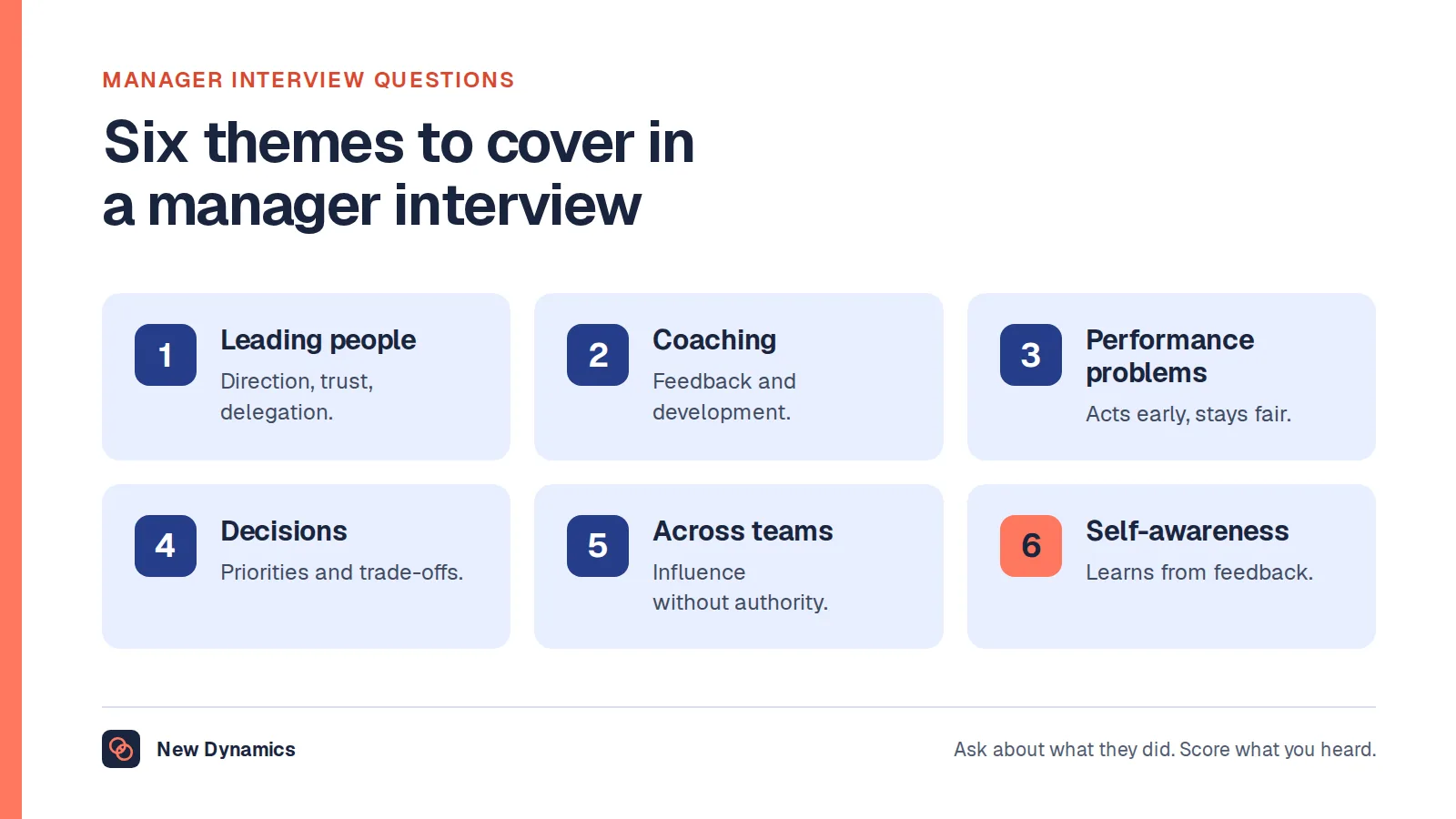
Take up references after a conditional offer, with the candidate's consent. Weigh what you hear against everything else you know. One lukewarm reference may say more about the referee than about the candidate. For the rest of the process, see our manager interview questions.
If you cannot give a good reference
You have three honest options.
- Decline, if your policy allows it. Say early that you would not be the best person to ask, so that the person can find someone else.
- Give a basic factual reference of job title and dates.
- Give a fair and accurate detailed reference, supported by records. This option needs the most care, so involve HR.
What you must not do is write a glowing reference for someone whose performance was poor. It is unfair to the new employer, and it breaches the requirement to be accurate.

Frequently asked questions
How do you write a reference for an employee?
Check your policy and the facts. Say how you know the person and for how long, describe their role, give two or three strengths with specific examples, answer the questions asked honestly and finish with a clear recommendation if you can give one. Keep it to one page.
What should a professional job reference include?
A detailed reference usually includes the job title, dates of employment, the main responsibilities, skills and achievements with examples, the reason for leaving and whether you would recommend the person. A basic reference gives only the job title and dates.
Does an employer have to give a reference?
In the UK, usually not. GOV.UK says that an employer does not usually have to give a work reference unless there was a written agreement to do so or they are in a regulated industry, such as financial services. A reference that is given must be fair and accurate.
What should I write for areas of improvement in a reference?
Give real, proportionate points that were discussed with the person, such as delegation or presenting to senior audiences. Describe the behaviour and the progress they made. If you can honestly name only one or two, say so.
Can an employer give a bad reference?
A reference can include negative information if it is fair, accurate and supported by evidence. It must not be misleading. GOV.UK notes that someone who receives an unfair or misleading reference that causes them a loss may be able to claim damages.
What questions are asked in a reference check?
Typical questions cover how the referee knows the candidate, the job title and dates, the main responsibilities, strengths with examples, how they worked with others, how they responded to feedback, the reason for leaving and whether the referee would employ them again.
Your next step: prepare before you are asked
- Find out your organisation's policy on references.
- When someone in your team leaves, note three achievements with evidence while they are fresh.
- Keep review records and feedback where you can find them later.
- When a request arrives, use the structure and the examples above.
For a fair process from the job description to the offer, read and download our recruitment and selection guide. The guide is free to read, and the PDF uses our short download form.
Want a clear record of goals, feedback and achievements for everyone in your team? Book a New Dynamics demo and bring your current review process. You can also email contact@new-dynamics.com.