TL;DR
- An applicant is a person who formally asks for something. In employment, a job applicant is someone who has applied for a job, usually by sending a CV or completing an application form.
- Applicant and candidate overlap. An applicant has put themselves forward. A candidate is anyone being considered, which can include people who were approached and never applied.
- The definition matters for record keeping and fairness. Applicants are protected from discrimination during recruitment, and every applicant is owed a clear advert, a fair process, adjustments, privacy and an answer.
The word is printed on every application form: “name of applicant”. It looks too plain to need a definition. Yet employers argue about it. Is someone who sends a speculative CV an applicant? What about a person who clicks “apply” and never finishes the form, or someone a recruiter approached?
This article gives the meaning of applicant in plain terms, with dictionary and official definitions. It explains the difference between an applicant and a candidate, what an applicant pool is, the stages between applying and starting, and what every applicant is owed.
Every applicant you hire becomes a new starter. See how New Dynamics onboarding brings tasks, early goals and manager conversations into a clear path for a new starter.
What does applicant mean?
The Cambridge Dictionary defines an applicant as “a person who formally requests something, especially a job, or to study at a college or university”. Its business dictionary gives the HR sense: “someone who has applied for a job, a place on a course, etc.”
The important word is formally. An applicant has done something: completed a form, sent a CV, or asked in the way that the employer invited. Someone who is merely interested in working for you is not yet an applicant.
The word is wider than employment. Cambridge also lists the applicant for a loan or for shares, and the applicant for planning permission. There are applicants for university places, visas, grants and tenancies. In each case, the applicant is the person who is asking.
A job applicant is simply an applicant for a job.
Applicant, candidate and new starter
People use applicant and candidate as if they were the same, and in everyday speech little harm is done. There is a difference. Cambridge defines a candidate as “a person who is competing to get a job or elected position”.
- Applicant. A person who has formally applied. They put themselves forward.
- Candidate. A person who is being considered for the job. Most candidates are applicants. Some are not: a person approached by a recruiter, or an employee considered for promotion, is a candidate who never applied.
- New starter. A person who has accepted an offer. They are no longer an applicant, and your duties to them change.
In practice, many employers say applicant for everyone who applies, and candidate for those who pass the first sift. That is a convention. It is not a rule.

Two official definitions from the United States
American regulators have had to define the word, because employers must keep records about applicants.
The Equal Employment Opportunity Commission. Its questions and answers on the Uniform Guidelines on employee selection say: “The concept of an applicant is that of a person who has indicated an interest in being considered for hiring, promotion, or other employment opportunities.” The interest may be expressed on an application form, or orally, “depending upon the employer's practice”. The same answer explains candidate. The term covers cases in which an employer considers current employees for promotion or training “without inviting applications”. And a person who voluntarily withdraws is no longer an applicant or candidate for the purpose of those calculations.
The “Internet Applicant” rule for federal contractors. The regulation at 41 CFR 60-1.3 defines an Internet Applicant as any individual who meets four criteria. The individual submits an expression of interest in employment through the Internet or related electronic data technologies. The contractor considers the individual for employment in a particular position. The expression of interest indicates that the individual “possesses the basic qualifications for the position”. And the individual does not, before receiving an offer, remove themselves from consideration.
A caution about the second definition. The text was still in the Code of Federal Regulations when we checked on 20 September 2026. But it was written under Executive Order 11246, which Executive Order 14173 revoked in January 2025. Federal contractors should check its current status with an adviser. We quote it because it remains the most detailed official attempt to say who is an applicant online.
Both definitions make the same practical point. Who counts as an applicant depends partly on the process that the employer has set up. So decide, write it down and apply it consistently. These rules are specific to the United States, and the second was written only for federal contractors. This is general information, not legal advice.
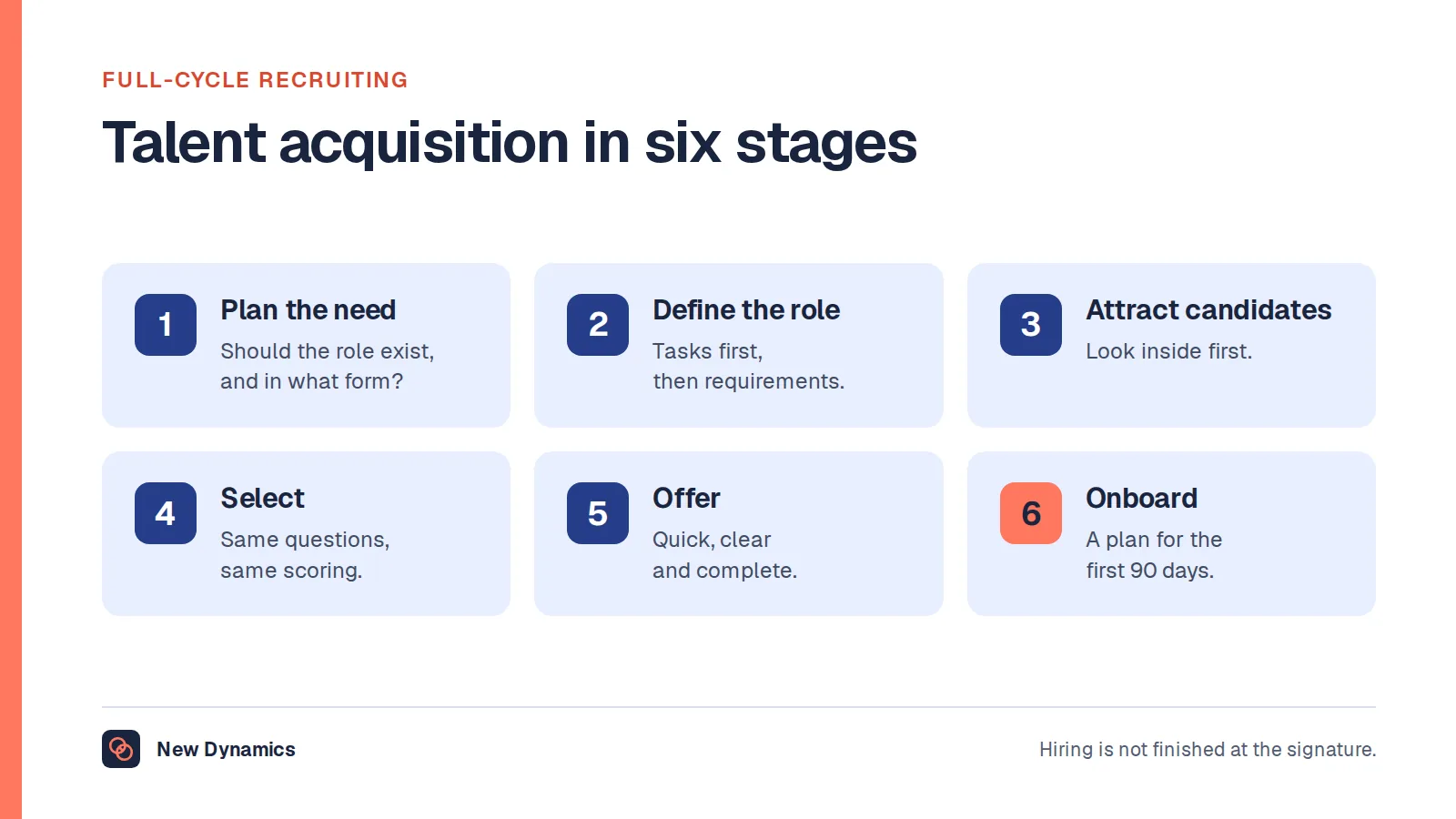
From applicant to employee: six stages
- Prospect. Someone who might apply: a visitor to your careers page, or a person in a talent pool.
- Applicant. They have applied in the way that you asked.
- Shortlisted candidate. Their application matches the job description and person specification well enough to go forward.
- Interviewee. They are being assessed, by interview, test or work sample.
- Preferred candidate. They have an offer, often subject to references and checks.
- New starter. They have accepted, and onboarding begins.
Clear stage names make reporting easier. They also stop a common confusion, in which one manager's “candidate” is another's “applicant”.

What is an applicant pool?
An applicant pool is the whole group of people who have applied for a particular vacancy. It is the group from which you shortlist.
Two things matter about a pool: its size and its make-up. A large pool with few suitable people wastes everyone's time. A small pool drawn from one narrow source limits your choice, and may shut out good people. Acas advises employers to select “the applicants who best match the job description and person specification”, and to do this “in a fair way for each person”.
An applicant pool is not the same as a talent pool, which is a list of people who may suit future vacancies and have agreed to stay in touch. Our article on talent acquisition explains how the two fit together.
Useful measures of a pool include the number of applicants for each vacancy, the share who meet the essential requirements, where they came from, and, where you monitor it lawfully and separately, the diversity of the pool at each stage. If few applicants meet your essential requirements, the fault may lie in the requirements. See our guide to job requirements.
What every applicant is owed
- A clear and honest advert. GOV.UK's guidance for employers on discrimination in recruitment says that you must not state or imply in a job advert that you will discriminate against anyone.
- A fair process. Acas's guidance on choosing who to interview recommends a consistent decision-making process, such as a scoring system, and says that ideally two or more people should be involved in choosing whom to interview.
- Reasonable adjustments. Acas states that, by law, you must ask anyone coming to an interview to tell you if they need reasonable adjustments.
- Privacy. Acas advises employers to avoid using information on someone's personal social media profile to decide whether to interview or hire them. Notes and recordings from interviews must be stored securely, and must follow data protection rules.
- An answer. Acas says that at the end of each interview you should tell applicants when and how they will hear, and what sort of feedback to expect. Applicants who are not interviewed deserve an answer too.
GOV.UK adds some questions that employers must not ask. You must not ask candidates about protected characteristics, or whether they are married or have or plan to have children. It also says that applicants “do not have to tell you about criminal convictions that are spent”, although some areas of employment, such as schools, are exempt from that rule.
The UK guidance here applies in Great Britain. It is general information, not legal advice.

For employers: define applicant in your own process
- Say how to apply, and treat as applicants those who apply in that way.
- Decide how you will handle speculative CVs. Either consider them all for relevant vacancies, or tell senders to apply to a specific advert. Do not consider some and ignore others.
- Decide what happens to incomplete applications.
- Record when someone withdraws.
- Keep records for a set period, then delete them. Tell applicants how long that is.
- Use the same stage names in your forms, your applicant tracking system and your reports.
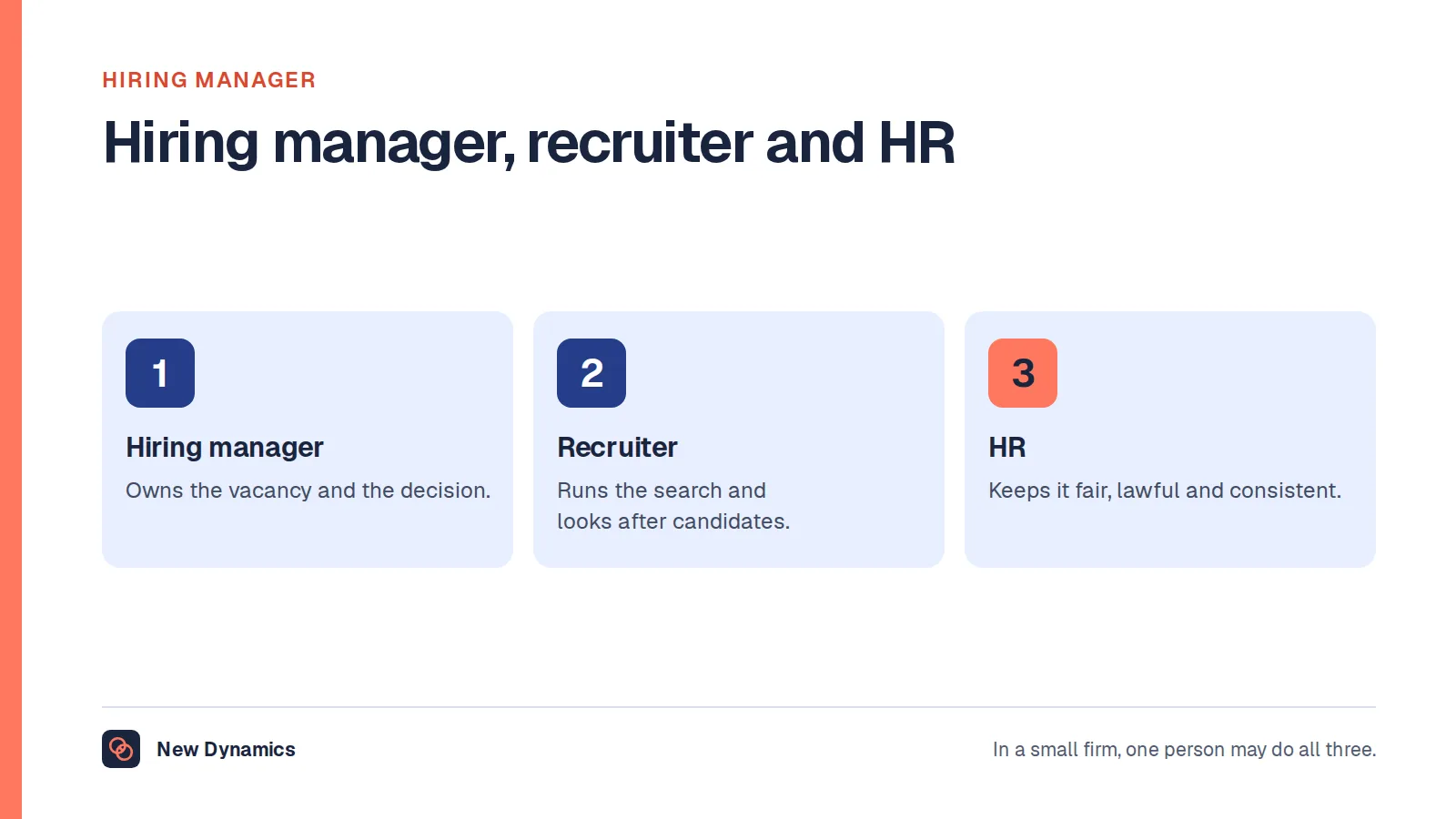
Our article on the hiring manager sets out who does what between the advert and the offer.
For applicants: what the word means for you
- You become an applicant when you apply in the way that the employer asked. A message to a manager on a networking site may not count.
- “Name of applicant” on a form means you, the person applying. Give your full name as it appears on your identity documents. If someone is completing the form on your behalf, it is still your name that goes there.
- “Applicant's company” or “applicant's organisation” means the organisation that you work for or represent. It appears on forms for grants, licences, events and business accounts more often than on job applications.
- You can withdraw at any time. Tell the employer. It is courteous, and it frees a place for someone else.
- You can ask for adjustments, and you can ask when you will hear.
Frequently asked questions
What does applicant mean?
An applicant is a person who formally requests something, such as a job, a place at a university, a loan or a licence. In employment, it means someone who has applied for a job, usually by submitting a CV or an application form.
What is a job applicant?
A job applicant is a person who has formally applied for a particular job in the way that the employer invited, for example by completing an online form. They remain an applicant until they withdraw, are turned down or accept an offer.
What is the difference between an applicant and a candidate?
An applicant has put themselves forward by applying. A candidate is anyone being considered for the job. Most candidates are applicants, but someone approached by a recruiter, or an employee considered for promotion, can be a candidate without applying.
What is an applicant pool?
An applicant pool is the whole group of people who have applied for a particular vacancy, from which the employer shortlists. It differs from a talent pool, which is a list of people who may suit future vacancies.
What does “name of applicant” mean on a form?
It means the full name of the person who is applying, which is usually you. If someone else is filling in the form for you, the applicant's name is still yours, because you are the person making the request.
Are job applicants protected from discrimination?
In Great Britain, yes. GOV.UK tells employers that they might be breaking the law if any discrimination happens during the recruitment process, even if they use a recruitment agency. Other countries have their own laws. This is general information, not legal advice.
Your next step: write down your definition
- Write one sentence that says who counts as an applicant in your process.
- Name the stages from applicant to new starter, and use the same names everywhere.
- Check that every applicant gets an answer, including those you do not interview.
- Set a retention period for applicant records, and tell applicants what it is.
For a full, fair hiring process, read and download our recruitment and selection guide. The guide is free to read, and the PDF uses our short download form.
Want your successful applicants to have clear goals from their first week? Book a New Dynamics demo and bring your current approach. You can also email contact@new-dynamics.com.