TL;DR
- Accounts payable is the money a business owes its suppliers, and the accounts payable clerk is the person who processes, checks, records and pays those bills. Accounts receivable is the money customers owe the business, and the receivables clerk invoices, chases and allocates it.
- The accounts payable job has six duties: process invoices, match and get them approved, keep the supplier ledger, run the payment run, reconcile statements and answer queries, and support the close. The receivable job mirrors it: raise invoices, allocate receipts, chase overdue accounts, manage credit and report.
- In England the accounts or finance assistant apprenticeship is a level 2 standard, typically 12 months. Employers look for accuracy, systems skills, attention to control and courtesy with suppliers and customers.
Every invoice a business receives passes through one pair of hands before it is paid, and every invoice it sends is chased by another. The two jobs are the plumbing of a finance function. When they work, nobody notices. When they fail, suppliers stop delivering and customers stop paying.
This accounts payable job description sets out the duties of the accounts payable clerk, explains the accounts receivable job and the receivables manager that mirror it, summarises the UK rules on invoices and late payment that both sides work within, lists the skills and qualifications employers ask for, gives a template that you can adapt and ends with eight interview questions.
Invoice approvals are a workflow, and they should run as one. See how New Dynamics workflows let you shape forms, stages and approvals around the way you work.
What is accounts payable?
The Cambridge Dictionary defines accounts payable as “the amounts in a company's accounts that show money that it owes, for example to suppliers”, and notes the UK term creditors and the US term payables. Accounts receivable is the mirror image: “the amounts in a company's accounts that show money that is owed to the company by its customers”, known in the UK as debtors and in the US as receivables.
The jobs take their names from the ledgers. An accounts payable clerk, also called a purchase ledger clerk in the UK, runs the process from supplier invoice to payment. An accounts receivable clerk, or sales ledger clerk, runs the process from customer invoice to receipt. In a small business one person does both and is called the bookkeeper or finance assistant. In England the accounts or finance assistant apprenticeship, a level 2 standard typically taking 12 months, describes the combined entry-level role as “Maintaining an efficient and accurate finance function within a business”.
Accounts payable duties: six responsibilities
- Process supplier invoices. Receive invoices by post, email or portal, check that they are valid and addressed to the business, code them to the right account and cost centre, and enter them on the purchase ledger.
- Match and get approval. Match each invoice to the purchase order and the delivery or receipt where the business uses them, query differences with the buyer or the supplier, and route the invoice to the right person for approval within the authority limits.
- Keep the supplier ledger. Set up and maintain supplier records, including bank details verified by a second person, payment terms and contacts, and keep the ledger clean of duplicates and old items.
- Run the payment run. Select invoices due, prepare the payment run for authorisation, make the payments by the agreed method, send remittance advices and record the payments against the invoices.
- Reconcile and answer queries. Reconcile supplier statements to the ledger, resolve missing or disputed invoices, and answer suppliers' questions about when they will be paid.
- Support the close. Provide the accruals for goods received but not invoiced, the aged creditors report and the reconciliations the accountants need at month-end.
The controls matter as much as the processing. Separation between the person who sets up a supplier's bank details and the person who pays, verification of any change to bank details by a phone call to a known number, and approval limits that are actually enforced are what stand between a business and invoice fraud.

Accounts receivable duties: the mirror image
The accounts receivable clerk's job runs the other way.
- Raise and send invoices. Accurately, promptly and with everything the customer needs to pay: what was supplied, the amount, the due date and how to pay.
- Allocate receipts. Match money received to invoices daily, investigate unallocated cash and short payments, and keep the sales ledger current.
- Chase overdue accounts. Run the credit control cycle: statements, reminders, calls, and escalation for accounts that pass the agreed limits.
- Manage credit. Set up customer accounts, check credit where the business requires it, apply credit limits and put accounts on hold when the rules say so.
- Resolve disputes. Work with sales and operations to settle queries that hold up payment, and issue credit notes where they are due.
- Report. Aged debtors, days sales outstanding, cash forecasts and the bad debt provision for the close.
A receivables manager, or credit manager, leads the receivable team: sets the credit policy and the collection process, owns the aged debt and the cash forecast, handles the largest and most difficult accounts, decides when to stop supply or to pursue a debt formally, and reports to the financial controller or finance director.
UK rules that shape the work
Two GOV.UK guides set the framework in the UK. Its guide to invoicing and taking payment from customers explains that a business must give a VAT-registered business customer an invoice by law, that an invoice “is not the same as a receipt, which is an acknowledgement of payment”, and that it must show how much the customer needs to pay and when. Its guide to late commercial payments says a business can claim interest and debt recovery costs if another business pays late, that an agreed payment date “must usually be within 30 days for public authorities or 60 days for business transactions”, and that where no date is agreed, payment is late 30 days after the customer gets the invoice or the goods or service are delivered, whichever is later. This is general information about the UK, not legal advice; other countries have their own rules.

Skills employers ask for
- Accuracy. A transposed digit pays the wrong supplier or chases the wrong customer.
- Systems. The accounting system's ledgers, a spreadsheet, and often a supplier portal or a bank platform.
- Attention to control. Following the approval limits, the bank-detail checks and the separation of duties every time, including when someone senior is in a hurry.
- Organisation. Payment runs, statement dates and month-end do not move.
- Courtesy and firmness. Suppliers asking when they will be paid and customers explaining why they have not paid both deserve a clear, polite answer.
- Numeracy and query-solving. Reconciling a statement is detective work with numbers.
Qualifications
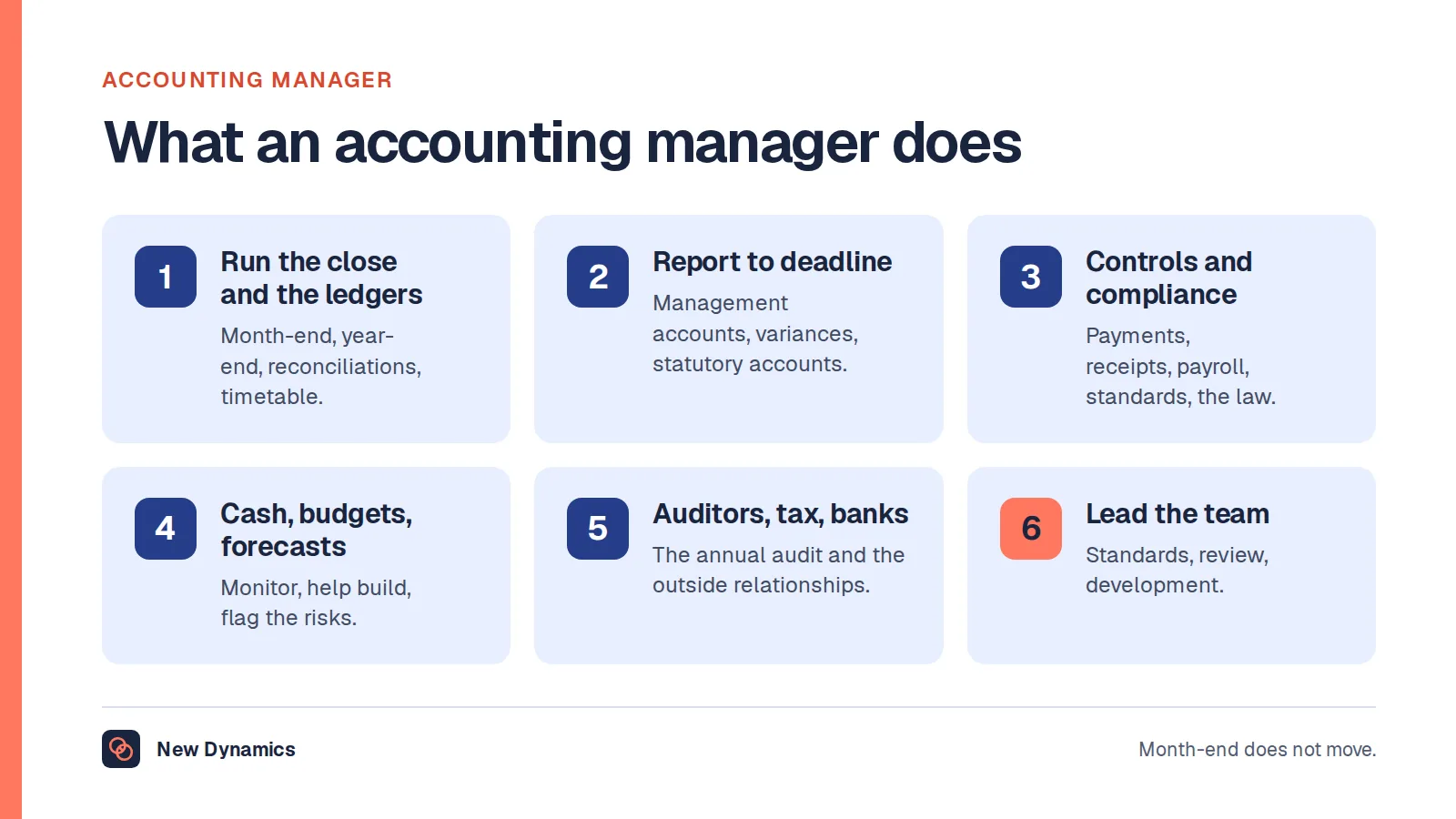
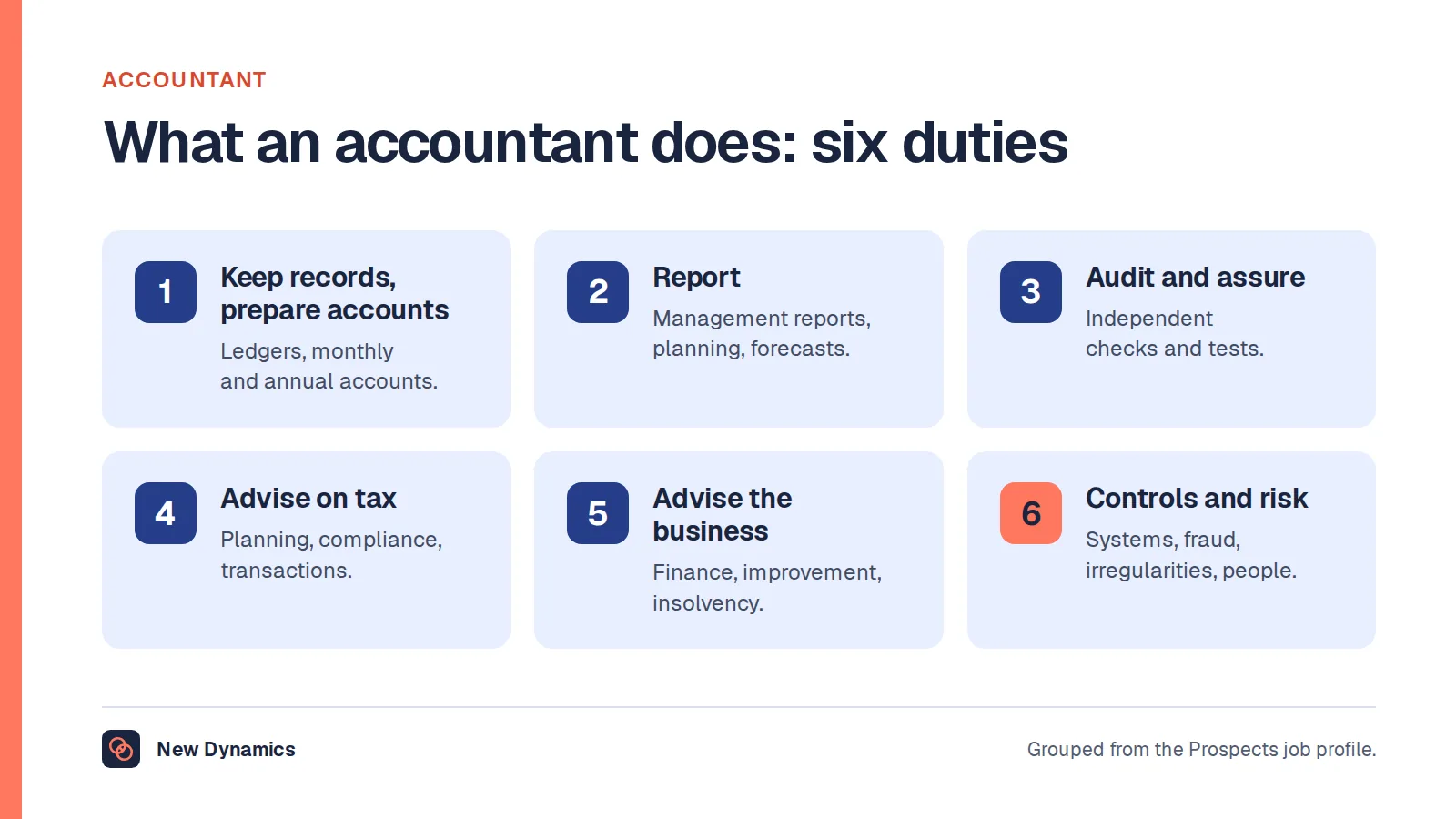
No formal qualification is usually required. Many clerks start with GCSEs and learn on the job; in England the level 2 accounts or finance assistant apprenticeship is the usual formal route, and the technician-level accounting qualifications lead on from it. Our accountant job description describes the professional routes beyond.
Accounts payable job description template
Adapt the systems, the volumes and the controls to your business. For an accounts receivable clerk, swap in the six duties from the section above.
Job title: Accounts payable clerk (purchase ledger clerk)
Reports to: Accounting manager or financial controller
Hours: Full time, office-based or hybrid
Purpose of the role: To process and pay supplier invoices accurately, on time and within the business's controls, and to keep the purchase ledger complete and current.
Main duties:
- Receive, check, code and enter supplier invoices on the purchase ledger
- Match invoices to purchase orders and receipts, resolve differences and obtain approvals within authority limits
- Maintain supplier records, with all bank-detail changes verified by a second person
- Prepare the weekly payment run for authorisation, make payments and send remittances
- Reconcile supplier statements and answer supplier queries
- Provide accruals, aged creditors and reconciliations for month-end
Skills and experience:
- Accurate, organised and comfortable with high volumes to fixed deadlines
- Experience of purchase ledger work and [accounting system] desirable
- Confident with spreadsheets
- Clear, courteous communication with suppliers and colleagues
- Level 2 accounts or finance assistant apprenticeship or equivalent [desirable]
We provide: Training on our systems and controls, support for the level 2 apprenticeship and the accounting technician qualification, and a route to senior clerk, ledger supervisor and assistant accountant roles.
For the layout of the whole document, use our job description template. For the person the clerk reports to, see our accounting manager job description.
Accounts payable interview questions
These eight questions are ours. Each asks for evidence of accuracy, control or judgement.
- Walk me through what happens to an invoice from the day it arrives to the day it is paid, in your current or last job.
- A supplier emails to say their bank details have changed. What do you do?
- An invoice does not match the purchase order. How do you resolve it, and who do you involve?
- Describe a supplier statement reconciliation that took real work. What was wrong and how did you find it?
- A director asks you to pay an invoice today, outside the payment run and without the usual approval. What do you say?
- How do you organise a week that includes a payment run, month-end and a backlog of queries?
- Tell me about a mistake you made in a ledger. How did you find it and what did you change?
- What would you look at first to judge whether a purchase ledger is in good order?
For a receivable role, replace questions 1 to 5 with the receipt-to-cash equivalents: the invoice-to-cash process, allocating an unidentified receipt, a customer disputing an invoice, chasing an overdue account without losing the customer, and deciding when to put an account on hold.

Common mistakes in accounts payable and receivable adverts
No volumes. Fifty invoices a week and five thousand are different jobs. Say the numbers.
No systems. Name the accounting system and any portals. Experience with them shortens the induction.
Controls left out. If the advert does not mention approvals and bank-detail checks, candidates cannot show they take them seriously.
Payable and receivable confused. They are mirror images, not the same job. Say which it is, or say it is both.
Frequently asked questions
What are the job responsibilities of accounts payable?
An accounts payable clerk receives, checks, codes and enters supplier invoices, matches them to purchase orders and receipts and obtains approval, maintains supplier records, prepares and makes the payment run, reconciles supplier statements and answers queries, and provides accruals and reports for month-end.
What does an accounts receivable clerk do?
An accounts receivable clerk raises and sends customer invoices, allocates receipts to invoices, chases overdue accounts through statements, reminders and calls, sets up customer accounts and applies credit limits, resolves disputes and issues credit notes, and reports aged debt and cash forecasts.
What is a receivables manager?
A receivables manager, or credit manager, leads the accounts receivable team. They set the credit policy and collection process, own the aged debt and cash forecast, handle the largest and most difficult accounts, decide when to stop supply or pursue a debt formally, and report to the financial controller or finance director.
What is the difference between accounts payable and accounts receivable?
Accounts payable is money the business owes its suppliers; the payable clerk processes and pays those bills. Accounts receivable is money customers owe the business; the receivable clerk invoices, chases and allocates it. In the UK the ledgers are called the purchase ledger and the sales ledger.
What qualifications do you need for accounts payable?
Usually none to start. Many clerks learn on the job. In England the level 2 accounts or finance assistant apprenticeship, typically 12 months, is the usual formal route, and accounting technician qualifications lead on from it.
What should an accounts payable job description include?
The ledger the job covers, the invoice volumes, the accounting system and any portals, the six duties from invoice to close, the controls the clerk must follow, the reporting line, the skills and experience required and the route to senior and technician roles.
Your next step: write the controls into the job
- State the volumes, the systems and the payment run day.
- Write the approval limits and the bank-detail check into the duties.
- Say whether the job is payable, receivable or both.
- Interview for control and judgement, not only for speed.
A clerk's first month is the induction to your controls. Read and download our employee onboarding guide. The guide is free to read, and the PDF uses our short download form.
Want invoice approvals, payment runs and month-end tasks to run through one workflow? Book a New Dynamics demo and bring your current process. You can also email contact@new-dynamics.com.