TL;DR
- OTE stands for on-target earnings. It is the total you would earn in a year if you hit the targets set by the employer: base pay plus commission or bonus.
- Only the base is guaranteed. An advert that says “£60k OTE” may mean a £35,000 salary and £25,000 that depends on results.
- Before you rely on an OTE figure, ask for the split, the target, how many people reach it, whether earnings are capped and when commission is paid.
A sales job is advertised at “£60,000 OTE”. It sounds like a £60,000 salary. It is not. Understanding the difference before you accept the offer can be worth a great deal of money.
This article explains the meaning of OTE, how on-target earnings are made up, a worked example, six questions to ask before you rely on the figure, and how employers should design and describe OTE fairly.
Variable pay only works when targets are clear and fair. See how New Dynamics Goals & OKRs keep targets, owners and progress visible.
What does OTE mean?
OTE stands for on-target earnings. The Cambridge Dictionary says that OTE is “used in job advertisements to show how much money it is possible to earn if the person doing the job sells an amount of goods or services, or does an amount of work, stated by the employer”.
In other words:
OTE = base pay + variable pay at 100% of target
- Base pay is the guaranteed salary, paid whatever the results.
- Variable pay is commission or bonus, earned by reaching the target.
- The target, often called a quota in sales, is the result that the employer has set.
You will meet OTE mostly in sales, recruitment and other roles where results can be counted. It sometimes appears as “on-track earnings”, which means the same.

A worked example
The figures below are invented for illustration.
A job is advertised at £60,000 OTE. The offer letter shows a base salary of £35,000 and commission of 5% on sales, with an annual target of £500,000.
| Result against target | Sales | Commission at 5% | Total earnings |
|---|---|---|---|
| 60% | £300,000 | £15,000 | £50,000 |
| 80% | £400,000 | £20,000 | £55,000 |
| 100%, on target | £500,000 | £25,000 | £60,000 |
| 120% | £600,000 | £30,000 | £65,000 |
Three things stand out. The only guaranteed figure is £35,000. The advertised figure is reached only at exactly 100% of target. And everything depends on whether £500,000 is a realistic target, which the advert does not tell you.
Commission plans can be more elaborate. The open textbook Introduction to Business, published by OpenStax, gives an example in its section on employee compensation and benefits in which a salesperson earns 3 percent on the first $50,000 of product sold, 4 percent on the next $30,000 and 5 percent beyond $80,000. It comments that, as sales increase, “the incentive becomes increasingly more attractive and rewarding”. A rising rate of this kind is usually called an accelerator.
Terms you will meet with OTE
| Term | Meaning |
|---|---|
| Base, or basic | The guaranteed salary |
| Pay mix | The split between base and variable pay at target, often written as 60/40 or 70/30 |
| Quota, or target | The result needed to earn the full variable amount |
| Attainment | The share of target achieved, as a percentage |
| Accelerator | A higher commission rate above target |
| Cap | A limit on how much variable pay can be earned |
| Uncapped | No limit. Check whether anyone has ever earned far above OTE |
| Ramp | A reduced target for a new starter's first months |
| Draw | An advance against future commission, which may have to be repaid |
| Clawback | Commission that must be returned, for example if a customer cancels |
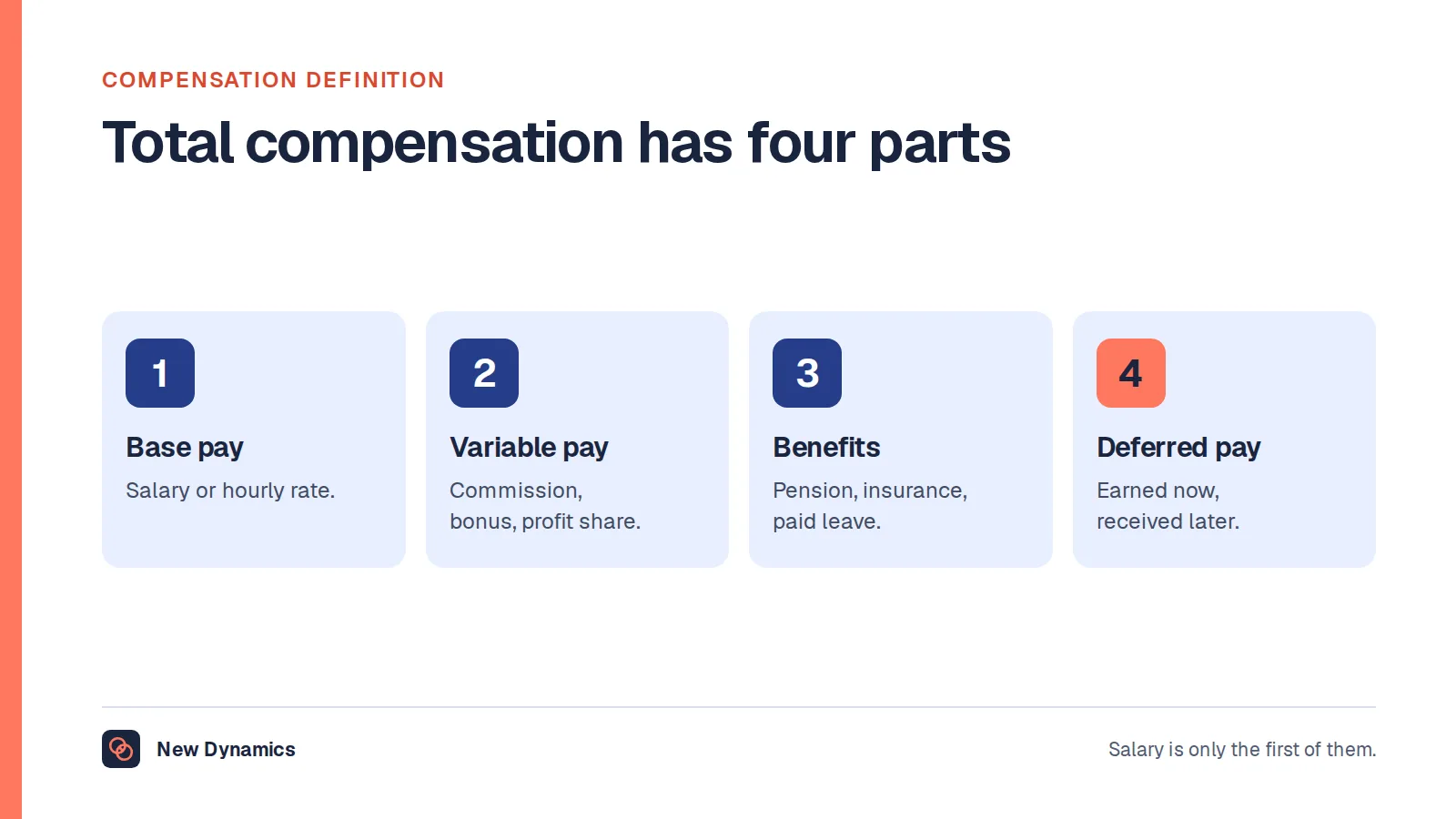
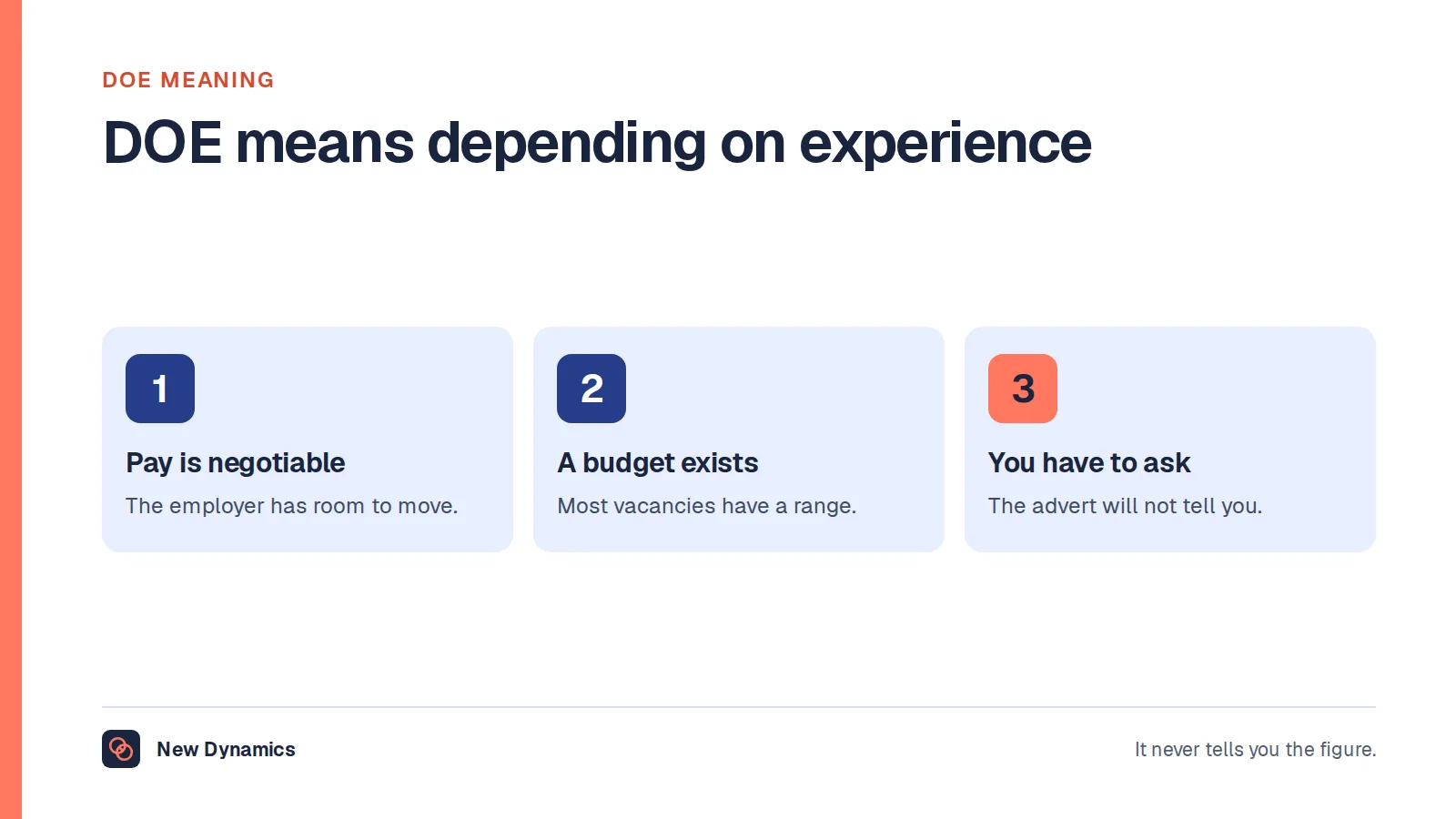
Our guides to DOE meaning and the definition of compensation explain other pay terms in job adverts.
Six questions to ask before you rely on OTE
- What is the split? Ask for the base and the variable amounts separately. Plan your finances on the base.
- What is the target, and who sets it? Ask how it was calculated, and whether it can change during the year.
- How many people hit it? “What share of the team reached 100% last year, and what did the median person earn?” is the most revealing question you can ask. If the answer is vague, treat the OTE as optimistic.
- Is it capped, and are there accelerators? Find out what happens above target.
- When is commission paid? Monthly or quarterly, on signature or on payment by the customer, and is there a clawback?
- What happens at the start and at the end? Ask about a ramp period for new starters, and about commission on deals in progress if you leave.
Ask for the commission plan in writing before you accept. A verbal OTE is not a plan.

OTE, minimum wage and holiday pay in the UK
Two legal points are worth knowing. This is general information, not legal advice.
The minimum wage still applies. GOV.UK's guidance on the minimum wage for different types of work says that the National Minimum Wage “applies to all eligible workers even if they're not paid by the hour”, and that, however someone gets paid, they need to work out their equivalent hourly rate. A low base with high commission does not remove the floor.
Holiday pay must include commission. Acas's guidance on calculating holiday pay says: “By law, holiday pay must include: payments linked to doing tasks required in the contract, for example commission”. Employers must include these payments for at least four weeks of a worker's paid holiday entitlement. If your pay drops to base when you take leave, ask about it.
How employers should set and describe OTE
An OTE plan is a promise. Five rules keep it honest.
- Set targets that most good performers can reach. If few people ever hit target, the advertised OTE is misleading, and your best people will work that out.
- Keep the formula simple. People should be able to work out their own commission. A plan that needs a specialist to explain it will not motivate anyone.
- Pay promptly and accurately. Late or disputed commission destroys trust faster than a low rate does.
- Put it in writing, and change it rarely. Moving targets in the middle of the year teaches people that effort does not pay. Our article on expectancy theory explains why that matters.
- Be specific in the advert. State the base, the variable amount and, if you can, the share of people who reached target.
Watch for side effects as well. Paying only for closed deals can encourage poor-fit sales, discounting and neglect of existing customers. Pair the sales target with a measure of quality, such as retention or customer satisfaction.

Frequently asked questions
What does OTE stand for?
OTE stands for on-target earnings. It is the total pay that you would receive in a year if you met the targets set by your employer: your base salary plus the commission or bonus payable at 100% of target.
What does OTE mean for salary?
It means that the advertised figure is not all salary. Part is guaranteed base pay, and part is variable pay that depends on results. “£60k OTE” might be a £35,000 salary plus £25,000 of commission at target.
Is OTE guaranteed?
No. Only the base salary is guaranteed. You earn the full OTE only if you reach 100% of your target. You may earn less if you fall short, or more if you exceed the target and the plan is not capped.
What is a good OTE split?
There is no single answer. The split between base and variable pay, called the pay mix, varies with the role and the length of the sales cycle. A higher base gives security. A higher variable share gives more upside, and more risk.
What is the difference between OTE and base salary?
Base salary is the fixed amount that you are paid whatever your results. OTE is base salary plus the variable pay you would earn by hitting target. Lenders and landlords may look mainly at the base.
What questions should I ask about OTE?
Ask for the split between base and variable pay, the target and who sets it, the share of the team that hit target last year, whether earnings are capped, when commission is paid, and what happens when you start and when you leave.
Your next step: get the plan in writing
- If you have an offer with an OTE figure, ask for the base, the target and the commission plan in writing.
- Work out your earnings at 60%, 80% and 100% of target, as in the table above.
- Ask what share of the team reached target last year.
- If you set OTE for others, check how many of your people reached it, and what your adverts say.
For a structure behind variable pay, read and download our compensation policy guide. The guide is free to read, and the PDF uses our short download form.
Want targets that are visible, fair and reviewed through the year? Book a New Dynamics demo and bring your current goals. You can also email contact@new-dynamics.com.