TL;DR
- Redundancy is a form of dismissal that happens when an employer needs to reduce its workforce. The reason lies in the job and the business. It is not a judgement on the person.
- UK law recognises three situations: the business closes, the workplace closes, or the business needs fewer employees to do work of a particular kind.
- Employees who are made redundant may have rights to consultation, notice, redundancy pay, an offer of suitable alternative work and time off to look for a new job. Selection has to be fair.
“Your role is at risk of redundancy.” Few sentences at work land harder, and few words are used so loosely. People say redundancy when they mean dismissal, a lay-off, a restructure or a way of moving someone on. In UK law the word has a specific meaning, and rights follow from it.
This article gives the definition of redundancy in plain English, with the official sources. It explains the three situations that count, what redundancy is not, the rights it brings, and what managers should do. It describes the law in Great Britain. It is general information, not legal advice.
If redundancy selection uses appraisal records, those records have to be fair and consistent. See how New Dynamics performance reviews keep evidence from the whole year in one place.
What does redundancy mean?
The UK government's guide to redundancy rights puts it in two sentences: “Redundancy is a form of dismissal from your job. It happens when employers need to reduce their workforce.”
Acas is even shorter. Its redundancy guidance says: “Redundancy is a type of dismissal where a role is no longer needed.”
The Cambridge Dictionary marks this meaning as British English: “a situation in which someone loses their job because their employer does not need them”. The nearest American term is layoff, which Cambridge offers as a comparison.
The common thread is that the reason sits with the job. A redundancy is about the employer's need for work to be done. It says nothing about how well the person did that work.
In everyday English, redundancy also means something that is more than is needed, as in a spare system kept for backup. That sense is the root of the employment meaning: the role has become surplus.
The legal definition: three situations
The statutory definition is in section 139 of the Employment Rights Act 1996. An employee is dismissed by reason of redundancy if the dismissal is “wholly or mainly attributable to” one of these situations.
- The business closes. The employer “has ceased or intends to cease” to carry on the business for which the employee was employed.
- The workplace closes. The employer has ceased, or intends to cease, to carry on that business “in the place where the employee was so employed”.
- Less work of a particular kind is needed. The requirements of the business “for employees to carry out work of a particular kind”, there or in that place, “have ceased or diminished or are expected to cease or diminish”.
The third situation is the most common and the most misunderstood. The test is the employer's need for employees to do that kind of work. The work itself may continue, for example where new technology means that three people can do what five did.

What redundancy is not
- It is not dismissal for misconduct. GOV.UK states that being dismissed for misconduct “does not count as redundancy”.
- It is not a way to deal with poor performance. If the role still exists and someone else will do it, the role is not redundant. Performance concerns need their own fair process. See our guide to the performance plan.
- It is not a way to remove a particular person. Relabelling a dismissal as redundancy when the work continues unchanged can lead to a claim of unfair dismissal.
What rights does redundancy bring?
GOV.UK lists what an employee who is being made redundant might be eligible for: redundancy pay, a notice period, a consultation with the employer, the option to move into a different job, and time off to find a new job. Most depend on length of service and other conditions, so check the official guidance for your own case.
Fair selection
GOV.UK says: “You must be selected for redundancy in a fair way, for example because of your level of experience or capability to do the job.” Employers should use “a fair and objective way” of selecting people. Commonly used methods include length of service, asking for volunteers, disciplinary records, and “staff appraisal markings, skills, qualifications and experience”.
Selection cannot be based on reasons such as sex, race, disability, religion or belief, age, pregnancy or maternity leave, trade union membership or working part-time. GOV.UK warns that “last in, first out” can itself be discriminatory if, for example, it means that only young people are selected.
Consultation
GOV.UK says: “You're entitled to a consultation with your employer if you're being made redundant.” It covers why the redundancy is happening and any alternatives.
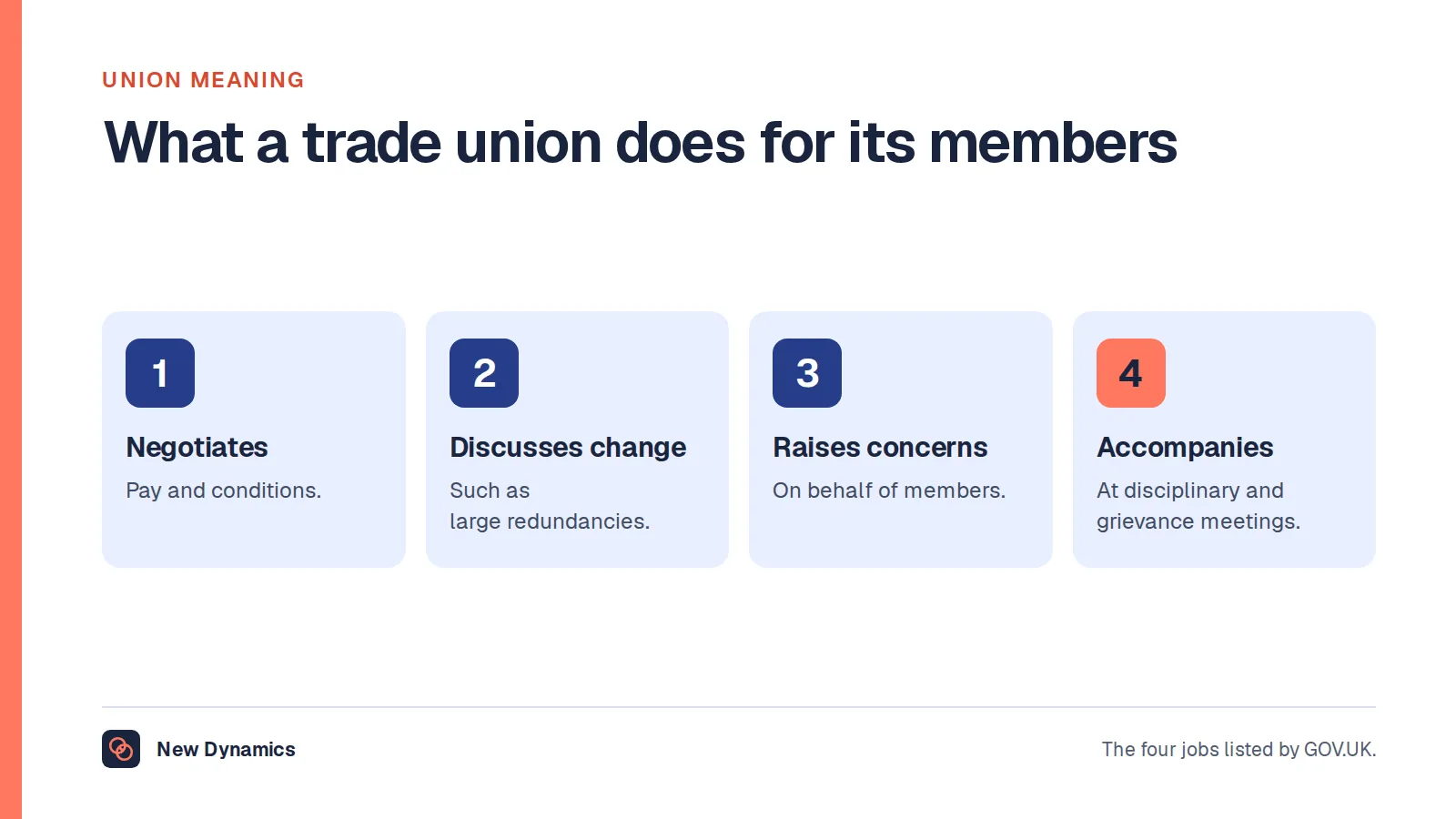
When an employer proposes 20 or more redundancies at the same time, the collective redundancy rules apply, and consultation takes place with a trade union rep or an elected employee rep. It must start at least 30 days before any dismissals take effect for 20 to 99 redundancies, and at least 45 days before for 100 or more. Our guide to union meaning explains the role of reps.
Notice
The statutory notice periods are at least one week if you have been employed between one month and two years, one week for each year between two and twelve years, and 12 weeks for twelve years or more. A contract can give more, but not less.
Statutory redundancy pay
GOV.UK says that you will normally be entitled to statutory redundancy pay “if you're an employee and you've been working for your current employer for 2 years or more”. The amount is:
- half a week's pay for each full year you were under 22;
- one week's pay for each full year you were 22 or older, but under 41;
- one and a half week's pay for each full year you were 41 or older.
Length of service is capped at 20 years, and weekly pay is capped at a figure that the government updates each April, so use the official calculator on GOV.UK. Many employers pay more than the statutory minimum under their own schemes.
Suitable alternative employment
An employer might offer “suitable alternative employment” in the organisation or an associated company. Whether a job is suitable depends on how similar the work is, the terms, your skills and circumstances, and the pay, status, hours and location. There is a right to a four-week trial period. GOV.UK warns that you may lose your right to statutory redundancy pay if you unreasonably turn down a suitable job.
Employees on maternity leave, or certain other kinds of parental leave, have extra protection: they must be offered a suitable alternative job if one is available.

Voluntary and compulsory redundancy
Compulsory redundancy is where the employer selects who goes. Voluntary redundancy is where the employer asks for volunteers, often with an enhanced payment, and accepts some or all of them. GOV.UK lists asking for volunteers among the commonly used selection methods.
Volunteering does not remove the employer's duty to run a fair process, and the employer does not have to accept every volunteer.
What managers should do
Managers are usually the people who deliver the news, often without having made the decision. Five things matter.
- Be clear about the reason. Understand which of the three situations applies, so that you can explain it truthfully. If you cannot, ask before you speak to anyone.
- Look for alternatives first. Acas says that employers “should consider other options to try and reduce or avoid redundancies”. Those might include a hiring freeze, reduced overtime, retraining or redeployment.
- Use fair evidence. If selection draws on appraisals, skills or attendance, use records made over time, applied in the same way to everyone in the pool. Ratings written after the decision are not evidence.
- Consult before deciding. Consultation means listening to suggestions while the outcome can still change.
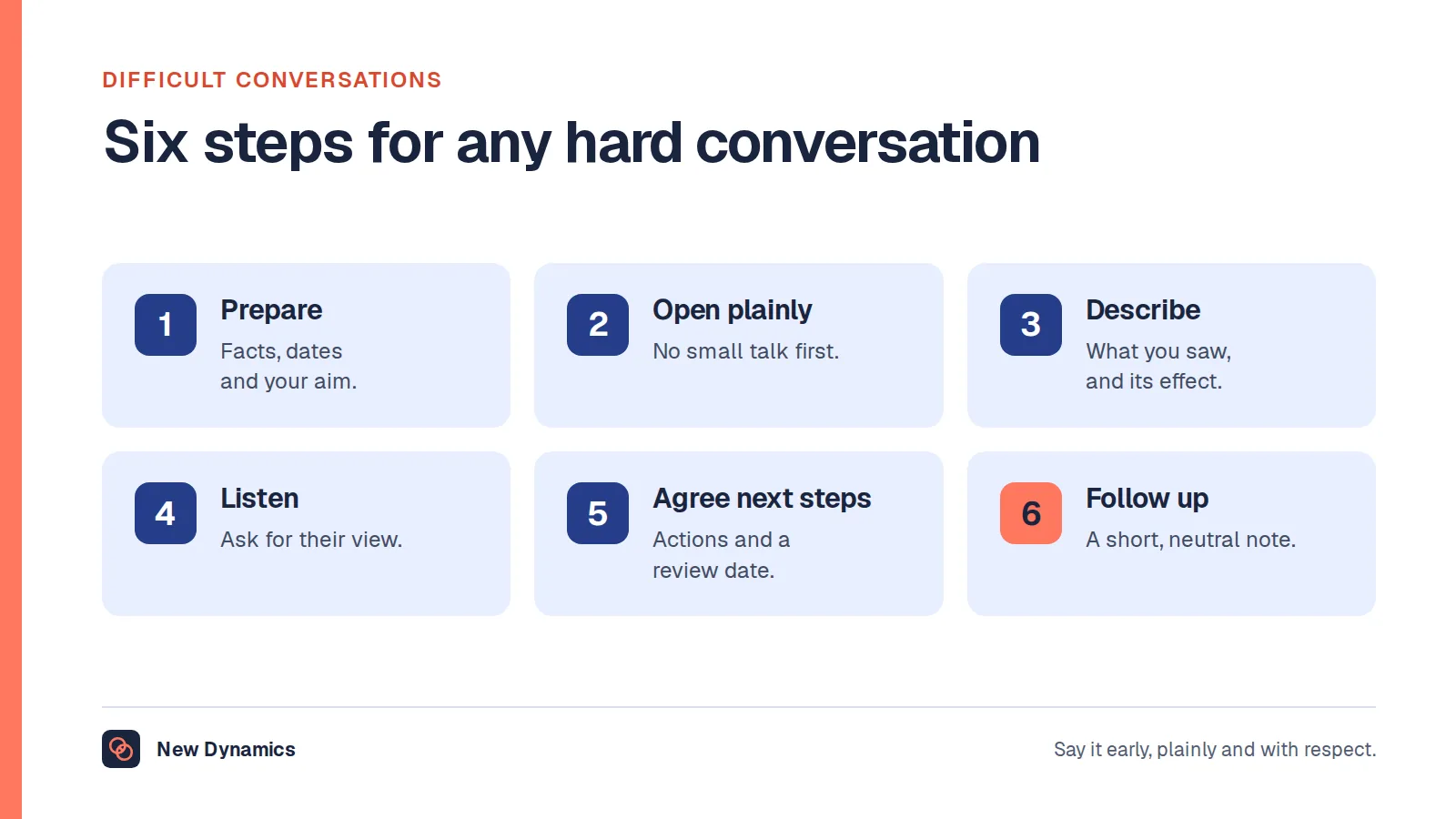
- Treat people with dignity. Tell them in person and in private, give them the facts in writing, and support them through notice. Our difficult conversations examples include opening lines.
Remember the people who stay. They watch how colleagues are treated, and they draw conclusions about their own future.

Frequently asked questions
What is the definition of redundancy?
Redundancy is a form of dismissal that happens when an employer needs to reduce its workforce. UK law recognises three situations: the business closes, the workplace closes, or the business needs fewer employees to do work of a particular kind.
What does being made redundant mean?
It means that your employer is ending your employment because your role is no longer needed, and not because of your conduct or performance. You may be entitled to consultation, notice, redundancy pay and an offer of suitable alternative work.
Is redundancy the same as being dismissed?
Redundancy is one kind of dismissal. What sets it apart is the reason. The job has gone or fewer people are needed. GOV.UK states that being dismissed for misconduct does not count as redundancy.
Who gets statutory redundancy pay?
GOV.UK says that you are normally entitled to it if you are an employee and have worked for your employer for two years or more. The amount depends on your age, weekly pay and length of service, with caps on pay and on years.
How must people be selected for redundancy?
Selection must be fair and objective, for example by skills, qualifications, experience, appraisal records or length of service. It cannot be based on reasons such as sex, race, disability, age, pregnancy, part-time working or trade union membership.
What is the difference between redundancy and a layoff?
Redundancy is the British term for losing a job because the employer no longer needs the role. Layoff is the nearest American term. In the UK a lay-off means something different: GOV.UK describes it as being off work for at least one working day because there is not enough work, so check the context.
Your next step: check the reason
- If you are an employer considering redundancies, write down which of the three situations applies, in one sentence.
- List the alternatives you have considered, and why each will or will not work.
- Check that any appraisal evidence you plan to use was recorded consistently, and before the decision.
- If you are an employee at risk, read the GOV.UK guide and contact Acas or your union for advice.
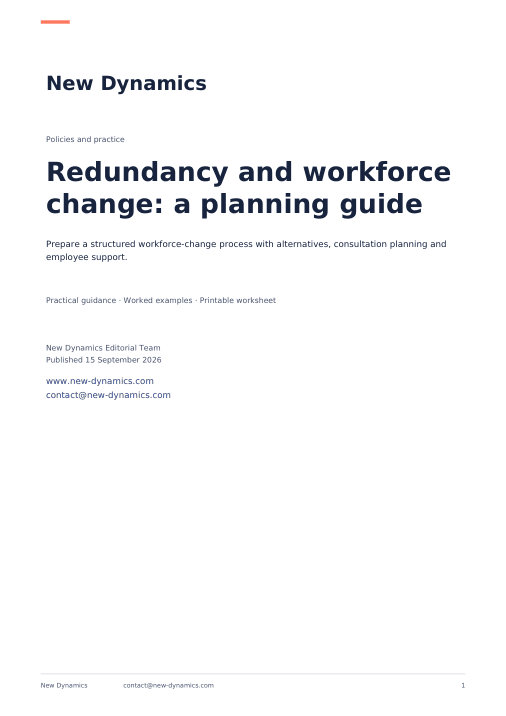
For a structured approach to planning, consultation and support, read and download our redundancy and workforce change guide. The guide is free to read, and the PDF uses our short download form.
Want performance evidence that is consistent long before you ever need to rely on it? Book a New Dynamics demo and bring your current review form. You can also email contact@new-dynamics.com.