TL;DR
- A union, called a trade union in the UK and a labor union in the US, is an organisation of workers that looks after its members' interests at work, chiefly by negotiating with employers over pay and conditions.
- Unions also discuss big changes such as redundancies, raise members' concerns and go with members to disciplinary and grievance meetings.
- In the UK you have the right to join a union or not to join one, and an employer must not treat you unfairly either way. An employer that recognises a union takes on specific duties to inform, consult and bargain.
The word “union” turns up in news reports about strikes, in contracts that mention a “collective agreement” and in the first week of many new jobs, when someone asks whether you want to join. It is rarely explained.
This article gives the meaning of union in the workplace sense, explains what unions do, defines six terms you will meet, sets out your rights under UK government guidance and describes what an employer must do once it recognises a union. A short section covers how the American system differs.
Union or no union, people need a way to be heard at work. See how New Dynamics continuous feedback gives employees and managers a regular channel for concerns and ideas.
What is a union?
A union is an organisation of workers that acts for its members in dealings with their employer. In the UK the usual term is trade union. In the United States it is labor union. The meaning is the same.
The UK government's guide to joining a trade union defines it like this: “A trade union is an organisation with members who are usually workers or employees.” It adds that a union “looks after their interests at work”.
The Cambridge Dictionary defines a trade union as “an organization that represents the people who work in a particular industry, protects their rights, and discusses their pay and working conditions with employers”.
The American open textbook Introduction to Business, published by OpenStax, says in its section on the labor relations process that a labor union “is an organization that represents workers in dealing with management over disputes involving wages, hours, and working conditions”.
All three definitions share one idea. A single employee has little bargaining power. Many employees speaking together have more.
What does a union do?
GOV.UK lists four things that a trade union does for its members.
- Negotiates agreements with employers on pay and conditions.
- Discusses big changes, such as large-scale redundancy.
- Raises members' concerns with employers.
- Accompanies members to disciplinary and grievance meetings.
Much of this work is done by a trade union representative, or rep. GOV.UK describes a rep as “a union member who represents and gives advice to colleagues when they have problems at work”. Reps are not paid for this work, but they do get paid time off to do it.
Unions are funded by their members. GOV.UK explains that a union charges a membership fee, which can be the same for everyone or based on pay.

Six union terms to know
- Recognition. GOV.UK: “When an employer and a union agree to negotiate on pay, terms and conditions, this agreement is called ‘recognition’ of the union.”
- Collective bargaining. The negotiations themselves. GOV.UK tells employers that it usually covers “things like pay, holiday, and working hours”.
- Bargaining unit. The group of workers that the union represents in those negotiations. It can be a whole workplace or certain groups, such as technicians.
- Collective agreement. An agreement reached through collective bargaining. GOV.UK notes that collective agreements “can cover all staff - not just union members”.
- Union rep. A member who represents and advises colleagues, and who may be appointed or elected, depending on the union's rules. OpenStax describes the American equivalent, the shop steward, as “an elected union official who represents union members to management when workers have complaints”.
- Check-off. The arrangement in which an employer takes union subscriptions straight from pay and passes them to the union.

Your rights: joining, or not joining
GOV.UK sets out the position for workers in its guide to trade union membership and your employment rights. You have the right to:
- choose to join or not join a union;
- decide to leave or remain a member;
- belong to the union you choose, even if it is not the one your employer negotiates with;
- belong to more than one union.
Your employer is not allowed to offer you a benefit to leave a union, or to threaten to treat you unfairly if you do not leave. An employer must not dismiss you, or choose you for redundancy, because you are or want to be a union member, or because you are not and do not want to be.
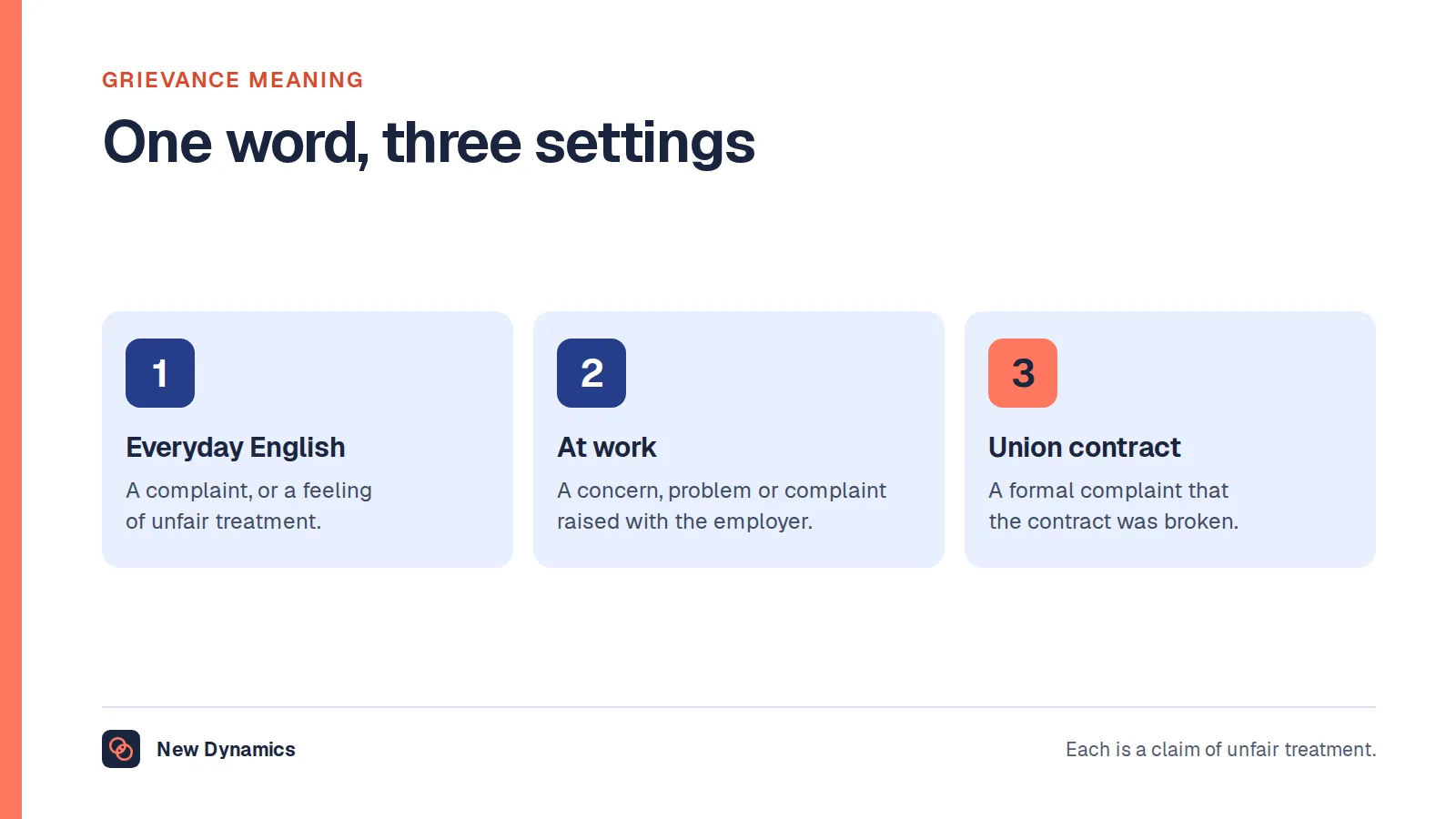
GOV.UK also says that you have the right to be accompanied by your union rep to some meetings with management, for example if you face a disciplinary charge or wish to raise a grievance. Our guide to the meaning of grievance explains that procedure.
This section summarises UK government guidance. It is general information, not legal advice, and the law differs in other countries.
What employers must do with a recognised union
GOV.UK's guide for employers on working with trade unions says that if you recognise a union, you must:
- give the union information in advance to help with collective bargaining;
- inform and consult the union about major changes in the workplace;
- follow proper procedures if you take union subscriptions from pay;
- let union reps and members have time off for union activities.
A fifth duty applies to every employer: you must not discriminate against a worker because they are in a union. GOV.UK states that this applies “whether or not you recognise the union”.
Two situations trigger consultation with union reps in particular. GOV.UK says that employers must consult them if there is going to be a business transfer or takeover, or if they are planning to make 20 or more people redundant within 90 days. Our redundancy and workforce change guide covers the wider process.
Working well with a union
The legal duties are a minimum. Managers who work well with unions tend to do three more things.
- Share information early. Surprises destroy trust faster than bad news does.
- Use the reps. A good rep knows what is worrying people before managers do, and can help to solve a problem while it is small.
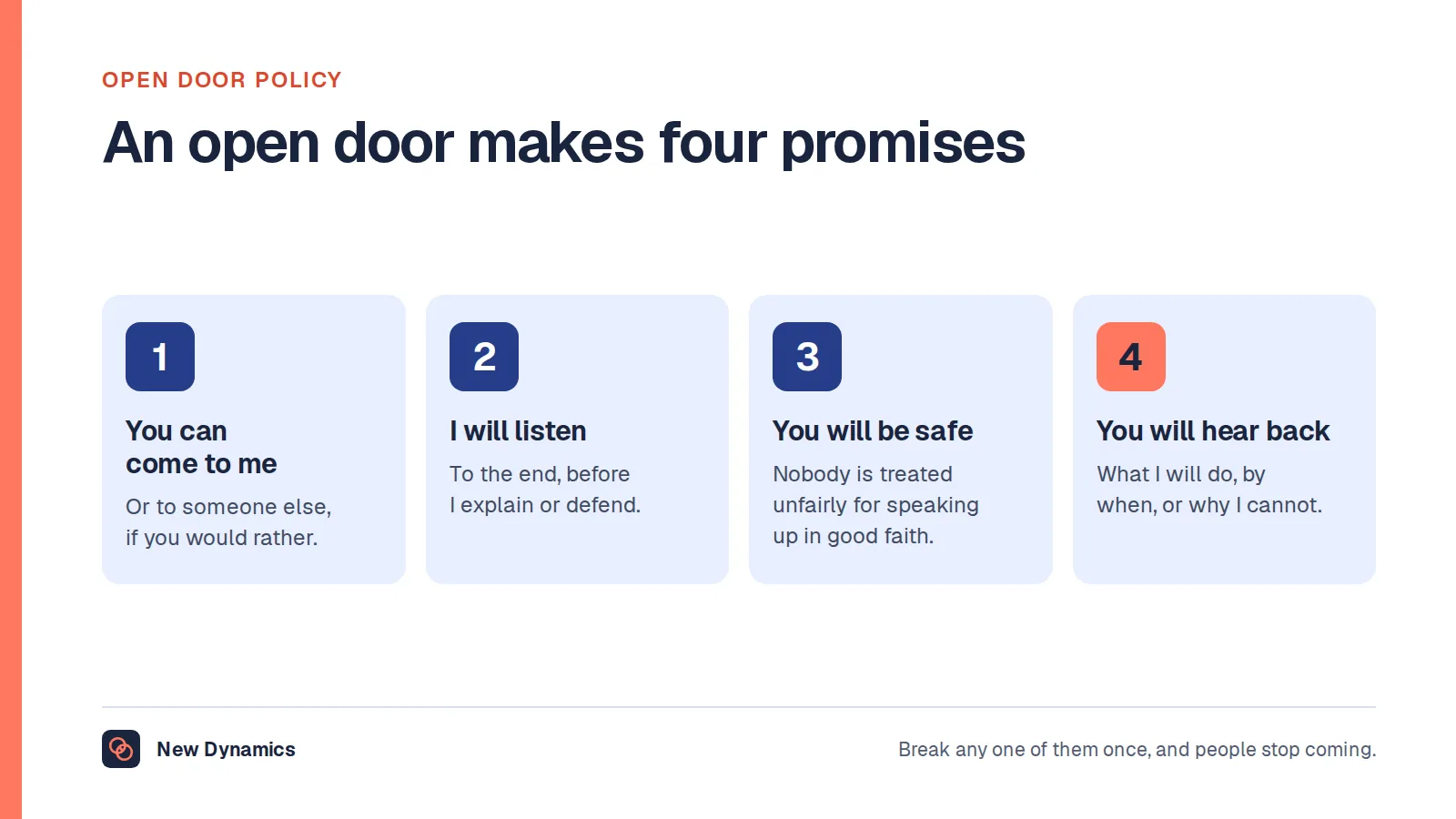
- Keep individual conversations going. Collective bargaining covers pay and terms. It does not replace one-to-ones, feedback or a genuine open door policy.

How unions work in the United States
OpenStax describes a labor relations process in three phases: “union organizing, negotiating a labor agreement, and administering the agreement”.
- Organizing. Employees form a union, or an established union organises the workers of an employer into a local union.
- Negotiating. Collective bargaining, which OpenStax defines as “the process of negotiating a labor agreement that provides for compensation and working arrangements mutually acceptable to the union and to management”.
- Administering. The daily work of applying the agreement, mostly by handling grievances.
OpenStax also describes the structure of the American labor movement in three parts: local unions, national and international unions, and union federations. It reports that union membership fell from 20.1 percent of workers in 1983 to 10.7 percent in 2017. Those figures are from the textbook, and will have moved since.
The rules on organising, recognition and strikes differ a great deal between countries, so check the law where you work.
Union, staff association and works council
| Body | What it is |
|---|---|
| Trade union | An independent organisation of workers, funded by members, which can negotiate pay and conditions where it is recognised |
| Staff association or forum | A group of employees, often set up within one employer, which is consulted on workplace matters |
| Works council | A body of elected employee representatives which the employer informs and consults, common in some European countries |
The names vary, and the legal status of each depends on the country. What usually separates a union from the others is that it is independent of the employer and funded by its members.
Frequently asked questions
What is the meaning of union at work?
At work, a union is an organisation of workers that looks after its members' interests, chiefly by negotiating with employers over pay and conditions. It is called a trade union in the UK and a labor union in the United States.
What does a trade union do?
According to GOV.UK, a trade union negotiates agreements with employers on pay and conditions, discusses big changes such as large-scale redundancy, raises members' concerns with employers and goes with members to disciplinary and grievance meetings.
Do I have to join a union?
No. UK government guidance says that you have the right to choose to join or not join a union, and that an employer or employment agency is not allowed to insist that you join or leave one. The law differs in other countries.
What is collective bargaining?
Collective bargaining is the negotiation between an employer and a recognised union over pay, terms and conditions. Agreements reached in this way are called collective agreements, and GOV.UK notes that they can cover all staff, not just union members.
What does it mean when an employer recognises a union?
Recognition means that the employer and the union have agreed to negotiate on pay, terms and conditions. A recognised union must be given information for bargaining, must be consulted about major changes, and its reps must be given time off for union activities.
Can my employer treat me differently for being in a union?
Not lawfully in the UK. GOV.UK says that an employer must not treat you unfavourably, dismiss you or select you for redundancy because you join a union, take part in its meetings or leave it. Employers must not discriminate whether or not they recognise the union.
Your next step: know where you stand
- Find out whether your organisation recognises a union, and for which groups of staff.
- Read any collective agreement that covers you or your team.
- If you manage people, learn who the reps are and meet them before there is a problem.
- Check that your grievance and consultation procedures mention the right to be accompanied.
If you are planning changes that affect jobs, read and download our redundancy and workforce change guide. The guide is free to read, and the PDF uses our short download form.
Want regular feedback and one-to-ones alongside your formal channels? Book a New Dynamics demo and bring your current approach. You can also email contact@new-dynamics.com.