PERFORMANCE MANAGEMENT FOR CONSTRUCTION AND PROPERTY

One review cycle for the site and the office.

Contractors, housebuilders, property companies and facilities firms manage two workforces at once: site teams who move from project to project, and office staff in commercial, design and support roles. The appraisal usually lives on paper or in a spreadsheet, and half of it never comes back from site. This page explains how the sector runs performance management, with examples you can adapt.

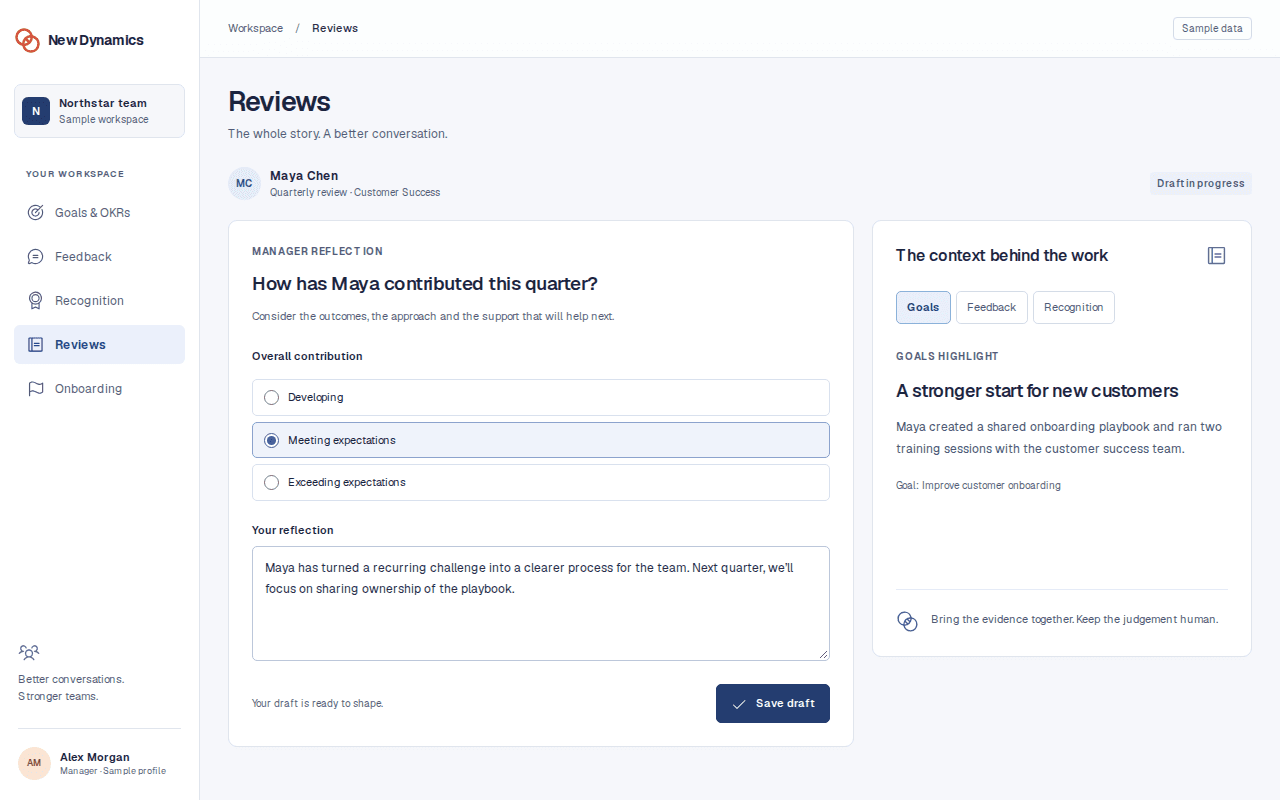
A review draft alongside goals, feedback and recognition evidence, shown in the New Dynamics desktop interface.
An onboarding plan with milestones, task owners and progress, shown in the New Dynamics mobile layout.
Explore reviews
HOW THE SECTOR WORKS

How performance management works in construction and property

Two workforces, one process

A site manager, a quantity surveyor and a marketing executive in the same company have very different working days. Many firms respond with two appraisal processes, or with one that quietly only reaches the office. The better pattern is one cycle with forms and competencies that differ by role. Everyone has an appraisal, the same reminders and the same completion tracking, but a site engineer’s form asks about temporary works and a bid manager’s asks about tenders.

Competence is tracked per trade

Construction already records competence: CSCS cards, trade qualifications, SMSTS and SSSTS for supervisors, plant tickets and first-aid certificates. Those live in a training matrix or the HR system. A performance conversation should not duplicate them. It should refer to them: which ticket is due, which qualification opens the next role, who is ready to run their own site. The competency framework by trade gives the review something concrete to discuss.

Projects move, managers change

Someone may work under three project managers in a year and be appraised by a fourth, the regional or operations manager. The project manager who saw the work daily is the person with the evidence. Firms that manage this well collect a short project-end note from each project manager, so the annual appraisal is built from the year rather than from the last few weeks.

Access decides whether the cycle finishes

Site teams do not sit at a desk, may not have a company laptop and often have no company email address. A paper appraisal sent to site returns late or not at all. When an appraisal runs in a system, the questions are practical: can a site manager complete it on a phone, and can site staff be given access from the company directory without a ticket to IT for each person. Those two answers decide the completion rate.
THE RHYTHM

The performance year in construction and property

A typical pattern. Your own calendar, agreements and policies come first.

  1. Start of year

    Objectives by role

    Site roles agree safety, quality and programme objectives. Office roles agree commercial, design or support objectives. All use the same cycle.

  2. Project end or handover

    Project manager’s note

    A few lines on the person’s contribution from the project manager who saw the work, recorded before the team disperses.

  3. Mid-year

    Check-in and competence review

    Review objectives, tickets and qualifications due, and readiness for the next role.

  4. Annually

    Appraisal

    Held on site or by video for site staff, in the office for office staff. Project notes and competence records are already to hand.

  5. After the cycle

    Completion and succession

    HR reports completion by region and division, and the business sees who is ready to run the next site.

IN PRACTICE

Performance management examples in construction and property

Three illustrative scenarios showing a goal, the evidence that informs it and the conversation that follows. Adapt them to your own roles.

Illustrative example

Site manager, main contractor

The goal
Deliver the current scheme to programme with no reportable incidents and develop the assistant site manager to run a small project.
The evidence
Safety audit results, programme milestones, the contracts manager’s site visits and the assistant’s progress.
The conversation
The appraisal is held in the site cabin on a phone. The contracts manager recognises the decision to stop work for a scaffold inspection, which delayed a pour by a day.
Illustrative example

Quantity surveyor

The goal
Improve the accuracy of monthly valuations and complete the professional qualification.
The evidence
Valuation variance, feedback from two project managers and the commercial director, and qualification progress.
The conversation
The commercial director gathers the project managers’ notes before the review. Study leave is agreed for the final assessment.
Illustrative example

Facilities technician, property company

The goal
Complete the electrical competence refresh and reduce repeat call-outs on two buildings.
The evidence
Call-out data, tenant feedback, the training matrix and the supervisor’s observations.
The conversation
A quarterly check-in with the facilities manager. The annual appraisal takes 30 minutes because the notes are already there.
THE VIEW FROM HR

What HR leaders in construction and property wrestle with

Illustrative voices. New Dynamics wrote these composite perspectives to reflect themes that are common in the sector. They are not customer testimonials, and the names do not refer to real people.

Our appraisal was a paper form posted to site. Some came back in a van three months later, most did not come back at all. The office finished its appraisals every year, and the sites were the business.

ClaireHR Director, regional contractorIllustrative voice

Every appraisal question I get from a site manager is about access. Can I do it on my phone, and can my team get logins without me raising a ticket. Answer those and the rest follows.

GarethHead of People, housebuilderIllustrative voice
WHERE NEW DYNAMICS FITS

New Dynamics for construction and property

New Dynamics connects goals, feedback, recognition and reviews in one place. Bring a real process to the demo, and confirm each requirement with the team.

Safety, programme and commercial goals in view.

See how site and office objectives could sit in one place, with progress visible to the regional manager who owns the review.

Try the interactive preview
A goal workspace with aligned priorities, key results and progress, shown in the New Dynamics desktop interface.
A goal workspace with aligned priorities, key results and progress, shown in the New Dynamics mobile layout.
Explore goals & okrs

A note from every project manager.

Explore a focused space for a project manager to record a few lines at handover, before the team moves to the next site.

Try the interactive preview
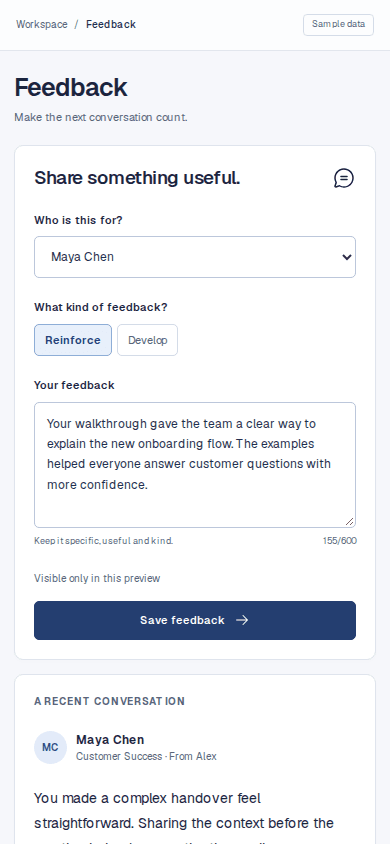
A feedback composer with colleague selection and a recent conversation, shown in the New Dynamics desktop interface.
A feedback composer with colleague selection and a recent conversation, shown in the New Dynamics mobile layout.
Explore feedback

Your questions, answered.

How do you run appraisals for site-based staff?

Give site staff the same cycle as the office, with a form that fits their role, and make it possible to complete on a phone or a shared device. Collect a short note from each project manager at project end so the appraiser has evidence from the year. Hold the conversation on site or by video.

Should the appraisal record CSCS cards and trade qualifications?

Keep competence records in your training matrix or HR system, which is the record for audits. Refer to them in the appraisal to plan the next ticket or qualification and to discuss readiness for the next role.

Can staff without a company email address use New Dynamics?

Access for people without a corporate email address, and provisioning from a directory such as Microsoft Entra ID, should be confirmed for your set-up during evaluation. Bring your directory and HR system details to a demo so the answer is specific to your firm.

Can New Dynamics replace our paper appraisal form?

That is the usual starting point. Send us the form you post to site today and we will show it running as a cycle in the platform, with reminders and a completion view, before you commit to anything.

OTHER SECTORS

Performance management in other industries

Bring out the best
in your people.

See what performance management could look like for your organisation.

Book a demo