PERFORMANCE MANAGEMENT FOR PROFESSIONAL SERVICES

Appraisals for firms where the people are the product.

Consultancies, law and accountancy firms, agencies, architects and recruiters sell their people’s time and judgement. Progression is the career story, utilisation is always in the background, and a small central team runs the review cycle for partners who are busy with clients. This page explains how the sector runs appraisals, with examples you can adapt.

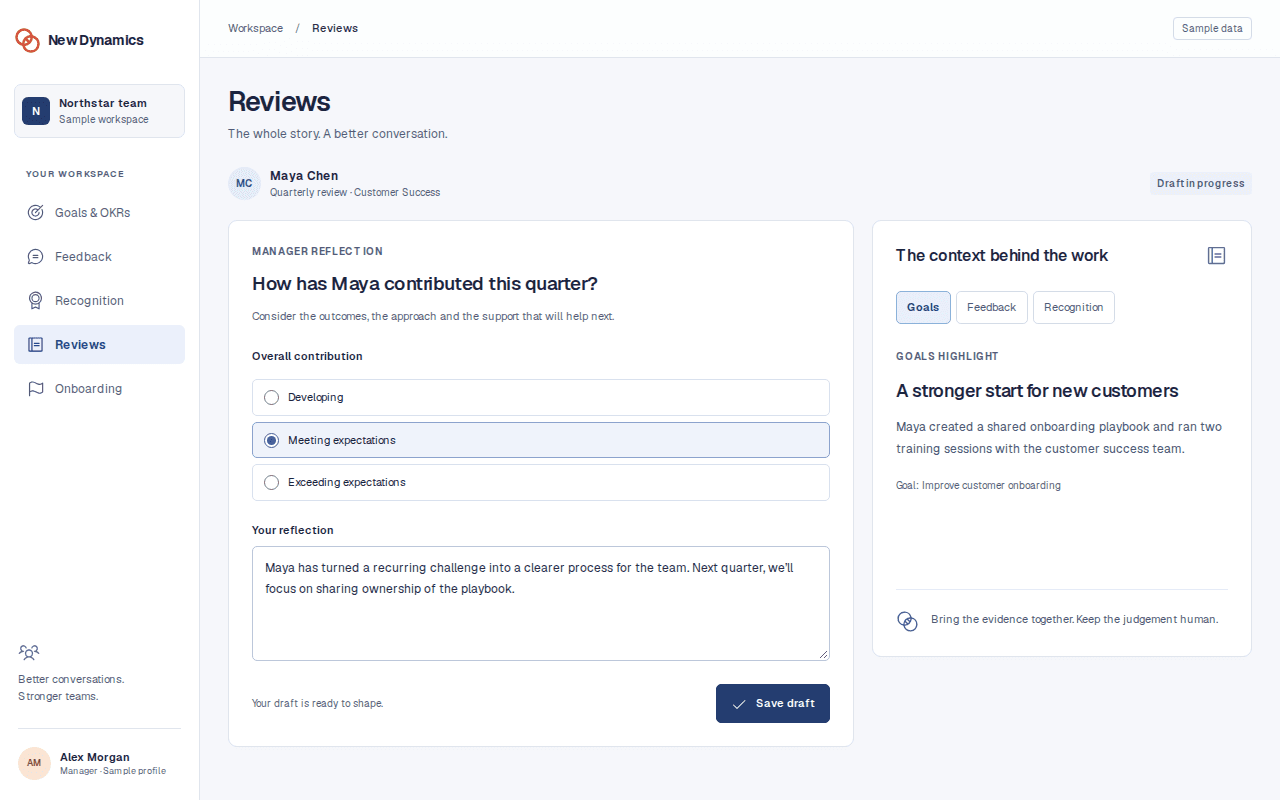
A review draft alongside goals, feedback and recognition evidence, shown in the New Dynamics desktop interface.
A recognition feed with appreciation, company values and applause, shown in the New Dynamics mobile layout.
Explore reviews
HOW THE SECTOR WORKS

How performance management works in professional services firms

Progression is the review

Most firms publish a grade or level structure: analyst to consultant to manager, trainee to associate to partner. Each grade carries expectations for client work, technical skill, business development and leadership of others. The annual appraisal is mainly a conversation about where someone sits against the next grade and what evidence would support a promotion case. Where the framework is vague, promotion decisions drift towards who is visible to which partner.

Chargeable hours are context, not the verdict

Utilisation and billing targets exist in almost every firm, and they are easy to pull from the practice management system. They say little about the quality of the work, the client relationship or how someone treated the juniors on the job. Firms that rely on hours alone reward the people staffed on the biggest matters. Better reviews put the numbers alongside project feedback from the partners and managers who saw the work.

Feedback comes from many engagements

An associate may work for six different partners in a year. The line manager or counselling partner who owns the appraisal saw only part of it. Firms therefore gather feedback at the end of each engagement or matter, while the detail is fresh. The appraisal then draws those together, and the person is not judged on the one project their appraiser happened to lead.

A small team runs the cycle for busy partners

In a firm of 15 to 200 people, HR is often one or two people, sometimes the office manager or a partner with the HR hat. The cycle lives in Word forms and a spreadsheet, and the work is chasing: partners who have not returned forms, reviews stuck at the second signature, and the year-end deadline arriving during a client deadline. Completion, not design, is where most firms’ processes fail.
THE RHYTHM

The performance year in professional services firms

A typical pattern. Your own calendar, agreements and policies come first.

  1. Start of the financial year

    Objectives and development plan

    Agree client, skills and business-development objectives against the grade framework. Note the promotion case being built.

  2. End of each engagement

    Project feedback

    The engagement lead writes a few lines on the work and the person’s contribution. It is stored against the person, not lost in email.

  3. Mid-year

    Check-in

    Review utilisation, feedback received and progress on objectives. Adjust for a change of team or practice area.

  4. Year end

    Appraisal and moderation

    Self-assessment, engagement feedback and the appraiser’s view. Partners moderate across the practice before pay and promotion.

  5. Promotion round

    Cases to the partnership

    Promotion cases are built from the year’s evidence. Criteria for the next grade are published and applied consistently.

IN PRACTICE

Performance management examples in professional services firms

Three illustrative scenarios showing a goal, the evidence that informs it and the conversation that follows. Adapt them to your own roles.

Illustrative example

Senior associate, law firm

The goal
Lead two matters end to end and build the business-development evidence needed for a promotion case.
The evidence
Feedback from the three partners the associate worked for, client comments, chargeable hours as context and a record of the pitch work.
The conversation
The counselling partner brings all three partners’ feedback into one review. The hours were below target because of the pitch work, and the review says so plainly.
Illustrative example

Consultant, management consultancy

The goal
Move from delivering workstreams to managing a small team on client site, ready for the manager grade next year.
The evidence
End-of-engagement feedback from two project leads, a client survey and a record of the two analysts coached.
The conversation
The reviewer and the current project lead both contribute. The gap to manager is people leadership, so the next engagement is chosen for it.
Illustrative example

Account manager, creative agency

The goal
Improve client retention on two accounts and take on a junior to develop.
The evidence
Account renewals, client feedback, the junior’s progress and feedback from the creative director.
The conversation
A quarterly check-in with the managing director. The year-end review takes 30 minutes because the check-in notes are already there.
THE VIEW FROM HR

What HR leaders in professional services firms wrestle with

Illustrative voices. New Dynamics wrote these composite perspectives to reflect themes that are common in the sector. They are not customer testimonials, and the names do not refer to real people.

I was one person chasing forty partners for forms in January, which is their busiest month. Half the cycle was never completed. The process was fine. The chasing was the problem.

RachelHR Director, accountancy firmIllustrative voice

A consultant works for six partners in a year and is appraised by one of them. Unless the other five write something down at the end of each project, the review is one person’s opinion.

TomHead of People, consultancyIllustrative voice
WHERE NEW DYNAMICS FITS

New Dynamics for professional services firms

New Dynamics connects goals, feedback, recognition and reviews in one place. Bring a real process to the demo, and confirm each requirement with the team.

Objectives against the next grade.

See how objectives for client work, skills and business development could stay visible, with the promotion case building through the year.

Try the interactive preview
A goal workspace with aligned priorities, key results and progress, shown in the New Dynamics desktop interface.
A goal workspace with aligned priorities, key results and progress, shown in the New Dynamics mobile layout.
Explore goals & okrs

Feedback at the end of every engagement.

Explore a focused space for an engagement lead to record a few lines on the work while the detail is fresh, stored against the person.

Try the interactive preview
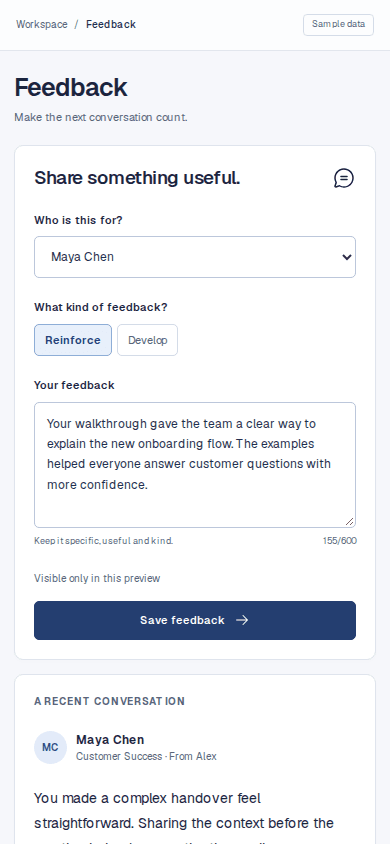
A feedback composer with colleague selection and a recent conversation, shown in the New Dynamics desktop interface.
A feedback composer with colleague selection and a recent conversation, shown in the New Dynamics mobile layout.
Explore feedback

Your questions, answered.

Should chargeable hours be part of an appraisal?

Hours and utilisation are useful context and most firms include them. They should sit alongside feedback on the quality of the work, client relationships and contribution to the firm, because hours alone reward whoever was staffed on the largest matters.

How do firms appraise people who work for many partners?

Collect short feedback at the end of each engagement or matter from the partner or manager who led it. The appraiser then draws that feedback together at the annual review. Reviews with input from more than one manager are designed into New Dynamics.

How does a small HR team run the cycle for busy partners?

Keep forms short, run the cycle in one system with automatic reminders, and schedule the appraisal window away from the busiest client periods. Completion tracking replaces manual chasing. Bring your current form to a demo to see how the cycle would run.

Can New Dynamics replicate our existing appraisal form?

Configurable stages, forms and participants are central to the platform. Send the appraisal form, grade framework or spreadsheet you use today and we will show your cycle running in the platform before you commit to anything.

OTHER SECTORS

Performance management in other industries

Bring out the best
in your people.

See what performance management could look like for your organisation.

Book a demo