TL;DR
- Nepotism is favouring relatives, or close friends, in hiring, pay, promotion or discipline. The problem is the favour, not the family connection. Relatives can work well together when decisions about them are made by someone else.
- It damages trust, drives away capable people and creates conflicts of interest. Depending on the country and sector it can also break specific rules, or lead to discrimination claims.
- Prevention is simple in principle: decide on merit, require people to declare relationships, keep relatives out of each other's reporting lines and decisions, and apply the rule to everyone, including owners and executives.
The new operations manager is capable enough. She is also the chief executive's niece, and the job was never advertised. Nobody says anything in the meeting. Plenty is said afterwards, and two of the people who hoped for that job begin to update their CVs.
This article explains what nepotism in the workplace is, with examples, why it does so much damage, where the legal risks lie, how to prevent it with a simple policy, and what to do if you see it.
Fair decisions need evidence that everyone can see. See how New Dynamics performance reviews base judgements on goals, feedback and results from the whole year.
This is general information, not legal advice. The law on this subject varies by country and sector.
What is nepotism?
Nepotism is the practice of favouring relatives in decisions about work: hiring, pay, promotion, the allocation of work, discipline or redundancy. Many people use the word to include partners and close friends as well.
Three related terms are worth separating.
| Term | Who is favoured | Example |
|---|---|---|
| Nepotism | Relatives | A director's son is hired without a competitive process |
| Cronyism | Friends and associates | A manager appoints a former colleague, with no interviews |
| Favouritism | Anyone the decision-maker prefers | One team member always gets the best projects |
The common thread is that the decision rests on a relationship, and not on merit.
Notice what nepotism is not. Employing relatives is not nepotism in itself. Family businesses, and many others, employ relatives who are good at their jobs. Nepotism begins when the relationship influences a decision, or when people have good reason to believe that it did.
Examples of nepotism in the workplace
- A vacancy is filled by a manager's relative, without being advertised.
- A relative is hired despite clearly stronger candidates.
- A manager conducts their partner's performance review, and awards the top rating.
- A relative is paid more than colleagues who do the same job, with no explanation.
- Poor performance or misconduct by a relative is overlooked, where others would be disciplined.
- A relative is protected in a redundancy exercise.
- A family member is promoted over longer-serving, better-qualified colleagues.
- Contracts are awarded to a supplier owned by a relative of the buyer, without a tender.
- A relative has access to confidential information, such as pay data, that their role does not require.
Some of these may be innocent. A relative may really be the best candidate. That is exactly why process matters: without it, nobody can tell the difference.

Why nepotism does harm
It destroys trust in the fairness of decisions. Once people believe that relationships decide who gets on, they stop believing in reviews, promotions and pay.
It drives capable people away. Often the most employable people leave first.
It puts weaker people in important jobs, and makes it harder to remove them.
It creates conflicts of interest. A manager cannot be objective about their own child's performance, and colleagues cannot speak freely about either of them.
It silences feedback. Few people will raise a concern about the owner's brother.
It is unfair to the relative, too. Even a capable person is assumed to have the job for the wrong reason.
Our guide to team morale describes what happens to a team once fairness is in doubt.
Is nepotism illegal?
It depends on the country and the sector. Take advice on your own situation.
Public sector rules are often explicit. In the United States, a federal statute, 5 U.S.C. § 3110, provides that a public official “may not appoint, employ, promote, advance, or advocate for” the appointment or advancement of a relative in the agency in which the official serves or over which they exercise control. In the UK, the Seven Principles of Public Life say that holders of public office should not act “in order to gain financial or other material benefits for themselves, their family, or their friends”, that they must “declare and resolve any interests and relationships”, and that they must take decisions “impartially, fairly and on merit”.
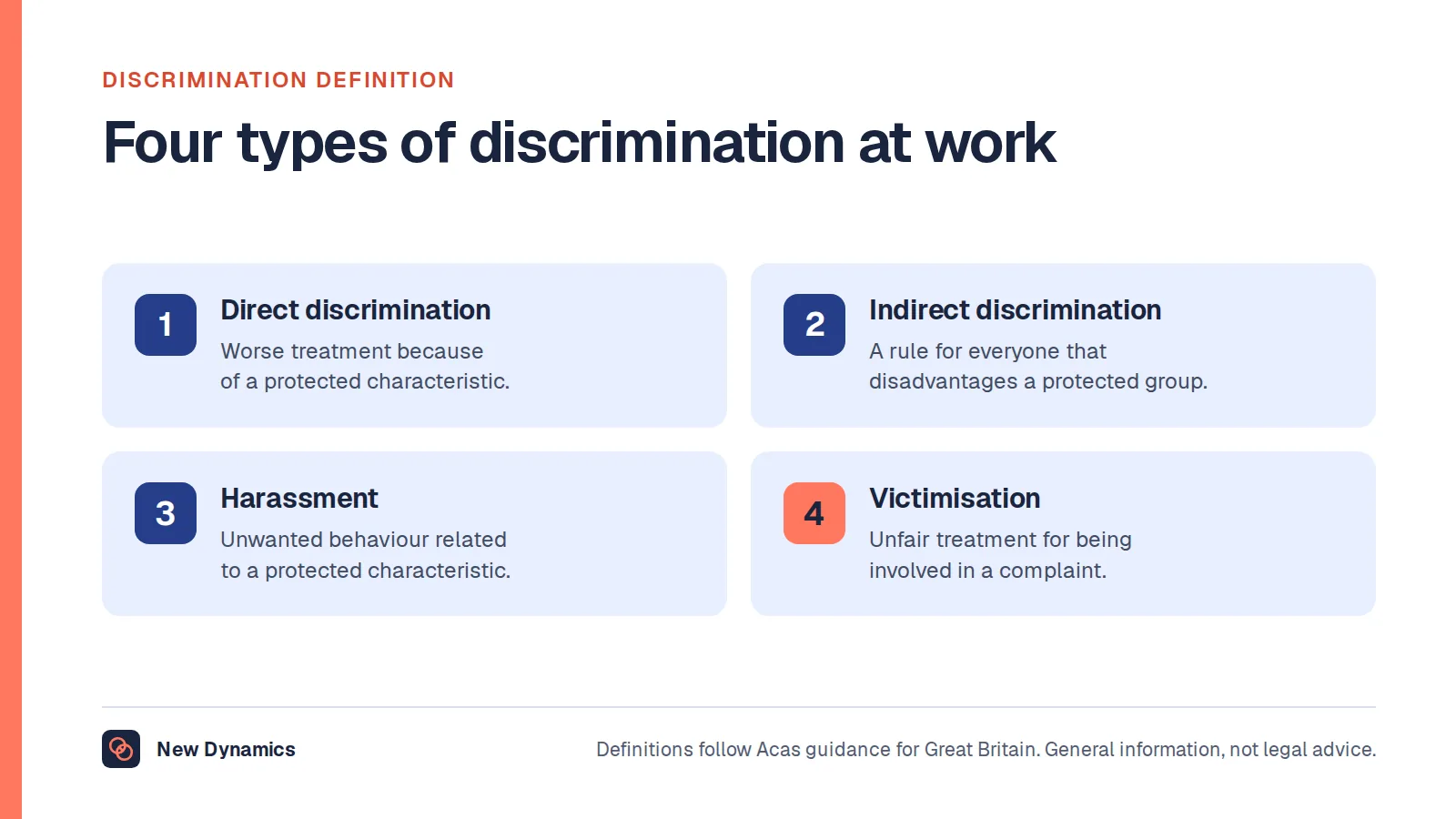
In private employment, the risk is often indirect. Favouring relatives can disadvantage other people in ways that the law does address. Acas explains that discrimination means treating someone less favourably because of a protected characteristic, such as age, race, sex or religion or belief. If a workforce recruited through family ties ends up excluding people who share a protected characteristic, the employer may face a claim. Our plain guide to the definition of discrimination at work explains the terms.
Other rules may apply. Regulated industries, listed companies, charities and organisations that receive public funds often have specific duties about conflicts of interest and related parties.
Whatever the legal position, the damage to trust is the same.
How to prevent nepotism: a simple policy
A workable policy rests on four safeguards.
- Declare. Anyone involved in a decision must declare a family or close personal relationship with a candidate, employee or supplier. Declaring is normal. Concealing is a breach.
- Step back. A person with a declared relationship takes no part in the decision, and does not try to influence it.
- Separate. No one manages, appraises, sets the pay of, disciplines or approves expenses for a relative or partner, directly or indirectly where it can be avoided.
- Decide on merit, with evidence. Advertise vacancies, use the same criteria and questions for every candidate, use more than one decision-maker and keep a record of the reasons. Our manager interview questions include a scorecard.
Sample nepotism policy wording
Employment of relatives and close personal relationships
We welcome applications from relatives and friends of our employees. All appointments, promotions and pay decisions are made on merit, through our normal processes.
If you have a family or close personal relationship with a candidate, a colleague or a supplier, you must tell HR as soon as you become aware of it. You must take no part in any decision about that person's recruitment, pay, performance, promotion, discipline or contract.
No employee may directly manage a relative or partner. Where a relationship arises between people in the same reporting line, we will work with both to change the reporting arrangements.
This policy applies to everyone, including directors and owners. Failure to declare a relationship may be treated as a disciplinary matter.
“Relative” includes a spouse or partner, parent, child, sibling, grandparent, grandchild, aunt, uncle, niece, nephew, cousin and in-laws. “Close personal relationship” includes romantic relationships and close friendships.
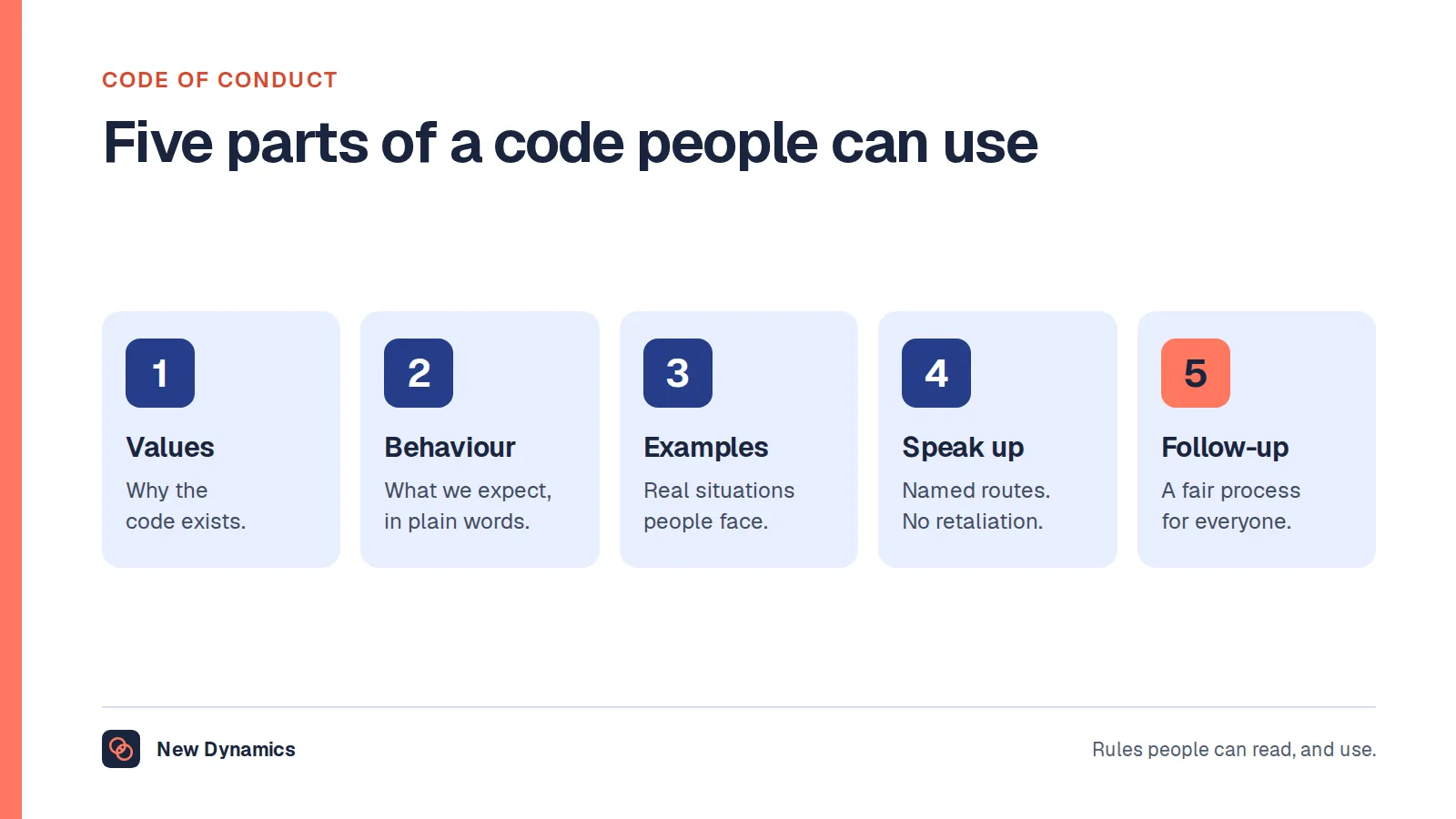
Adapt the wording, and have the final text reviewed. Put it in your code of conduct, where people will find it.
Family businesses
Relatives are the point of a family business, so the aim is different: make the rules explicit. Decide which roles are reserved for family members and which are open. Set the same performance standards for everyone. Have non-family managers review family members where possible. Tell non-family employees honestly how far they can progress.

If you manage a relative, or might
- Declare the relationship at once.
- Ask for the reporting line to be changed.
- Until it is, have another manager handle pay, reviews and discipline.
- Be careful with information. Do not share with a relative what you would not share with anyone in the same role.
- Expect extra scrutiny, and welcome it. Transparency protects you both.
If you see nepotism at work
- Check your facts. A shared surname proves nothing. Note specific decisions, dates and effects.
- Read the policy. Your code of conduct or conflicts policy may cover it.
- Raise it through a safe route: your manager, another manager, HR or a confidential line. See how to make an open door policy real.
- Describe the effect on the work, not the character of the people. “The role was not advertised, and two qualified colleagues had no chance to apply” is stronger than “She only got it because of her uncle.”
- Use the formal grievance procedure if an informal approach fails, or if you have been treated unfairly yourself.
- Take advice if you believe that you have been discriminated against.
If the person involved owns the business, your options inside it may be limited. That is worth knowing when you decide where to build your career.
Common mistakes
Banning relatives altogether. It is rarely necessary, and it may exclude good people. Manage the conflict, not the family tree.
A policy that exempts the top. A rule that does not apply to owners and executives is worse than no rule.
Relying on good intentions. “I can be objective about my own son” is what everyone believes.
Forgetting partners and friends. Undeclared romantic relationships in a reporting line cause the same problems.
Informal hiring “because we know them”. Referrals are fine. Skipping the process is not.
No record of reasons. When a decision is challenged, evidence is the only defence.

Frequently asked questions
What is nepotism in the workplace?
Nepotism is favouring relatives, and often close friends or partners, in decisions about hiring, pay, promotion, work allocation or discipline. Employing relatives is not nepotism in itself. It becomes nepotism when the relationship, and not merit, influences the decision.
What is an example of nepotism at work?
A manager's relative is appointed to a role that was never advertised, although better-qualified colleagues would have applied. Other examples include a manager appraising their own partner, a relative being paid more for the same job, or a relative's misconduct being overlooked.
Is nepotism illegal?
It depends on the country and sector. Public bodies often have explicit rules. US federal law bars public officials from appointing or promoting relatives in their own agency. In private employment, nepotism is usually a risk because it can lead to discrimination claims or breach conflict-of-interest duties.
What is the difference between nepotism, cronyism and favouritism?
Nepotism favours relatives. Cronyism favours friends and associates. Favouritism is the general term for preferring someone for reasons other than merit. All three replace evidence with relationships, and all three damage trust.
How can employers prevent nepotism?
Require people to declare relationships, keep them out of decisions about relatives or partners, avoid reporting lines between relatives, advertise vacancies, use the same criteria for every candidate, involve more than one decision-maker, record reasons and apply the policy to everyone.
What should I do if I see nepotism at work?
Note the specific decisions and their effects, check your organisation's policy, and raise the concern through a safe route, such as HR or a confidential line. Describe the effect on the work. Use the grievance procedure if needed, and take advice if you suspect discrimination.
Your next step: check three things
- Does your code of conduct require people to declare family and close personal relationships?
- Does anyone in your organisation currently manage, appraise or set the pay of a relative or partner?
- Were your last five appointments advertised, and were the reasons for the decisions recorded?
For a drafting framework that covers conflicts of interest and reporting routes, read and download our code of conduct guide. The guide is free to read, and the PDF uses our short download form.
Want pay, promotion and review decisions to rest on evidence that everyone can see? Book a New Dynamics demo and bring your current review process. You can also email contact@new-dynamics.com.