TL;DR
- Team morale is the shared mood and confidence of a team: how people feel about the work, each other and their prospects of succeeding. It shows in energy, candour and willingness to help.
- Low morale is a symptom. The causes are usually found in workload, control, support, relationships, clarity of role and how change is handled.
- Treats and away days give a brief lift. Lasting improvement comes from listening, fixing one real problem, sharing context, recognising good work and managing fairly.
You can feel it when you walk into the room, or join the call. The cameras are off. Questions meet silence. The jokes have stopped, or turned sour. Nobody has said that anything is wrong, and everybody knows that something is.
This article explains what team morale is, lists 12 signs that it is slipping, shows how to find the cause and sets out 20 practical ways to improve it, along with the quick fixes that tend to backfire.
Morale is built in everyday conversations. See how New Dynamics continuous feedback supports the check-ins, recognition and listening that keep a team steady.
What is team morale?
Team morale is the shared mood and confidence of a team. It covers how people feel about the work, about each other and about their chances of succeeding together.
It is related to three other ideas, and different from each.
- Engagement is an individual's commitment to their work and their organisation.
- Motivation is a person's drive to act.
- Wellbeing is a person's health, physical and mental.
- Morale belongs to the group. It can be high in a team whose members are tired, and low in a team of well-paid, healthy people who have lost faith in where they are heading.
Morale matters because it shapes what people do when nobody is checking: whether they help a colleague, raise a problem early, go to the trouble of doing the job properly or quietly update their CV.
12 signs of low team morale
No single sign proves anything. A cluster of them, or a change from how the team used to be, deserves attention.
- Silence in meetings. Fewer questions, fewer ideas and cameras off.
- Less help offered. People stick to their own tasks.
- More complaints, or none at all. Both extremes are warnings. A team that has stopped complaining may have stopped hoping.
- Cynical humour. Jokes about the company, the plan or the leadership that have an edge.
- Bad news travels slowly. Problems surface late, because people expect blame.
- Minimum effort. Work is done to the letter of the request and no further.
- Rising absence and lateness.
- Missed deadlines and slipping quality, from people who used to be reliable.
- Conflict, or cliques. Small irritations become rows, and the team splits into camps.
- Resistance to anything new. “We tried that before.”
- Rumours. Speculation fills the space where information should be.
- Good people leaving, and others asking them where they went.
Find the cause before you try a fix
Low morale is a symptom. Treating it without a diagnosis is how teams end up with a pizza lunch in the week of a redundancy announcement.
The UK Health and Safety Executive's Management Standards offer a useful checklist. They cover “six key areas of work design that, if not properly managed, are associated with poor health, lower productivity and increased accident and sickness absence rates”. The same six areas are where low morale usually starts.
| Area | Question to ask the team |
|---|---|
| Demands | Is the workload manageable? Are deadlines realistic? |
| Control | Do people have a say in how they do their work? |
| Support | Do they get the help, information and encouragement they need? |
| Relationships | Is poor behaviour dealt with? Do people feel respected? |
| Role | Does everyone know what is expected of them, without conflicting demands? |
| Change | Are changes explained early, and are people consulted? |
Two further causes sit alongside these: fairness, in pay, recognition and opportunity, and purpose, whether people believe that the work matters and that the plan can succeed.
To find out, ask. Use one-to-ones, a short anonymous pulse survey or a team conversation with the question “What is getting in the way of us doing our best work?” Then listen without defending. Our workplace engagement survey questions can help.

20 ways to boost team morale
Listen and fix
- Ask what is wrong, and mean it. Hold one-to-ones with everyone in a fortnight, with one question: what would make your work better?
- Fix one real problem quickly. Choose something visible that the team has raised, such as a broken tool or a pointless report. Fixing it proves that speaking up works.
- Tell people what you cannot fix, and why. Honesty about limits builds more trust than vague promises.
- Review the workload. Stop, pause or postpone something. Morale rarely recovers while people are overloaded.
Give clarity
- Share context early. Tell the team what you know, what you do not know and when you will know more. It starves the rumour mill. See formal vs informal communication.
- Make priorities plain. Three priorities for the quarter, written down, with permission to say no to the rest.
- Connect the work to its purpose. Share a customer story, a result or a thank-you message every week.
- Make progress visible. A simple board of what has been finished reminds people that they are getting somewhere.
Recognise and include
- Thank people specifically, and soon. Name the person, what they did and why it mattered. Our employee recognition quotes offer wording.
- Spread recognition fairly. Notice the quiet work that prevents problems, as well as the visible heroics.
- Give people a say. Involve the team in decisions about how the work is done.
- Celebrate finishing. Mark the end of a project before starting the next.
Support and develop
- Hold regular one-to-ones, and do not cancel them. See our one-to-one meeting guide.
- Talk about development. Morale tends to rise when people can see a future. Our personal development goals examples help.
- Deal with poor behaviour and poor performance. Few things depress a team faster than watching someone get away with it.
- Protect the team from noise. Filter requests, push back on unrealistic deadlines and absorb some of the pressure from above.
Build connection
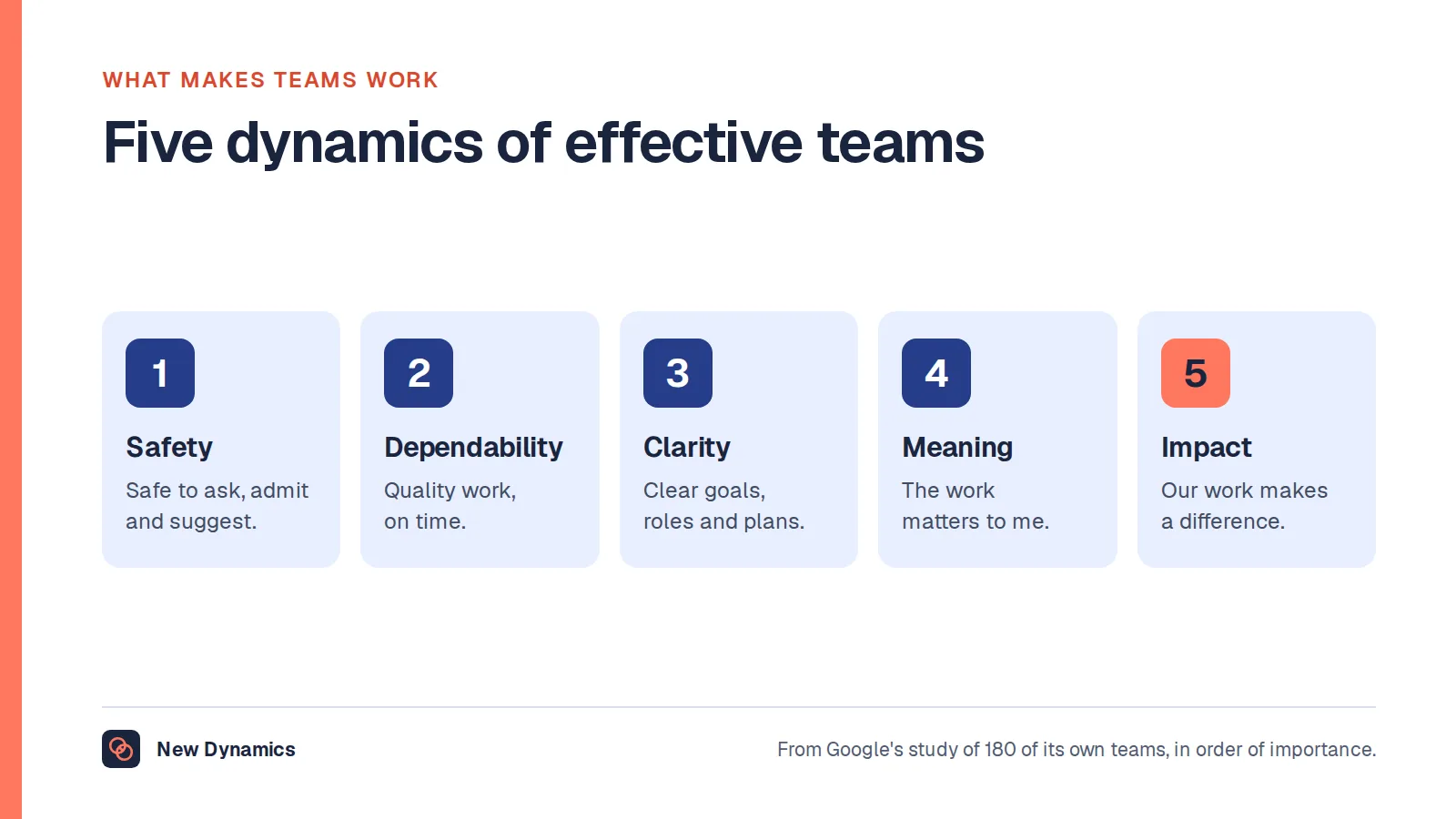
- Make it safe to speak. Admit your own mistakes, and thank people who disagree with you. Google's study of what makes teams effective found that psychological safety mattered most. We summarise it in why teamwork is important.
- Create small rituals. A Friday round of wins, a Monday check-in or a shared lunch once a month.
- Include remote colleagues on purpose. Make sure that they hear news at the same time and have the same chance to speak.
- Have some fun, once the basics are right. Social events work when they are optional, inclusive and not a substitute for anything above.

Quick fixes that backfire
Treats in place of change. Pizza during a workload crisis tells people that you have not understood.
Compulsory fun. A mandatory evening event, for a team that is already stretched, takes more than it gives.
Relentless positivity. “Let's focus on the positives” shuts down the honest conversation that morale depends on.
A survey with no follow-up. Asking for views and then doing nothing is worse than not asking.
Blaming attitude. “The team is negative” puts the problem inside people. Ask what they are reacting to.
A one-off gesture. Morale follows the pattern of everyday management, not a single grand event.
Morale during bad news and change
Sometimes the cause cannot be removed: redundancies, a lost contract or a reorganisation. Morale will dip, and pretending otherwise damages trust. You can still limit the harm.
- Tell people early and straight. Say what is decided and what is not.
- Explain the reasons, and answer questions, including the awkward ones.
- Acknowledge how people feel. You do not have to fix the feeling. You have to show that you have noticed it.
- Be visible. This is the worst time to stay in your office.
- Give people something they can control, even if it is small.
- Look after those who remain. After redundancies, the people who stay are often anxious and carrying more work. Our redundancy and workforce change guide covers this.
How to measure team morale
- Ask a regular pulse question, such as “How are you feeling about work this week, from 1 to 5, and why?” The reason matters more than the score.
- Watch the signals: absence, turnover, overtime, missed deadlines and how early problems are raised.
- Use your one-to-ones. Patterns across several conversations tell you more than any survey.
- Look at the trend. One low week means little. Three in a row deserve a conversation.
Treat the numbers as a prompt for questions. Morale is understood by listening.

Frequently asked questions
What is team morale?
Team morale is the shared mood and confidence of a team: how people feel about the work, about each other and about their chances of succeeding. It shows in energy, candour, willingness to help and how early problems are raised.
What are the signs of low team morale?
Common signs include silence in meetings, less help offered between colleagues, cynical humour, bad news arriving late, minimum effort, rising absence, slipping quality, conflict or cliques, resistance to new ideas, rumours and good people leaving.
What causes low morale in a team?
The usual causes are excessive workload, little say over how work is done, poor support, unresolved bad behaviour, unclear or conflicting roles and badly handled change. Unfairness in pay or recognition, and loss of faith in the plan, also play a part.
How do you boost team morale quickly?
Ask everyone what would make their work better, then fix one visible problem within a fortnight and say that you did it because they asked. Share what you know about the future, thank people specifically and take something off an overloaded team.
How can a manager improve team morale?
Listen first, then act: review the workload, make priorities clear, share context early, hold regular one-to-ones, recognise good work fairly, deal with poor behaviour and make it safe to speak up. Everyday management matters more than events.
Do team-building activities improve morale?
They can strengthen relationships when the basics are healthy and the events are optional and inclusive. They do not repair morale that is low because of workload, unfairness or poor communication. Fix the cause first.
Your next step: ask one question this week
- In your next one-to-ones, ask: “What is getting in the way of you doing your best work?”
- Group the answers under the six areas above.
- Pick one problem that you can fix within a fortnight, and fix it.
- Tell the team what you did, and what you are working on next.
For a fuller approach to listening and acting on what you hear, read and download our employee engagement guide. The guide is free to read, and the PDF uses our short download form.
Want regular check-ins, feedback and recognition to be part of how every team works? Book a New Dynamics demo and bring your team's current habits. You can also email contact@new-dynamics.com.