TL;DR
- A tax-sheltered annuity, or 403(b) plan, is a retirement plan offered by public schools and certain 501(c)(3) tax-exempt organisations, as the IRS defines it. Employees defer part of their salary into individual accounts, and employers can contribute too.
- It is similar to a 401(k) plan maintained by a for-profit employer. The differences are who can offer it, the investments allowed (annuity contracts or mutual fund custodial accounts), the universal availability rule, and a 15-year service catch-up that 401(k) plans do not have.
- In 2026 the elective deferral limit is $24,500 with an $8,000 catch-up from age 50; the limit on annual additions is $72,000 or 100 percent of includible compensation. The figures are adjusted; this is general information, not tax or legal advice.
Ask a teacher or a hospital administrator in the United States about their pension and they may talk about their TSA or their 403(b). Ask someone in a company and they say 401(k). The plans do the same job. The names, and some of the rules, differ because the employers do.
This article explains what a tax-sheltered annuity is, who can offer one, how it compares with a 401(k), the contribution limits and the universal availability rule as the IRS states them, and what HR has to do to set up and run one. It covers US federal rules as the IRS describes them and is general information, not tax or legal advice. The figures are adjusted for the cost of living, so check the current year.
Enrolment is one of the first things a new employee does. See how New Dynamics onboarding brings tasks, early goals and manager conversations into a clear path for a new starter.
What is a tax-sheltered annuity?
The IRS's page on IRC 403(b) tax-sheltered annuity plans gives the definition: “A 403(b) plan (also called a tax-sheltered annuity or TSA plan) is a retirement plan offered by public schools and certain 501(c)(3) tax-exempt organizations. Employees save for retirement by contributing to individual accounts. Employers can also contribute to employees' accounts.”
The name is historical. Early plans could only be funded through annuity contracts, and the Cambridge Dictionary defines an annuity as “a fixed amount of money paid to someone every year, usually until their death, or the insurance agreement or investment that provides the money that is paid”. Today the IRS says the individual accounts can be an annuity contract provided through an insurance company, a custodial account invested in mutual funds, or a retirement income account for church employees, but the old name has stuck.
The tax shelter works as it does in a 401(k). The IRS says the deferred salary “is generally not subject to federal or state income tax until it's distributed”. A plan may also offer designated Roth accounts, where the salary is taxed now and distributions, including earnings, are tax-free.

Who can offer a 403(b)?
Only certain employers. The IRS says only public educational institutions or 501(c)(3) tax-exempt organisations may establish a 403(b) plan, and lists the eligible employers as a public school, college or university, a church, or a charitable entity tax-exempt under Section 501(c)(3).
On the employee side, the IRS lists employees of 501(c)(3) organisations, employees of public school systems involved in the day-to-day operations of a school, employees of cooperative hospital service organisations, civilian faculty and staff of the Uniformed Services University of the Health Sciences, employees of public school systems organised by Indian tribal governments, and certain ministers.
If your organisation is a for-profit company, the answer is a 401(k). If it is a state or local government body that is not a school, the usual plan is a 457(b). The 403(b) belongs to education, healthcare charities, churches and the wider non-profit sector.
403(b) vs 401(k)
The IRS puts the comparison plainly: “It's similar to a 401(k) plan maintained by a for-profit entity.” Just as with a 401(k), it lets employees defer some of their salary into individual accounts. The differences that matter to HR are these.
| Feature | 403(b) tax-sheltered annuity | 401(k) |
|---|---|---|
| Who can offer it | Public schools and 501(c)(3) tax-exempt organisations | For-profit employers (and some others) |
| Investments | Annuity contracts or mutual fund custodial accounts | Wider range chosen by the plan |
| Eligibility rule | Universal availability: offer deferrals to one, offer to all, with exclusions | Plan-defined, subject to nondiscrimination |
| Extra catch-up | 15-year service catch-up, if the plan allows | No equivalent |
| ERISA | Governmental and non-electing church plans are outside ERISA | Generally covered |
The IRS lists pros and cons in its own summary: flexibility in contributions and optional loans and hardship distributions on one side; investment options limited to those chosen by the employer and possibly high administrative costs on the other. For where 401(k) safe harbor rules fit, see our guide to the meaning of safe harbor.
The universal availability rule
This is the rule that most often catches non-profit employers. The IRS explains that under the universal availability rule, “if an employer permits one employee to defer salary into a 403(b) plan, the employer must extend this offer to all employees of the organization”.
The employer may exclude certain groups: employees who will contribute $200 or less annually, those who participate in a 401(k), 457(b) or another 403(b) plan of the employer, nonresident aliens, employees who normally work less than 20 hours per week, and students performing certain services. Everyone else must be told about the plan and given the chance to join. An organisation that quietly offers deferrals to senior staff only has a compliance problem.
Contribution limits
The IRS's 403(b) contribution limits page gives the figures for 2026.
- Elective deferrals. The most an employee can contribute out of salary is $24,500 in 2026.
- Age 50 catch-up. Employees who are 50 or over at the end of the calendar year can contribute a further $8,000 in 2026, if the plan permits. Under SECURE 2.0, a higher catch-up of $11,250 applies in 2026 for employees aged 60 to 63.
- Annual additions. All employer contributions and employee deferrals to all of the employee's 403(b) accounts are limited to the lesser of $72,000 in 2026 or 100 percent of includible compensation for the most recent year of service.
- 15-year service catch-up. If the plan permits, an employee with at least 15 years of service with the same eligible employer (the IRS lists public school systems, hospitals, home health service and health and welfare service agencies, churches and associated organisations) can defer more, up to the lesser of $3,000 a year, $15,000 lifetime reduced by prior catch-ups, or $5,000 times years of service minus prior deferrals.
The IRS notes that these amounts “are subject to cost-of-living adjustments”, and that where both catch-ups are available the 15-year catch-up has a use test, a lifetime limit and an annual limit. Payroll needs to know which catch-ups the plan allows and to track them.

What HR must do to set up and run a 403(b)
The IRS sets out the steps to establish a plan and the duties to operate it.
- Adopt a written program. The IRS says all 403(b) plans, except church plans without retirement income accounts, “must have a written program that must contain mandatory provisions and may contain other optional provisions”. Pre-approved plans and model language for public schools exist.
- Establish the accounts. Annuity contracts or custodial accounts for participants. The IRS says the employer should verify there is no conflict between the plan and the contracts, and that the plan's terms overrule any inconsistencies.
- Sort out ERISA status. Plans subject to ERISA must comply with Department of Labor rules, which may include an identification number for the plan, a summary plan description and fiduciary obligations. Governmental and non-electing church plans that meet the safe-harbor requirements are outside ERISA.
- Apply universal availability. Tell every eligible employee, every year, that they can defer.
- Follow the terms of the plan. The IRS says an employer must operate its 403(b) plan according to its written terms, and provides a correction programme for errors.
- Track the limits. Deferrals, catch-ups and annual additions, per employee, per year.
- File where required. Certain 403(b) plans are subject to annual Form 5500 filing.
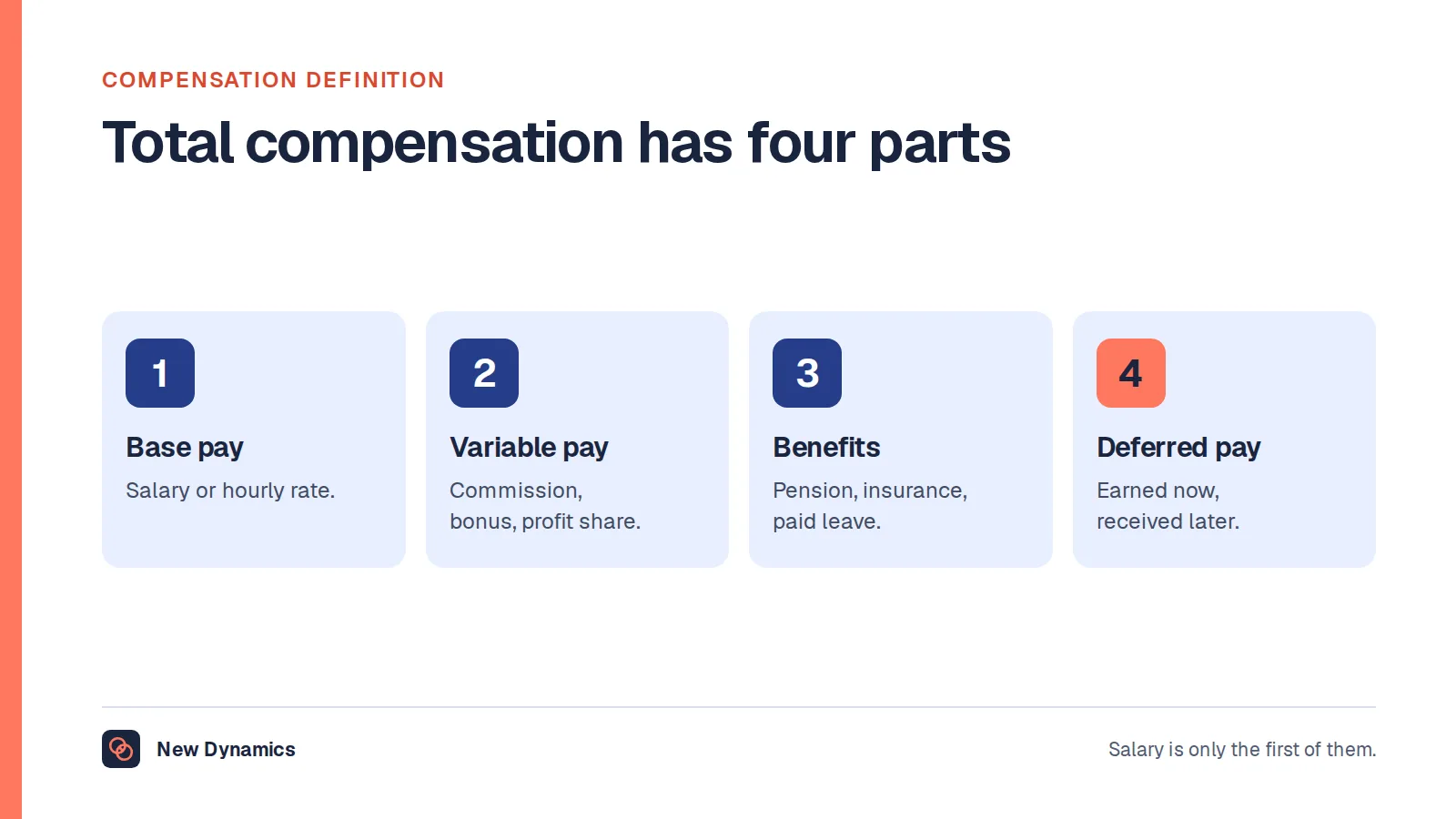
For where the plan sits in the wider reward package, see our guide to the definition of compensation and our compensation policy guide.

Frequently asked questions
What is a tax-sheltered annuity?
A tax-sheltered annuity, or 403(b) plan, is a retirement plan offered by public schools and certain 501(c)(3) tax-exempt organisations, as the IRS defines it. Employees defer part of their salary into individual accounts, employers may contribute, and the deferred salary is generally not taxed until it is distributed.
Is a 403(b) the same as a 401(k)?
They are similar: both let employees defer salary into individual accounts with tax deferred until distribution. A 403(b) can only be offered by public schools and 501(c)(3) organisations, is invested in annuity contracts or mutual fund custodial accounts, must follow the universal availability rule, and may offer a 15-year service catch-up that 401(k) plans do not have.
Who is eligible for a 403(b) plan?
The IRS lists employees of 501(c)(3) tax-exempt organisations, employees of public school systems involved in day-to-day school operations, employees of cooperative hospital service organisations, staff of the Uniformed Services University of the Health Sciences, employees of tribal public school systems and certain ministers.
What is the 403(b) contribution limit?
For 2026, the IRS gives an elective deferral limit of $24,500, an age 50 catch-up of $8,000 ($11,250 at ages 60 to 63), and a limit on annual additions of $72,000 or 100 percent of includible compensation, whichever is less. The amounts are adjusted for the cost of living each year.
What is the universal availability rule?
If an employer lets one employee defer salary into its 403(b) plan, it must offer the same to all its employees, with limited exclusions such as those who would contribute $200 or less a year, those in another employer plan, nonresident aliens, employees working under 20 hours a week and certain students.
Why is it called a tax-sheltered annuity?
Because early 403(b) plans could only be funded through annuity contracts, and the salary deferred into them was sheltered from income tax until paid out. Plans can now also use custodial accounts invested in mutual funds, but the name has stayed.
Your next step: check the plan against the IRS list
- Confirm your organisation is an eligible employer and the plan has a written program.
- Check that every eligible employee has been offered the chance to defer this year.
- Confirm payroll knows which catch-ups the plan allows and tracks the limits.
- Put the annual notice, limit review and any filing dates in the HR calendar.
For where retirement contributions sit in your reward policy, read and download our compensation policy guide. The guide is free to read, and the PDF uses our short download form.
Want enrolment, notices and reviews handled as part of a clear process for every employee? Book a New Dynamics demo and bring your current benefits checklist. You can also email contact@new-dynamics.com.