TL;DR
- A bar manager runs a bar as a business and as a shift. O*NET's tasks for food service managers cover most of it: scheduling staff hours and assigning duties; establishing standards for personnel performance and customer service; maintaining inventories and inventory records; scheduling and receiving deliveries and checking contents for quality and quantity; monitoring budgets and payroll records and reviewing financial transactions “to ensure that expenditures are authorized and budgeted”; counting money and making bank deposits; hiring, training and evaluating staff; investigating and resolving complaints; and estimating “food, liquor, wine, and other beverage consumption to anticipate amounts to be purchased”.
- The National Careers Service's publican profile adds the British detail: ordering stock and taking deliveries, serving customers, organising events to maximise sales, maintaining the premises, bar equipment and cellar, handling wages, bookkeeping and accounts, recruiting, training and supervising bar and kitchen staff, and building relationships with breweries, suppliers and customers. It also lists the requirements: a licence to sell alcohol, being over 18 to sell alcohol and other restricted goods, and enhanced background checks.
- The licensing layer is what separates this from any other hospitality supervisor role. GOV.UK says a business selling alcohol on a permanent basis needs a premises licence, and that “anyone who plans to sell or supply alcohol or authorise the sale or supply of alcohol must apply for a personal licence”. The licensing authority can also refuse to specify a person as the designated premises supervisor. An advert should say which of these the postholder will hold.
A bar manager is judged on a Friday night that runs smoothly and a Tuesday stock count that balances. The first is visible and the second is not, which is why bar manager adverts tend to describe the shift and forget the rest: the cellar, the gross profit, the delivery that arrived short, the rota that has to cover a bank holiday, and the licence without which none of it is lawful.
This article sets out what a bar manager does, using the US O*NET occupational database and the UK National Careers Service, explains the licensing layer using GOV.UK's guidance, separates the role from a bartender and a general manager, covers the routes in, and gives a job description template. Licensing is described as it applies in England and Wales; it is general information, not legal advice, and the local licensing authority is the place to check.
Bar teams are young, part-time and quick to leave, and the first shifts decide who stays. See how New Dynamics onboarding gives a new starter clear tasks, a buddy and planned check-ins from day one.
Bar manager duties: seven responsibilities
Grouped from the O*NET tasks for food service managers and the National Careers Service's publican profile.
- The shift and the rota. Schedule staff hours and assign duties; run service; cover the peaks, the bank holidays and the night nobody wants; step behind the bar when the room demands it, which O*NET describes as performing service tasks "when necessary".
- The bar and the cellar. Maintain the premises, bar equipment and cellar: line cleaning, gas, temperatures, dispense, glassware, and the maintenance that prevents the Friday failure.
- Stock and suppliers. Order stock and take deliveries; check delivery contents "to verify product quality and quantity"; run stocktakes; keep inventory records; estimate liquor, wine and beer consumption to anticipate what to buy; build relationships with breweries and suppliers.
- Money and margin. Count money and make bank deposits; monitor budgets and payroll records; review transactions so that expenditure is authorised and budgeted; watch gross profit by category and investigate the variances that stock loss produces.
- People. Recruit, train and supervise bar and kitchen staff; organise training; resolve personnel problems; evaluate performance; set the standard by working to it.
- Standards, safety and licensing. Establish standards for performance and customer service; keep the records government agencies require on sanitation; run age verification and refusals; keep the premises safe and the conditions of the licence met.
- Sales and events. Organise events, functions and activities to maximise sales; set the range and the pricing within the group's rules; build the regulars.

The licensing layer
This is the part of the job that has no equivalent in most management roles, and the part adverts most often skip.
GOV.UK's alcohol licensing guidance sets out the structure. A business or organisation that "sells or supplies alcohol on a permanent basis needs to apply for a premises licence". Separately, "anyone who plans to sell or supply alcohol or authorise the sale or supply of alcohol must apply for a personal licence". Qualifying members' clubs need a club premises certificate. Applications go to the local council's licensing team with the fee, and, depending on the application, copies go to the police and other "responsible authorities". The licensing authority can attach conditions, reject licensable activities, refuse an application, or "refuse to specify a person as a designated premises supervisor", with a right of appeal to the magistrates' court.
For a bar manager advert, three practical consequences:
- Say whether the postholder must hold a personal licence, or will be supported to obtain one.
- Say whether they will be the designated premises supervisor for the premises licence, because that is a named, accountable position rather than a job title.
- Say what the licence conditions require of them, such as door supervision, CCTV, age verification policy, and the hours the premises may trade.
The National Careers Service adds the other requirements for this kind of role: a licence to sell alcohol, being over 18 to sell alcohol and other restricted goods, and enhanced background checks.

The cellar and stock side
The difference between a bar manager and a good bar supervisor usually shows up in the stock figures. Three things belong in the job description because they are where the money is:
- Cellar management. Line cleaning on schedule, correct temperatures and gas, stock rotation, and the discipline that keeps quality consistent and waste down.
- Stocktaking and variance. A regular count, a known yield per container, and an investigation when the figures diverge rather than a shrug. Most losses are measurement, over-pouring, wastage and giveaway, in that order, before anything dishonest.
- Range and price. What the bar sells, at what margin, and what it stops selling. A manager who can explain the gross profit on each category is managing a business; one who can only explain the takings is managing a till.
Bar manager, bartender, barback, general manager
| Role | Owns | Typical measure |
|---|---|---|
| Barback | Keeping the bar stocked, clean and running | Bar never runs dry; service uninterrupted |
| Bartender | Serving, making drinks, the customer in front of them | Service, speed, accuracy, upselling |
| Bar manager | The bar as a business and as a shift | Sales, gross profit, stock variance, standards, staffing |
| General manager | The whole venue, including kitchen and front of house | The venue's result |
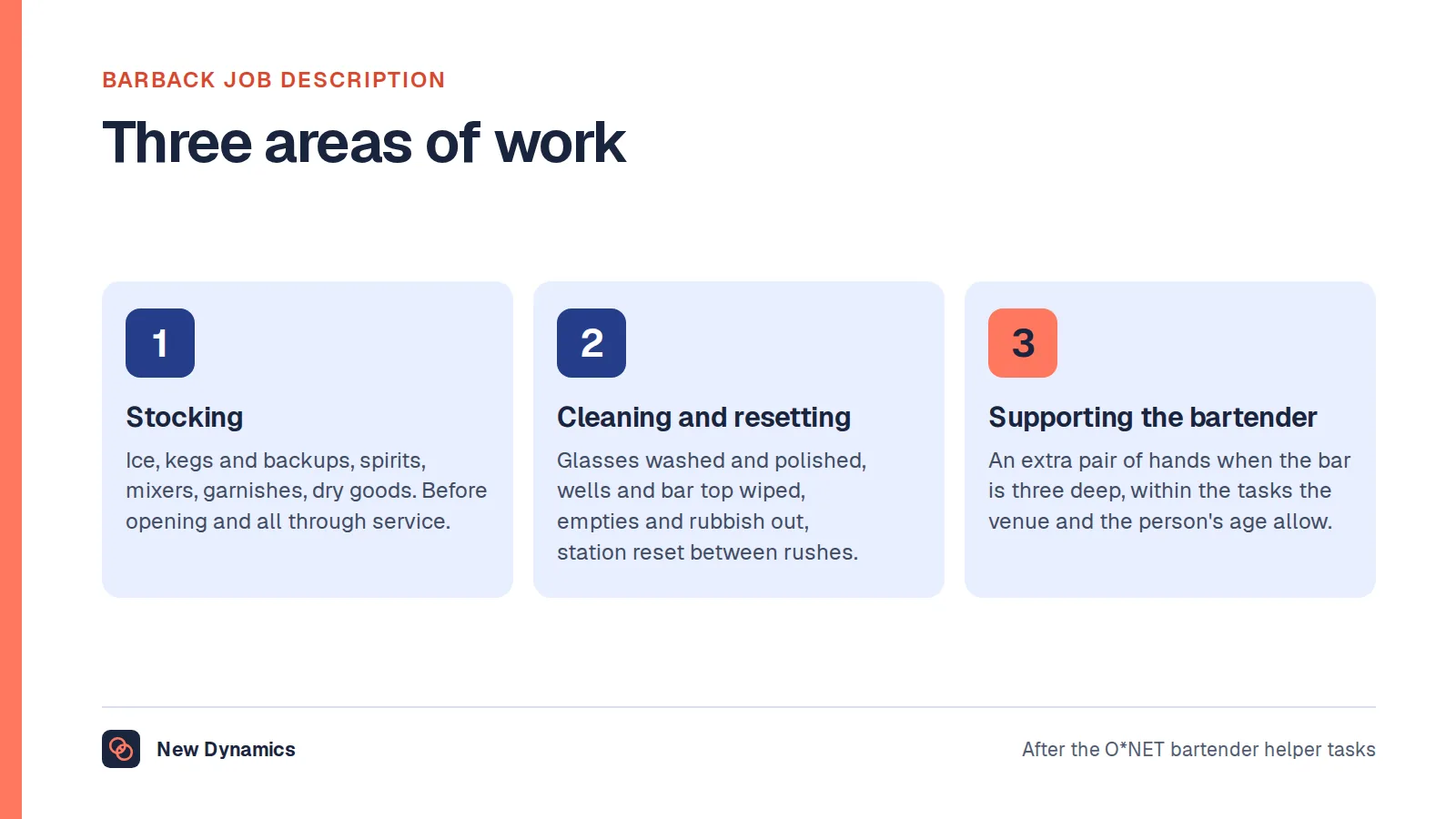
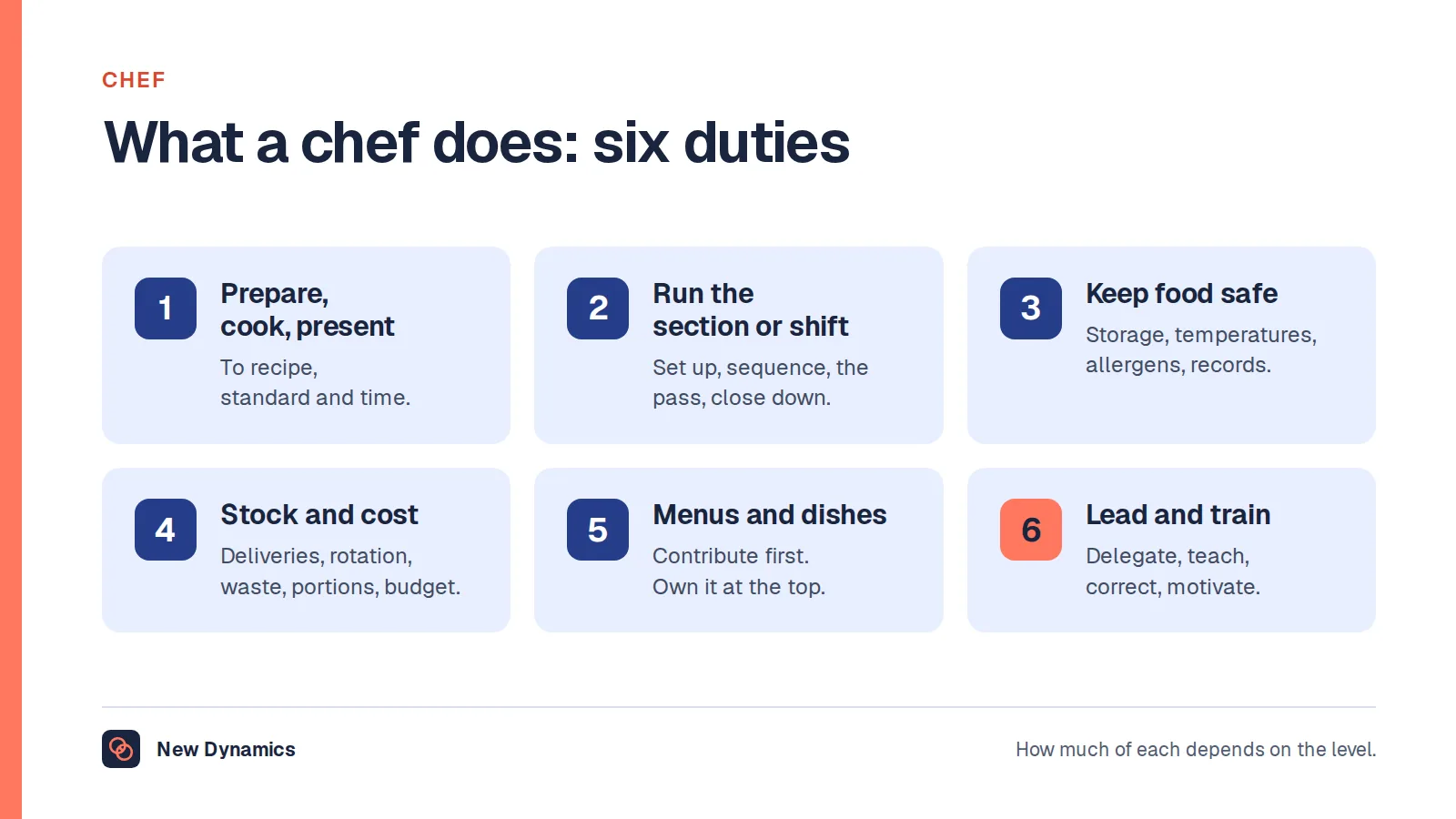
Our barback job description covers the entry role and the chef job description the kitchen side that a bar manager works alongside.
Routes in, and where it leads
The National Careers Service lists the ways in: a Hospitality Manager level 4 higher apprenticeship, which "might help you find work as a deputy bar manager"; starting as a bar person or cellar technician and building experience in the drinks trade; applying directly; or a graduate management trainee scheme. Progression runs to regional management within a pub chain or brewery, into catering or restaurant management, or to self-employment and running a venue, with the licensing responsibilities that brings.
Bar manager job description template
Job title: Bar Manager (or Pub Manager, Deputy Bar Manager)
Reports to: General Manager, Operations Manager or the licensee
Scope: State the venue and capacity, the trading hours, the size of the bar team, whether a kitchen is included, the weekly turnover band, and who holds the premises licence.
Purpose: Run the bar profitably, safely and lawfully: a well-staffed, well-stocked bar that serves customers properly, meets its licence conditions and delivers its margin.
Responsibilities:
- Plan and publish the rota; assign duties; cover peaks and holidays; work shifts on the bar.
- Maintain the bar, equipment and cellar, including line cleaning, temperatures and gas.
- Order stock, receive and check deliveries, run stocktakes and investigate variances.
- Monitor sales, gross profit and payroll cost against budget; handle cash, banking and reconciliation.
- Recruit, induct, train, rota and develop the team; manage performance and conduct.
- Uphold licensing conditions, age verification and refusals; maintain safety and hygiene records.
- Plan events and promotions; manage supplier relationships.
Requirements:
- Experience running or deputising on a bar of comparable size and pace.
- Personal licence held, or willingness to obtain one; willingness to be named designated premises supervisor if required.
- Over 18; enhanced background checks where required.
- Numerate and comfortable with stock and margin figures; confident with the till and rota systems in use.
- Calm and authoritative with customers late in the evening.
Working pattern: State the shift pattern, late finishes, weekends and bank holidays, and how the rota is published.
Progression: deputy to bar manager to general manager or multi-site, and the support offered towards licensing qualifications.

What an advert should state
- The venue and the trade. Capacity, style, food offer, late licence, busiest nights.
- The rota reality. Hours, late finishes, weekends, bank holidays, and how far ahead it is published.
- The licence position. Personal licence required or funded, and whether the postholder will be the designated premises supervisor.
- The numbers they own. Sales, gross profit, stock variance, labour cost, and whether they set pricing or follow a group range.
Most bar managers leave over rotas, understaffing and being held to numbers they cannot influence. Saying all four things up front removes the first three arguments before they start.
Frequently asked questions
What does a bar manager do?
Runs the bar as a business and as a shift: rotas and staffing, cellar and equipment, ordering and stocktaking, sales and gross profit, cash and banking, recruiting, training and managing the team, upholding licence conditions and safety, and planning events. The National Careers Service's publican profile and the US occupational database's food service manager tasks cover the same ground.
What qualifications does a bar manager need?
No degree. The National Careers Service lists a Hospitality Manager level 4 higher apprenticeship, starting as a bar person or cellar technician, direct application, or a graduate management trainee scheme. A licence to sell alcohol is required, along with being over 18 to sell alcohol and other restricted goods, and enhanced background checks.
Does a bar manager need a personal licence?
GOV.UK says anyone who plans to sell or supply alcohol, or to authorise its sale or supply, must apply for a personal licence, and that premises selling alcohol on a permanent basis need a premises licence. Whether a particular bar manager must hold one depends on the role and the premises, so the advert should say, and the local licensing authority is the place to confirm.
What is a designated premises supervisor?
The person named on a premises licence as responsible for the premises. GOV.UK notes that a licensing authority may refuse to specify a person as designated premises supervisor, with a right of appeal to the magistrates' court. It is an accountable position attached to the licence, not simply a job title.
What is the difference between a bar manager and a general manager?
The bar manager owns the bar: its staffing, stock, margin and standards. The general manager owns the whole venue, including the kitchen and front of house, and answers for the site's result. In a small venue one person does both.
Your next step: put the licence and the rota in the advert
- State the venue, the trade and the busiest nights.
- Say whether a personal licence is required or funded, and who is the designated premises supervisor.
- Publish the shift pattern and how far ahead the rota goes out.
- Name the numbers the manager owns and can actually influence.
For a plan to keep the bar team you train, read and download our employee retention guide. The guide is free to read, and the PDF uses our short download form.
Want inductions, objectives and check-ins recorded for a team that is never at a desk, across shifts and sites? Book a New Dynamics demo and bring your current rota. You can also email contact@new-dynamics.com.