TL;DR
- A barback is the bartender's helper. O*NET lists Barback first among the titles for bartender helpers, whose tasks include stocking refrigerators with wine and bottled beer, replacing empty kegs, washing glasses, slicing and pitting fruit for garnishes, cleaning up spills and removing empty bottles and trash. The bartender takes the order and makes the drink; the barback makes sure everything needed is there.
- The duties fall into three areas: stocking before and during service, cleaning and resetting, and supporting the bartender when the bar is busy. The work is physical and constant: O*NET's work context shows most people in the occupation walking, standing and handling objects continually.
- Write the job description around the venue, the shift pattern and the ladder. Barback to bartender is one of hospitality's clearest routes, and the UK National Careers Service notes that staff must be over 18 to sell alcohol, which shapes who can step up and when.
Every busy bar has someone who never takes an order and is never off their feet. The barback job description is for that person: the bartender's helper who keeps ice in the wells, kegs on tap, glasses clean and the rail stocked, so the bartender can stay with the guests. Get the description right and you hire someone who lasts a season and becomes your next bartender. Get it wrong and you hire a glass collector who leaves after a month.
This article explains what a barback does using two primary sources, the US O*NET occupational database and the UK National Careers Service, sets out the duties in three areas, the skills and the working pattern, the route to bartender, and a template you can adapt.
Barbacks are often new to hospitality, and their first shifts decide whether they stay. See how New Dynamics onboarding gives a new starter clear tasks, a buddy and planned check-ins from day one.
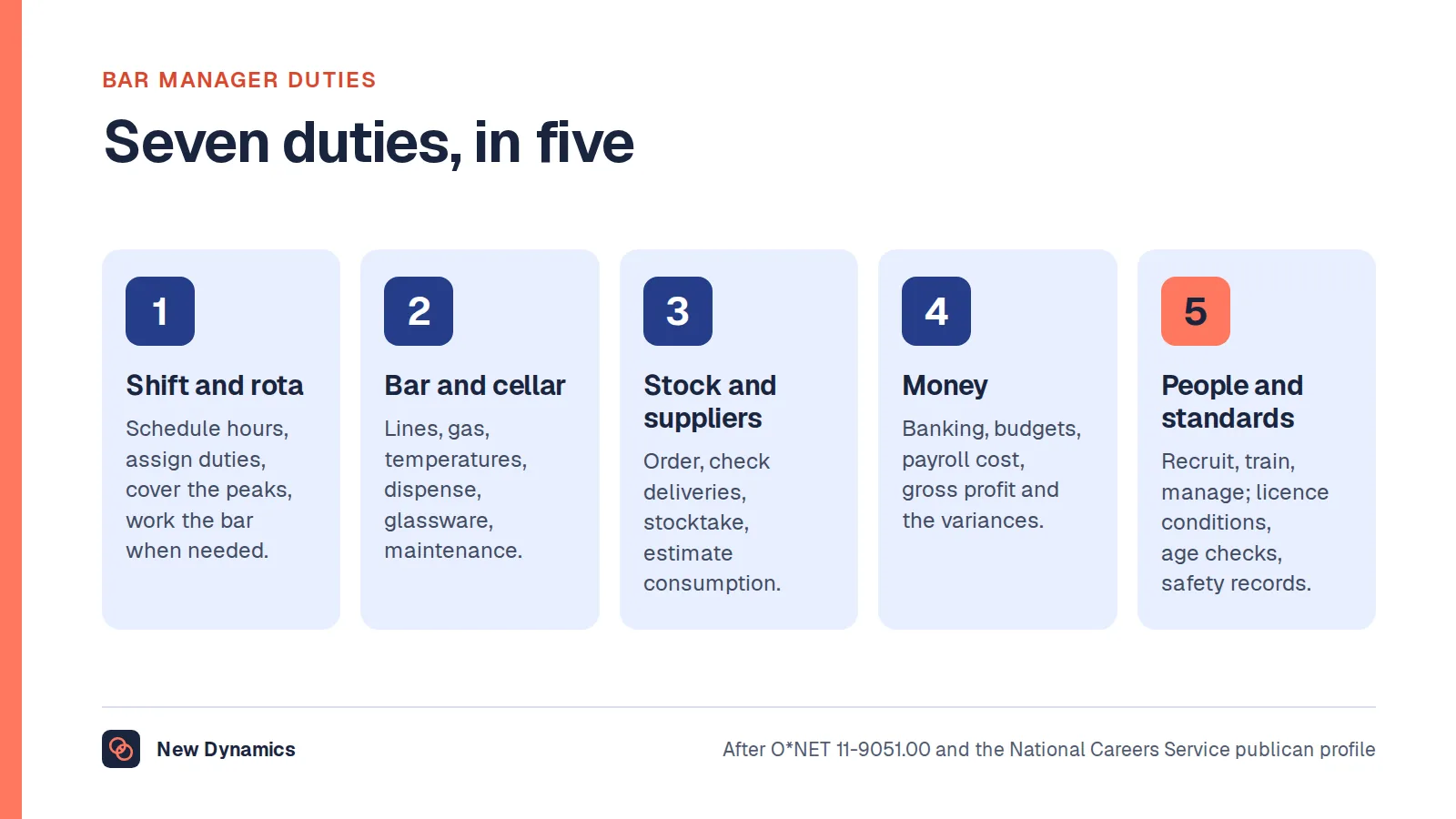
The person who runs the bar the barback keeps stocked has a job of their own: our bar manager job description covers the seven duties, the licensing layer and a template.
What is a barback?
A barback supports the bartenders. In the O*NET database, which the US Department of Labor maintains, the occupation is Dining Room and Cafeteria Attendants and Bartender Helpers, and “Barback” is the first of its sample job titles, ahead of busser and server assistant. The tasks that belong to the bar side of that occupation describe the job precisely:
- “Stock refrigerating units with wines or bottled beer or replace empty beer kegs”
- “Wash glasses or other serving equipment at bars”
- “Slice and pit fruit used to garnish drinks”
- “Mix and prepare flavors for mixed drinks”
- “Fill beverage or ice dispensers”
- “Replenish supplies of food or equipment at steam tables or service bars”
- “Clean up spilled food or drink or broken dishes and remove empty bottles and trash”
- “Clean and polish counters, shelves, walls, furniture, or equipment in food service areas”
The dividing line with the bartender is simple. The bartender greets the guest, takes the order, makes and serves the drink and handles payment. The barback makes sure that everything the bartender needs is in reach, cold, clean and full, and clears what is left behind.
In the UK the barback is usually the first rung of bar work. The National Careers Service describes bar staff as people who “serve drinks in venues like pubs, clubs, bars, hotels and restaurants”, whose day-to-day includes taking orders and payments, serving drinks, giving advice on drinks and keeping “the bar area clean and well stocked”. A barback does the last of those, and the glass collecting and washing up, so that the bar staff can do the rest.
Barback duties: three areas of work
Grouped for a job description, the O*NET tasks and the practice of most venues give the barback three areas of responsibility.
1. Stocking, before and during service
Set up the bar before opening: fill ice wells, stock beer fridges and wine, check kegs and line up backups, top up spirits on the speed rail and back bar, fill mixers and juices, cut and prepare garnishes and lay out napkins, straws, stirrers and bar towels. During service, watch what is running low and replace it before the bartender has to ask. Change a keg when it blows. Keep the ice coming.
2. Cleaning and resetting
Collect empties and glasses from the bar and the floor, wash and polish glassware, wipe down the bar top and the wells, clear spills and breakages at once, take out rubbish and empty bottles, and reset the bartender's station between rushes. At close, break the bar down, clean the equipment and the floor, and leave the stock ready for the next shift to count.
3. Supporting the bartender
When the bar is three deep, the barback is an extra pair of hands: pouring beers and simple serves where the venue allows it, fetching from the cellar or the store, running food or drinks to tables, and taking pressure off the bartender so that guests are served faster. O*NET's task list includes preparing mixers and flavours for drinks and serving food when servers need help; how much of that a barback does depends on the venue and, in the UK, on their age.

Barback vs bartender vs busser
| Role | Faces the guest? | Main job |
|---|---|---|
| Bartender | Yes | Takes orders, makes and serves drinks, handles payment |
| Barback | Rarely | Stocks, cleans and resets the bar; supports the bartender |
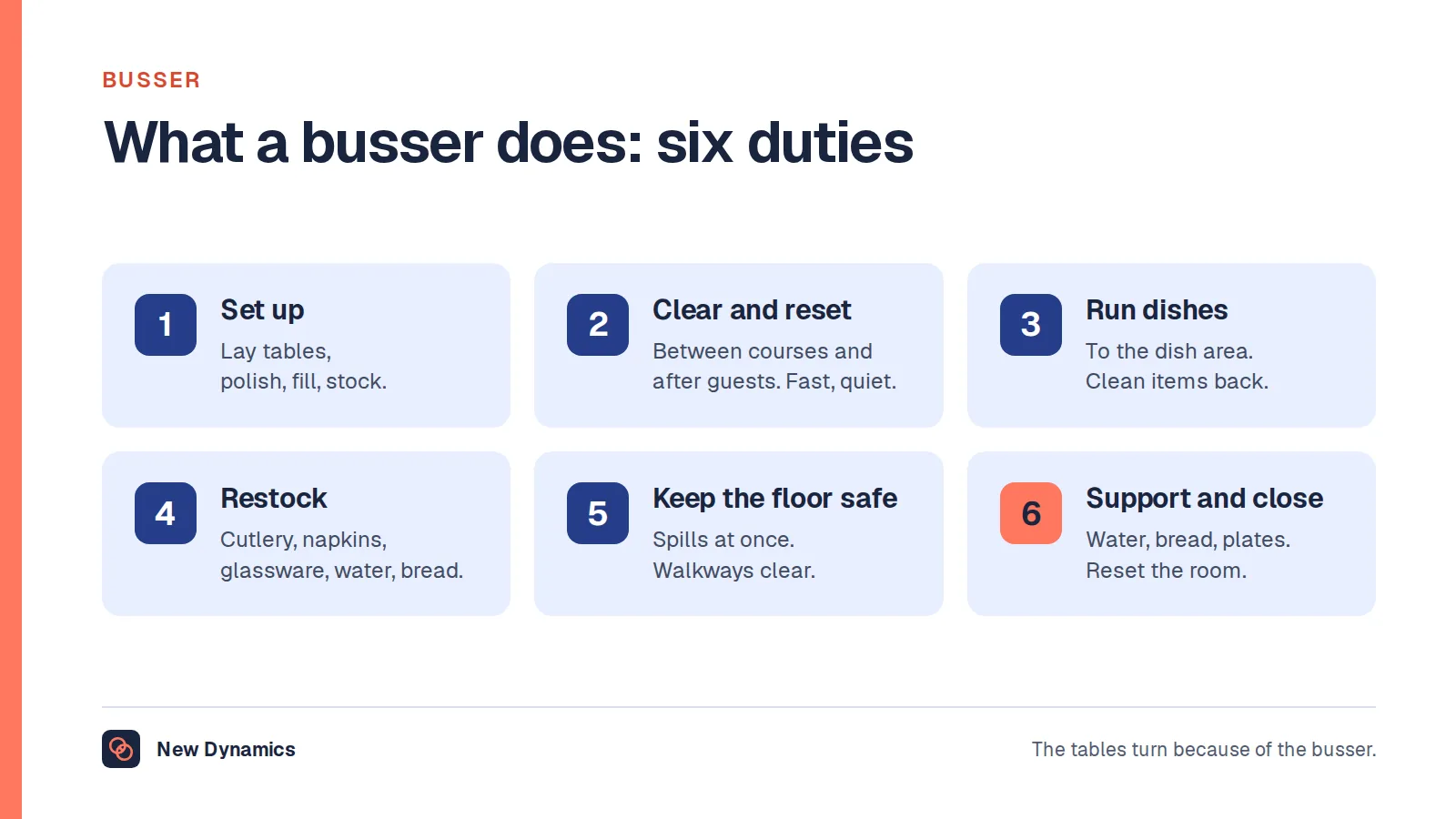
| Busser | Rarely | Clears and resets tables; supports the servers |
The barback and the busser share an occupation in O*NET and a place on the ladder: both are support roles that lead into the customer-facing job. See the busser job description for the dining-room equivalent.
Skills and physical demands to ask for
O*NET lists active listening as the essential skill for the occupation, with coordination and service orientation as transferable skills. Its top abilities are physical: trunk strength, arm and hand steadiness, manual dexterity, stamina and flexibility. The work context confirms it: most people in the occupation report spending time walking or running, standing and using their hands continually, with constant contact with others and work as part of a team rated extremely important.
For the job description, that translates into:
- Stamina and strength. Long shifts on your feet, carrying cases and changing kegs. State the lifting expectation honestly.
- Anticipation. Noticing that the ice is low or the tonic is nearly out before the bartender does.
- Care with glassware and hygiene. Clean, polished glasses and a spotless well are the barback's signature.
- Teamwork under pressure. The National Careers Service asks bar staff for “the ability to accept criticism and work well under pressure”, customer service skills and “excellent verbal communication skills”; a barback needs the same, minus the sales patter.
- Reliability. Turning up for the Friday close is most of the job.
Hours, environment and the age rule
The National Careers Service gives bar staff 30 to 40 hours a week on variable shifts, including “evenings / weekends / bank holidays”, in a working environment that “may be noisy and crowded”, sometimes in uniform. A barback's pattern is the same, with more of the early set-up and late breakdown.
One rule shapes the role in the UK: the National Careers Service says you need to “be over 18 to sell alcohol and other restricted goods”. A barback under 18 can stock, clean and collect glasses but cannot make the sale, so say in the job description whether the role is open to under-18s and which tasks are excluded until they turn 18. Check the licensing rules for your country and venue before you write that line.

From barback to bartender
Barback is a route in, not a destination. The National Careers Service lists three entry routes to bar work: a college course in hospitality, an apprenticeship, or applying directly with “strong customer service skills, good communication skills and the ability to work well in a team”. With experience, bar staff can move to supervisor, deputy bar manager or bar manager.
Say in the job description what the ladder looks like in your venue: what a barback needs to learn to be trusted on the bar, how long that usually takes, and who decides. A short check-in in the first week, the first month and the third month, as described on our hospitality industry page, is where that conversation happens.
Barback job description template
Job title: Barback
Reports to: Head Bartender or Bar Manager
Purpose: Keep the bar stocked, clean and ready throughout service so that the bartenders can serve guests without interruption.
Responsibilities:
- Set up the bar before opening: ice, beer and wine fridges, kegs and backups, spirits, mixers, garnishes and dry goods.
- Restock throughout service; change kegs; keep ice wells full.
- Collect, wash and polish glassware; keep the bar top, wells and floor clean; clear spills and breakages at once.
- Remove empties and rubbish; manage recycling and bottle returns.
- Prepare garnishes and simple mixers to house standards; label and date them.
- Support bartenders during busy periods, within the tasks permitted for the role and the person's age.
- Break down and clean the bar at close; leave stock ready for counting.
- Follow food safety, hygiene and licensing rules and report faults or shortages.
Skills and attributes:
- Physically fit; able to stand for a full shift and lift cases and kegs, with training and equipment provided.
- Attentive and quick to anticipate what the bar needs.
- Reliable, punctual and calm under pressure; a team player.
- Careful with glassware and hygiene; tidy by habit.
- No experience required; an interest in learning to bartend is welcome.
Hours: Shifts including evenings, weekends and holidays; specify the weekly hours and the rota.
Progression: Training towards bartender for those who show reliability and interest; explain how and when.
Adapt the tasks to your venue: a hotel bar, a nightclub and a village pub ask different things of a barback. Say which one this is.

Frequently asked questions
What is a barback?
A barback is the bartender's helper. They keep the bar stocked, clean and ready during service: filling ice, changing kegs, restocking spirits and mixers, preparing garnishes, washing and polishing glasses, clearing empties and cleaning up. O*NET lists Barback as the first sample title for bartender helpers.
What is the difference between a barback and a bartender?
The bartender faces the guest: takes orders, makes and serves drinks and handles payment. The barback works behind and around the bartender, making sure everything needed is stocked and clean and clearing what is used. In many venues the barback is the trainee bartender.
Is a barback the same as a busser?
They are the same kind of role in different places. A busser clears and resets tables for the servers; a barback stocks, cleans and resets the bar for the bartenders. O*NET groups both under dining room attendants and bartender helpers.
Can a barback be under 18?
In the UK a person must be over 18 to sell alcohol, according to the National Careers Service, so an under-18 barback can stock, clean and collect glasses but not make the sale. Rules differ by country and by licence; check yours and state the position in the job description.
What skills does a barback need?
Stamina and strength for a shift on their feet and lifting stock, anticipation, care with glassware and hygiene, reliability and teamwork under pressure. O*NET names active listening as the essential skill and lists physical abilities such as trunk strength, stamina and manual dexterity.
Your next step: hire for the ladder
- State the venue, the shifts and the weekly hours.
- List the duties in three areas: stocking, cleaning and supporting the bartender.
- Say whether the role is open to under-18s and which tasks are excluded.
- Describe the route to bartender and the check-ins that will get someone there.
For a plan that turns a new barback's first week into a confident first month, read and download our onboarding guide. The guide is free to read, and the PDF uses our short download form.
Want every new starter behind your bar to get the same clear start? Book a New Dynamics demo and bring your current approach. You can also email contact@new-dynamics.com.