TL;DR
- Most lists of change quotes are unsourced, and several of the most popular lines are misattributed. This article uses three that can be checked in a free, linkable text: Machiavelli on introducing a new order of things, Plato's account of Heraclitus on the river, and Marcus Aurelius on change and the nature of the universe.
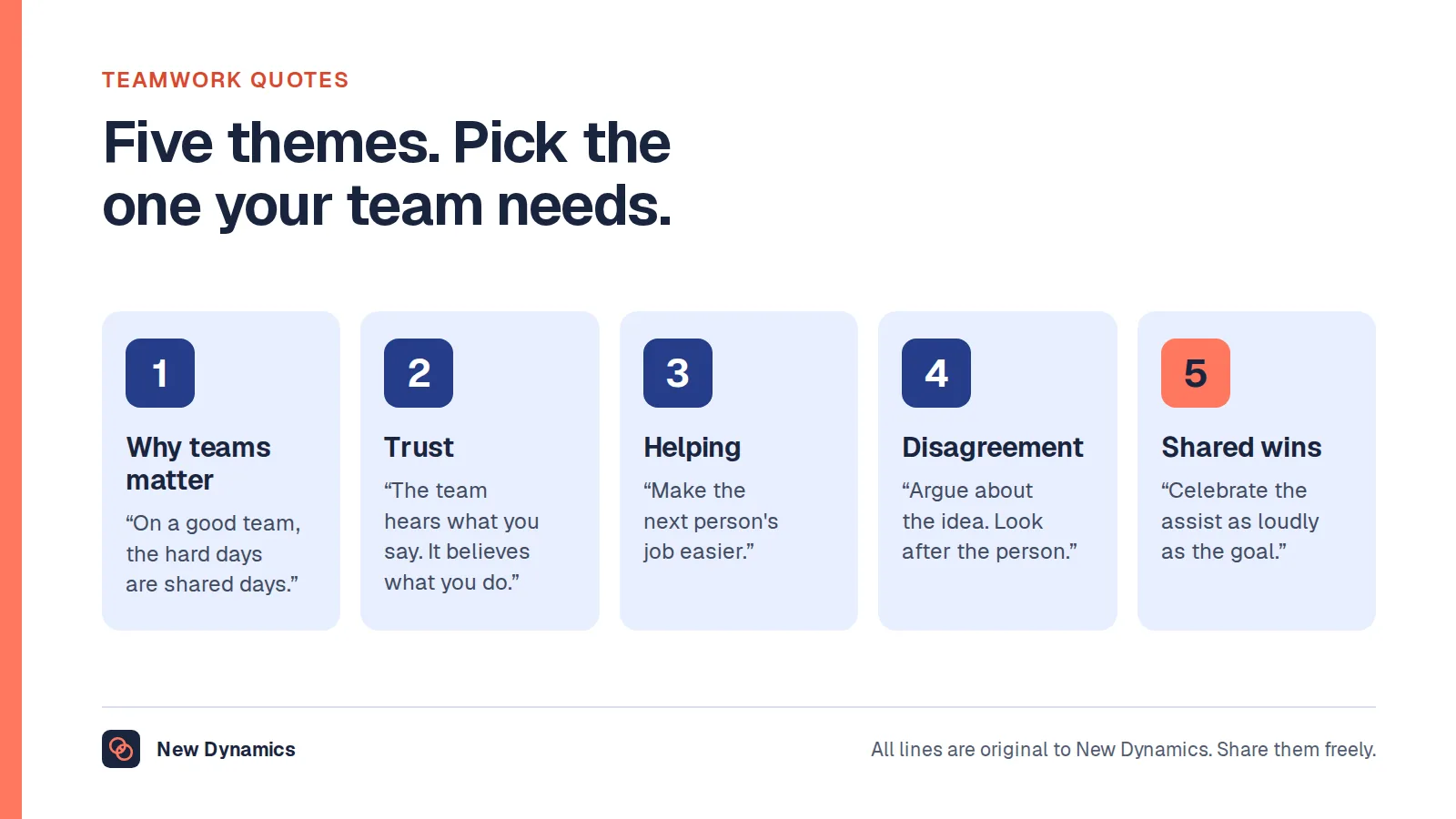
- Everything else here is written by us and presented as ours. Twelve lines for the change email, the all-hands slide and the one-to-one, grouped by what the audience is actually feeling: uncertainty, loss, overload and scepticism.
- The hard part is knowing when not to quote anyone. Where a change touches pay, hours or terms, Acas is clear that “any changes must be agreed by both the worker and employer”, that employers “should avoid ‘fire and rehire’” and “must consult before dismissal”. Consultation is the obligation; a quotation on a slide is not a substitute for it.
Somewhere in every restructure there is a slide with a quotation on it, and somewhere in the room there is a person whose job is changing who finds it insulting.
That is not an argument against quotations. It is an argument for choosing them carefully, sourcing them honestly, and knowing when a plain sentence of your own would do more good. This article gives three quotes for change at work that can actually be checked, twelve original lines you are welcome to use, and the things to say when a quotation would land badly.
Change lands better when people can ask questions and be answered rather than addressed. See how New Dynamics continuous feedback helps colleagues share feedback and recognition as part of everyday work.
Why quotations often go wrong during change

- They answer the wrong question. People want to know what happens to them, when, and who decides. A quotation about embracing the future does not address any of that.
- Half of them are made up. The most shared "change" quotations on the internet (including the famous line about the most adaptable species) are misattributed. Sharing one tells your audience you did not check.
- They can read as instruction. A line about resisting change, posted by the people making the change, is heard as "stop complaining".
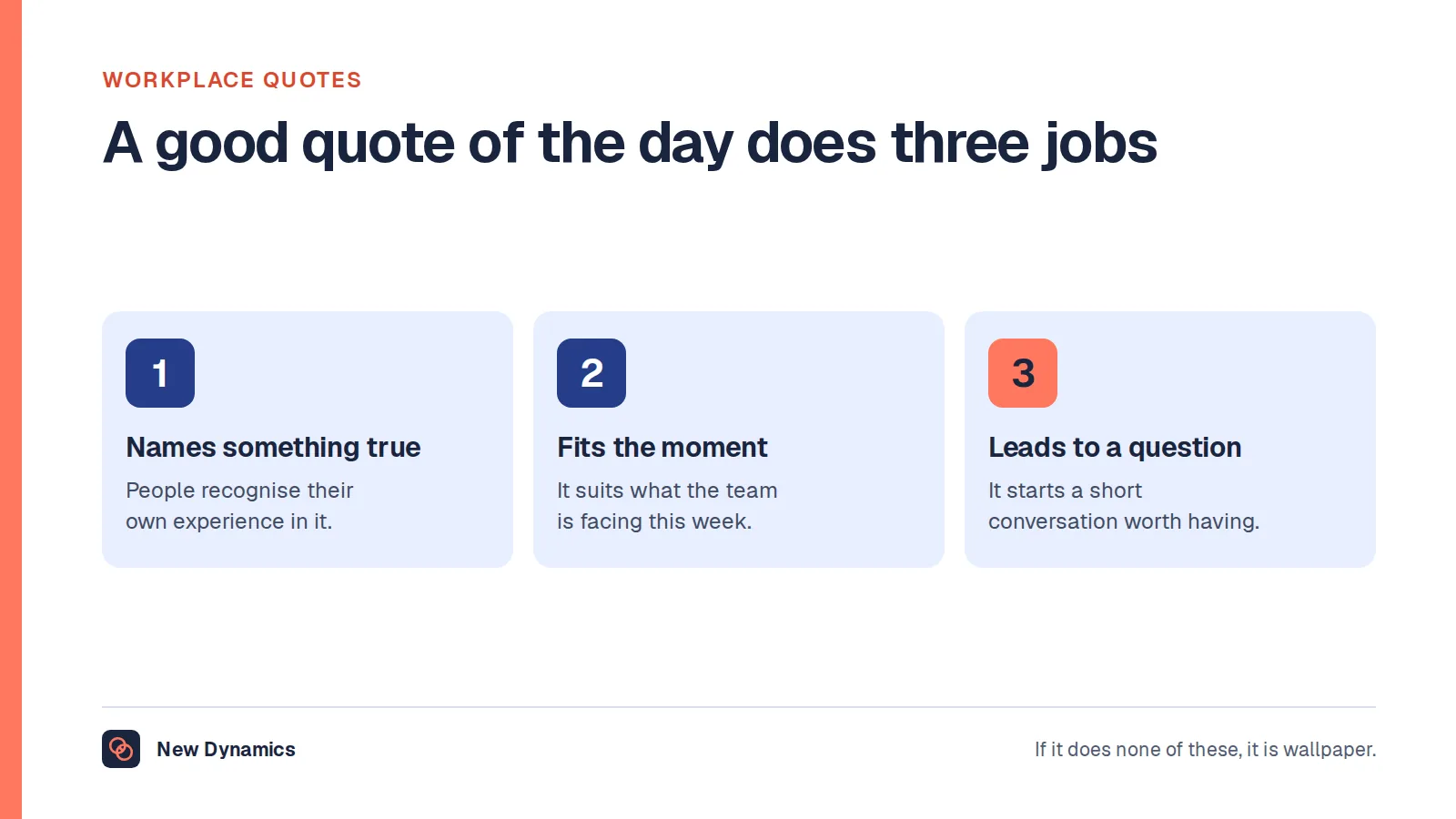
Use a quotation to open a thought, never to close a question.
Three quotations with real sources

Machiavelli, on being the one who changes things
From chapter VI of The Prince:
"There is nothing more difficult to take in hand, more perilous to conduct, or more uncertain in its success, than to take the lead in the introduction of a new order of things, because the innovator has for enemies all those who have done well under the old conditions, and lukewarm defenders in those who may do well under the new."
He goes on to explain the lukewarmness: it arises "partly from fear of the opponents, who have the laws on their side, and partly from the incredulity of men, who do not readily believe in new things until they have had a long experience of them".
How to use it: with the people leading the change, not with the people receiving it. It is an accurate description of why support is quieter than opposition, and it stops a leadership team concluding that silence means agreement.
Plato, on Heraclitus and the river
From the Cratylus, in Jowett's translation:
"Heracleitus is supposed to say that all things are in motion and nothing at rest; he compares them to the stream of a river, and says that you cannot go into the same water twice."
The dialogue elsewhere puts it more briefly: "all things flow and nothing stands".
How to use it: when the honest message is that the old state was not stable either. It works badly as consolation and well as context.
Marcus Aurelius, on change itself
From Meditations, in Meric Casaubon's translation:
"Loss and corruption, is in very deed nothing else but change and alteration; and that is it, which the nature of the universe doth most delight in, by which, and according to which, whatsoever is done, is well done."
How to use it: sparingly, and never at someone whose role is being removed. It is a private consolation, not a corporate message.
Twelve lines of our own
These are ours. Use them, adapt them, no attribution needed.
When people are uncertain
- "Here is what we know, here is what we do not know yet, and here is when we will know it."
- "Nothing changes for you this month. The first thing that changes is the rota in October, and you will see it two weeks before."
- "If you have heard something that worries you, ask me and I will tell you whether it is true."
When people are losing something
- "This takes away a part of the job that several of you are good at, and I am not going to pretend otherwise."
- "You are allowed to think this is worse for you personally and still help us do it well."
- "We are not asking you to be pleased. We are asking you to tell us what breaks."
When people are overloaded
- "The old way and the new way are both running for six weeks. That is the hardest part, and it ends."
- "If something has to give, tell me what, and I will decide rather than leave it to you."
- "One change at a time is slower and finishes sooner."
When people are sceptical
- "We have started things before and not finished them. Here is what is different about the way we are doing this one."
- "Judge it on whether the thing you complained about last year is fixed by March."
- "If it is not working in eight weeks, we will say so rather than quietly carry on."
That last one is the most useful sentence in change communication, and the hardest to keep.
What to say instead of a quotation

When somebody is losing something, replace the inspirational line with four pieces of information:
- What is changing, precisely. Not "we are transforming how we work".
- What is not changing. People underestimate how much this helps.
- When each part happens, and what the next decision point is.
- Who decides, and how to be heard before they decide.
Say those four and you will not need a quotation. Say none of them and no quotation will save the email.
The sentence to delete
"This is an exciting opportunity for everyone."
It is almost never true for everyone, and the people for whom it is untrue are the ones reading most closely. If it is exciting for some and difficult for others, say that.
Where consultation is an obligation, not a choice
Communication and consultation are different things, and some changes trigger the second.
Acas's guidance on changing an employment contract states that "any changes must be agreed by both the worker and employer", that employers "should avoid 'fire and rehire'", and that they "must consult before dismissal". Where a change touches terms and conditions (pay, hours, place of work, duties) the requirement is a proper conversation, not a well-written announcement. This is general information rather than advice on your situation, and specific changes deserve specific advice.
Our change management guide covers the wider sequence: who to involve, when, and what to do with what they say.
How to check a quotation before you use it
- Find the original work, not a quotation site. If nobody can name the book, chapter or speech, the attribution is probably invented.
- Read the sentence around it. Quotations lose or reverse their meaning when cut, and Machiavelli's is a warning rather than encouragement.
- Prefer sources anyone can open, such as Project Gutenberg or a university archive, so your audience can check it too.
- If you cannot verify it, write your own line. Nobody has ever complained that a manager's sentence was not famous enough.
Frequently asked questions
What is a good quote about change at work?
Chapter VI of Machiavelli's The Prince has the most accurate one about organisational change: that there is nothing more difficult, perilous or uncertain than taking the lead in introducing a new order of things, because the innovator has enemies among everyone who did well under the old conditions and only lukewarm defenders among those who may do well under the new. It is best used with the people leading the change rather than with those receiving it.
Are most change quotes real?
Many are not. Several of the most widely shared lines about change and adaptability are misattributed, including the one usually credited to Darwin about the most adaptable species. Before using a quotation, find the original work, read the surrounding sentences, and prefer a source your audience can open, such as Project Gutenberg or a university archive.
What should you say in a change announcement?
Four things: exactly what is changing, what is not changing, when each part happens and what the next decision point is, and who decides and how to be heard before they decide. Those four do more than any quotation, and their absence is why most change emails fail.
What should you not say when announcing change?
"This is an exciting opportunity for everyone." It is rarely true for everyone, and the people it is untrue for are reading most carefully. If a change is good for some and hard for others, say so plainly.
Is a good change email enough if we are changing contracts?
No. Acas states that any change to an employment contract must be agreed by both the worker and the employer, that employers should avoid "fire and rehire", and that they must consult before dismissal. Where terms and conditions are involved, consultation is an obligation and communication alone does not discharge it. This is general information, not legal advice.
Can I use the lines in this article?
Yes. The twelve lines in the section above are ours and are free to use or adapt without attribution. The three quotations are from public-domain works and are linked to freely readable sources so you can check them.
Your next step: replace one quotation
- Take the last change email you sent and delete any quotation from it.
- Add the four pieces of information: what changes, what does not, when, and who decides.
- Add one sentence committing to say so if it is not working.
- Check that anything touching terms and conditions is going through consultation, not announcement.
For the sequence around all of that (who to involve and when, and what to do with what they tell you) read and download our change management guide. The guide is free to read, and the PDF uses our short download form.
Want questions, answers and check-ins in one place during a change, so people are heard rather than addressed? Book a New Dynamics demo and bring your last change email. You can also email contact@new-dynamics.com.