TL;DR
- A creative producer is the person who takes a piece of creative work, a campaign, a film, a piece of content, a game feature or an event, from the idea to the finished thing, on time and to budget, while protecting the idea on the way. Prospects describes producers as managing all stages of the production process from conception to completion; O*NET describes producers and directors as producing or directing productions for entertainment, information or instruction.
- The word creative marks the difference from a project manager or a line producer: the creative producer is accountable for the quality and integrity of the idea as well as the schedule and the money. They brief and choose the talent, shape the concept with the creative team, make the trade-offs when time and budget bite, and sign off what goes out.
- The title appears in four settings with different emphases: advertising and design agencies, brands' in-house content studios, film, television and digital media, and games and interactive. Write the job description around the setting, the kinds of work, the budgets and teams the producer owns, and the numbers the role is judged on: delivery, budget, quality and the client's or audience's response.
Every agency and studio has a person who is asked two questions on the same afternoon: “Is it any good?” and “Will it be ready?” The creative producer is the person who has to answer yes to both. The title has spread from film and television into advertising, brand content and games, and it means something slightly different in each, which is why job adverts for it are often confused.
This article explains what a creative producer is and what the word creative adds to producer, the four settings where the title appears, the duties drawn from two primary sources, the UK graduate careers service Prospects and the US O*NET database, how the role differs from its siblings, the skills and routes in, and a job description template.
Creative work lives by milestones, and a producer's objectives should be as visible as the schedule. See how New Dynamics Goals & OKRs keep a project's targets and progress in one place with the team's.
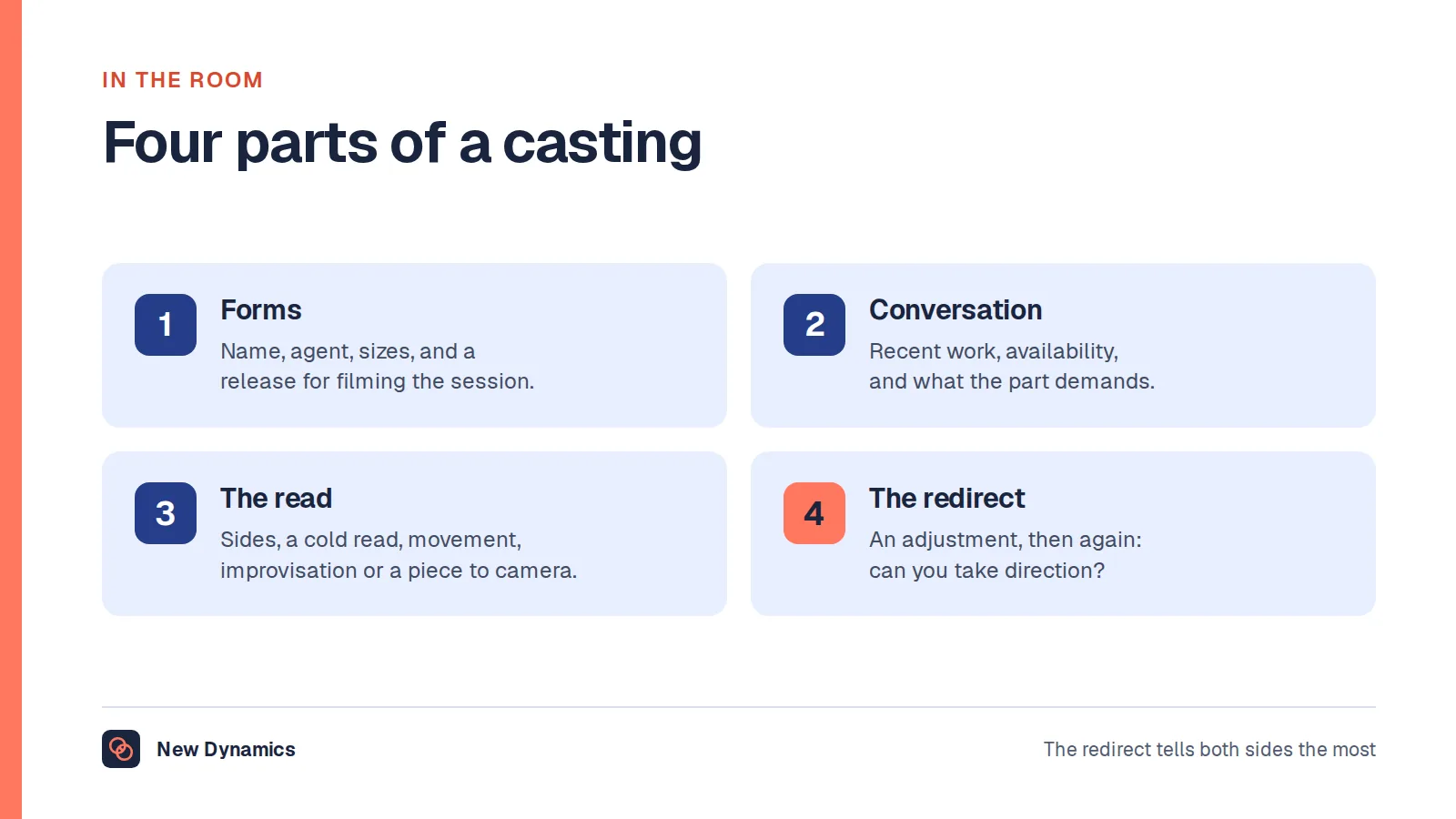
Casting is one of those milestones with rules attached: our post on the casting interview covers the room and the production side.
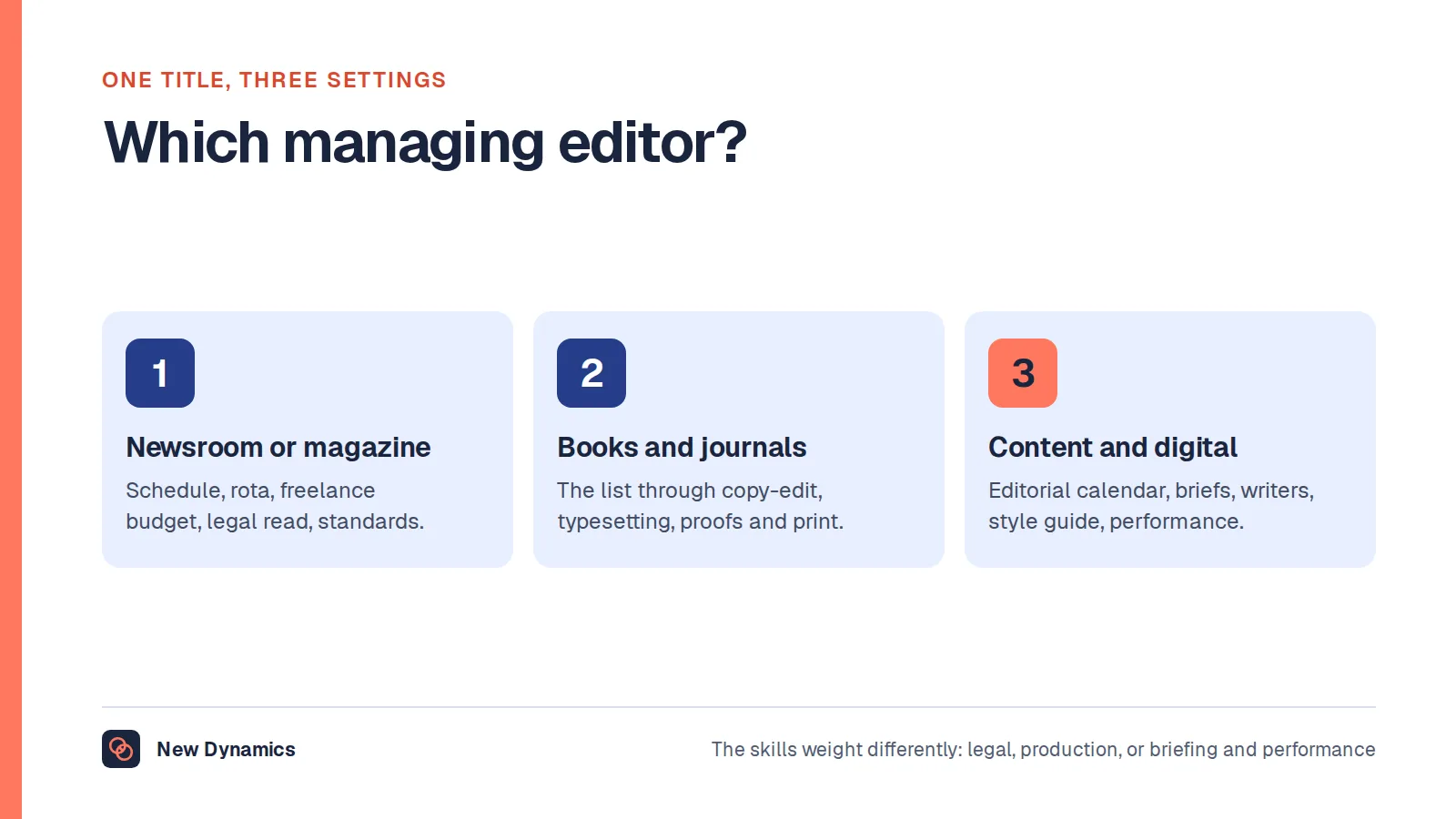
On the written side, the equivalent role is the managing editor, who runs the schedule, budget, people and production of a publication or content team.
What is a creative producer?
Start with producer. Prospects says television, film and video producers “manage all stages of the production process, overseeing all elements from conception to completion”, and that the job is to “deliver the finished production on time and to budget”. O*NET describes producers and directors as people who “produce or direct stage, television, radio, video, or film productions for entertainment, information, or instruction”, with tasks running from researching and studying scripts to budgeting, scheduling and coordinating crews.
Now add creative. A line producer or a project manager is accountable for the schedule and the money. A creative director is accountable for the idea. A creative producer is accountable for both on a given piece of work: they shape the concept with the creative team, choose and brief the talent, protect the idea when time and budget bite, and deliver the finished thing. When the title is used well, it names the person who makes the trade-offs that a pure project manager cannot and a pure creative would rather not.
Where the title appears
| Setting | What the creative producer typically owns | Nearest sibling titles |
|---|---|---|
| Advertising and design agencies | Production of campaigns and assets: film, photography, digital, print; suppliers and budgets | Agency producer, integrated producer, project manager |
| In-house brand studios | A stream of content across channels: briefs, shoots, edits, approvals, publishing | Content producer, studio manager |
| Film, television and digital media | A programme, series, film or format from development to delivery | Producer, series producer, line producer |
| Games and interactive | A feature, level or release: scope, team, schedule, quality | Producer, product owner, development director |
The setting changes the budgets, the teams and the sign-off, and the job description should name it.

Creative producer duties: six responsibilities
Grouped from the Prospects responsibilities and the O*NET tasks, the work has six parts in every setting.
- Develop the idea. Prospects: read, research and assess ideas and finished scripts; act as a sounding board for creative decisions. O*NET: research production topics; study scripts to determine the approach. The creative producer works with writers, designers and directors until the idea is worth producing.
- Plan and budget. Prospects: control budgets and allocate resources; organise shooting schedules. O*NET: management activities including budgeting, scheduling, planning and marketing. The plan is where the trade-offs are first made.
- Assemble and brief the talent. Prospects: hire key staff including directors and crews; assemble creative and practical talent into cohesive teams; commission writers or secure rights. O*NET: identify and approve the equipment and elements required. The producer chooses the people and the suppliers and briefs them well enough that the idea survives the hand-off.
- Run the production. Prospects: hold regular meetings with directors; troubleshoot production problems; ensure regulatory and health-and-safety compliance. O*NET: supervise and coordinate camera, lighting, design and sound crews; confer with technical directors, managers, crew and writers.
- Protect the quality. O*NET: review film, recordings or rehearsals for compliance with standards; establish the pace of programmes. This is the creative half of the job: the review, the note, the decision to reshoot or to stop.
- Deliver and close. Prospects: supervise the project through post-production and deliver on time and to budget. Then the wrap: the reconciled budget, the assets archived, the lessons and the thank-yous.

Creative producer vs creative director vs project manager vs line producer
| Role | Accountable for | Decides |
|---|---|---|
| Creative director | The creative standard across all work | Whether the idea is right; who leads it |
| Creative producer | One piece of work: the idea and its delivery | The trade-offs between idea, time and money |
| Project manager | Scope, schedule, budget and reporting | How the plan runs; escalates creative questions |
| Line producer | The physical production and its budget | Crew, logistics, cost control on set |
The creative director job description covers the role above. In a small agency the creative producer is also the project manager; in a large production the creative producer sits between the executive producer and the line producer. Say in the advert which siblings exist, so candidates know what they are and are not responsible for.

Skills, hours and routes in
Skills. Prospects lists confidence and persuasive communication, editorial judgement, presenting and pitching, negotiation, time management and organisation, creativity, working under pressure, commercial awareness and financial acumen, self-motivation and leadership, plus an understanding of health and safety and industry regulation. O*NET's essential skills are active listening, critical thinking, monitoring, reading comprehension, speaking, writing, active learning and learning strategies. For a creative producer specifically, ask for evidence of judgement on creative work as well as delivery: a portfolio of things produced, and the story of a trade-off made well.
Hours. Prospects describes “regular unsocial hours at weekends and in the evenings” and long hours in meetings or on location. State the pattern and the travel.
Routes in. Prospects lists degrees in media, film, broadcast production and related subjects, creative and digital media apprenticeships, and above all “substantial experience in the industry before moving into the role of producer”, from entry roles such as researcher, assistant producer or runner. O*NET places producers and directors in Job Zone Four: usually a degree plus several years of experience. Many creative producers come from the creative side, as designers, writers or editors who took on delivery, or from the production side, as project managers who took on the idea.
Progression. Prospects says progression for producers has no fixed route and depends on opportunities: co-producer, line producer and associate producer roles, executive producer overseeing several projects, or a studio of one's own. In agencies and in-house studios the ladder runs to senior creative producer, head of production and, for some, creative director.
Creative producer job description template
Job title: Creative Producer (or Senior Creative Producer), with the setting named
Reports to: Head of Production, Creative Director or Executive Producer
Direct reports: Producers, production assistants, coordinators; state which
Scope: State the kinds of work, the typical budgets, the teams and suppliers, and the sign-off the role holds.
Purpose: Take creative work from idea to delivery, on time and to budget, while protecting the quality and integrity of the idea.
Responsibilities:
- Develop ideas with writers, designers and directors; assess scripts, treatments and concepts.
- Plan productions: budgets, schedules, resources, approvals and risk.
- Choose, commission and brief creative talent, crews and suppliers; secure rights.
- Run productions day to day; solve problems; keep compliance, safety and standards.
- Review work at each stage and make the creative and commercial trade-offs.
- Deliver, reconcile the budget, archive the assets and capture the lessons.
- Manage client or stakeholder relationships through the production.
- Lead and develop junior producers and coordinators.
Skills and experience:
- Several years producing creative work in the stated setting, with a portfolio.
- Judgement on creative quality, and the ability to explain a trade-off to a client and a creative team.
- Budgeting, scheduling and negotiation with suppliers.
- Calm under pressure; clear communication; leadership without formal authority.
- Knowledge of the relevant regulation, rights and safety requirements.
Working pattern: State the hours, evenings and weekends, and travel.
Targets: On-time and on-budget delivery, creative quality as judged by the creative director or client, team and supplier feedback, agreed and reviewed.
Frequently asked questions
What does a creative producer do?
Takes a piece of creative work from the idea to the finished thing, on time and to budget, while protecting the idea: developing the concept, planning and budgeting, choosing and briefing talent, running the production, reviewing quality and delivering. Prospects describes producers as managing all stages from conception to completion.
What is the difference between a creative producer and a creative director?
The creative director sets the creative standard across all work and decides whether an idea is right. The creative producer owns one piece of work, both the idea's integrity and its delivery, and makes the trade-offs between idea, time and money.
What is the difference between a creative producer and a project manager?
A project manager is accountable for scope, schedule, budget and reporting and escalates creative questions. A creative producer is accountable for those and for the creative quality of the work, and makes the creative trade-offs. In small teams one person does both.
Where do creative producers work?
Advertising and design agencies, brands' in-house content studios, film, television and digital media companies, and games and interactive studios. The setting changes the budgets, the teams and the sign-off, so a job description should name it.
What qualifications does a creative producer need?
Prospects says producers usually have substantial industry experience, often after a media or production degree or a creative and digital media apprenticeship, entering through roles such as researcher or assistant producer. Experience and a portfolio matter more than any certificate.
Your next step: name the setting and the trade-offs
- Say which setting the role is in and what kinds of work it produces.
- State the budgets, the teams and the sign-off the producer owns.
- Name the sibling roles that exist, so the boundaries are clear.
- Set objectives that cover delivery, budget and creative quality, not delivery alone.
For a method that turns a production slate into quarterly objectives the team can see, read and download our OKR guide. The guide is free to read, and the PDF uses our short download form.
Want producers' objectives, project feedback and reviews in one place across the studio? Book a New Dynamics demo and bring your current job description. You can also email contact@new-dynamics.com.