TL;DR
- There are three legitimate timings: close the review out before the leave starts, hold it after the return, or hold it on an agreed keeping-in-touch day at the employee's request. Sending a review form to someone on leave and waiting for a reply is not one of them.
- Rate the period actually worked and say which period that is. An objective whose window fell inside the leave was not missed, and an annual volume compared against colleagues who worked the full year is not a rating, it is an arithmetic error.
- The pay and promotion rounds that happen during the leave still include the person. GOV.UK says employees are entitled to any pay rises and improvements in terms and conditions given during the leave, and Acas lists pregnancy and maternity among the nine protected characteristics under the Equality Act 2010.
The cycle opens in October. One person on the team started maternity leave in June. The manager has a form, a deadline and no idea what to do, so they pick one of the two defaults: email the form to someone on leave, or quietly leave them out. The first lands as work during protected time off. The second removes them from the ratings, and therefore from the pay round, the promotion list and the record of a year in which they did five months of good work.
This article covers when the review should happen, what to settle before the leave starts, how to rate a part-year fairly, and what to do about decisions taken while the person is away. It describes the position in Great Britain and is general information, not legal advice.
A review cycle that handles absence properly is a design question, not a manager-by-manager judgement call. See how New Dynamics performance reviews keep one cycle and one record when someone's year does not line up with it.
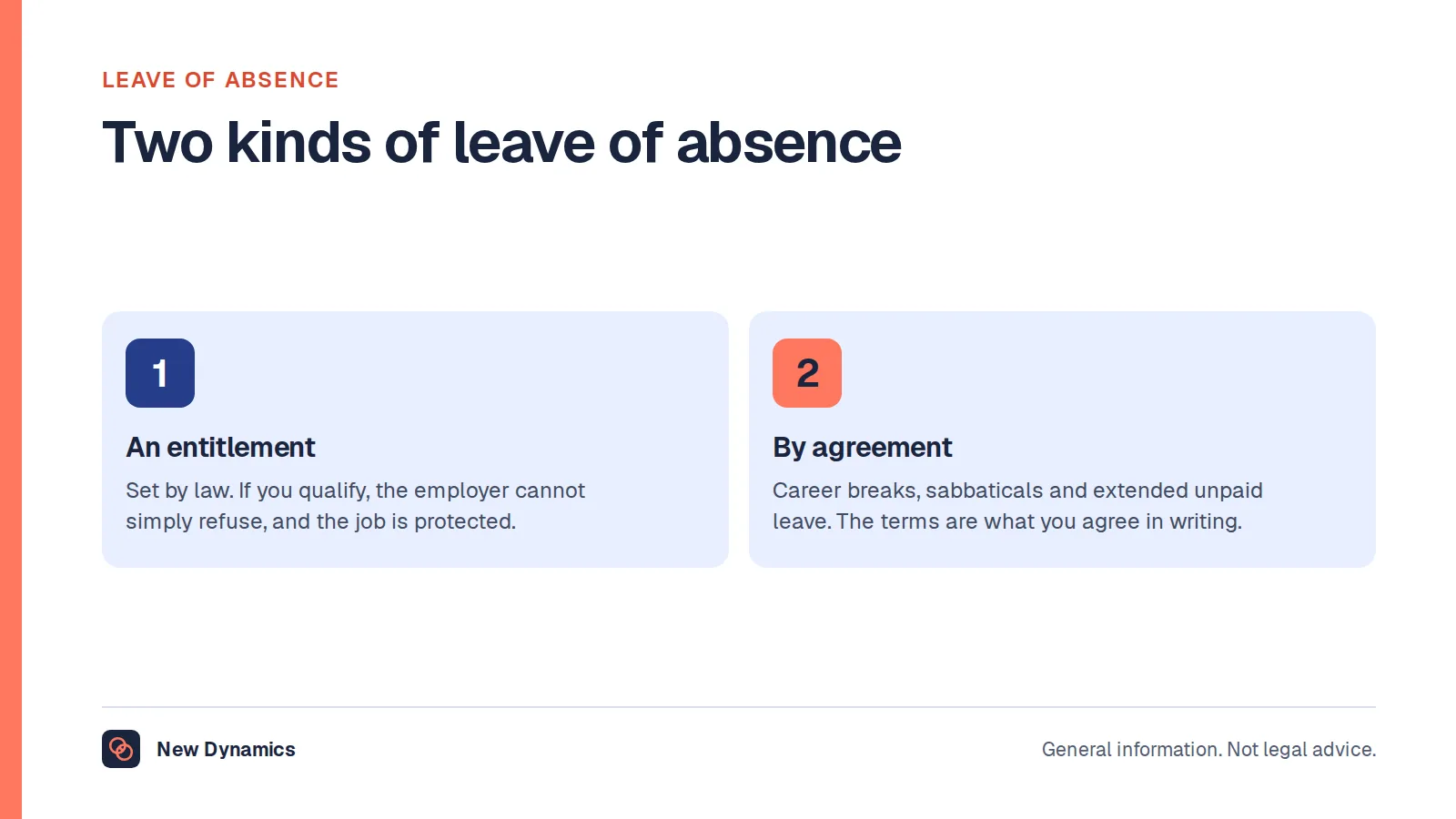
What the law is doing in the background
Acas states that "'pregnancy and maternity' is one of 9 'protected characteristics' covered by discrimination law (Equality Act 2010)", and that the Act defines pregnancy and maternity discrimination as unfavourable treatment that happens "because someone is pregnant", "because someone is on maternity leave or has the right to take maternity leave" or "because of pregnancy-related illness". It adds that this "can happen during recruitment, at work or when people are on maternity leave".
The protected period, Acas says, starts when someone becomes pregnant and usually ends when their maternity leave ends, they return to work, or they leave their job. A rating round, a pay decision or a promotion list that falls inside that window is therefore inside the protected period, which is a good reason to make the handling deliberate rather than improvised.
The practical version for a manager is short: the review must not treat the leave itself as a performance fact. Everything else in this article follows from that.
Three legitimate timings

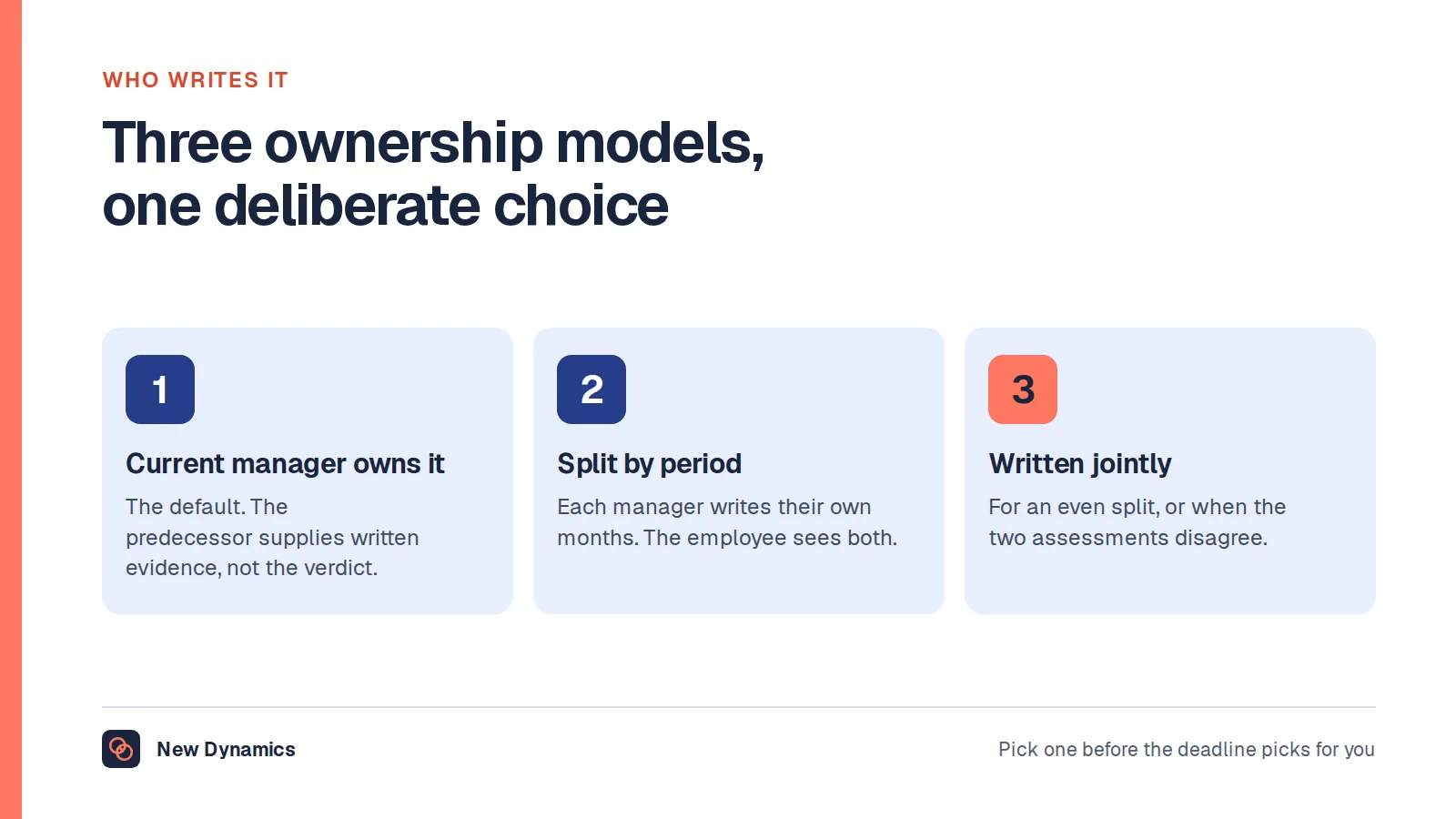
Before the leave starts. The best option in most cases. Close the review out for the period worked, in a meeting held while the person is still at work, and write down which period it covers. Nothing then has to be reconstructed later by a manager who may have changed.
After the return. Hold it within a few weeks of coming back, covering the period worked before the leave, and keep it separate from the conversation about objectives for the period ahead. Running those two conversations together on someone's first week back produces a meeting that is neither.
On a keeping-in-touch day, at the employee's request. GOV.UK says employees "can work up to 10 days during their maternity leave", that these days "are optional - both the employee and employer need to agree to them", and that "the type of work and pay employees get should be agreed before they come into work". So a review can happen during leave, but only when the employee wants it, with the work and the pay agreed in advance. It is their day to spend, and most people have better uses for one of ten.
What is not on the list is sending the form and waiting. A person on leave has no obligation to open it, and a cycle that records non-response as a missing self-assessment has created a disadvantage out of nothing.
Close it out before the leave starts
Six things, in the last fortnight before leave begins. This is the single highest-value half hour in the whole process.
- Close the objectives in writing. Mark what was achieved, what was in flight and what has been handed on. An objective that was transferred to someone else is not an objective that was missed.
- Write the evidence down now, while it is fresh and while the manager who saw it is still the manager. If the reporting line changes during the leave, that record is all the next manager will have: reviewing an employee who changed manager covers what the handover should contain.
- Agree what happens to the work. Who picks it up, and what returns on the way back.
- Agree contact. How much, by what channel, and who initiates. Write down the answer, including "none unless it is urgent" if that is what the person wants.
- Say what happens with pay, bonus and promotion decisions that fall during the leave, before anyone has to ask.
- Diary the return conversation for the first fortnight back, and put a reminder on whoever will be the manager then.

Rating a part-year without penalising the absence
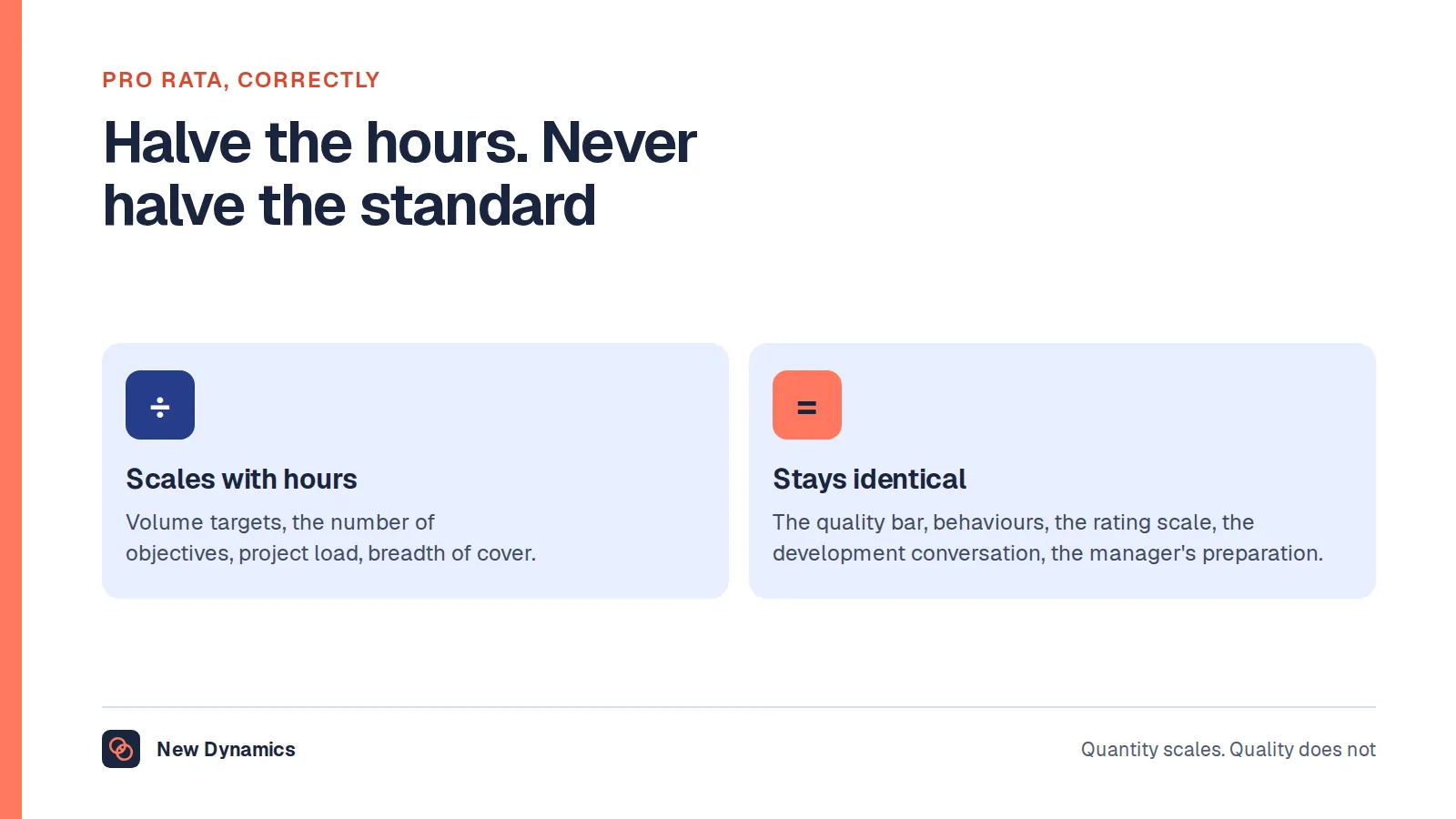
- Say which period you assessed. "This review covers January to June" is a complete and honest statement. A rating that silently represents twelve months is not.
- Do not mark an objective as missed if its window fell inside the leave. It was not attempted, which is a different thing, and the form should let you record that.
- Do not compare annual totals. If colleagues produced a year's volume and this person produced five months of it, the comparison is arithmetic, not performance. The same pro-rata discipline covered in reviewing part-time employees applies here.
- Do not let the gap become a comment. "Lost momentum", "less involved this year" and "will need to rebuild profile" are all ways of writing down the absence.
- Include them in calibration. Leaving someone out of the comparison because their period is shorter is how a shorter period turns into a lower rating that nobody ever argued for.

Decisions taken while someone is away
Pay reviews, bonus rounds and promotion panels do not pause. GOV.UK is explicit that terms and conditions are protected during leave and that employees "are entitled to any pay rises and improvements in terms and conditions given during the leave".
That gives three practical rules:
Pay. Apply the increase the person would have received. If increases are rating-driven, use the rating for the period worked rather than defaulting them to the middle of the scale, and never score them down for months they were not there.
Bonus. Follow the scheme rules as they are written, apply them consistently and record the basis. If a scheme's treatment of absence has never been written down, write it down before the round rather than deciding it person by person.
Promotion. Being on leave is not a reason to leave someone off a list. If a vacancy or a promotion round comes up, they should be told about it and considered on the same evidence as everyone else. Acas describes unfavourable treatment because someone is on maternity leave as exactly what the Act prohibits, and quietly skipping the conversation is the most common form of it.
The return
Statutory Maternity Leave is 52 weeks, made up of 26 weeks' Ordinary and 26 weeks' Additional Maternity Leave, and someone must give at least 8 weeks' notice to change their return date. GOV.UK sets out the right to return to the same job after 26 weeks or less, and to the same job or a similar one, meaning "the same or better terms and conditions", after more than 26 weeks.
For the review process, that translates into four things:
- Set objectives on return, dated from the return. Not backdated to the start of the cycle, and not inherited from whatever was agreed a year ago.
- Give a re-induction. What changed: the team, the system, the priorities, the customers. An hour of this prevents a quarter of quiet confusion.
- Expect a reorientation period, and do not rate it. A few weeks of lower output while someone relearns a job is normal and is not a performance issue.
- Revisit the working pattern honestly. If the person has a flexible working request, that is a separate process with its own rules, and it should not be bundled into the performance conversation.
Frequently asked questions
Can you do a performance review while someone is on maternity leave?
Only by agreement. GOV.UK treats work during maternity leave as a keeping-in-touch day: up to 10 are available, both sides have to agree to them, and the type of work and the pay are agreed before the person comes in. That makes a review during leave possible at the employee's request, but it cannot be expected or scheduled unilaterally, and sending a form and waiting for a reply is not a substitute.
Should an employee on maternity leave be given a rating?
Usually yes, for the period they actually worked, with that period stated on the form. Excluding someone from the ratings excludes them from everything the ratings drive, including pay and promotion. What should not happen is a rating that covers months they were not there, or a lower score justified by the absence.
Do employees on maternity leave still get pay rises?
GOV.UK says employment terms and conditions are normally protected and that employees are entitled to any pay rises and improvements in terms and conditions given during the leave. Where increases follow performance ratings, use the rating for the period worked. This is general information about the position in Great Britain, not legal advice.
Can someone be considered for promotion while on maternity leave?
Yes, and leaving them out is the risk rather than the safe option. Acas describes pregnancy and maternity as a protected characteristic under the Equality Act 2010 and defines the discrimination as unfavourable treatment because someone is on maternity leave. Tell them about the opportunity, agree how they want to take part, and assess them on the same evidence as everyone else.
How do you set objectives for someone returning from maternity leave?
Set them on the day they return, dated from that day, after a re-induction covering what changed while they were away. Do not revive year-old objectives or backdate new ones across the leave. Allow a reorientation period before anything is measured, and keep any conversation about hours or flexible working separate from the performance one.
What should a manager do before someone starts maternity leave?
Close the objectives in writing, record the evidence while it is fresh, agree who picks up the work, agree how much contact the person wants and who initiates it, explain how pay, bonus and promotion decisions during the leave will be handled, and diary the return conversation. Half an hour before the leave starts saves reconstructing a year afterwards.
Your next step: fix the policy, not the individual case
- Write down how your cycle treats part-year employees, including the period-covered field on the form. If it is not on the form, it will not happen.
- Decide the rule for pay and bonus during leave once, in writing, and apply it to everyone.
- Add a pre-leave close-out to the manager checklist that triggers on any leave longer than a month.
- Check last year's ratings for everyone who had a period of leave, and look at whether their scores sit below their own previous ones.
For the mechanics of a cycle that handles exceptions without improvising, read and download our performance review guide. The guide is free to read, and the PDF uses our short download form.
Want a review cycle that records which period it covers and keeps the evidence through a year of leave? Book a New Dynamics demo and bring your current form. You can also email contact@new-dynamics.com.