TL;DR
- A babysitter's core responsibility is supervision: keeping children safe, following the household's routine, and telling the parents what happened. O*NET's childcare workers occupation covers maintaining “a safe play environment”, observing and monitoring children's play, and communicating with parents “about daily activities, behaviors, and related issues”.
- Most difficulties come from things nobody wrote down: bedtime, allergies, screen rules, who may collect a child, what to do if someone knocks, and which number to ring first. A one-page brief takes ten minutes and lasts for years.
- Sitters are often teenagers. GOV.UK states that children “can work part-time from the age of 14”, and that “in some local council areas, children can work part-time from the age of 13”, with the local council's education department as the contact.
Babysitting looks like the simplest job in the world until the smoke alarm goes off, a child says they feel sick, or someone rings the doorbell at nine o'clock and the sitter does not know whether to answer.
This article sets out the responsibilities of babysitting in five groups, the one-page brief parents should write before the first evening, how a babysitter differs from a nanny or a registered childminder, and the checks worth making. It is general information rather than legal or childcare advice.
If you employ childcare staff rather than book an occasional sitter, the same clarity belongs in a written role. See how New Dynamics onboarding brings tasks and expectations into one clear path.
The five groups of responsibility

O*NET's Childcare Workers occupation covers people who "attend to children at schools, businesses, private households, and childcare institutions", and its task list maps neatly onto an evening of babysitting.
- Safety. Maintain "a safe play environment". In practice: knowing where the exits, the fuse box and the first aid kit are, what the child is not allowed to do, and what to do if something goes wrong.
- Supervision. Observe and monitor "children's play activities", which is the actual job and the reason phones matter less than parents fear and more than sitters admit.
- Routine. Meals, bath, teeth, story, bed, at the times the household uses. Instruct children "in health and personal habits, such as eating, resting, and toilet habits", which mostly means keeping the routine the parents already have.
- Food and personal care. Preparing what the parents have set out, dressing children, changing nappies, and tidying "toys and materials" afterwards.
- Reporting back. Communicate "with children's parents or guardians about daily activities, behaviors, and related issues", including anything unusual. For regular arrangements, keeping simple records of "activities, meals served, and medications administered" saves confusion later.
One task from that list deserves its own line: identifying "signs of emotional or developmental problems in children" and bringing them to a parent's attention. A sitter is not diagnosing anything, but they see the child in a setting the parents do not, and saying "he seemed very anxious about school" is part of the job.
The one-page brief

Write it once, keep it on the fridge, update it when something changes.
- Names, ages and the routine, with times: food, bath, screens, bed.
- Health: allergies, medicines and dosages, inhalers, anything to watch for, and the GP's number.
- Rules: food that is allowed, screen limits, rooms that are out of bounds, whether the child may go outside, who may collect them, and what to do if anyone else arrives.
- Emergencies: where you will be, both parents' mobiles, a second adult who can get there quickly, the address written in full for a 999 call, and where the keys are.
Ask the sitter to read it in front of you the first time. It takes two minutes and prevents most of the phone calls.
What "in charge" means
The sitter is responsible for the children while the parents are out, and parents remain responsible for the arrangement itself: whether the sitter is suitable, whether the children can be left with them, and what instructions were given.
Two rules make that workable:
- Nothing important is decided alone. Illness, an injury beyond a plaster, a locked-out neighbour, an unexpected visitor: the sitter calls.
- Calling early is never wrong. Say this explicitly. Teenage sitters in particular will wait far too long rather than seem incapable.
How old a child must be before they can be left, and how young a sitter can be trusted with them, are judgement calls rather than fixed rules. The NSPCC publishes guidance for parents on leaving children alone, and your local council's children's services can advise.
Babysitter, nanny or childminder?

- Babysitter. Occasional, usually in the child's home, usually in the evening, usually while the parents are out for a few hours.
- Nanny. Employed by the family, regular hours, in the family's home, often with responsibility for the children's routine, meals, laundry, nursery runs and activities. A nanny is normally an employee, which brings payroll and contractual duties for the family.
- Registered childminder. Cares for children in the childminder's own home as a business, and is registered and inspected. Registration requirements differ across the UK, so check the rules where you live.
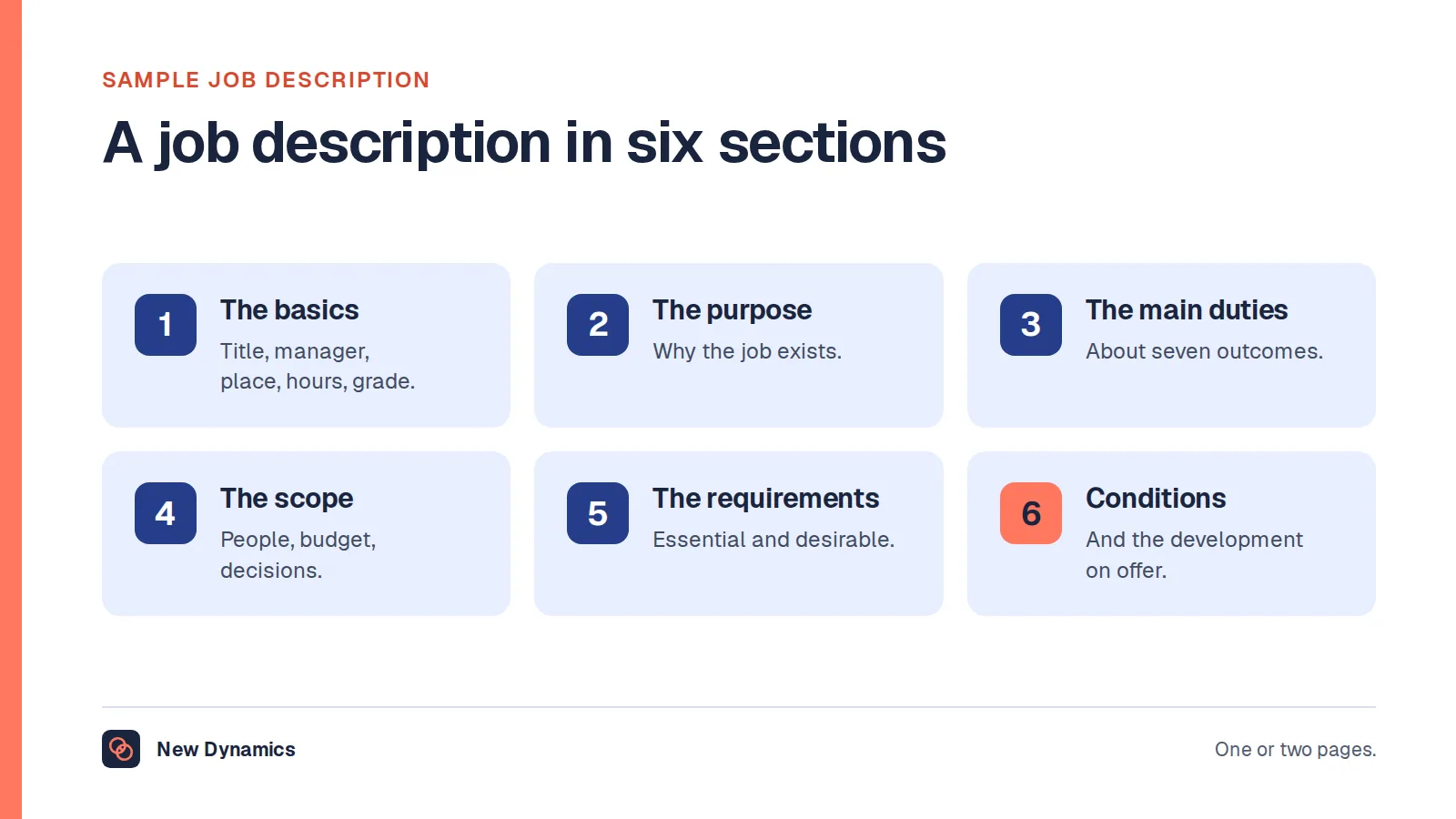
The distinction matters because it changes who is the employer, what is expected and what registration or insurance applies. If you are writing a paid role rather than arranging an evening out, our sample job description post covers the format.
The teenage sitter, and the age rules
Babysitting is many people's first paid work, and the rules on young people working are often missed. GOV.UK's child employment guidance states that children "can work part-time from the age of 14", and that "in some local council areas, children can work part-time from the age of 13"; the contact for local rules is "your local council's education department or education welfare service". Children "can only start full-time work once they've reached the minimum school leaving age", and can then work "up to a maximum of 40 hours a week". Once someone reaches 16, "you may need to pay them through PAYE", and at 18 "adult employment rights and rules then apply". In England, "a young person must be in part-time education or training until they're 18".
Local byelaws also set permitted hours for young people's part-time work, so check with the council rather than assuming.
Checks, references and first aid
For a private arrangement, most families rely on knowing the person, a recommendation or an agency. Where you want more:
- References, taken up properly, and a conversation rather than a text.
- A basic DBS check. GOV.UK's guidance on requesting a basic DBS check explains that it provides "a copy of your criminal record", is "available for people working in England and Wales", costs £21.50, "will only show convictions that are not 'spent'", usually takes "up to 3 days", and that "you must be 16 or over to apply". Applications for jobs in Scotland or Northern Ireland go through different routes.
- Paediatric first aid training, which is common for nannies and worth asking about for anyone caring for babies or toddlers.
- Insurance, for anyone working as a professional nanny or childminder.
Two honest caveats. A basic check shows less than a standard or enhanced one, and eligibility for those depends on the role rather than on the employer's preference. And no check replaces judgement, a trial afternoon while you are in the house, or asking the children afterwards how it went.
Putting childcare work on a CV
For a nanny or childcare CV, write duties the way an employer reads them: what you were responsible for, for how many children, of what ages, and what you did that was more than supervision.
Nanny, private family, [city], [dates]
Sole charge of two children aged 3 and 6. Responsible for the daily routine including school runs, meals, homework and bedtime. Planned activities and outings, managed allergies and medication, kept a daily log for parents, and maintained the children's laundry and play areas. Paediatric first aid trained; clean driving licence; references available.
Three lines beat a list of adjectives. Name the ages, say "sole charge" if it was, and mention first aid, driving and languages, which are the things families search for.
Frequently asked questions
What are the responsibilities of a babysitter?
Keeping children safe, supervising them closely, following the household's routine for meals, bath and bedtime, preparing food that has been left, handling personal care such as changing and dressing, tidying up afterwards, and telling the parents what happened, including anything unusual about the child's mood or behaviour.
What should parents tell a babysitter?
Names, ages and routine with times; allergies, medicines and any health issues plus the GP's number; the rules on food, screens, rooms and going outside; who may collect the children and what to do if anyone else arrives; and emergency details, where the parents will be, two mobile numbers, a nearby adult, and the full address for a 999 call.
What is the difference between a babysitter and a nanny?
A babysitter works occasionally, usually in the evening, and supervises children while the parents are out. A nanny works regular hours for the family, usually in the family's home, with responsibility for the children's routine and often for related tasks such as meals, laundry and school runs. A nanny is normally an employee, which brings payroll and contractual duties.
How old do you have to be to babysit?
There is no single age, and it is a judgement about the individual, the children and the arrangement. On paid work generally, GOV.UK says children can work part-time from 14, and from 13 in some local council areas, with local councils setting the detail. Parents remain responsible for whether the person they leave their children with is suitable.
Do babysitters need a DBS check?
Not automatically for a private family arrangement. Anyone aged 16 or over can request a basic DBS check for themselves, which shows unspent convictions, costs £21.50 and usually takes about three days. Standard and enhanced checks depend on the role rather than on preference, so ask the agency or employer what applies.
How do you write babysitting on a CV?
Give the ages and number of children, say whether you had sole charge, and list what you were responsible for beyond supervision: routine, school runs, meals, homework, medication, activities and records. Add paediatric first aid, a driving licence and languages if you have them.
Your next step: write the page before you go out
- Write the one-page brief: routine, health, rules, emergencies.
- Read it through with the sitter the first time, in the house.
- Agree that calling early is expected, not a failure.
- If this is a paid regular role, write it as a job description rather than an arrangement.
For turning a regular childcare role into a proper first week, read and download our employee onboarding guide. The guide is free to read, and the PDF uses our short download form.
Want expectations, tasks and check-ins written down once for any role you employ? Book a New Dynamics demo and bring your current induction notes. You can also email contact@new-dynamics.com.