TL;DR
- A chief technology officer is, in the Cambridge Business English Dictionary's definition, the person responsible for the technical needs of a company or organisation; Oxford says the person responsible for managing the company's technology requirements. The title covers four different jobs: the start-up CTO who builds the product, the scale-up CTO who builds the engineering organisation, the enterprise CTO who sets architecture and innovation beside a CIO, and the technical figurehead who represents the company's technology to customers and investors.
- Across the versions, the duties fall into seven groups: technology strategy and roadmap, architecture and platform, the engineering organisation, security, data and resilience, delivery with product, vendors and budget, and the external voice. O*NET's occupation for top technology executives lists developing computer information resources providing for data security, strategic computing and disaster recovery, evaluating the organisation's technology use and recommending improvements, staying abreast of advances, controlling the budget and recruiting and supervising staff.
- The CTO differs from the CIO, who runs the internal systems the business operates on, from the VP of engineering, who runs delivery and the engineering team day to day, and from the head of IT, who runs infrastructure and support. Write the job description around which version is being hired, the stage of the company and the decisions the CTO owns, and set objectives beyond shipping: reliability, security, team health and cost on the same page as the roadmap.
Ask five companies what their chief technology officer does and you will get five jobs: a founder who still writes most of the code, an executive who has not opened an editor in years and runs three hundred engineers, an architect who sets standards for a bank's systems while a CIO runs them, and a well-known engineer whose main job is to convince customers and investors that the technology is sound. The CTO job description has to say which of these it is, because a candidate who is right for one is wrong for the others.
This article gives the job description of a chief technology officer in a way that survives that variety: the definition from two dictionaries, the four versions of the job, seven duties that appear in different proportions in each, the difference from a CIO, a VP of engineering and a head of IT, the skills and the route in, and a template with objectives that go beyond what shipped. It draws on the US O*NET occupational database's entry for the managers who lead information systems and technology functions.
A CTO's first structural decision is usually the shape of the engineering organisation, and the second is how it changes as the company grows. See how New Dynamics org charts show roles, reporting lines and the relationships between teams, so the structure is visible to everyone it affects.
What is a chief technology officer?
The Cambridge Business English Dictionary defines a chief technology officer as “the person who is responsible for the technical needs of a company or organization”. The Oxford Learner's Dictionary gives “the person in a company who is responsible for managing the company's technology requirements”. Both are deliberately broad, because the job is.
O*NET does not list the CTO title separately; its occupation for computer and information systems managers covers IT directors, information systems directors and the executives above them, and its tasks describe the core of the job at any level: “develop computer information resources, providing for data security and control, strategic computing, and disaster recovery”, “evaluate the organization's technology use and needs and recommend improvements, such as hardware and software upgrades”, “stay abreast of advances in technology”, “consult with users, management, vendors, and technicians to assess computing needs and system requirements”, “develop and interpret organizational goals, policies, and procedures”, “control operational budget and expenditures” and “recruit, hire, train and supervise staff, or participate in staffing decisions”.
The four versions of the CTO job
- The start-up CTO. Often a co-founder. Builds the first product, chooses the stack, hires the first engineers and writes code most days. The job is the product; the title is a promise about the future.
- The scale-up CTO. Stops writing production code and builds the engineering organisation: teams, managers, hiring, process, architecture that will survive growth. The job is the organisation and the platform.
- The enterprise CTO. In a large company with a CIO, sets technology strategy, architecture standards and innovation, often for products and platforms the company sells, while the CIO runs the systems the company operates on. The job is direction and standards.
- The technical figurehead. Represents the company's technology to customers, partners, investors, regulators and the engineering community; advises the board; may have no direct reports. The job is credibility and judgement.
Most real CTO jobs are a mix, and the mix changes as the company grows. The advert should say which version the company needs now and which it expects in three years.

Chief technology officer responsibilities: seven duties
In proportions that vary with the version, the work has seven parts.
- Technology strategy and roadmap. Decide what the technology must do for the business over the next one to three years: build, buy, partner, retire. Translate the company strategy into a technology roadmap and the roadmap into priorities for the teams.
- Architecture and platform. Set the architecture, the standards and the platform choices; decide what is core and what is commodity; keep technical debt visible and paid down deliberately. O*NET's task is to review and approve systems before implementation.
- The engineering organisation. Design the teams and the reporting lines; hire, develop and retain engineers and managers; set how work flows from idea to production; build the culture of review, testing and learning. O*NET lists recruiting, hiring, training and supervising staff.
- Security, data and resilience. Own the security posture, data protection, backup and disaster recovery and the response when something fails. O*NET's phrase is providing for data security and control, strategic computing and disaster recovery.
- Delivery with product. Partner with the product function to ship the roadmap: scope, sequencing, trade-offs and the honest conversation about what will not be done.
- Vendors and budget. Control the technology budget; negotiate with cloud, software and services vendors; make the build-or-buy calls with the numbers attached.
- The external voice. Represent the technology to customers, investors, partners and regulators; stay abreast of advances, as O*NET puts it, and decide which ones matter to this company.

CTO vs CIO vs VP of engineering vs head of IT
| Role | Owns | Faces |
|---|---|---|
| CTO | Technology strategy, architecture, the products the company builds | Customers, the market, the board |
| CIO | The internal systems and information the business runs on | The business's own functions |
| VP of engineering | Delivery, the engineering team, process and people day to day | The engineers and the product team |
| Head of IT | Infrastructure, devices, support, access | Every employee |
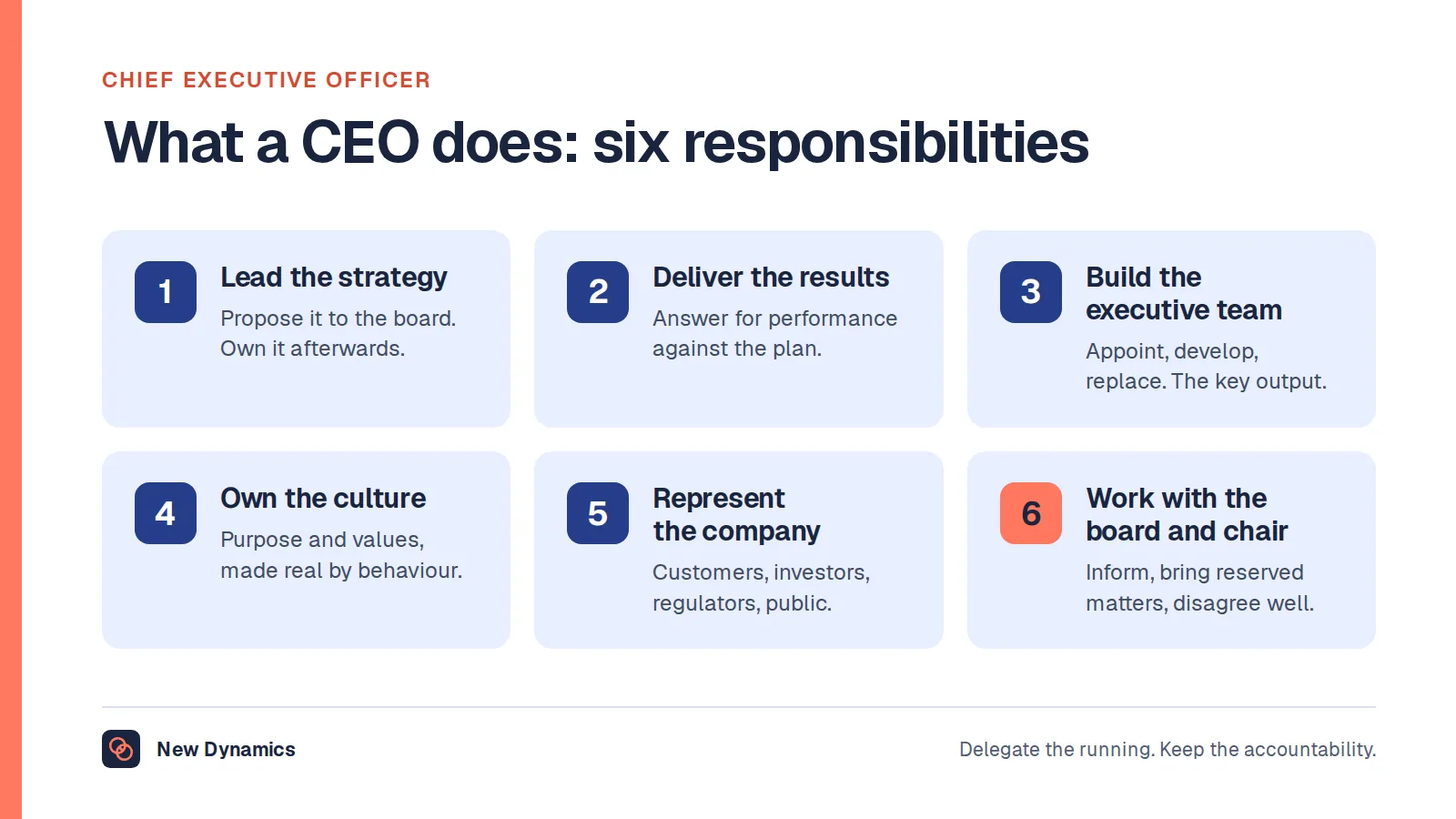
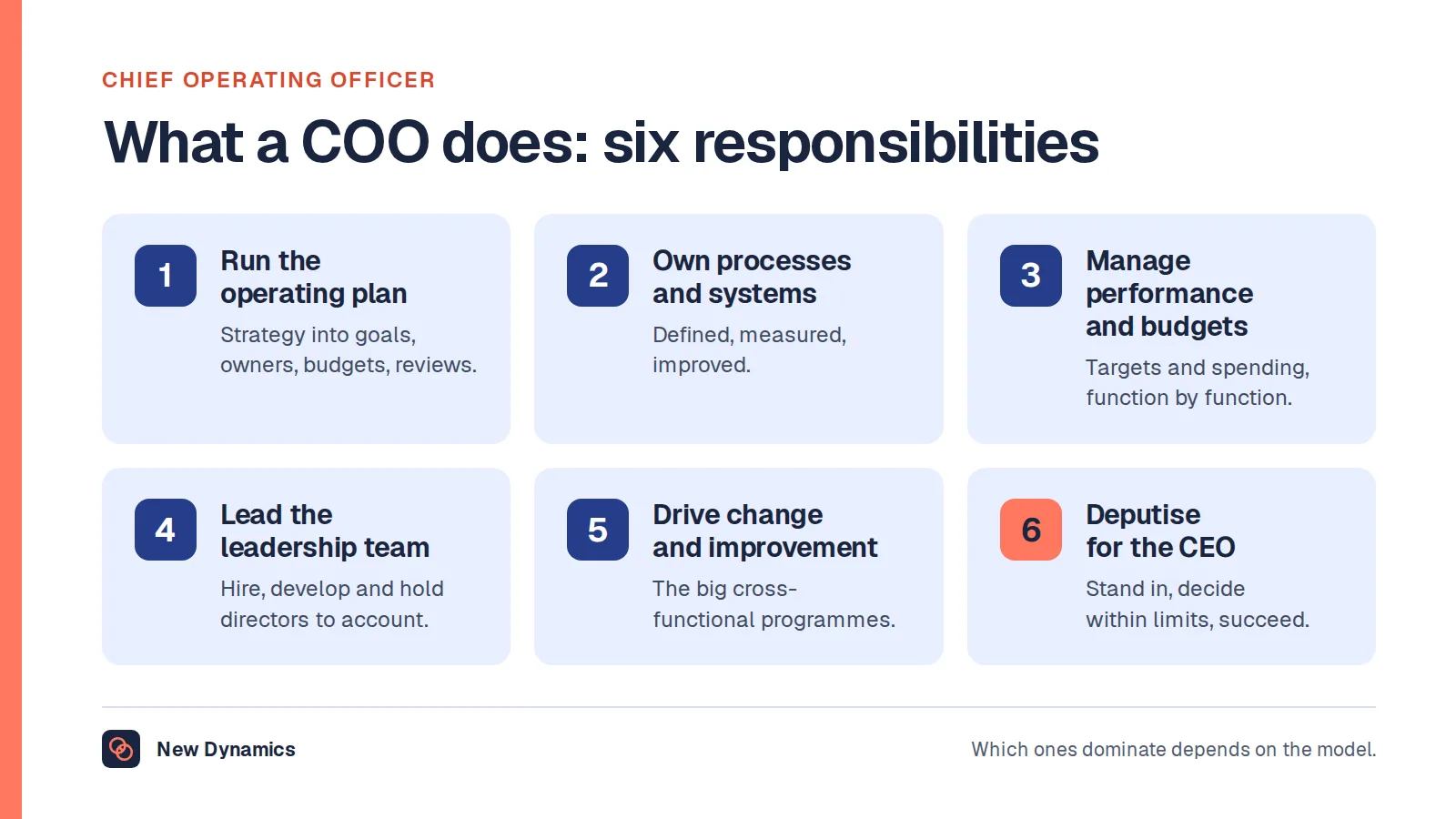
In a small company one person holds all four. In a larger one, the CTO and CIO split external and internal, and the VP of engineering takes the organisation so the CTO can take the direction. Say in the advert which of the four the CTO owns and who holds the rest. Our chief operating officer job description and CEO job description set out the neighbouring seats at the executive table.
Skills employers look for
- Technical judgement at the level of the company's stage. Enough depth to make architecture calls credibly and know when to defer to the team.
- Organisational design and hiring. The scale-up CTO's job is mostly people: managers hired well, teams shaped well, engineers who stay.
- Commercial and product sense. The ability to say what a technical choice costs and earns, in the CEO's terms.
- Risk judgement. Security, data, resilience and the calls about what to fix now and what to accept.
- Communication in three registers: to engineers, to the board and to customers.
- Calm in incidents, because the CTO sets the tone when production is down.
Qualifications and the route in
O*NET places computer and information systems managers in Job Zone four, usually a bachelor's degree, and most CTOs hold a degree in computer science or engineering, though the evidence that matters is a record of building systems and teams at the relevant scale. The routes in are the technical co-founder, the VP of engineering or head of engineering who steps up, the chief architect, and, for the enterprise version, the senior technologist from a larger company. State the evidence the company wants: systems built at the target scale, teams grown from and to certain sizes, a security or resilience record, or products taken to market.
CTO job description template
Job title: Chief Technology Officer
Reports to: Chief Executive Officer
Scope: State the version being hired and the stage of the company; the size of the engineering organisation now and in the plan; the products and platforms; whether a CIO, VP of engineering or head of IT exists; the budget; and the decisions the CTO owns outright.
Purpose: Set and deliver the technology strategy that the company's plan depends on: the right architecture, an engineering organisation that ships and lasts, systems that are secure and resilient, and a technology budget spent on what matters.
Responsibilities:
- Own the technology strategy and roadmap; translate the company plan into technical priorities and build, buy and retire decisions.
- Set architecture, standards and platform choices; keep technical debt visible and managed.
- Design and lead the engineering organisation; hire, develop and retain engineers and managers; set how work flows to production.
- Own security, data protection, backup, disaster recovery and incident response.
- Partner with product to deliver the roadmap and make trade-offs openly.
- Control the technology budget and vendor relationships; make the commercial case for technical choices.
- Represent the company's technology to customers, investors, partners and regulators; advise the board.
Experience and attributes:
- A record of building products and systems at the target scale, and of growing engineering teams through comparable stages.
- Architecture judgement and current technical depth appropriate to the version being hired.
- Experience owning security, resilience and incident response.
- Commercial fluency; clear communication with engineers, executives and customers.
- Calm, decisive leadership under pressure.
Working pattern: State location, travel and the expectations of an executive role.
Objectives beyond shipping:
- Roadmap. The agreed roadmap delivered, with changes to scope decided openly with product and the CEO.
- Reliability and security. Availability and incident targets met; security programme milestones and audit outcomes.
- Organisation. Engineering hiring plan met, managers in place, retention of the engineers the company most needs, and an honest measure of team health.
- Cost. Technology spend within budget and the unit economics of the platform moving the right way.

Frequently asked questions
What does a CTO do?
Sets and delivers the company's technology strategy: the roadmap, the architecture and platform choices, the engineering organisation, security and resilience, delivery with product, the technology budget and vendors, and the company's technical voice to customers, investors and the board. The Cambridge Business English Dictionary defines the chief technology officer as the person responsible for the technical needs of a company.
What is the difference between a CTO and a CIO?
The CTO owns technology strategy and the products and platforms the company builds, facing customers and the market; the CIO owns the internal systems and information the business runs on, facing its own functions. In small companies one person does both; in large ones they sit side by side.
What is the difference between a CTO and a VP of engineering?
The CTO sets the direction: strategy, architecture, standards and the external voice. The VP of engineering runs delivery and the engineering organisation day to day: teams, managers, process and people. A scale-up often hires a VP of engineering so the CTO can move from running the team to leading the technology.
What qualifications does a CTO need?
Usually a degree in computer science or engineering, but the evidence that matters is a record of building systems and teams at the relevant scale. The US occupational database places the managers who lead technology functions in Job Zone four, usually a bachelor's degree.
How should a CTO be measured?
On the roadmap delivered, reliability and security outcomes, the strength and health of the engineering organisation, and the technology budget and unit economics, all on the same page. Shipping alone rewards the wrong trade-offs.
Your next step: name the version and the decisions
- Decide which of the four CTO jobs the company needs now, and which in three years.
- List the decisions the CTO owns outright and who holds the CIO, VP of engineering and head of IT responsibilities.
- Write the objectives beyond shipping and agree them with the CEO before the advert goes out.
- Draw the engineering organisation as it is and as it should be in a year.
For a way to connect an executive's objectives to every team's goals, read and download our OKR guide. The guide is free to read, and the PDF uses our short download form.
Want executive objectives, team goals and the org chart in one place, visible to everyone they affect? Book a New Dynamics demo and bring your current roadmap. You can also email contact@new-dynamics.com.