TL;DR
- Pooling means grouping people or things together and treating the group as one for a particular purpose. At work it appears in three places that matter: redundancy selection, tips, and recruitment.
- The consequential one is redundancy. Acas says selection pools “help make sure employees are selected for redundancy in a fair way”, that each pool should include “all roles that are the same or similar”, and that scoring criteria must be applied “in the same way for all employees in the pool”.
- Tip pooling is different again. GOV.UK states that tips “do not count towards the National Minimum Wage”, that “by law, all tips must be given to workers without deductions”, and that a “tronc” is a separate system for managing and sharing them out.
"You're in the pool" is one of those phrases that means almost nothing until you know which pool, and then means a great deal.
This article explains what pooling means at work: selection pools in redundancy, tip pooling and the tronc, talent pools in recruitment, and the everyday senses. It is general information rather than legal advice.
Pools, criteria and scores are a process with stages and records. See how New Dynamics workflows let you define your own stages, forms and approvals with a completion view instead of a spreadsheet.
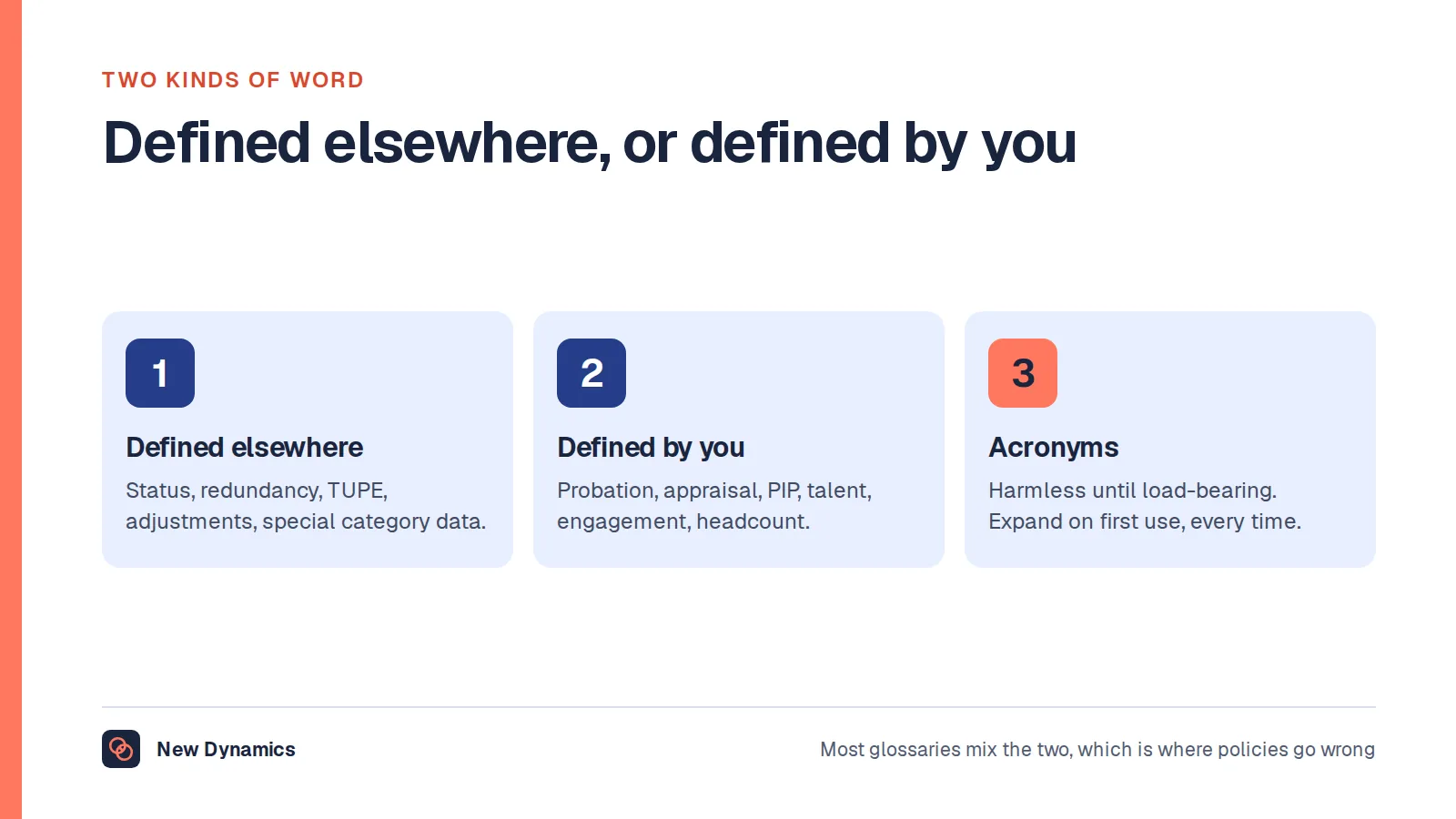
The four meanings

- Redundancy selection pool. The group of employees whose roles are compared when an employer reduces numbers.
- Tip pooling. Tips collected together and shared out among staff, often through a tronc.
- Talent pool. A group of candidates an employer keeps in mind, or keeps on file, for future roles.
- Everyday pooling. Sharing resources: a car pool, a staffing pool for cover, a pooled budget between departments.
The word also has technical meanings in insurance, investment and statistics, which are outside the scope of this article.
Selection pools in redundancy

This is the meaning with consequences attached. Acas's guidance on selecting employees for redundancy begins with the principle: "you need to select people for redundancy in a fair way." It also notes that redundancy "only applies to those with the legal status of employee", and that someone "is not likely to be an employee if they're: an agency worker, a casual worker, on a zero-hours contract".
Where a whole team or function is going, the group is obvious. Where an employer needs to reduce numbers within a team, it has to "set up selection criteria" and "make a list of roles to be considered for redundancy (one or more 'selection pools')".
How a pool is drawn. Acas says selection pools "help make sure employees are selected for redundancy in a fair way", and that "where a number of different roles are at risk of redundancy, you may need to have more than one selection pool". Each pool should include "all roles that are the same or similar", and the employer "should also consider including roles that have similar skills". Its example: "all marketing roles are in a selection pool. You could also include roles from the press and communications team if the skills are similar to those needed for marketing."
What must be checked first. When setting up a pool, an employer "should check and follow any agreements you may have with a recognised trade union" and any "existing redundancy policy". Where there is no policy or agreement, the employer "should consider consulting any recognised trade union on how the pool should be set up".
The criteria. Selection criteria should have been included in consultation, and "should be as objective and measurable as possible", which Acas defines as criteria that "should be fair, be based on facts that can be measured and not be affected by personal opinions". Crucially: "you must apply the scoring criteria in the same way for all employees in the pool", though different criteria may be needed for different pools.
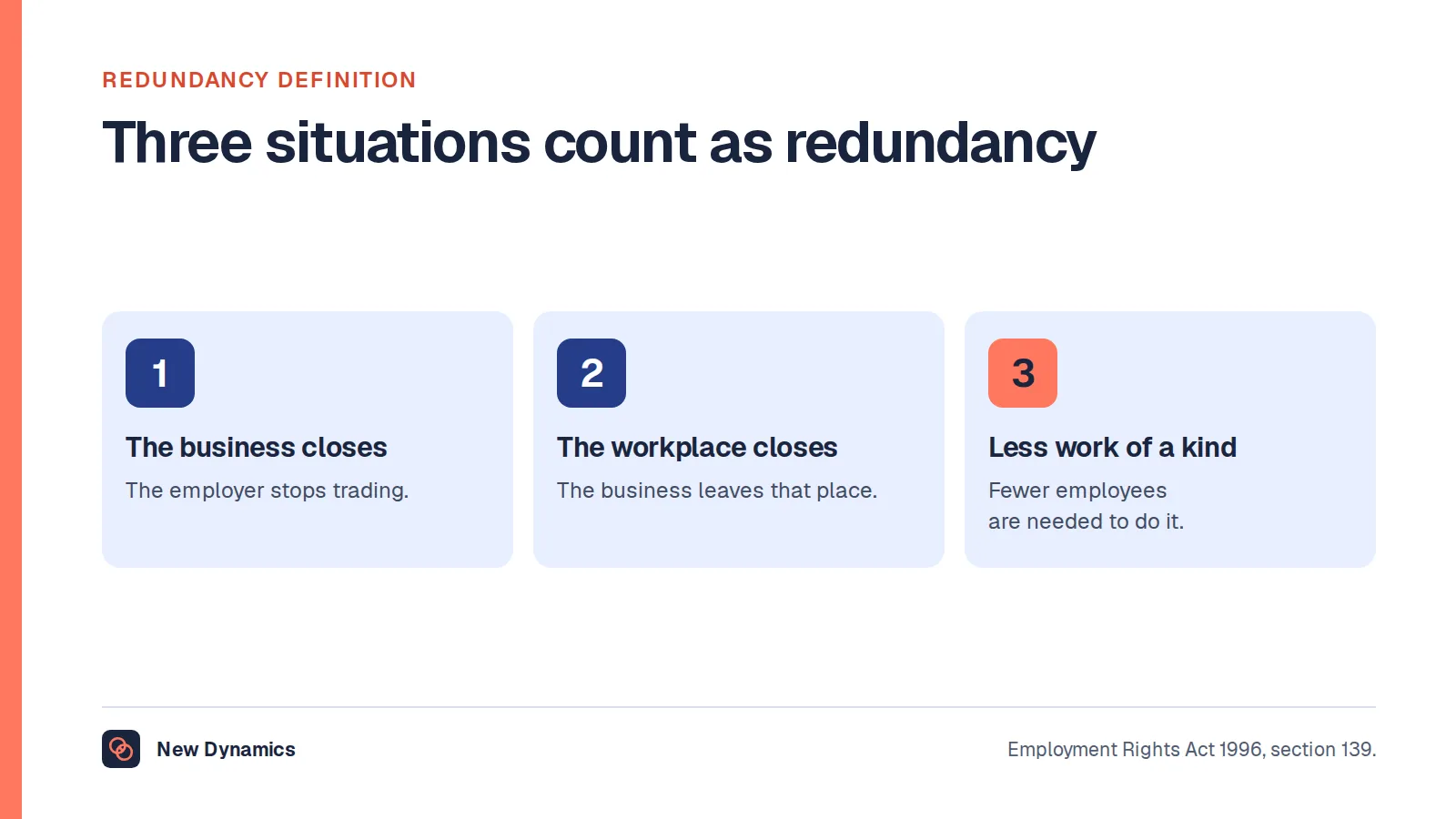
Our redundancy definition post covers the wider process, and our redundancy and workforce change guide covers running it properly.
Tip pooling and the tronc
A different world, and one where the rules changed within living memory for everyone working in hospitality. GOV.UK's guidance on tips at work sets out the basics:
- Tips are not wages for minimum wage purposes. They "do not count towards the National Minimum Wage".
- They are still taxable. "You still have to pay Income Tax on tips and may have to pay National Insurance."
- They can arrive three ways: directly from a customer, "as part of your pay packet from your employer", or "through a separate system for managing and sharing out tips at your workplace (known as a 'tronc')".
- They belong to workers. "There is a statutory code of practice on the distribution of tips", and "by law, all tips must be given to workers without deductions."
The code covers which workers and tips are in scope, how employers ensure tips are distributed "fairly and transparently", "the need for a written tipping policy and accurate record-keeping", and "steps for resolving disputes, including escalation to an employment tribunal". If you run a tip pool, the written policy and the records are not optional extras; they are the part that gets examined.
Talent pools in recruitment
A talent pool is a group of people an employer keeps in mind for future vacancies: strong candidates who came second, speculative applicants, former employees, or people met at events.
Useful, and frequently done carelessly. Keeping someone's application on file is processing their personal information, and the ICO's draft guidance on recruitment and selection (the consultation has closed and the final version is to follow) is aimed at employers and recruiters, covers "candidates, prospective candidates" among the people whose information is processed, and notes that the labour market supply chain "can be complex, with end-to-end recruitment processes often involving several organisations".
Three practical rules follow: tell candidates if you intend to keep their details and for how long, give them a way to say no, and actually delete what you said you would delete. A talent pool nobody has contacted in two years is not an asset.
Everyday pooling
Resource pooling covers the ordinary uses: a staff bank or cover pool that several teams draw on, a pooled vehicle, a shared budget, a pooled inbox. The same question makes each of them work or fail, who decides priority when two people want the same resource at the same time? Write that down when the pool is created rather than during the first argument.
If you have been told you are in a pool

Four questions worth asking, calmly and in writing:
- Which pool am I in, and who else is in it? You do not need names to understand the shape of it.
- How was the pool decided, and does it follow a policy or union agreement?
- What are the criteria, and how are they scored? Acas expects them to be objective, measurable and applied the same way across the pool.
- What is the timetable, including consultation, scoring, outcomes and appeal?
Being in a pool does not mean you have been selected. It means you are in the group being compared, and the fairness of that comparison is exactly what the process is supposed to demonstrate.
Frequently asked questions
What does pooling mean at work?
Grouping people or things together and treating the group as one for a purpose. The three workplace meanings that matter are redundancy selection pools, tip pooling, and talent pools of candidates for future roles. There are also everyday uses such as a cover pool, a car pool or a pooled budget.
What is a selection pool in redundancy?
The group of employees whose roles are compared when an employer needs to reduce numbers. Acas advises including all roles that are the same or similar in a pool, and considering roles with similar skills, with more than one pool where several different roles are at risk.
How should a redundancy selection pool be decided?
By following any existing redundancy policy or trade union agreement first, and by consulting a recognised union where there is none. The pool should group the same or similar roles, and the selection criteria should be objective, measurable and applied in the same way to everyone in that pool.
Does being in a selection pool mean I am being made redundant?
No. It means your role is in the group being compared under the selection criteria. The outcome depends on the scoring, the number of roles being removed and what happens during consultation, including alternative employment.
What is tip pooling and what is a tronc?
Tip pooling is collecting tips together and sharing them among staff. A tronc is a separate system for managing and sharing out tips at a workplace. Tips do not count towards the National Minimum Wage, they are taxable, and by law all tips must be given to workers without deductions, under a statutory code of practice.
What is a talent pool?
A group of candidates an employer keeps in mind for future roles, strong runners-up, speculative applicants, former employees and contacts. Keeping their details is processing personal information, so tell people you are doing it, say for how long, let them opt out, and delete what you promised to delete.
Your next step: name the pool and its rules
- If it is a redundancy pool, write down how it was drawn and against which policy.
- Make the criteria objective and measurable, and score everyone in the pool the same way.
- If it is a tip pool, publish the written policy and keep the records.
- If it is a talent pool, tell candidates and set a retention period you will honour.
For running workforce change properly from consultation to outcome, read and download our redundancy and workforce change guide. The guide is free to read, and the PDF uses our short download form.
Want selection stages, scores and records in one auditable place rather than in several spreadsheets? Book a New Dynamics demo and bring your current process. You can also email contact@new-dynamics.com.