TL;DR
- Sensitivity training is workplace training that helps people recognise how their behaviour affects colleagues, customers and clients, and change it: what harassment, discrimination and bullying look like, how bias works, what respectful behaviour is in this organisation, and what to do when something goes wrong. It is also called respect at work, dignity at work or harassment prevention training.
- Regulators ask for it as part of prevention. Acas says employers in Great Britain must take reasonable steps to prevent sexual harassment under the Worker Protection Act, and recommends training everyone on recognising and understanding it and managers on assessing and managing the risk. The EEOC in the United States says prevention is the best tool and that employers should provide anti-harassment training to managers and employees, with an effective complaint process and prompt action.
- One-off, generic, screen-based sessions rarely change behaviour, and training that shames people can make things worse. A programme that works is specific to your workplace, teaches observable behaviours and how to intervene, trains managers separately on their responsibilities, is repeated, and sits inside a policy, a reporting route and an induction. Record who was trained, in what, and when.
Most requests for sensitivity training arrive after something has gone wrong: a complaint, a grievance, a tribunal claim, or a manager's comment that has travelled round the office. The training is expected to fix it. Whether it does depends on what the training is for, how it is designed, and what surrounds it.
This article explains what sensitivity training is and covers, what employment regulators in Britain and the United States say employers should train people on, why so much of it fails, and how to design a programme that changes behaviour. It draws on Acas guidance for employers in Great Britain and on the US Equal Employment Opportunity Commission; the principles apply anywhere, but the law differs by country and this is general information, not legal advice.
The first place people learn how a workplace behaves is their first week. See how New Dynamics onboarding gives every new starter the same induction tasks, including the training your policy requires, with a record that it was completed.
What is sensitivity training?
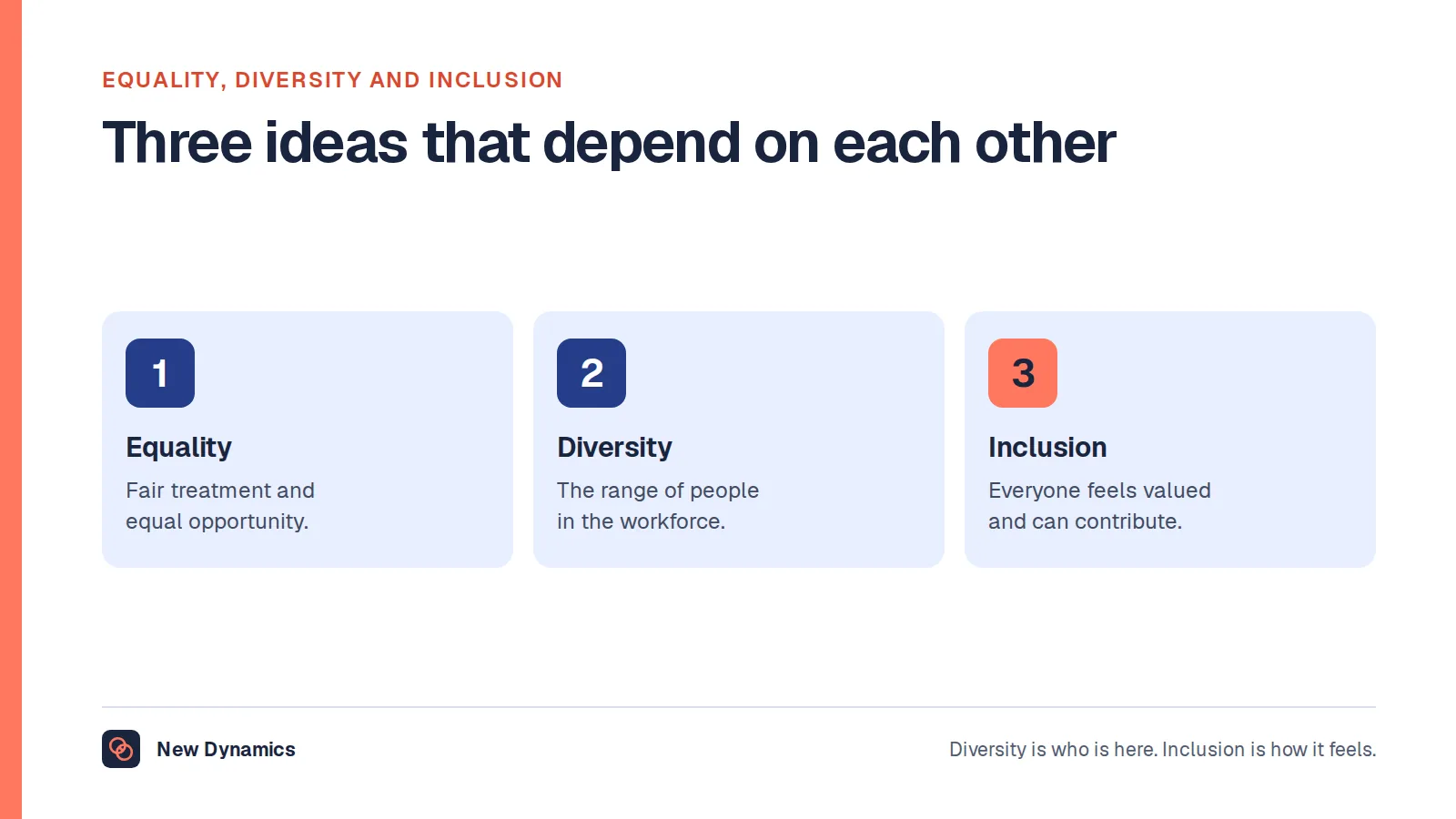
Sensitivity training is workplace training that helps people understand how their words and actions affect others, and change them where they need to. It goes by several names: respect at work, dignity at work, harassment prevention, anti-bullying, diversity and inclusion, or cultural awareness training. The names emphasise different parts of the same aim: a workplace where people are treated with respect, where behaviour that is not respectful is recognised and stopped, and where those who experience it know what to do.
It is not therapy, not a punishment and not a substitute for dealing with a specific complaint. When a complaint has been made, it needs investigating under the organisation's procedure; training the whole team afterwards may be one of the outcomes, but it is not the response.
What it covers
Programmes vary, but good sensitivity training covers five things.
- What harassment, discrimination and bullying look like. The legal definitions in your jurisdiction, in plain language, with examples from your kind of workplace. The EEOC defines harassment as “unwelcome conduct that is based on race, color, religion, sex (including sexual orientation, transgender status, or pregnancy), national origin, older age (beginning at age 40), disability, or genetic information”; the Equality Act 2010 protects a similar list of characteristics in Britain.
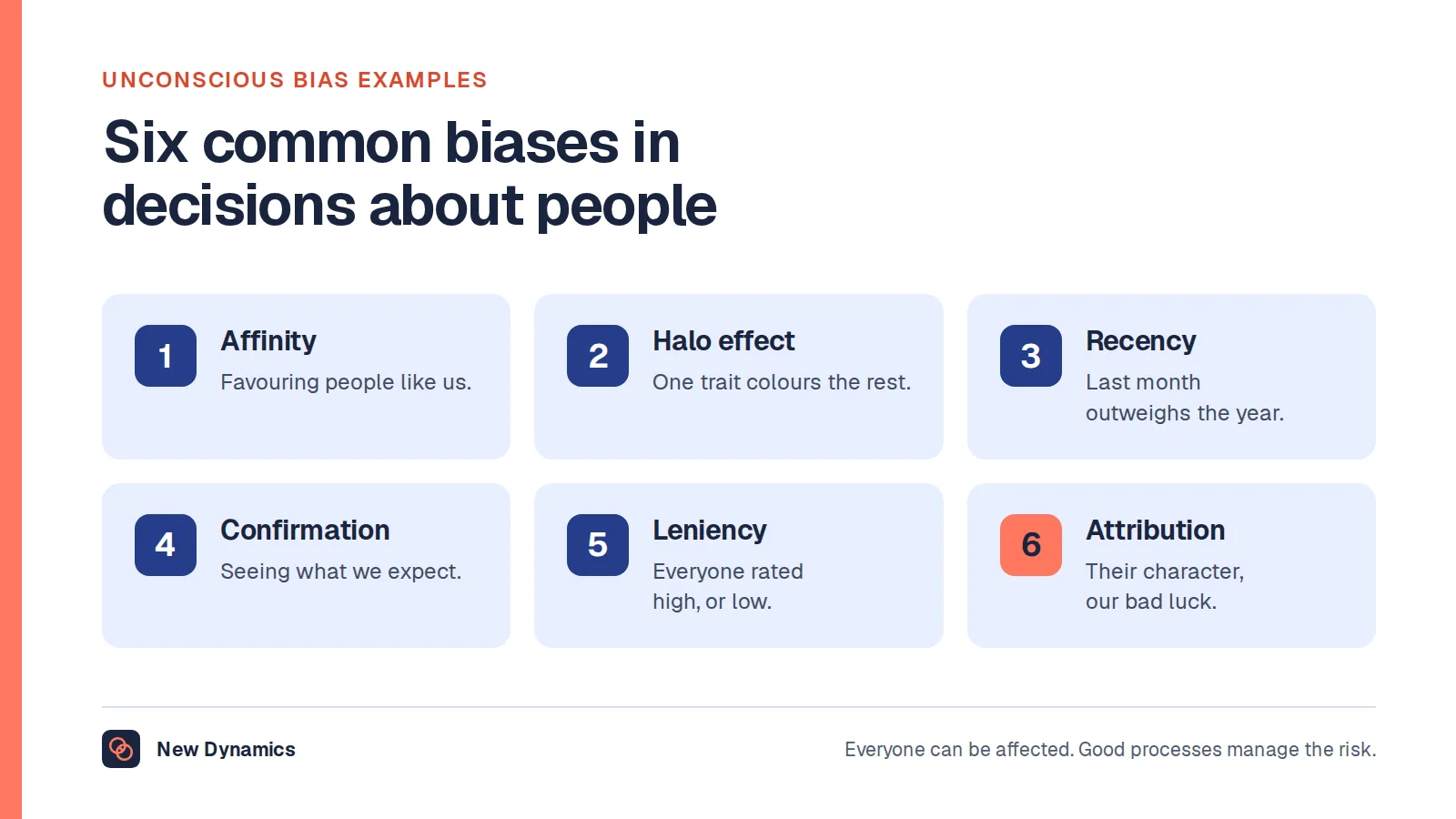
- How bias affects decisions. Recruitment, allocation of work, feedback and promotion. Our unconscious bias examples show the patterns.
- What respectful behaviour means here. Not a general exhortation but the standards of this organisation: how meetings are run, how feedback is given, what is said on the group chat, what happens at work social events.
- What to do when something goes wrong. How to raise it, who to go to, what happens next, and what a bystander can do. Acas says employers should make clear that they “will not cover up or ignore a sexual harassment complaint” and that workers are “encouraged to report sexual harassment”.
- What managers must do. Recognising risk, responding to concerns, keeping records and modelling the standard. Managers need their own session.

What the law and the regulators ask for
Great Britain
Acas explains that employers must take “reasonable steps to prevent sexual harassment of their workers” under the Worker Protection (Amendment of Equality Act 2010) Act 2023, which came into effect on 26 October 2024, and that the duty covers harassment from other people at work and from third parties such as customers and clients. Acas notes that the standard rises to “all reasonable steps” from 30 October 2026; check the current position. The Equality and Human Rights Commission can take action against an employer that does not take reasonable steps.
Among the steps Acas recommends are three about training: tell all workers at induction that sexual harassment is unacceptable; provide training to “everyone who works for you on recognising and understanding sexual harassment”; and train managers “on how to assess and manage risks of sexual harassment”. It also recommends training someone to advise workers who are considering a complaint, and having “a full and fair procedure for handling complaints”. Training on the wider ground of respect, bullying and discrimination follows the same logic: an employer that can show it trained people, and acted on what it learned, is in a far stronger position than one that cannot.
United States
The EEOC says “prevention is the best tool to eliminate harassment in the workplace”, and that employers should “clearly communicate to employees that unwelcome harassing conduct will not be tolerated”, provide “anti-harassment training to their managers and employees”, establish “an effective complaint or grievance process”, and take “immediate and appropriate action when an employee complains”. Several states and cities go further and require training by law, with content and frequency specified; check the rules where your people work.
The thread through both is the same. Training is one part of prevention, alongside a clear policy, a working complaints route and managers who act. On its own it is not a defence.
Why sensitivity training so often fails
- It is a one-off. A single session at induction, or a video once a year, is forgotten by the second week. Behaviour changes through repetition and reinforcement.
- It is generic. Off-the-shelf content about an imaginary office does not tell a warehouse night shift, a hospital ward or a sales team what respect looks like in their work.
- It is abstract. Sessions that explain attitudes and values without teaching what to say and do leave people knowing more and behaving the same.
- It shames. Training that treats every attendee as a suspect produces defensiveness, not change. Training that treats them as colleagues who want a decent workplace produces allies.
- Nothing surrounds it. Where the policy is unread, the reporting route is unclear and managers do not act, training teaches people that the organisation's words and its behaviour differ.
- Nobody measures it. Attendance is recorded; behaviour is not.

How to design a programme that changes behaviour
- Start from your own risks. Acas asks employers to assess the risks of sexual harassment in their workplace; do the same for bullying and discrimination. Lone working, customer contact, alcohol at events, power imbalances, a team with one person from a minority group: the training should address the risks you actually have.
- Teach behaviours, not attitudes. What to say when a joke goes too far. How to give feedback about work without comment on the person. How a bystander can interrupt. How a manager responds to a concern in the first ten minutes. Practise it, in small groups, with scenarios from your workplace.
- Train managers separately and first. They carry the duty in practice: recognising risk, responding, recording and modelling. Give them the policy, the procedure and the words. Then train everyone, with managers present as the people who will uphold it.
- Build it into the year. Induction for every starter, a short refresher at a set interval, a briefing when something changes, and a place in the manager's one-to-ones and the review cycle for how people treat each other.
Run it with a facilitator who knows your organisation, in person or live online rather than as a recorded module, and keep sessions short enough to hold attention and long enough to practise.

What to record
- Who attended which session, on what date, and what it covered.
- The policy and procedure in force at the time, and that attendees were shown where to find them.
- The risks the training was designed around, and how they were assessed.
- Follow-up: refreshers, changes made after feedback, and the concerns raised and how they were handled, kept confidentially and in line with data protection rules.
These records are what turn “we did some training” into evidence of reasonable steps. Our anti-harassment policy guide covers the policy the training should sit inside, and our diversity and inclusion guide the wider programme.
How to tell whether it worked
Attendance tells you nothing. Look instead at whether people can describe what respectful behaviour means here and what to do if it is breached; whether concerns are raised earlier and through the right route; whether managers respond in the way the training taught; what the staff survey says about feeling safe to speak up; and whether the incidents you assessed as risks are happening less. Ask people, three months on, what they have done differently.
Frequently asked questions
What is sensitivity training in the workplace?
Training that helps people recognise how their behaviour affects colleagues, customers and clients, and change it: what harassment, discrimination and bullying look like, how bias works, the respectful behaviour expected in the organisation, what to do when something goes wrong, and what managers must do. It is also called respect at work, dignity at work or harassment prevention training.
Is sensitivity training a legal requirement?
It depends where you are. In Great Britain, employers must take reasonable steps to prevent sexual harassment, and Acas recommends training everyone on recognising and understanding it and managers on managing the risk; training is one of the reasonable steps. In the United States, the EEOC recommends anti-harassment training for managers and employees, and some states and cities require it by law. Check the rules where your people work.
How often should sensitivity training be repeated?
Acas does not set an interval, and the regulators' emphasis is on prevention rather than a fixed frequency. In practice, train at induction, refresh at a set interval, brief people when the policy or the risks change, and reinforce the standard through managers' one-to-ones. Some US jurisdictions set a legal frequency.
Should sensitivity training be given after a complaint?
A complaint should be investigated under the organisation's procedure first. Training the team may be one outcome of the investigation, but it is not the response to the complaint and it should not be aimed at an individual as a punishment. Individual coaching is a different intervention.
What makes sensitivity training effective?
Content specific to your workplace and its risks, a focus on observable behaviours and how to intervene, a separate session for managers on their responsibilities, repetition through the year, and a policy, a reporting route and managers who act around it. Attendance records matter; changed behaviour matters more.
Your next step: assess the risks before you book the trainer
- Write down the risks of harassment, bullying and discrimination in your workplace, as Acas asks.
- Read the policy and the complaints procedure; fix them before training anyone on them.
- Train managers first, on assessing risk, responding and recording.
- Build induction, refreshers and one-to-one reinforcement into the year, and record all of it.
For the policy that the training should sit inside, read and download our anti-harassment policy guide. The guide is free to read, and the PDF uses our short download form.
Want induction training, manager check-ins and the review cycle to carry the same standard of behaviour all year? Book a New Dynamics demo and bring your current policy. You can also email contact@new-dynamics.com.