TL;DR
- Diversity in the workplace is the range of people in a workforce, and the valuing of those differences. Acas describes it in terms of age, religion, ethnicity, disability and sex, among other differences.
- Equality, diversity and inclusion are three separate ideas. Equality is about fair treatment and opportunity, diversity is about who is present, and inclusion is about whether everyone feels valued and able to contribute.
- Acas lists six benefits, from better ideas and problem-solving to attracting and keeping good staff. They depend on inclusion. A varied workforce in which only some people are heard gains little.
Ask ten managers what diversity means at work and you may hear ten answers: a legal duty, a recruitment target, a training course, a set of awareness days. The word has been stretched so far that it helps to go back to a plain definition and build from there.
This article explains what diversity in the workplace means, how it differs from equality and inclusion, the benefits that Acas identifies, the pitfalls to avoid and six practical steps for employers. It is written with UK law in mind, and it is general information, not legal advice.
Fair decisions about people need evidence from more than one source. See how New Dynamics performance reviews bring goals, feedback and examples into one conversation.
What is diversity in the workplace?
Acas, the UK's workplace advisory service, gives a plain definition in its guidance on equality, diversity and inclusion:
“Diversity is the range of people in your workforce. For example, this might mean people with different ages, religions, ethnicities, people with disabilities, and both men and women. It also means valuing those differences.”
Two parts of that definition deserve attention. The first is range: diversity describes a group, never an individual. A person is not “diverse”. A team is. The second is valuing: a varied workforce in which differences are merely tolerated has the numbers without the point.
The kinds of difference
Some differences are protected by law. GOV.UK's guide to discrimination and your rights lists the characteristics protected by the Equality Act 2010: age, gender reassignment, being married or in a civil partnership, being pregnant or on maternity leave, disability, race, religion or belief, sex and sexual orientation. We explain the terms in our guide to the definition of discrimination at work.
Others are not protected characteristics and still shape how people experience work and what they bring to it:
- social and economic background;
- education and career route;
- caring responsibilities;
- neurodiversity, which may or may not amount to a disability in law;
- working pattern and location;
- ways of thinking, experience and personality.
Equality, diversity and inclusion: the difference
The three ideas are often run together as EDI or DEI. Acas separates them.
| Idea | Acas describes it as | The question it asks |
|---|---|---|
| Equality | “equal job opportunities and fairness for employees and job applicants” | Are people treated fairly? |
| Diversity | “the range of people in your workforce” | Who is here? |
| Inclusion | “everyone feels valued at work” | Can everyone contribute? |
Acas adds that an inclusive workplace lets all employees feel safe to come up with different ideas, to raise issues and suggestions with managers and to try doing things differently.
The three depend on each other. Equality without diversity is a fair process that keeps selecting the same kind of person. Diversity without inclusion is a varied workforce in which only some voices count. People notice, and they leave.

Benefits of workplace diversity
Acas says that a workplace encouraging equality, diversity and inclusion can help to:
- “make it more successful”;
- “keep employees happy and motivated”;
- “prevent serious or legal issues arising, such as bullying, harassment and discrimination”;
- “better serve a diverse range of customers”;
- “improve ideas and problem-solving”;
- “attract and keep good staff”.
In plainer terms:
- Better decisions. People with different experience notice different risks and ask different questions. A room in which everyone has the same background tends to share the same blind spots.
- A wider talent pool. An employer that hires from only part of the population competes for a fraction of the available talent.
- Closer to customers. A workforce that reflects its customers is more likely to understand them.
- Retention. People stay where they feel they belong and can progress.
- Lower legal and reputational risk. Fair processes and a respectful culture prevent the grievances and claims that damage organisations.
A caution about the business case
You will see confident statistics claiming that diverse companies are more profitable by a precise percentage. We have not cited them, because the research is contested and a correlation does not show cause. The honest position is this: there are sound reasons to expect benefits, Acas and other bodies describe them, and they arrive only when inclusion is real. There is also a simpler argument. Treating people fairly is right, and in the UK much of it is the law.

Common pitfalls
Counting heads and stopping there. Representation matters, and it is a starting point. If the people you hire do not stay or progress, the problem lies inside.
Tokenism. Expecting one person to speak for a whole group is unfair to them and misleading for you.
Confusing positive action with positive discrimination. Acas describes positive action in recruitment as welcoming applications from “anyone under-represented in the organisation”. Encouraging applications is one thing. Decisions about whom to hire are governed by discrimination law, so take advice before you design a scheme.
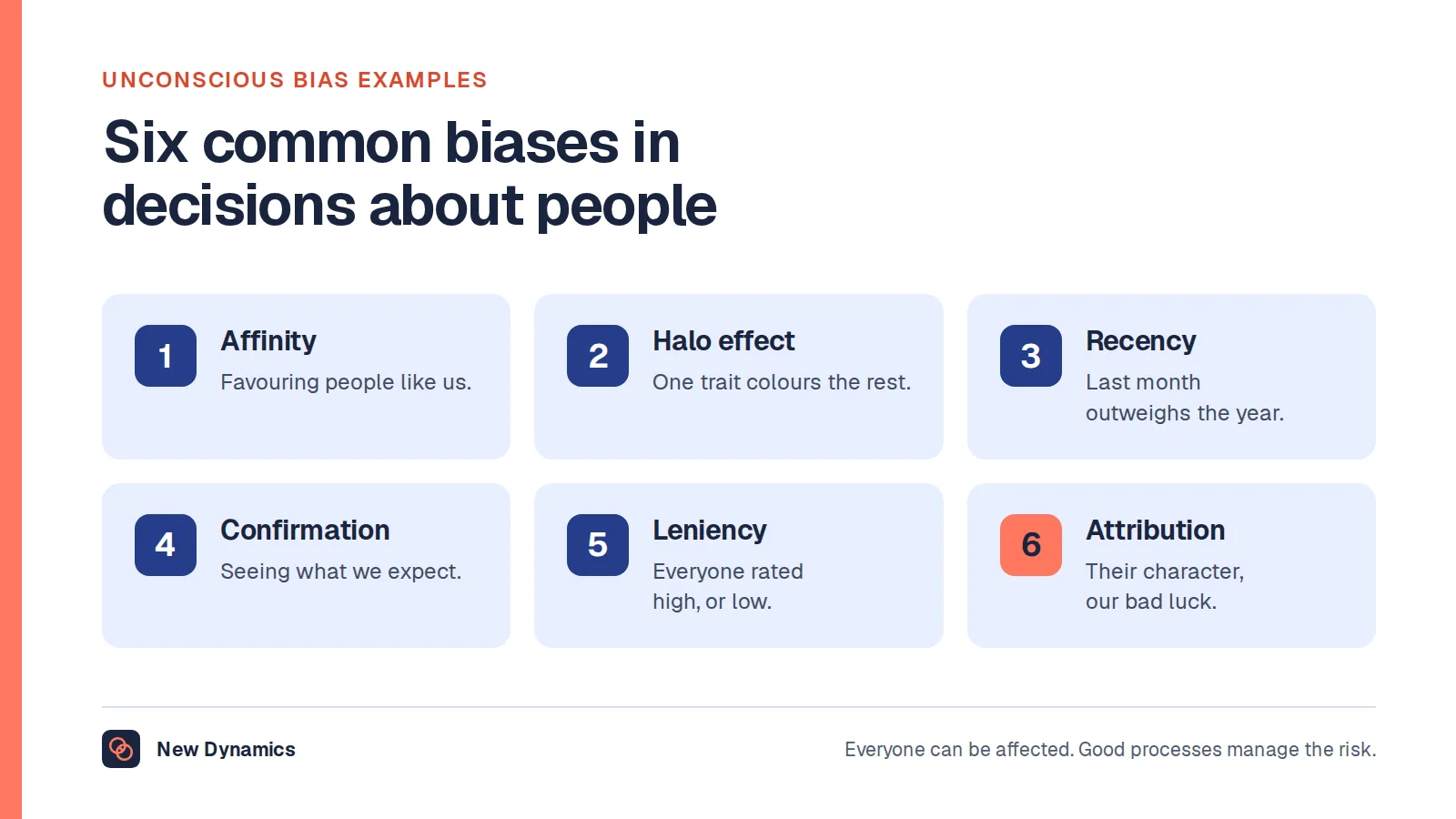
Training as the whole answer. A workshop does not change who gets hired or promoted. Processes do. See our unconscious bias examples for where bias enters decisions.
Awareness days without action. A themed lunch is pleasant. Fixing the promotion process is progress.
Ignoring everyday behaviour. Exclusion often happens in small moments: the interrupted speaker, the social event that leaves people out, the banter. See our articles on bro culture at work and nepotism in the workplace.
Six practical steps for employers
Acas advises employers to take steps to make the workplace inclusive, beginning with a policy and an action plan. Building on that guidance:
- Write a policy, and consult on it. Acas says that a good start is a workplace policy covering equality, diversity and inclusion, which helps everyone to know that the business treats everyone fairly, what behaviour is expected and where to find the procedures for resolving problems. Our equal employment opportunity guide can help.
- Make an action plan with owners and dates. Acas says that the plan should include how to get staff on board, how to monitor and measure whether it is working, and who will put it into practice and by when.
- Widen recruitment. Acas suggests advertising “in at least 2 different places to reach a wide range of people from different backgrounds”. Write essential criteria carefully, and use structured interviews with the same questions for every candidate. See our manager interview questions.
- Make pay, promotion and development fair. Check who gets stretch work, training, high ratings and promotion. Look at the patterns by group and ask about any gap you cannot explain. Our guide to the performance rating scale covers calibration.
- Build everyday inclusion. Run meetings so that everyone is heard, offer flexibility where you can, make reasonable adjustments and deal with poor behaviour whoever it comes from.
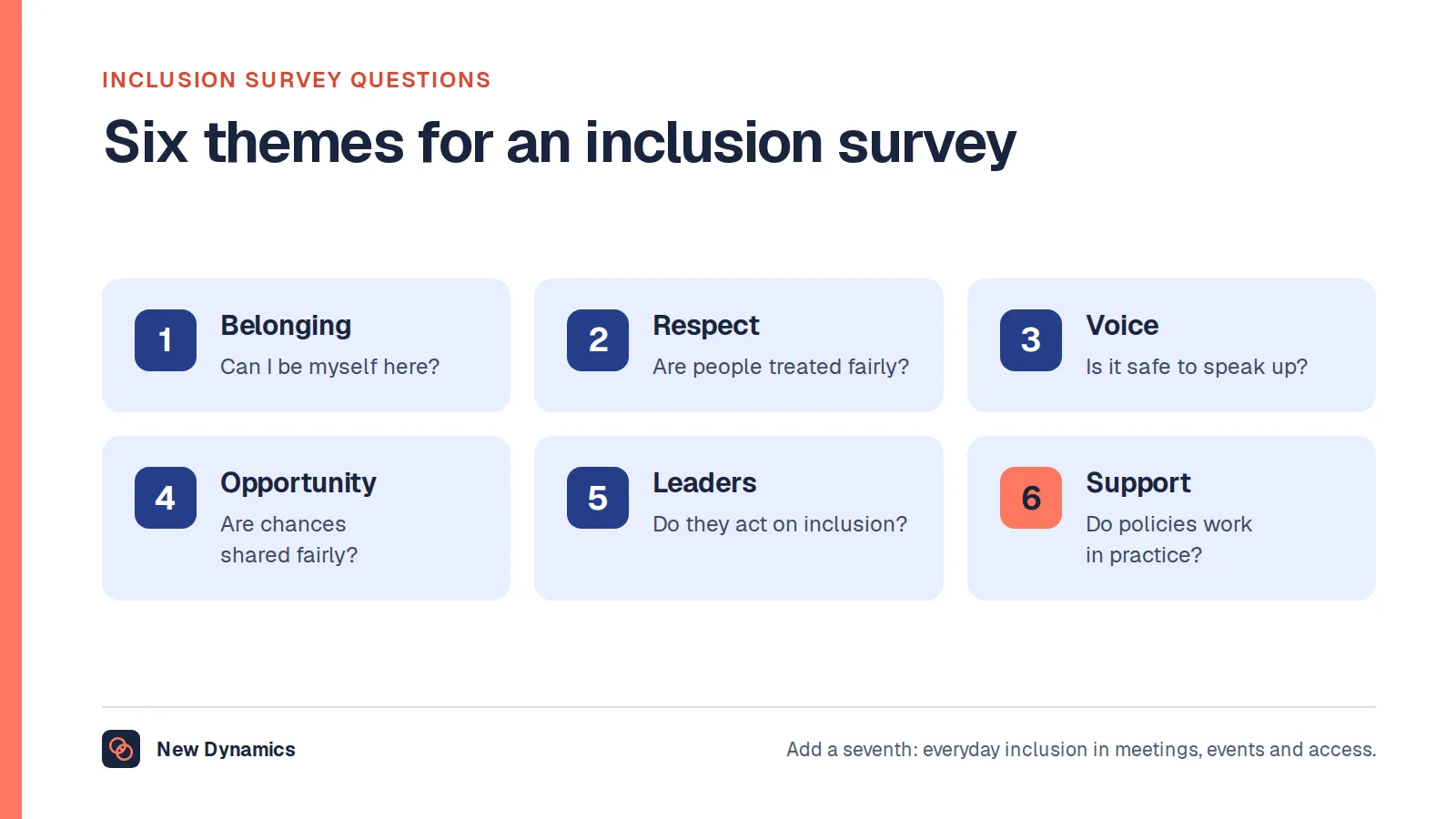
- Measure, listen and act. Collect workforce data carefully and lawfully, run an inclusion survey and publish what you will do about the results. Our inclusion survey questions give a starting set.
Acas adds a note for small employers: if you do not have the resources for a full action plan, “you can still do what you can”, for example staff training.

What managers can do this month
Policy matters, and culture is made in teams.
- Notice who speaks in your meetings and who does not, and invite the quieter voices in.
- Share interesting work deliberately, and keep a note of who has had it.
- Ask each person what would make it easier for them to do their best work.
- Challenge a remark that excludes someone, at the time and calmly.
- Give feedback to everyone with the same frequency and the same honesty.
- Check your shortlist, your ratings and your recognition for patterns.
Workplace diversity questions and answers
These are questions that employees and managers often ask, with short answers.
Does diversity mean lowering the bar? No. It means widening the search and removing barriers that have nothing to do with ability, then choosing the best person.
Is diversity only about race and gender? No. It includes age, disability, religion, sexual orientation, social background, caring responsibilities and more.
Do we have to collect diversity data? Check what, if anything, you are required to report. Beyond that, it is a choice, and you cannot manage what you cannot see. If you collect it, explain why, make it voluntary where appropriate and protect it carefully, because much of it is special category data.
What if our sector has few candidates from some groups? Look earlier in the pipeline: apprenticeships, returner programmes, partnerships with schools and colleges, and the wording and placement of adverts.
Frequently asked questions
What does diversity in the workplace mean?
Acas defines diversity as the range of people in your workforce, for example people of different ages, religions and ethnicities, people with disabilities, and both men and women. It adds that diversity also means valuing those differences.
What is the difference between diversity and inclusion?
Diversity is about who is in the workforce. Inclusion is about how it feels to work there: Acas describes an inclusive workplace as one where everyone feels valued. A workforce can be varied without being inclusive, if only some people are heard.
What are the benefits of workplace diversity?
Acas says that encouraging equality, diversity and inclusion can help to make a workplace more successful, keep employees happy and motivated, prevent legal issues, better serve a diverse range of customers, improve ideas and problem-solving, and attract and keep good staff.
What are examples of diversity in the workplace?
Examples include differences in age, sex, ethnicity, religion or belief, disability, sexual orientation and gender identity, as well as social background, education, caring responsibilities, neurodiversity, working pattern and ways of thinking.
How can employers improve diversity at work?
Write and consult on a policy, make an action plan with owners and dates, widen recruitment, check pay and promotion for unexplained gaps, build inclusive everyday habits, and measure progress through data and surveys, then act on the results.
Is workplace diversity a legal requirement in the UK?
There is no law requiring a diverse workforce. The Equality Act 2010 makes it unlawful to discriminate because of protected characteristics, such as age, disability, race, religion or belief, sex and sexual orientation. This is general information, not legal advice.
Your next step: look at one decision
- Pick one recent decision about people, such as a shortlist, a promotion or the allocation of a project.
- Look at who was considered, and who was not.
- Ask what would have widened the field without lowering the standard.
- Change one thing in how that decision is made next time.
For a step-by-step approach with a worksheet, read and download our diversity and inclusion guide. The guide is free to read, and the PDF uses our short download form.
Want reviews, feedback and recognition that are consistent for everyone? Book a New Dynamics demo and bring your current process. You can also email contact@new-dynamics.com.