TL;DR
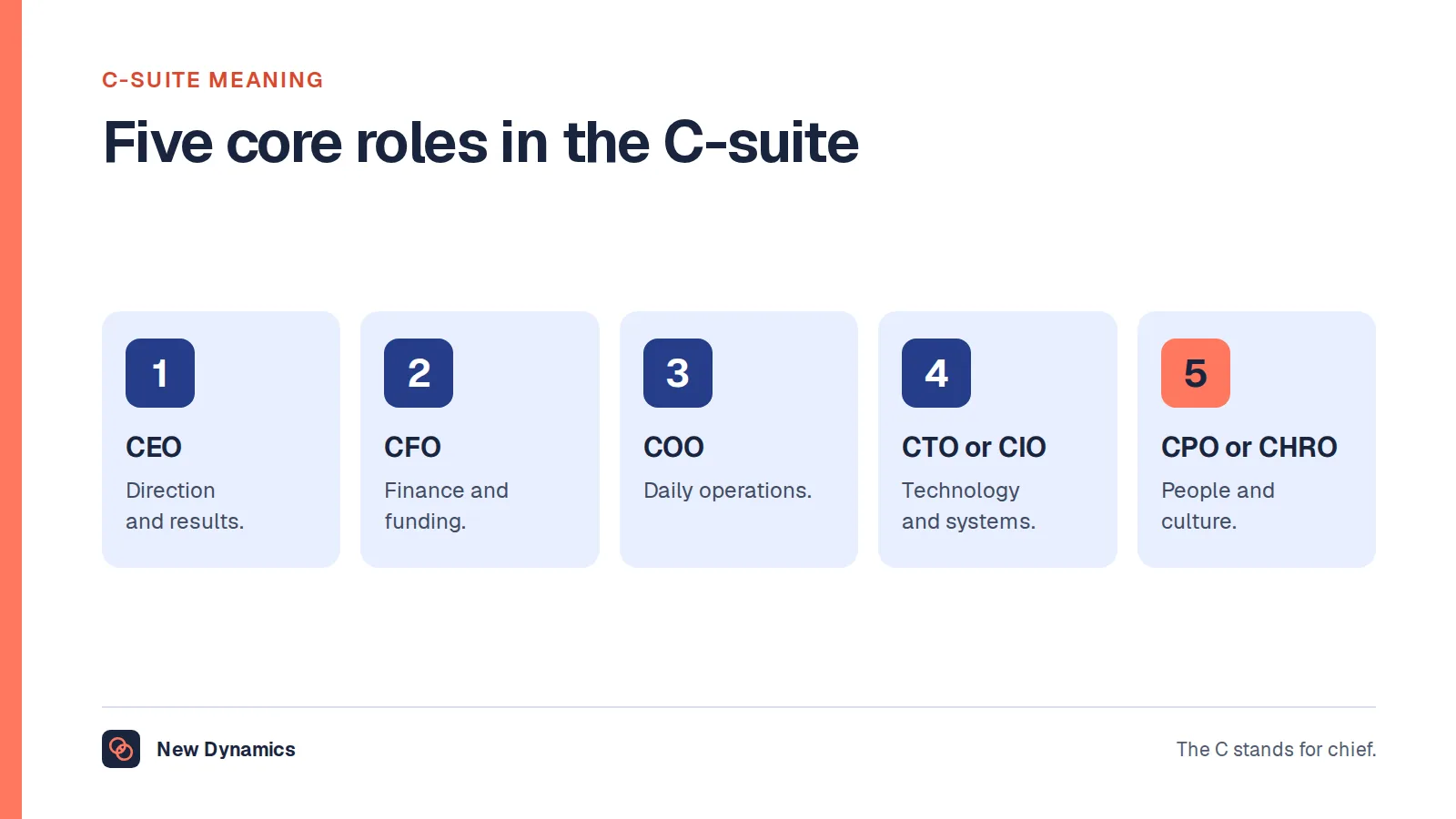
- CHRO stands for chief human resources officer: the most senior people role in an organisation, sitting on or reporting directly to the executive team, and accountable for how the organisation is staffed, structured, paid and led.
- The duties are recognisable from any senior HR role, O*NET's occupation covers planning and directing work “relating to employment, compensation, labor relations, and employee relations”, advising managers on policy, and representing the organisation at “personnel-related hearings and investigations”. What changes is the audience.
- At this level the work meets governance. The UK Corporate Governance Code is “separated into five sections: Board Leadership and Company Purpose; Division of Responsibilities; Composition, Succession and Evaluation; Audit, Risk and Internal Control; and Remuneration”, and three of those five land on the CHRO's desk.
The gap between HR director and CHRO is not a bigger team. It is the moment when the questions stop being "how do we run this process" and start being "should this organisation be shaped like this at all".
This article explains what a CHRO is: what the role covers, how it differs from HR director and chief people officer, what changes at board level, the statutory duties that land there, and whether a CHRO certificate exists.
A CHRO is assessed by a chief executive, a chair and a remuneration committee at once. See how New Dynamics multi-manager reviews gather input from everyone involved in a person's work.
The short answer
CHRO stands for chief human resources officer: the most senior people role in an organisation, sitting on the executive team or reporting directly to the chief executive, accountable for how the organisation is staffed, structured, paid, developed and led.
The underlying occupational description is familiar. O*NET's Human Resources Managers plan, direct or coordinate human resources activities and staff, including work "relating to employment, compensation, labor relations, and employee relations", advising managers "on organizational policy matters", analysing and modifying "compensation and benefits policies to establish competitive programs", and representing the organisation "at personnel-related hearings and investigations". The CHRO does that at the level where the answers change the organisation rather than the process.
CHRO, chief people officer, HR director

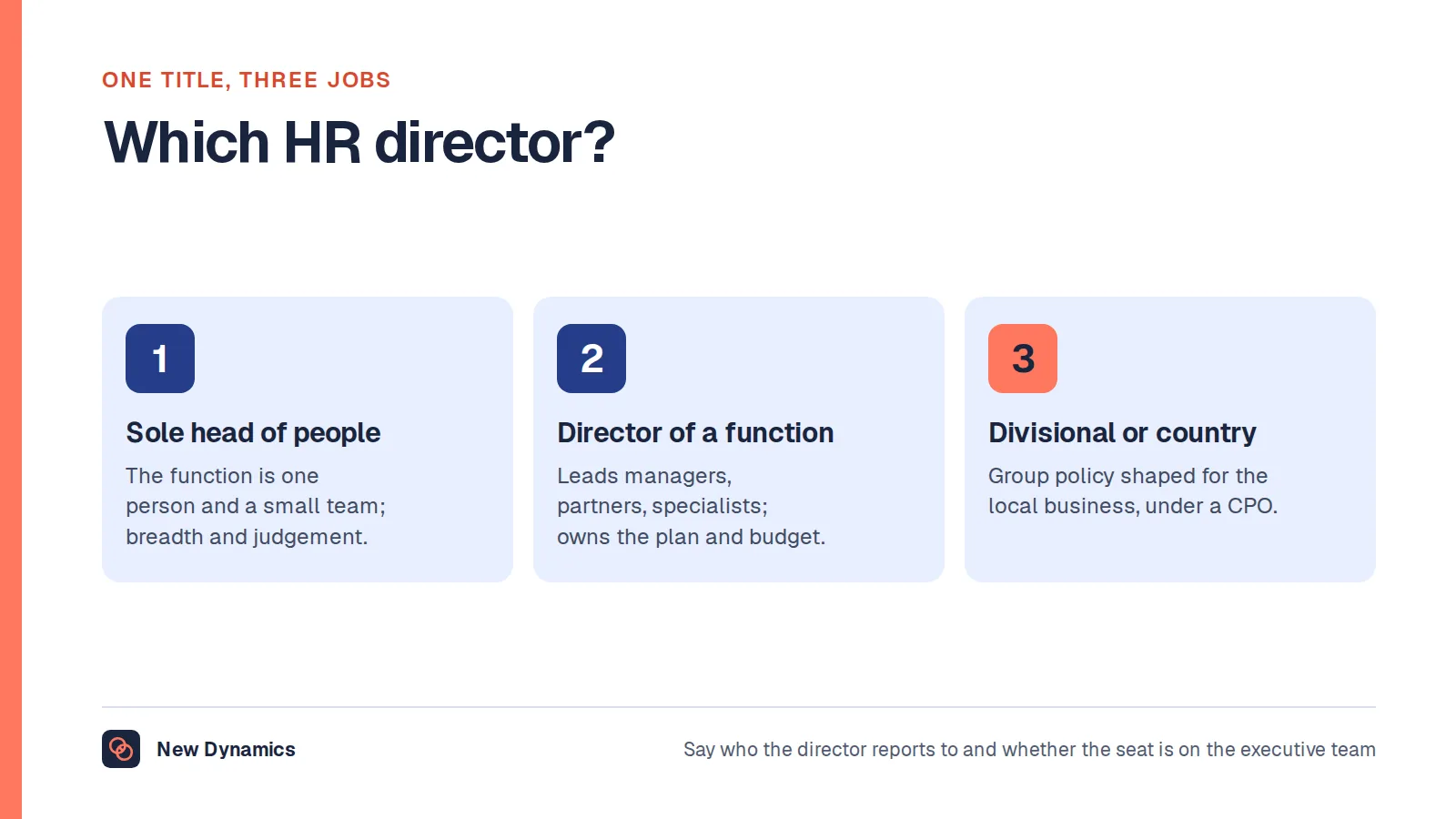
- HR director. Runs the HR function: the team, the services, the policies and the operating model. Usually reports to a chief executive, chief operating officer or finance director.
- CHRO. The same function plus a seat at the table where organisational decisions are made, and formal exposure to the board on succession, remuneration and culture.
- Chief people officer. Usually the same job with a title chosen for tone. Where organisations distinguish them, CPO tends to signal an emphasis on culture, employee experience and growth, and CHRO on governance, structure and reward.
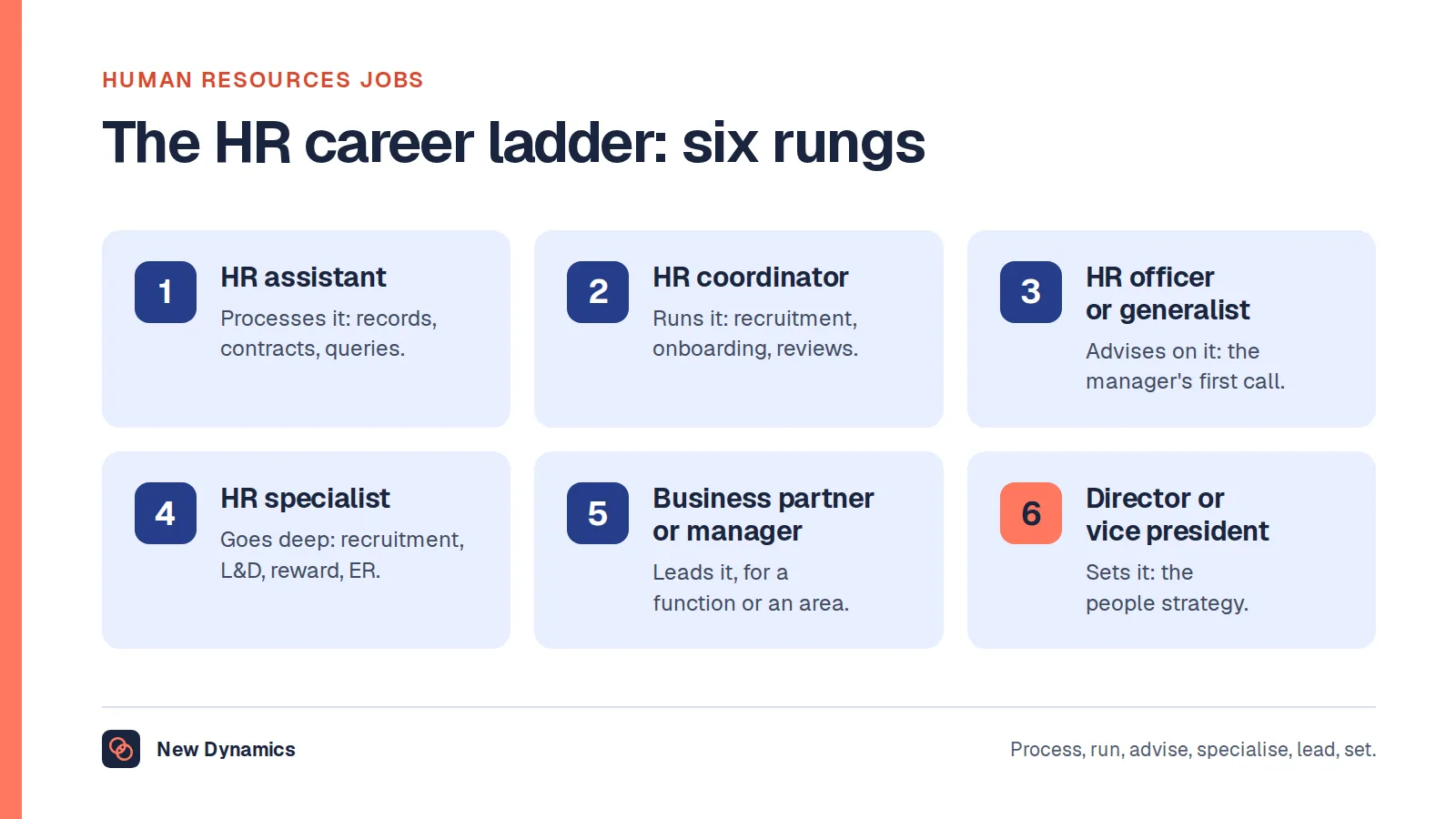
The title tells you little; the reporting line and the board exposure tell you everything. Our HR director job description covers the level below.
What changes at this level

- Organisation design. How the work is divided, where decisions sit, what is centralised, and what a restructure is actually meant to achieve.
- Succession and capability. Who could run each part of the business in two years, and what happens if someone leaves on Friday.
- Reward. Pay structures, executive remuneration, incentive design and the fairness questions they create.
- Culture and conduct. Not the poster version: what behaviour is tolerated at senior levels, what the whistleblowing and grievance data shows, and what the board is told about it.
- People risk. Key person dependency, capacity, industrial relations, regulatory exposure and what appears in the organisation's own risk register.
Everything else (recruitment, payroll, policies, cases) still has to work. It is simply not what the role is for.
The board interface

In a listed UK company, the governance framework sets much of the agenda. The Financial Reporting Council notes that the UK Corporate Governance Code was updated in January 2024, that the 2024 Code "has applied since 1 January 2025, with Provision 29 becoming applicable from 1 January 2026", and that it "is separated into five sections: Board Leadership and Company Purpose; Division of Responsibilities; Composition, Succession and Evaluation; Audit, Risk and Internal Control; and Remuneration", operating "on a 'comply or explain' basis".
Three of those five sections are people work. In practice that means a CHRO supports:
- The nomination or people committee on succession and board composition.
- The remuneration committee on executive pay design, and on how it relates to pay across the wider workforce.
- Workforce voice and culture reporting, so the board hears something other than a summary of a summary.
- Risk and internal control, where people risks belong alongside financial ones.
Most organisations are not listed, and the same four conversations still happen, with a board, a trustee body, an owner or a partnership.
The statutory duties that land here
The CHRO usually owns the reporting the organisation cannot opt out of. Gender pay gap reporting is the clearest example: GOV.UK's statutory guidance states that "any employer with 250 or more employees on a specific date each year (the 'snapshot date') must report their gender pay gap data", and that employers "must report and publish your gender pay gap information within a year of your snapshot date… for every year that you have 250 or more employees on your snapshot date".
Others vary by sector and size, from equality and diversity duties to regulatory fitness requirements. The CHRO's job is not to complete the forms; it is to make sure the organisation can answer for what the numbers show. This is general information rather than legal advice.
Is there a CHRO certificate?
No single licence or qualification makes someone a CHRO, and any course that implies otherwise is selling. The recognisable route has three parts:
- HR depth, usually with a professional qualification and experience across reward, employee relations and organisation development.
- Commercial experience, often including a period running something that is not HR, or working very close to a P&L.
- Board exposure, which is the part people skip and the part that decides whether the step works.
Executive education and professional body programmes help with the first two. The third is earned by presenting to boards and committees before you are responsible for them, which is a development decision an existing CHRO can make for their own successors. Our succession planning guide covers building that deliberately.
When an organisation actually needs one
Not at a headcount. The signals are structural: when organisational decisions are being made badly for lack of someone senior owning them; when executive reward or succession is on the board agenda without an internal adviser; when the people risks are material to the business; or when the HR director is already doing the work and reporting through someone who translates it.
Appointing a CHRO to fix an HR function that is not working is the common mistake. That is an HR director problem with a different title attached.
How the role is measured
- Quality of the executive team and the strength of the succession bench behind it.
- Whether organisation design decisions hold, or are reversed within a year.
- Reward outcomes, including pay gaps and whether incentive design produced the behaviour intended.
- Retention and capability in the roles that actually matter, rather than an overall figure.
- What the board knows about culture, conduct and people risk, and how quickly it hears bad news.
Avoid measuring engagement score alone. It moves for reasons far outside any one person's control and it makes honest reporting uncomfortable.
Frequently asked questions
What does CHRO stand for?
Chief human resources officer: the most senior people role in an organisation, on or reporting directly to the executive team, accountable for how the organisation is staffed, structured, paid, developed and led.
What is the difference between a CHRO and an HR director?
An HR director runs the HR function. A CHRO does that and takes part in organisational decisions and board-level work on succession, remuneration, culture and people risk. The difference is the reporting line and the audience rather than the size of the team.
Is a chief people officer the same as a CHRO?
Usually, yes. Where organisations distinguish them, chief people officer signals an emphasis on culture, employee experience and growth, and CHRO on governance, structure and reward. Look at the reporting line and the committees involved rather than the title.
What does a CHRO do on the board?
Supports succession and board composition work, advises the remuneration committee on executive and wider workforce pay, brings workforce voice and culture information to the board, and makes sure people risks sit alongside financial ones. The UK Corporate Governance Code's sections on composition and succession, remuneration, and risk map directly onto that work.
Is there a CHRO certificate or qualification?
No single qualification confers the role. The usual route combines HR depth with a professional qualification, commercial experience close to a profit and loss account, and board exposure gained before taking the job. Be sceptical of any course presented as a licence.
When does a company need a CHRO?
When organisational decisions, executive reward, succession or people risk need a senior owner in the room, rather than at a particular headcount. Appointing one to fix a struggling HR function usually disappoints everyone.
Your next step: decide which job you are appointing
- Write down which decisions the role will be in the room for.
- Name the committees it supports and what it owes each of them.
- Separate running the function from shaping the organisation, and say who does the first.
- Build board exposure for your potential successors now, not at appointment.
For building the bench behind every senior role, read and download our succession planning guide. The guide is free to read, and the PDF uses our short download form.
Want executive review input from a chief executive, a chair and a committee in one record? Book a New Dynamics demo and bring your current executive review process. You can also email contact@new-dynamics.com.