TL;DR
- Human resources jobs form a ladder of six rungs: HR assistant or administrator, HR coordinator, HR officer or generalist, HR specialist, HR business partner or manager, and HR director or vice president. The duties change at each rung from processing and records to advising, designing and leading.
- An HR assistant keeps the records, contracts, onboarding paperwork and queries moving. A coordinator runs the processes. An officer advises managers across the whole employee lifecycle. Specialists go deep in recruitment, learning, reward or employee relations. Managers and business partners lead the function or a business area. Directors and vice presidents set the people strategy.
- In England the apprenticeship standards map the ladder: HR support at level 3, people professional at level 5 and senior people professional at level 7. Employers hire on evidence at every rung, and the job description should say which rung it is.
“Works in HR” covers a person who files the new starter forms and a person who sits on the executive team deciding whether to close a site. The duties, the pay and the skills are different at every level, and job adverts often blur them.
This guide sets out the human resources jobs and their duties rung by rung, from HR assistant to vice president of human resources, explains how the specialist roles fit in, maps the UK apprenticeship standards to the ladder, and gives an HR assistant job description template for the rung where most HR careers begin.
Every HR job is defined by where it sits and who it serves. See how New Dynamics org charts show roles, reporting lines and the relationships between them.
What human resources does
The Cambridge Dictionary defines human resources as “the department of an organization that deals with finding new employees, keeping records about all the organization's employees, and helping them with any problems”. Prospects, the UK graduate careers service, lists the range of activities in its human resources officer job profile: conditions of employment, disciplinary and grievance cases, employee welfare, support and engagement, equality, diversity and inclusion, learning and development, negotiation with external agencies, recruitment and retention, pay and rewards, and policies, procedures and working practices.
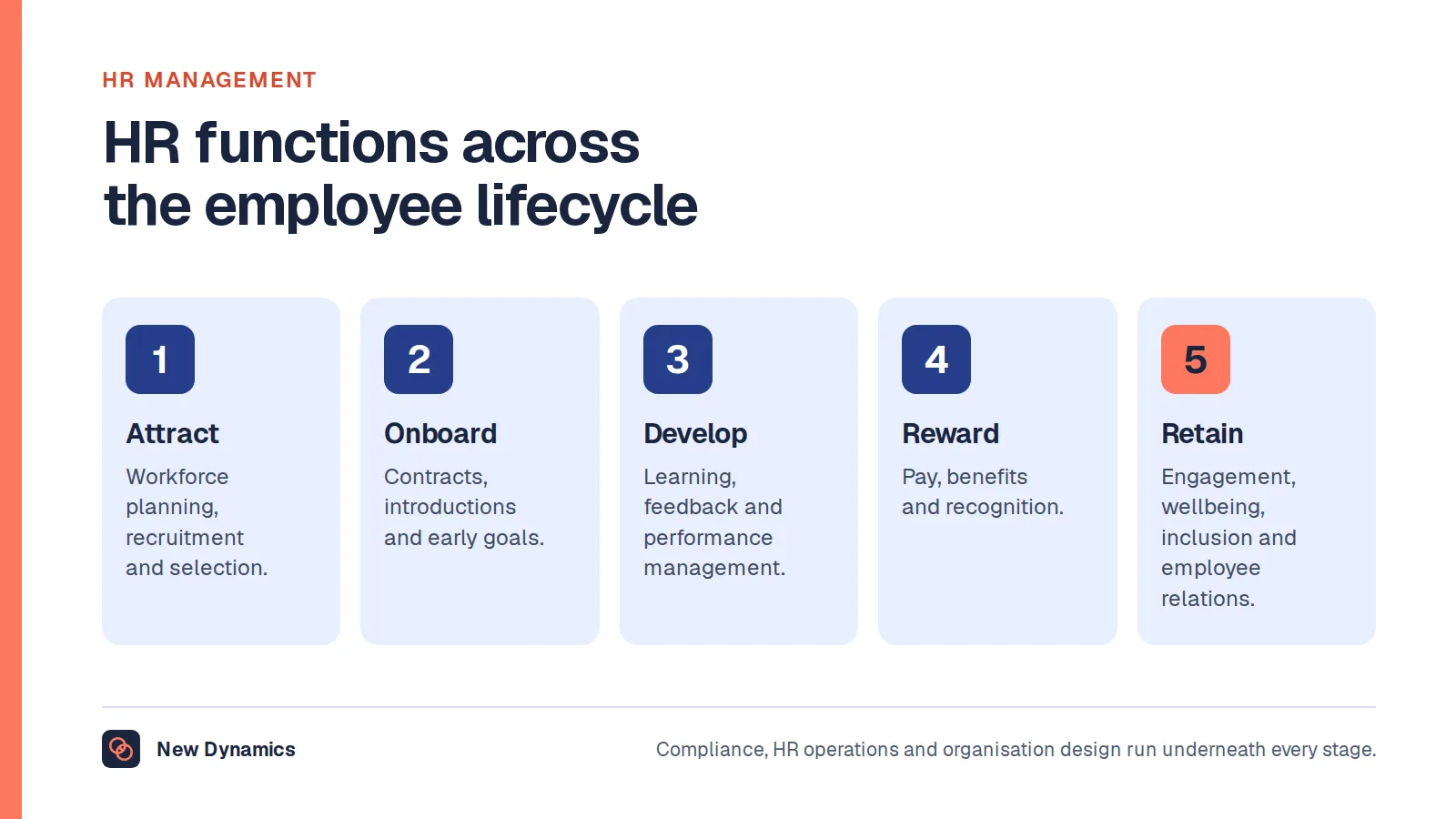
Every HR job does some of that list. What separates the jobs is how much of it, at what depth, and whether the holder processes it, advises on it, designs it or leads it. Our guide to HR management explains the functions themselves; this article is about the jobs.
The HR career ladder: six rungs
| Rung | Job titles | What they do with the HR work |
|---|---|---|
| 1 | HR assistant, HR administrator | Process it: records, contracts, paperwork, first queries |
| 2 | HR coordinator | Run it: the recruitment, onboarding and review processes |
| 3 | HR officer, HR adviser, HR generalist | Advise on it: managers' first call across the lifecycle |
| 4 | HR specialist: recruitment, learning, reward, employee relations | Go deep on one part of it |
| 5 | HR business partner, HR manager | Lead it, for a function or a business area |
| 6 | HR director, chief people officer, vice president of HR | Set it: the people strategy and the executive voice |

Rung 1: HR assistant or administrator
The HR assistant is where most HR careers start and where the function's accuracy is made. Skills England's HR support apprenticeship standard, a level 3 standard, describes the front line: people in the role are “typically either working in a medium to large organisation as part of the HR function delivering front line support to managers and employees, or are a HR Manager in a small organisation”, handling day-to-day queries and “working on a range of HR processes, ranging from transactional to relatively complex, from recruitment through to retirement”.
HR assistant duties
- Keep the records. Maintain the HR system and personnel files: starters, leavers, changes, absence and holiday, accurately and confidentially.
- Prepare the documents. Offer letters, contracts, contract changes, references and leaver letters, from templates, checked and sent on time.
- Run the onboarding paperwork. Right-to-work checks, new starter forms, payroll set-up, induction bookings and the first-day checklist.
- Answer first-line queries. Holiday entitlement, policies, forms and where to find things, and pass anything more complex to an officer.
- Support recruitment. Post adverts, acknowledge applications, arrange interviews and collect feedback.
- Support payroll and benefits. Collect and check the changes that payroll needs each month and keep benefit records current.
HR assistant job description template
Job title: HR assistant
Reports to: HR officer or HR manager
Hours: Full time, office-based or hybrid
Purpose of the role: To keep the organisation's HR records, documents and processes accurate and on time, and to give employees and managers a helpful first answer.
Main duties:
- Maintain the HR system and employee files, including starters, leavers, changes and absence
- Prepare offer letters, contracts, changes and references from approved templates
- Complete right-to-work checks and new starter paperwork, and set up payroll and induction
- Answer first-line queries on policies, holidays and forms, and escalate the rest
- Post vacancies, acknowledge applications and arrange interviews
- Collect monthly payroll changes and keep benefit records current
Skills and experience:
- Accurate, organised and discreet with confidential information
- Clear, courteous written and spoken communication
- Confident with spreadsheets and HR or payroll systems
- Experience in administration; HR experience or a level 3 HR qualification desirable
We provide: Training on our systems and policies, support for a level 3 HR apprenticeship or CIPD qualification, and a route to HR coordinator and HR officer roles.
For the layout of the whole document, use our job description template.
Rung 2: HR coordinator
The HR coordinator runs the processes that the assistant feeds. The title is more common in the United States and in larger organisations; in the UK the same work is often done by a senior HR administrator.
Responsibilities of an HR coordinator: schedule and coordinate recruitment campaigns from advert to offer; run the onboarding programme so that every starter has equipment, access, inductions and a first-week plan; coordinate the performance review and probation cycles, chasing the forms and the dates; organise training sessions and track attendance; produce HR reports on headcount, absence, turnover and recruitment; and keep the HR calendar of renewals, reviews and deadlines. The coordinator owns the timetable; the officer owns the advice.
Rung 3: HR officer, adviser or generalist
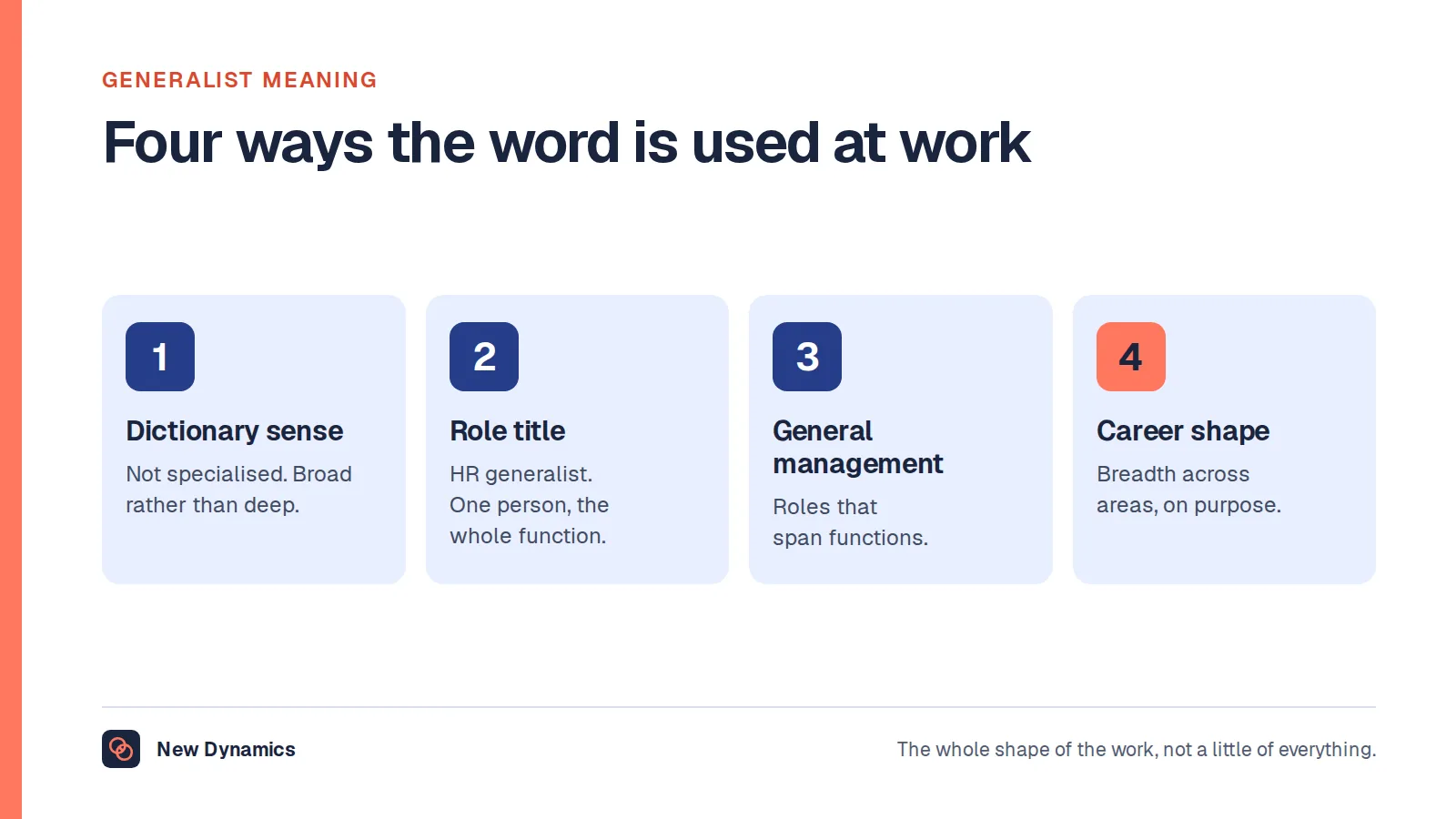
The HR officer is the manager's first call. Prospects describes the responsibilities: writing job descriptions and adverts and managing hiring; appointing, developing and retaining staff; planning and sometimes delivering training and inductions; dealing with welfare, grievances and disciplinary procedures; advising on pay and benefits and carrying out salary reviews; developing and implementing policies on working conditions, performance management, equal opportunities, discipline and absence; advising line managers on how to apply them; negotiating with staff representatives; and interpreting and advising on employment law. Prospects notes that it is possible to work as a generalist, “covering the full range of HR work, or to specialise in a particular area”. Our guide to the meaning of generalist explains the choice.

Rung 4: HR specialists
Specialists take one part of the list to depth. The four most common:
- Recruitment or talent acquisition. Prospects' recruitment consultant profile describes the agency version: attracting client business, advertising vacancies, headhunting candidates, screening applications, managing interviews and shortlists and checking references. An in-house recruiter does the same for one employer.
- Learning and development. Prospects' training and development officer profile lists identifying training needs through job analysis and appraisals, designing and delivering programmes, developing inductions, devising individual learning plans, ensuring statutory training is met and evaluating results.
- Reward and benefits. Pay structures, benchmarking, salary reviews, bonus schemes, pensions and benefits, and pay reporting.
- Employee relations. Complex grievance, disciplinary and capability cases, union relations, consultation and tribunal claims.
Other specialisms include HR systems and analytics, equality, diversity and inclusion, organisation development and wellbeing. A human resources specialist job description should name the specialism, the level of depth expected and who the specialist advises.
Rung 5: HR business partner or HR manager
At this rung the job becomes leading. An HR manager leads the function in a small or medium organisation: the team, the budget, the policies and the relationship with the leadership team. An HR business partner, in a larger one, is the senior generalist for a business area, working with its directors on workforce plans, organisation changes, talent and performance, backed by specialists in centres of expertise. Skills England's level 5 people professional standard is the usual apprenticeship at this level in England.
Rung 6: HR director, chief people officer or vice president of human resources
The top rung sets the people strategy and speaks for it on the executive team. Skills England's senior people professional standard, a level 7 standard, describes the purpose as to “improve people practices in organisations in order to drive organisational performance and effectiveness”, and the holders as “the in-house experts in people, work and change”. It says they “lead the design, implementation and evaluation of people policies and practices aligned to the needs of the organisation and its employees”, lead people projects or play a key role in organisation-wide programmes, keep up with legislation and regulation, and in smaller organisations may be “solely responsible for the entire people agenda and report directly to the organisation lead”.
A vice president of human resources job, the usual American title, adds executive accountability: the people plan and budget, executive pay and succession, culture and engagement, major change programmes, employment risk and the board's people reporting. For where the title sits among the other chiefs, see our guide to the meaning of the C-suite.

Skills and qualifications at each rung
In England the apprenticeship standards map the ladder: HR support at level 3, people professional at level 5 and senior people professional at level 7. The CIPD's qualifications follow the same shape, and our comparison of HR certifications covers the options in the UK and the United States. Employers hire on evidence at every rung: accuracy and discretion at the bottom, judgement and results in the middle, strategy and leadership at the top. For what each rung pays in the UK, see our guide to how much human resources makes.
Common mistakes in HR job adverts
Rung confusion. An “HR assistant” expected to advise on disciplinaries is an HR officer on assistant pay. Match the duties to the rung.
Everything in one job. In a small organisation one person may hold three rungs. Say so, and pay for the highest.
Specialist titles for generalist jobs. If the “recruitment specialist” also runs onboarding, reviews and payroll changes, it is a coordinator or officer role.
No route. Assistant to coordinator to officer to manager is a real ladder. Show it.
Frequently asked questions
What are the duties of human resources jobs?
They vary by rung. Assistants and administrators keep records, prepare contracts, run onboarding paperwork and answer first-line queries. Coordinators run recruitment, onboarding and review processes. Officers advise managers across the employee lifecycle. Specialists go deep in recruitment, learning, reward or employee relations. Managers and business partners lead the function or a business area. Directors and vice presidents set the people strategy.
What does an HR assistant do?
An HR assistant maintains the HR system and employee files, prepares offer letters, contracts and references, completes right-to-work and new starter paperwork, answers first-line queries, supports recruitment administration and collects monthly payroll changes. It is the usual entry point to an HR career.
What are the responsibilities of an HR coordinator?
An HR coordinator runs HR processes: scheduling recruitment campaigns, coordinating onboarding, running the performance review and probation cycles, organising training, producing HR reports and keeping the HR calendar. The coordinator owns the timetable; the HR officer owns the advice.
What is a human resources specialist?
An HR specialist works in depth in one area of HR, most commonly recruitment or talent acquisition, learning and development, reward and benefits, or employee relations. Other specialisms include HR systems and analytics, equality, diversity and inclusion, and organisation development.
What does a vice president of human resources do?
A vice president of human resources, called an HR director or chief people officer in the UK, sets the people strategy, leads the HR function, owns the people plan and budget, advises the executive team and board on talent, succession, culture, change and employment risk, and answers for the function's results.
What qualifications do you need for a career in HR?
None are required by law. In England the apprenticeship standards run from HR support at level 3 to senior people professional at level 7, and CIPD qualifications are the usual professional route in the UK. Many people enter as HR assistants from administrative roles and qualify while working.
Your next step: name the rung
- Decide which rung the job is, and write the title and duties to match.
- If one person will hold several rungs, say so and pay for the highest.
- Name the qualification or apprenticeship you will support.
- Show the next rung in the advert.
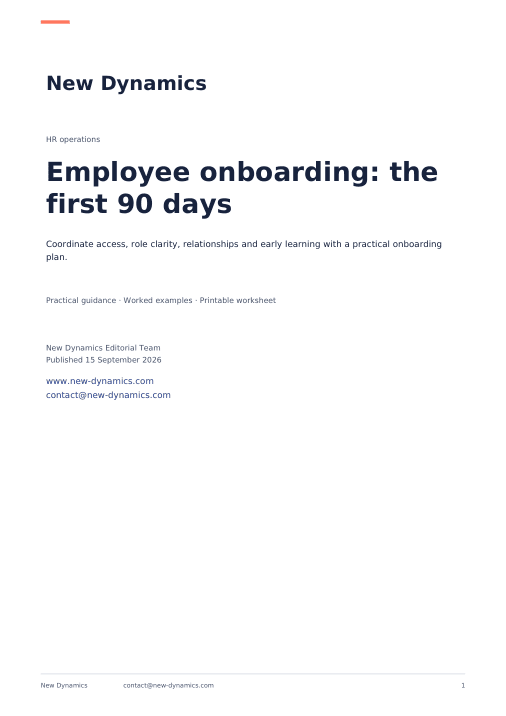
New HR starters learn the organisation before they can advise it. Read and download our employee onboarding guide. The guide is free to read, and the PDF uses our short download form.
Want every HR role, reporting line and responsibility visible in one chart? Book a New Dynamics demo and bring your current structure. You can also email contact@new-dynamics.com.