TL;DR
- A human resources director leads the people function and owns the people plan: the policies and practices, the HR team, the workforce plan, pay and reward, employee relations and risk, the culture, and the people case at the executive table and the board. O*NET lists HR director among the reported titles of human resources managers, whose tasks include planning, directing and coordinating HR activities and staff, advising managers on policy, analysing and modifying compensation and benefits, analysing data to find the causes of people problems, and preparing and following the personnel budget.
- The Skills England senior people professional standard describes the purpose as improving people practices to drive organisational performance and effectiveness, and its holders as the in-house experts in people, work and change; its duties run from leading the design of people policies and the people strategy, through people projects and change, workforce needs and capability, senior stakeholders, budget and metrics, technology and analytics, to shaping the culture. The job comes in three versions: the sole head of people in a smaller organisation, the director leading an HR team in a mid-sized one, and the divisional or country director inside a larger function.
- The HR director differs from the HR manager, who runs the function's operations, the HR business partner, who is the senior generalist for one business area, and the chief people officer, who sits on the executive team of a large organisation with directors beneath. Write the advert around the version, the executive relationship and the decisions the director owns, and set objectives on outcomes the director can influence: the workforce plan met, the review cycle completed, retention of the people the organisation most needs, employment risk managed and the function's cost and service.
The HR director is the person the chief executive turns to when the question is about people: can we afford this hire, why are the engineers leaving, is this dismissal safe, what will the reorganisation do to the culture, and what does the board need to hear about the workforce. The human resource director job description has to cover that range, and it has to say which version of the job it is, because the sole head of people in a two-hundred-person company and the country HR director inside a global function have the same title and different weeks.
This article sets out the role using two primary sources, the US O*NET occupational database and the Skills England senior people professional standard, describes the three versions, groups the work into seven duties, separates the director from the HR manager, the HR business partner and the chief people officer, lists the skills and qualifications, and gives a job description template with objectives measured on how the people do.
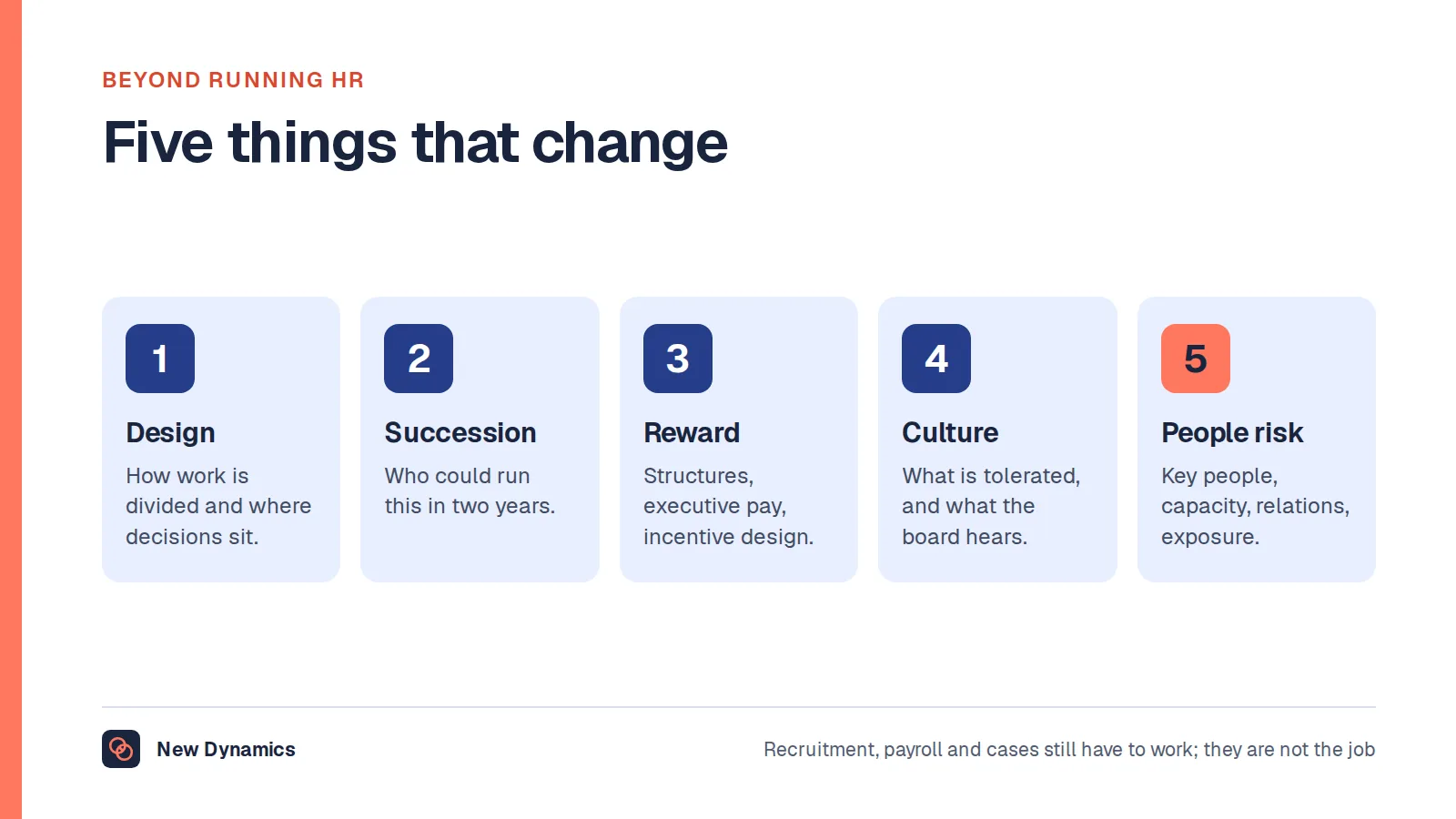
An HR director's own objectives are the people plan's objectives, and they should be visible to the executive team that depends on them. See how New Dynamics Goals & OKRs keep the people plan's objectives, owners and progress in one place beside the rest of the business's goals.
The step above it is a different job: our post on the CHRO covers what changes when people work becomes board work.
What is an HR director?
A human resources director leads the people function and owns the people plan. O*NET lists “HR Director (Human Resources Director)” and “HR VP (Human Resources Vice President)” among the reported titles of human resources managers, an occupation it describes as planning, directing or coordinating the human resources activities and staff of an organisation. Its tasks include “plan, direct, supervise, and coordinate work activities of subordinates and staff relating to employment, compensation, labor relations, and employee relations”, “advise managers on organizational policy matters”, “analyze and modify compensation and benefits policies to establish competitive programs and ensure compliance with legal requirements”, “analyze statistical data and reports to identify and determine causes of personnel problems and develop recommendations for improvement”, “prepare and follow budgets for personnel operations”, “represent organization at personnel-related hearings and investigations” and “negotiate bargaining agreements”.
The Skills England senior people professional standard, the level 7 standard in England, gives the purpose: “to improve people practices in organisations in order to drive organisational performance and effectiveness”. Its holders are “the in-house experts in people, work and change” who “champion the people agenda to create working environments and cultures that help get the best out of people”. In larger organisations they may lead a team of HR, L&D and OD advisers; in smaller ones “they might be solely responsible for the entire people agenda and report directly to the organisation lead”.
The three versions of the job
- The sole head of people. In a smaller organisation, the director is the function: strategy and the disciplinary hearing on the same day, with an administrator or a small team. The job is breadth and judgement.
- The director of a function. In a mid-sized organisation, leads an HR team of managers, business partners and specialists, sits on the executive team and owns the people plan and budget. The job is leadership of the function and influence at the table.
- The divisional or country director. In a large organisation, leads HR for a division or country under a chief people officer, applying group policy and shaping it for the local business. The job is translation and delivery at scale.
The advert should say which version it is, who the director reports to, whether the seat is on the executive team and what the board expects to hear.

HR director responsibilities: seven duties
Grouped from the O*NET tasks and the standard's nine duties, the work has seven parts.
- The people plan. Contribute to the organisation's strategy and lead the people strategy that serves it: the workforce plan, the capability the organisation will need and how it will build or buy it. The standard's duty is to assess current and future workforce needs and contribute to workforce planning.
- Policies and practices. Lead the design, implementation and review of people policies and practices aligned to the organisation's needs, in the standard's words, and critically evaluate them to ensure they are fit for purpose; keep them compliant with employment law as it changes.
- The function. Lead the HR team: structure, hiring, development and service standards; the budget and the people metrics; the HR technology that delivers the plan. O*NET's task is to plan, direct and coordinate the HR staff and to prepare and follow the personnel budget.
- Pay, reward and employment risk. Own the reward framework and pay review; oversee employee relations, collective bargaining where it exists, hearings, investigations and the difficult decisions; manage employment risk.
- Change and projects. Lead the people element of reorganisations, acquisitions and other programmes; build the business case for change and apply the right change methods, as the standard's third duty puts it.
- Culture and the review cycle. Shape the culture and role-model the values; own engagement, the review cycle and how managers manage; make sure the cycle completes and the conversations happen.
- The executive table and the board. Advise the chief executive and executive team; represent the organisation externally; report to the board on the workforce with people analytics that provide insight and influence decisions, in the standard's terms.

HR director vs HR manager vs HR business partner vs chief people officer
| Role | Owns | Sits |
|---|---|---|
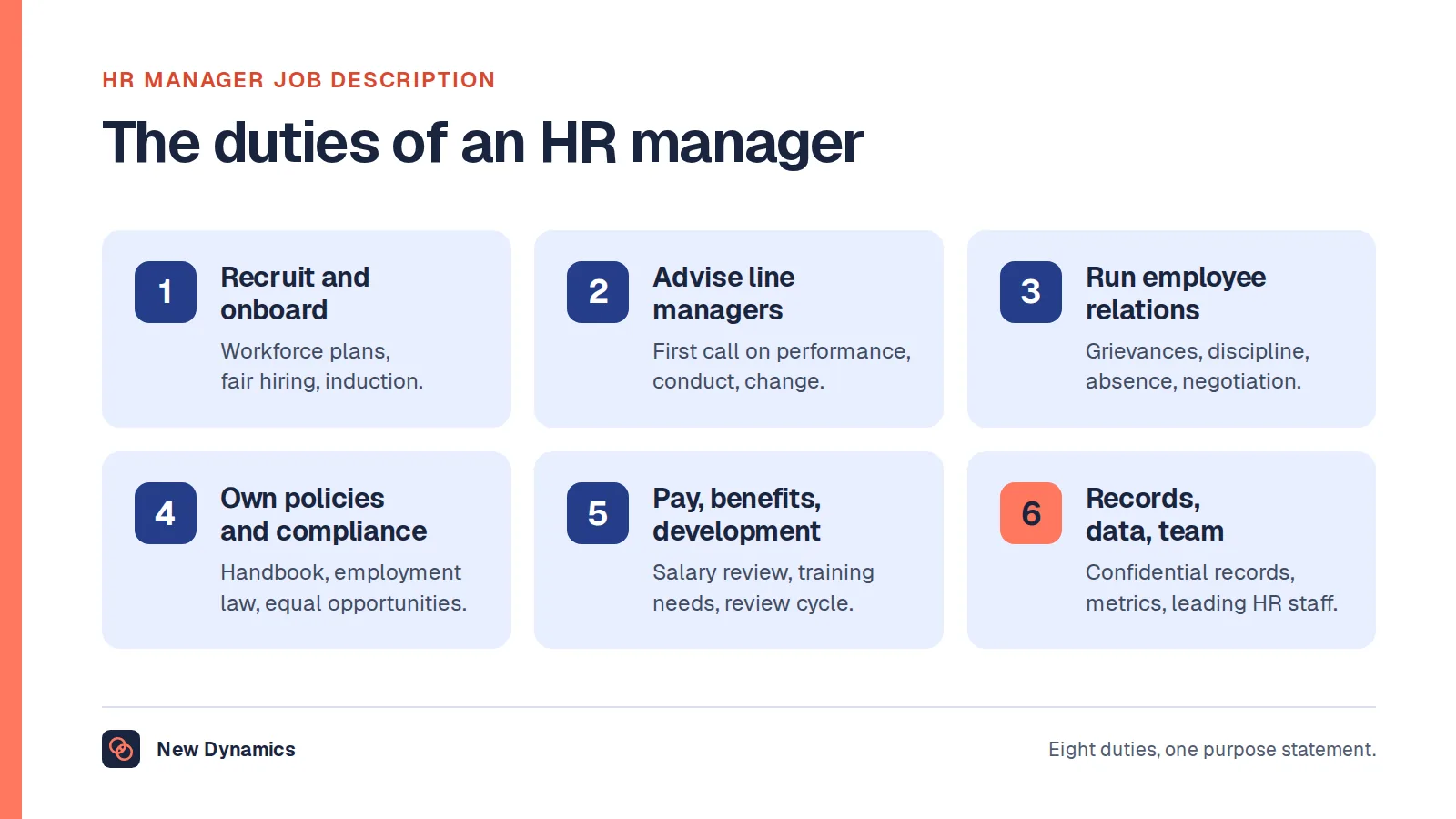
| HR manager | The function's operations: recruitment, ER, policy, records | Leads the HR team day to day; reports to the director or a general manager |
| HR business partner | The people agenda for one business area | Beside that area's leaders; part of the HR function |
| HR director | The people plan, the function, risk and the executive case | On or beside the executive team; reports to the CEO or CPO |
| Chief people officer | The people strategy of a large organisation | On the executive team, with directors beneath |
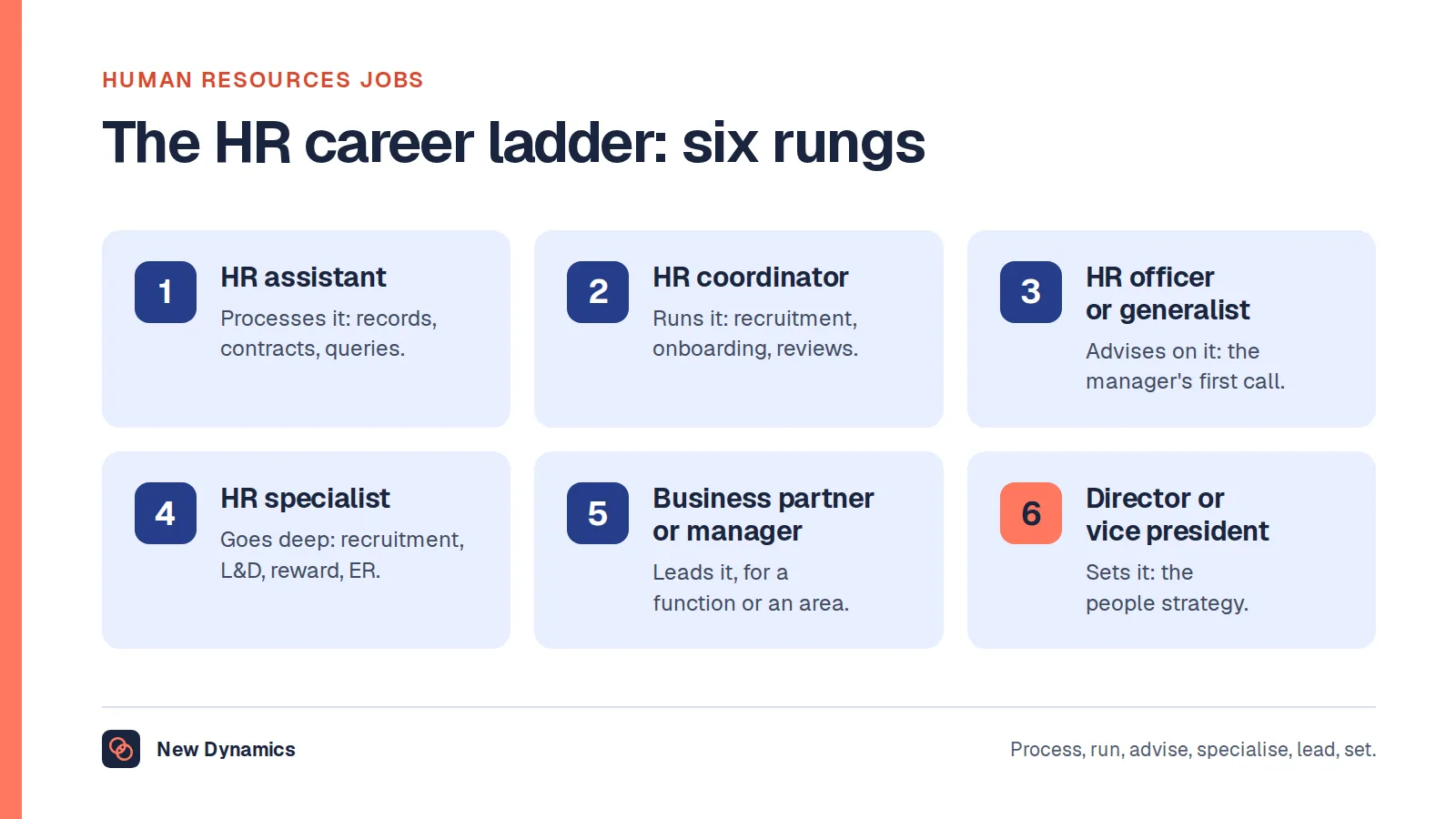
In a smaller organisation the HR manager and HR director are the same seat with different titles; the difference is whether the role owns the plan or runs the function. Our HR manager job description covers the operational rung, and the guide to HR jobs and duties places all six rungs of the ladder.
Skills employers look for
The standard's duties describe the skills: critical analysis and evaluation of internal and external factors; developing and maintaining relationships with senior stakeholders “to communicate, engage, influence and challenge effectively”; managing a budget and people metrics; selecting and implementing technology; interpreting people analytics to provide insight and influence senior decisions; and keeping up to date with legislation and regulation to make timely interventions.
For the advert, add:
- Judgement under commercial pressure. The ability to say no to the executive team with the reason and the alternative.
- Employment law fluency, enough to spot the risk before the lawyer is needed and to know when the lawyer is.
- Leadership of a professional team, including the specialists whose work the director will never do.
- Numbers. The workforce cost, the turnover, the pay bill and what each decision does to them.
- Plain communication to a board that has ten minutes for people.
Qualifications and the route in
O*NET places human resources managers in Job Zone four, usually a bachelor's degree. In the UK, employers usually ask for Chartered Member or Chartered Fellow status of the CIPD, or a level 7 qualification such as the senior people professional apprenticeship, which the standard links to that professional recognition, plus a record at HR manager or HR business partner level and experience of leading change. Say which is essential and which the evidence of experience can replace.
HR director job description template
Job title: HR Director (or People Director, Director of People, Head of People)
Reports to: Chief Executive Officer, Managing Director or Chief People Officer
Scope: State the version, the headcount and locations, the size and structure of the HR team, the budget, whether the role sits on the executive team, the board reporting and any union relationships.
Purpose: Lead the people function and the people plan so that the organisation has the people, capability, culture and practices its strategy needs, within the law and the budget, and so that the executive team and board understand and act on the people case.
Responsibilities:
- Contribute to organisational strategy; lead the people strategy and the workforce plan that serve it.
- Lead the design, implementation and review of people policies and practices; keep them compliant and fit for purpose.
- Lead the HR function: structure, team, service, budget, metrics and technology.
- Own reward and the pay review; oversee employee relations, collective bargaining, hearings and investigations; manage employment risk.
- Lead the people element of change programmes; build business cases; apply sound change methods.
- Shape the culture; own engagement, the review cycle and management practice; ensure the cycle completes.
- Advise the CEO and executive team; report to the board with people analytics; represent the organisation externally.
Skills and experience:
- A record at HR manager, business partner or head of HR level in a comparable organisation, including leadership of an HR team and of change.
- Chartered Member or Fellow of the CIPD or a level 7 people qualification, or equivalent experience; state which.
- Employment law fluency; commercial and financial understanding of the workforce.
- Influence with senior stakeholders; judgement; plain communication; discretion.
Working pattern: State location, travel between sites and the expectations of an executive role.
Progression: Chief people officer or a broader executive role; say how the organisation develops its directors.
Objectives for the appraisal
Measure the director on outcomes the role can influence, agreed with the chief executive:
- The plan. Workforce plan delivered: roles filled to the timetable, capability built as planned, workforce cost within budget.
- The cycle. Review cycle completed on time with the completion rate reported; managers' conversations happening.
- The people. Retention of the people the organisation most needs, and an honest engagement measure moving the right way.
- The risk and the function. Employment risk managed with no avoidable losses; the HR function's service and cost against agreed standards.

Frequently asked questions
What does an HR director do?
Leads the people function and owns the people plan: the people strategy and workforce plan, policies and practices, the HR team and budget, reward and employment risk, the people element of change, culture and the review cycle, and the people case at the executive table and the board. The US occupational database lists HR director among the titles of human resources managers, whose tasks include planning, directing and coordinating HR activities and staff.
What is the difference between an HR director and an HR manager?
The HR manager runs the function's operations day to day: recruitment, employee relations, policy, records and advice. The HR director owns the people plan, the function as a whole, employment risk and the case made to the executive team and board. In a smaller organisation the two are the same seat.
What is the difference between an HR director and a chief people officer?
Scale and seat. The chief people officer sits on the executive team of a large organisation with HR directors beneath, owning the people strategy across it. An HR director may be the top people role in a smaller or mid-sized organisation, or a divisional or country director inside a larger function.
What qualifications does an HR director need?
Usually a degree and, in the UK, Chartered Member or Fellow status of the CIPD or a level 7 people qualification such as the senior people professional apprenticeship, plus a record at HR manager or business partner level and experience of leading an HR team and change. The US occupational database places human resources managers in Job Zone four, usually a bachelor's degree.
How should an HR director be measured?
On outcomes the role can influence: the workforce plan delivered within budget, the review cycle completed on time, retention of the people the organisation most needs, engagement moving the right way, employment risk managed and the function's service and cost. Policies written and programmes launched are activity, not outcomes.
Your next step: name the version and the seat
- Decide which of the three versions the organisation needs and who the director reports to.
- List the decisions the director owns outright and what the board expects to hear.
- Write the objectives as outcomes and agree them with the chief executive before the search starts.
- State the professional recognition required and what experience can replace it.
For the practice the role is built on, read and download our human resources management guide. The guide is free to read, and the PDF uses our short download form.
Want the people plan's objectives, the review cycle's completion and the board's people reporting in one place, without chasing? Book a New Dynamics demo and bring your current people plan. You can also email contact@new-dynamics.com.