TL;DR
- “Difficult” is a label, not a diagnosis. Acas splits the question into capability (“someone's ability to do their job”) and conduct, “someone's behaviour at work”, because “what kind of problem it is affects how employers should respond”.
- The two overlap in a way that matters legally. Acas notes lateness can look like conduct but be “an impairment or condition”, and if that is a disability, adjustments must be considered “before taking any disciplinary action”.
- Informal first is the default. Employers “should talk to employees informally first if there are problems with their conduct”, unless the issue is serious misconduct.
Once someone is described as difficult, every subsequent conversation is about the person rather than the problem. The procedures an employer has to follow do not recognise the category, which is a useful hint about where to start.
This article covers how to diagnose what is actually happening, the overlap the law cares about, the informal conversation, and what a performance improvement plan has to contain.
Most of this depends on what was said at the time, written down. See how New Dynamics feedback keeps that record continuous rather than reconstructed.
Diagnose first

Acas's guidance on problems with an employee's performance starts by telling employers to "try to understand why", and splits the answer in two:
- Capability, "someone's ability to do their job".
- Conduct, "someone's behaviour at work".
And the reason it matters: "what kind of problem it is affects how employers should respond."
There is a third possibility the categories do not name, and it is common: nobody ever said what the standard was. Before treating either of the first two as established, check that the expectation was stated, in words, at a time when the person could act on it.
If it is capability, the employer "could help them improve by offering support, for example through coaching or mentoring" and training. Acas is firm that employers "must provide 'adequate resources' to enable an employee to do their job".
If it is conduct, Acas notes "employees usually have more control over conduct issues", and lists examples: "regularly being late for work", "calling in sick when they're not genuinely ill", "being absent without permission", "not following health and safety guidelines, if they've been trained in and understand them", "'insubordination' – for example, refusing to do work", and "bullying".
The overlap that matters

This is the part that turns a management problem into a legal one if it is missed.
"Sometimes, a situation might seem like a conduct issue but could actually be capability. For example, if someone is regularly late to work, this could be because of an impairment or condition." Where that is a disability, the employer "will need to consider if a reasonable adjustment is needed", and Acas is explicit about the sequence: "they should do this before taking any disciplinary action."
Reasonable adjustments are "changes that remove or reduce a disadvantage related to their disability", and Acas's examples are concrete: "giving someone more time to do written tasks, adjusting shift patterns or providing specialist equipment".
Sickness has its own path. Where illness prevents someone from doing their job, the employer "should take steps to support them to return to work", which "might include making changes to their role" or "using a phased return to work". Dismissal on that basis "should be a last resort", and where the illness is a disability the employer "must do everything they reasonably can to support them".
This is general information rather than legal advice; the Acas helpline advises on individual cases.
The informal conversation
Acas's default is clear: employers "should talk to employees informally first if there are problems with their conduct". Doing so "can help to resolve the problem more quickly" and "avoid formal procedures". The exception is where the issue is "more serious, sometimes known as 'misconduct' or 'gross misconduct'", which may need a formal procedure from the start.
What the conversation needs:
- The specific thing, with dates. Not "your attitude" but what happened, when.
- The standard, stated plainly, so there is no ambiguity about what should happen instead.
- A genuine question. Ask what is getting in the way, and be prepared for the answer to change your diagnosis.
- What happens next, including whether anything is being recorded.
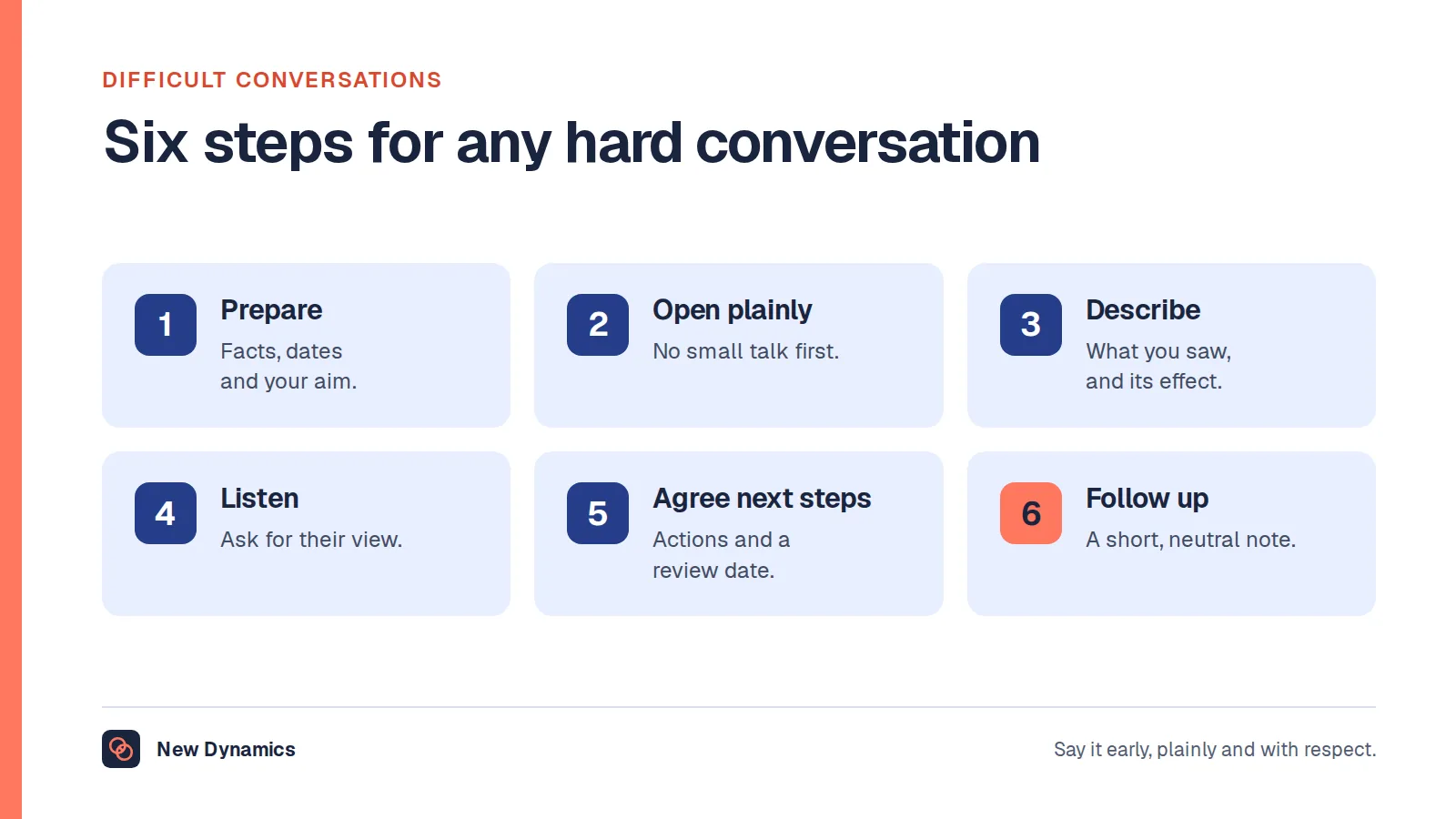
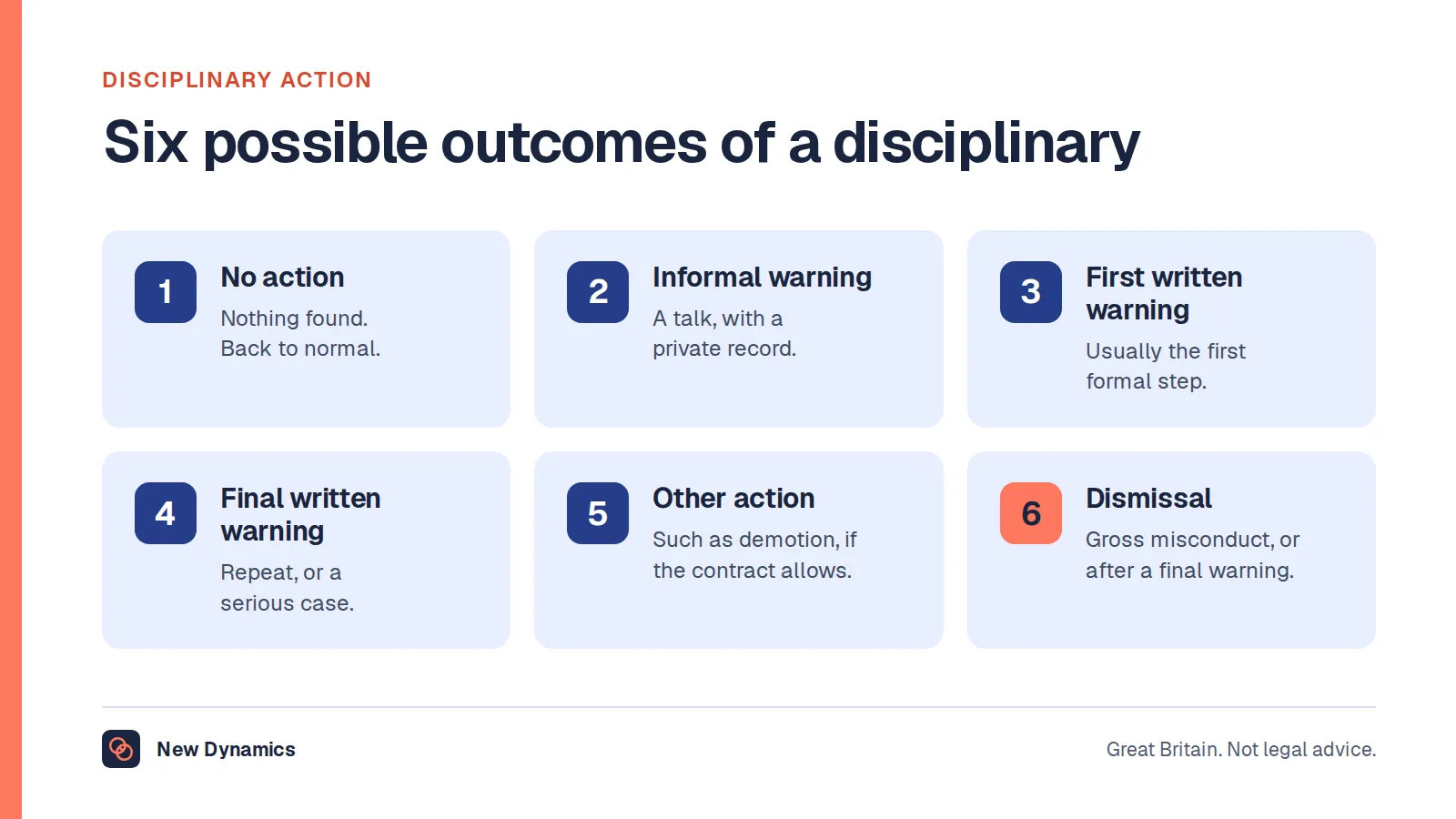
Our difficult conversations post covers the wording, and disciplinary action covers the formal route if it comes to that.
When the behaviour affects other people
Bullying appears on Acas's list of conduct issues, and this is where tolerating "difficult" becomes a problem of its own. HSE's Relationships standard expects an organisation to promote "positive behaviours at work to avoid conflict and ensure fairness", to have "agreed policies and procedures to prevent or resolve unacceptable behaviour", and to have systems "to enable and encourage employees to report unacceptable behaviour".
A manager who avoids one difficult conversation is making a decision about everyone else on the team, and they usually notice.
The performance improvement plan

Employers "should take steps to try and help someone to improve, before starting a formal disciplinary procedure". If informal steps do not work, Acas says employers "could consider setting up a performance improvement plan (PIP)", sometimes called a training or development plan.
A PIP "should set out":
- "Specific objectives for the employee."
- "A reasonable timeline to meet them."
- "Any further support" the employer will provide.
Three things, all of which are the employer's responsibility to define. A PIP that lists only what the employee must do is half a document.
Note also who these steps apply to: they are "mainly used for those with the legal status of employee", and somebody is "not likely to be an employee" if they are "an agency worker" or "a casual worker on a zero-hours contract", though Acas suggests using the same procedure for workers to maintain good relationships.
Write it down
"It's important for employers to keep a record of any conversations they have with employees about performance."
The record is what makes a later decision defensible, and its absence is the most common reason a well-intentioned process falls apart. Note the date, what was discussed, what was agreed and what support was offered.
When the difficulty is not the employee
Three patterns worth ruling out before the label sticks:
- The expectation was never stated. Common, and entirely fixable in one conversation.
- The job changed and the person did not. That is a capability question with a training answer, not a character flaw.
- The manager is the constant. If several people have become difficult under one manager, the diagnosis is probably in the wrong place. Our manager performance post covers assessing that.
Frequently asked questions
How do you deal with a difficult employee?
Diagnose first. Acas splits performance problems into capability (ability to do the job) and conduct, behaviour at work, and says the type of problem changes the response. Then talk informally, offer support or state the standard, and record the conversation.
What is the difference between capability and conduct?
Capability is about someone's ability to do their job; conduct is about their behaviour. Acas notes employees usually have more control over conduct issues, and lists lateness, unauthorised absence, refusing to do work and bullying as examples of conduct.
Should you go straight to a disciplinary?
Usually not. Acas advises talking informally first about conduct problems, which can resolve things faster and avoid formal procedures. The exception is more serious misconduct or gross misconduct, where a formal procedure may be needed from the start.
What if the behaviour might be caused by a disability?
Consider reasonable adjustments before any disciplinary action. Acas gives lateness as an example of something that can look like conduct but stem from an impairment or condition, and adjustments such as more time for written tasks or changed shift patterns may resolve it.
What should a performance improvement plan include?
Specific objectives, a reasonable timeline to meet them, and any further support the employer will provide. All three are the employer's responsibility; a plan listing only the employee's obligations is incomplete.
Do these steps apply to agency and zero-hours workers?
The procedures are mainly for those with the legal status of employee, and agency or casual zero-hours workers are unlikely to be employees. Acas nonetheless suggests using the same procedure for workers to maintain good working relationships.
Why does it matter to keep records?
Because a later decision has to be defensible, and memory is not. Acas says it is important to keep a record of any conversations about performance, including what was agreed and what support was offered.
Your next step: replace the label with a sentence
- Write down the specific behaviour or shortfall, with dates.
- Decide whether it is capability, conduct, or an expectation nobody set.
- Check whether an adjustment might be needed before anything formal.
- Have the informal conversation, and write down what was agreed.
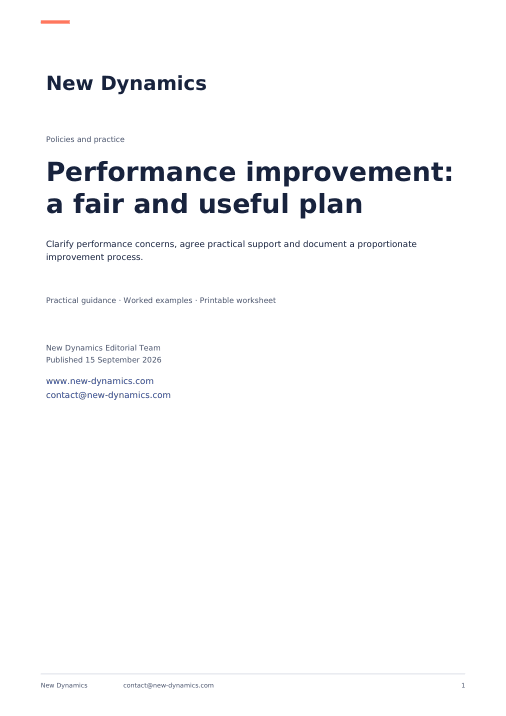
For the structured route once informal steps have not worked, read and download our performance improvement guide. The guide is free to read, and the PDF uses our short download form.
Want the evidence to exist before you need it? Book a New Dynamics demo and bring your current process. You can also email contact@new-dynamics.com.