TL;DR
- Managing a manager's performance means judging two things: their own work, and whether the people processes happened in their team. Acas is clear that employers “should conduct regular performance reviews for anyone with the legal status of employee”, and that managers “should still talk to employees informally about their performance on a regular basis”.
- Those informal habits are checkable: “sharing regular feedback”, coaching, and “regular check-ins, sometimes known as one-to-ones”. So is the record, Acas says “it's important to keep a written record of what is discussed”, shared with the employee afterwards.
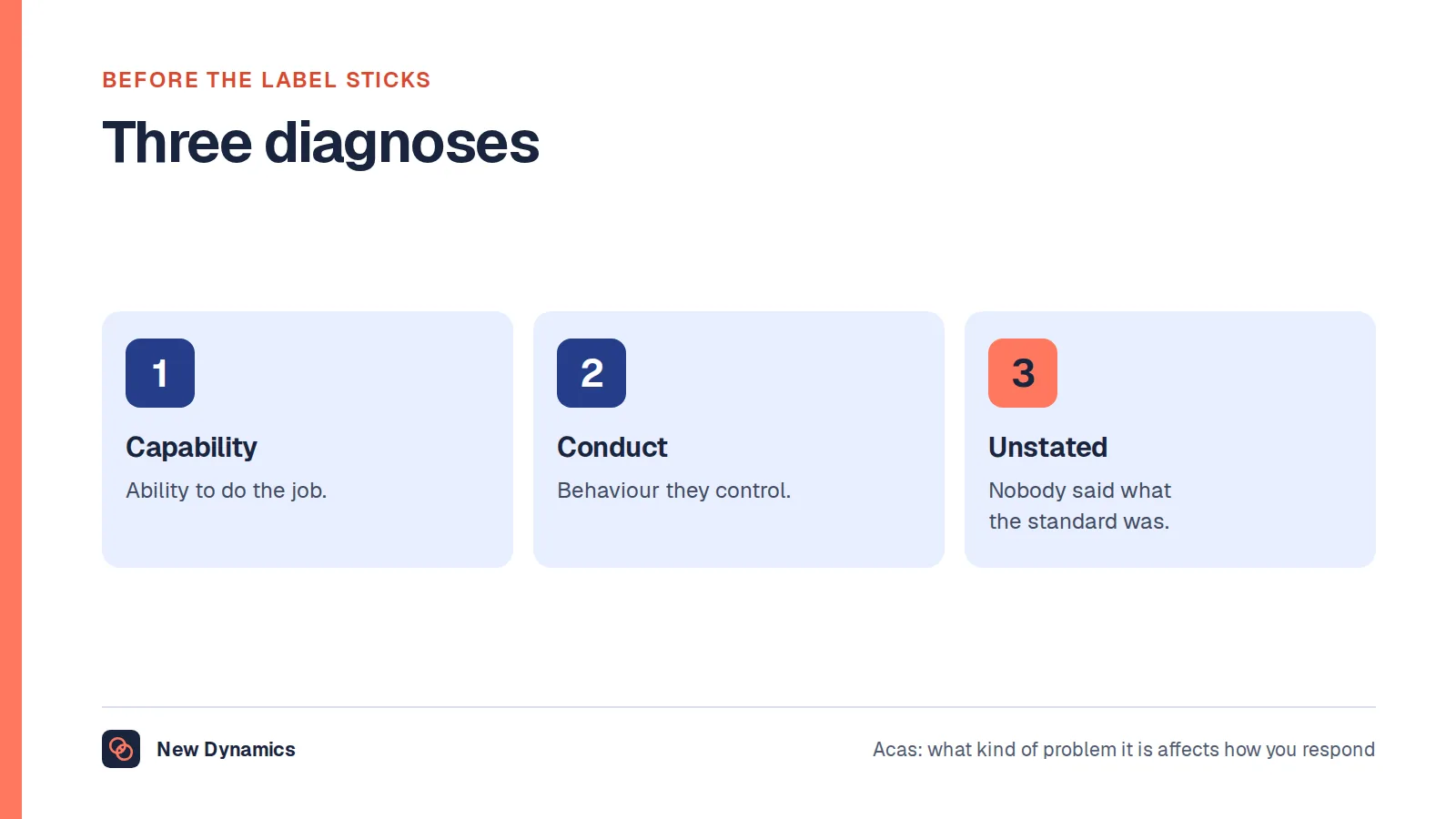
- The part managers most often get wrong is diagnosis. Acas distinguishes “capability – someone's ability to do their job” from “conduct – someone's behaviour at work”, and notes that “what kind of problem it is affects how employers should respond”.
Review forms designed for individual contributors do not fit managers. They ask what the person delivered, and a manager mostly delivers through other people, some of whom left because of them.
This article covers manager performance management in both senses: what a manager should be held accountable for, how to measure it without rewarding the wrong things, and how to run the review.
A manager is seen by their own manager, their team and their peers. See how New Dynamics multi-manager reviews gather that input into one record.
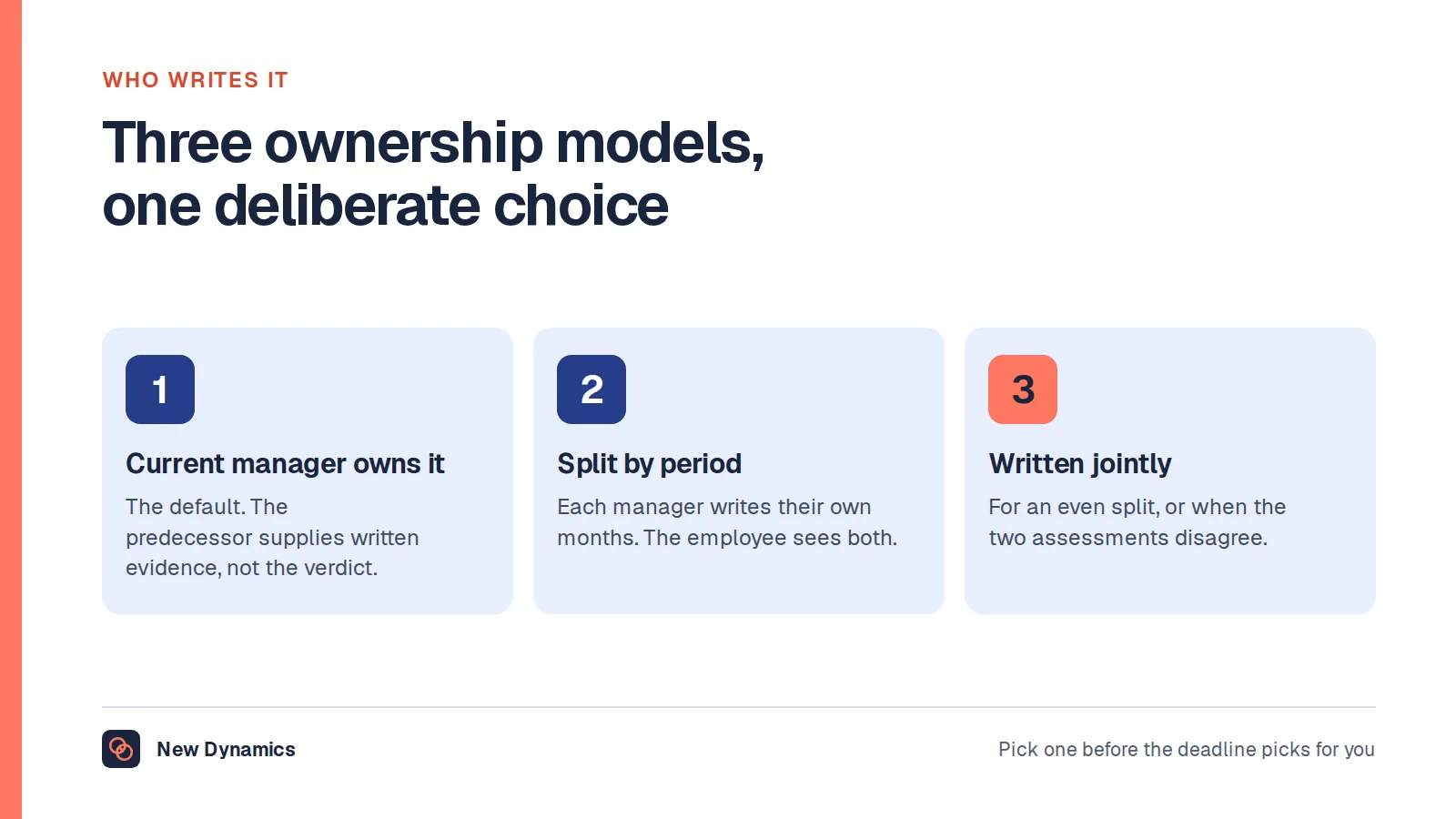
That record is what a promotion or a reorganisation puts at risk, which is why reviewing an employee who changed manager starts with a handover rather than with the review form.
The four areas

- Results. What the team delivered against what was agreed, read with the conditions it was delivered in.
- The team. Capability, retention of the people you wanted to keep, and whether anyone was developed rather than merely retained.
- The basics of people management. Objectives set, one-to-ones held, reviews written, problems raised early, records kept.
- Behaviour. How the results were obtained, judged against the organisation's stated standards rather than a general impression.
Area three is the one most organisations leave out of manager reviews and then complain about all year.
What the basics actually are
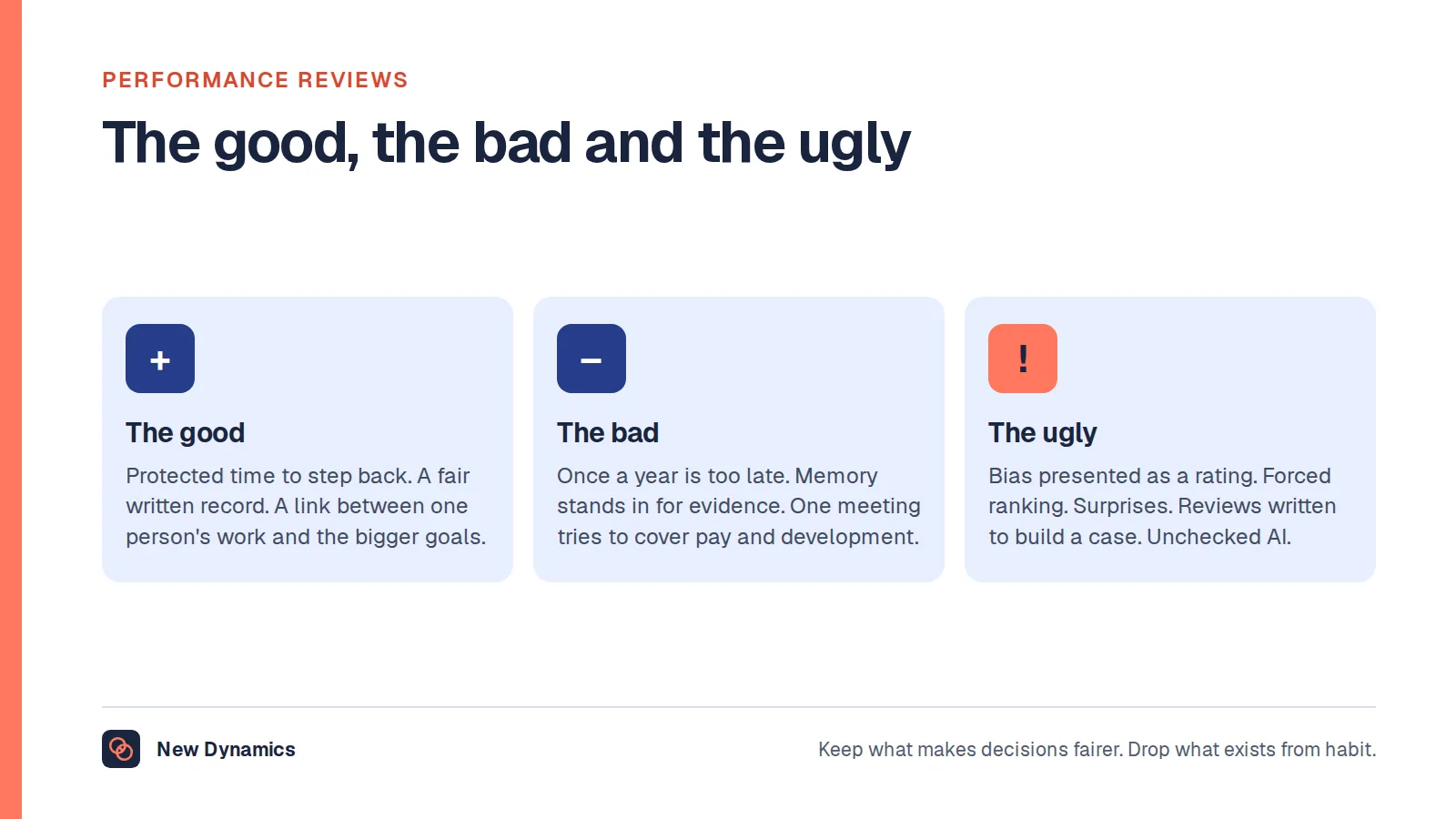
Acas sets the floor. Its guidance on performance management says employers "should conduct regular performance reviews for anyone with the legal status of employee", that "it's a good idea to do them at least once a year", and that reviews are a chance to discuss "what they are doing well, any areas for improvement, whether they need more support or training, their career and any development objectives".
It adds that reviews "might be based on a combination of things, like whether an employee is meeting or has met any agreed objectives, demonstrating the right behaviours in their work, following an agreed development plan", that "it's important to keep a written record of what is discussed", and that the record "should be shared with the employee afterwards".
And the part that matters between reviews: "alongside more formal performance reviews, managers should still talk to employees informally about their performance on a regular basis", through "sharing regular feedback", coaching and "regular check-ins, sometimes known as one-to-ones".
Every one of those is checkable. Whether a manager's team has current objectives, recent one-to-ones and written reviews is a fact, not an opinion, and it belongs in the manager's own review.
Measures that work, and ones that mislead

Work
- Team results with context. The same target is not the same job in two different markets.
- Completion of the people basics, as above.
- Retention of people you wanted to keep, rather than headline turnover.
- Internal development: promotions, moves and people who became ready for something.
- Team feedback on specific behaviours, not a popularity score.
Mislead
- Engagement score alone. It moves for reasons outside a manager's control, and making it a target teaches people to manage the survey.
- Turnover alone. A manager who addresses long-standing underperformance will look worse for a year.
- Utilisation or activity, which rewards busyness.
- Upward popularity, which rewards not asking anything difficult.
The part managers get wrong
The most common failure is diagnosis: treating everything as attitude. Acas's guidance on problems with an employee's performance draws the line clearly. Employers "should try to understand why", distinguishing "capability – someone's ability to do their job" from "conduct – someone's behaviour at work", because "what kind of problem it is affects how employers should respond".
For capability, employers "could help them improve by offering support, for example through coaching or mentoring" and training, and "must provide 'adequate resources' to enable an employee to do their job". Where sickness prevents someone from doing their job, the employer "should take steps to support them to return to work", dismissal "should be a last resort", and where the illness is a disability the employer "must do everything they reasonably can to support them".
A manager who can make that distinction, early and in writing, is doing the hardest part of the job. One who cannot is generating grievances for somebody else to resolve. This is general information rather than legal advice; follow your own procedure and take advice on individual cases.
Reviewing a manager: who to ask

Four inputs, weighted deliberately:
- Their own manager, on results, judgement and the decisions that were not visible to the team.
- Their team, on specific behaviours: clarity of expectations, usefulness of feedback, whether concerns are acted on.
- Peers and partners, on collaboration and whether their team is easy to work with.
- The record. Objectives, one-to-ones, reviews, cases handled and how long things took.
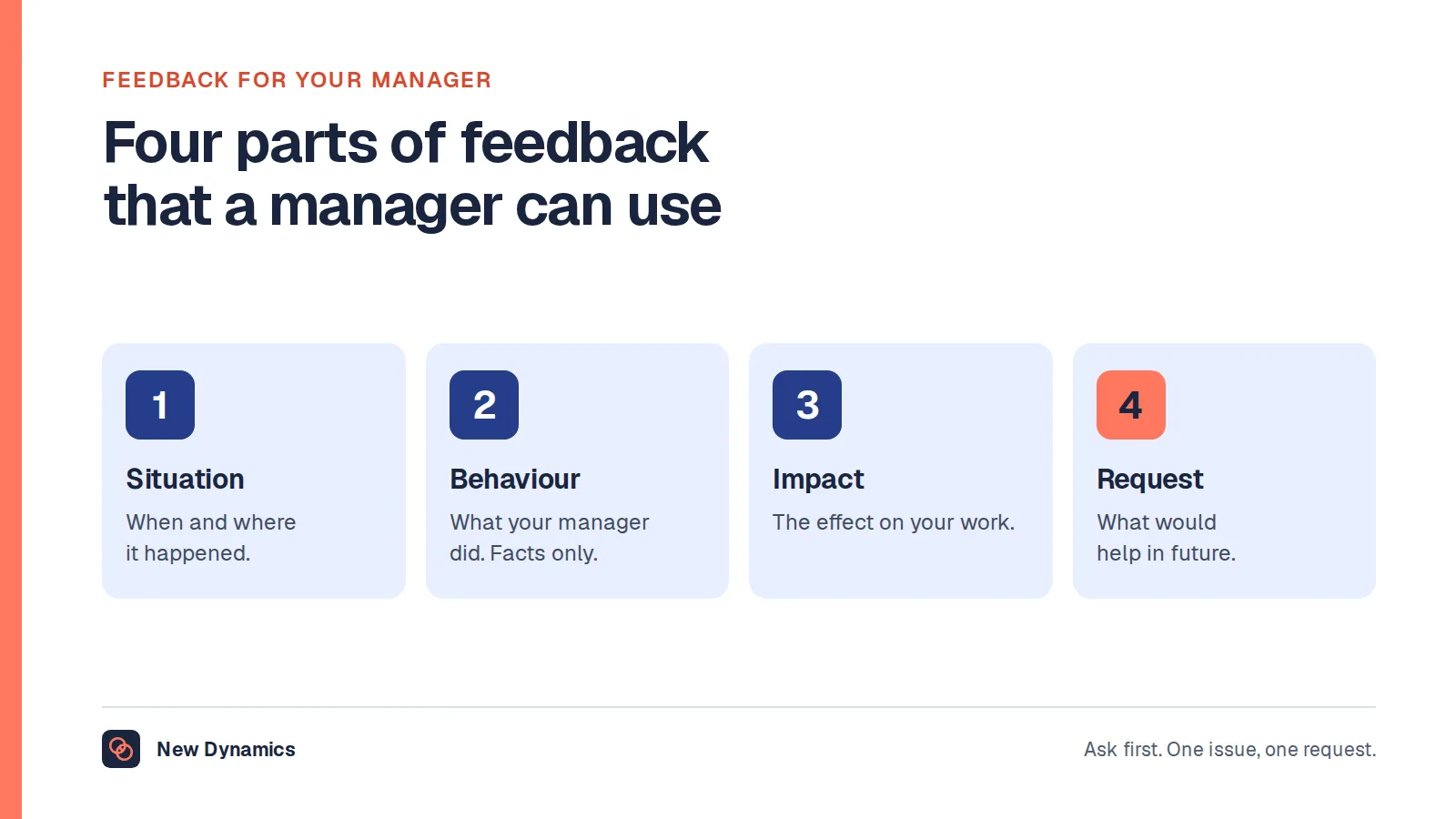
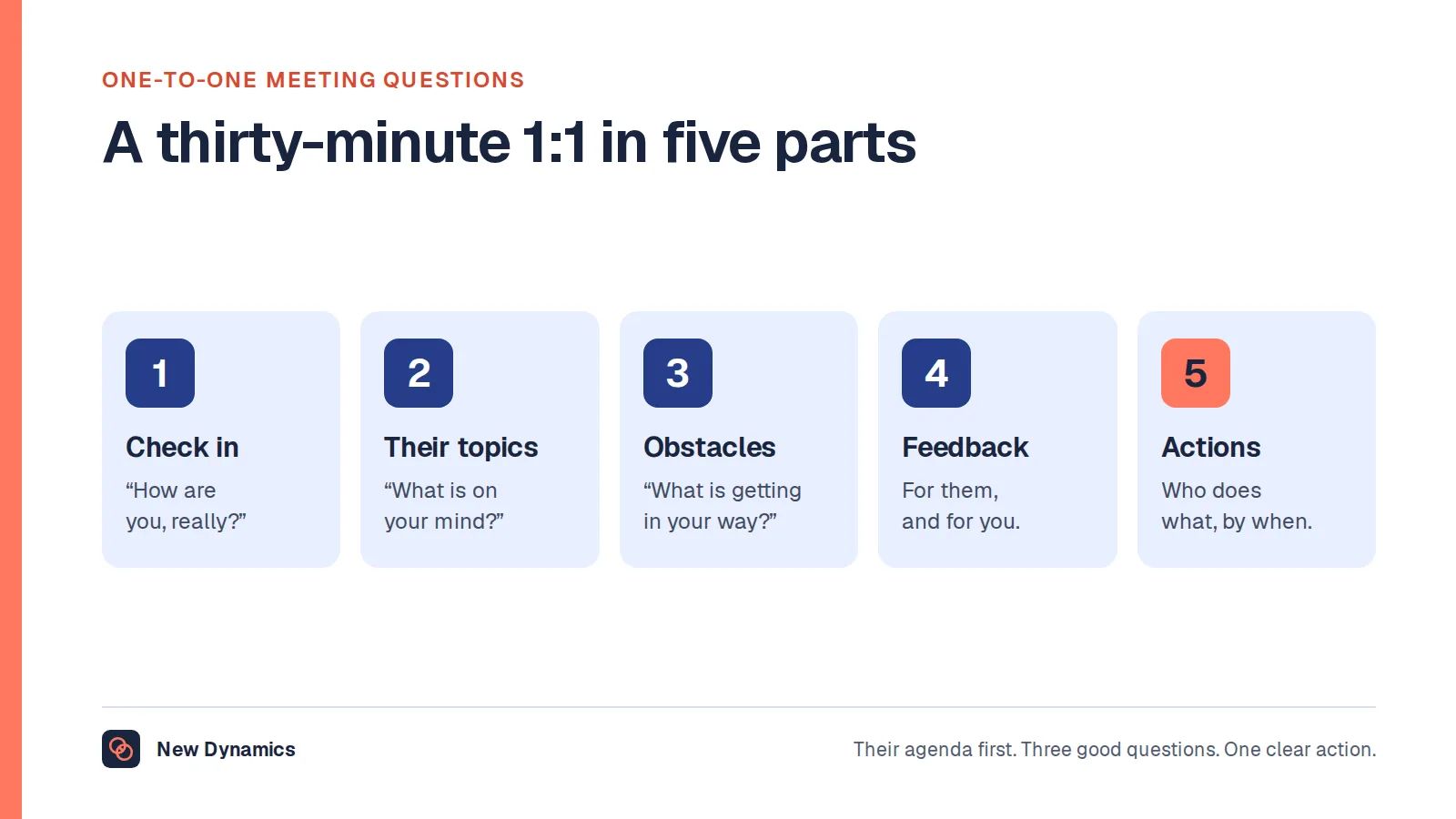
Ask the team about behaviours rather than about whether they like the person. "Do you know what is expected of you?" and "when you raised something, what happened?" produce usable answers. Our manager feedback examples post covers wording upward feedback, and our 1-1 meeting questions post covers the conversation being assessed.
First-time managers
In year one, expect the basics to be the review. Setting objectives, holding one-to-ones, giving feedback that is specific, and raising the first difficult issue without waiting six months. The HSE Support standard expects "systems are in place to enable and encourage managers to support their staff" and that "employees receive regular and constructive feedback", a new manager cannot build those systems alone, and their own manager is part of the answer.
Two things to avoid: judging a first-year manager on team results they inherited, and promoting someone into management and then measuring them as though they were still doing their previous job.
A manager review template
Results. What the team delivered against agreed objectives, and the conditions.
People basics. Objectives in place for every team member: yes or no. One-to-ones held at agreed frequency: yes or no. Reviews completed and shared: yes or no. Concerns raised early: examples.
Team development. Who progressed, who is ready for more, who left and why.
Behaviour. Against our stated standards, with examples from more than one source.
Judgement. One decision they got right, one they got wrong, and what they did about it.
Support needed. What this manager needs from the organisation to do the job better.
Frequently asked questions
How do you manage a manager's performance?
Assess four areas: results delivered by the team in context, the state of the team including capability and retention, whether the basics of people management happened (objectives, one-to-ones, reviews, records, early handling of problems) and behaviour against stated standards. Gather input from their manager, their team, peers and the record.
What should you measure for a manager?
Team results read with the conditions, completion of the people basics, retention of the people you wanted to keep, internal development and promotions, and specific team feedback on behaviours. Avoid relying on engagement score, turnover or activity measures alone.
How often should a manager be reviewed?
At least annually, as Acas advises for employees generally, with regular informal conversations in between. For managers, quarterly checks on the basics (are objectives set, are one-to-ones happening) catch problems long before an annual review would.
What is the difference between capability and conduct?
Capability is about someone's ability to do their job; conduct is about their behaviour at work. Acas is explicit that the kind of problem affects how an employer should respond, with support, coaching and training for capability issues, and adequate resources provided to enable someone to do the job.
Should a manager's team be asked for feedback?
Yes, on specific behaviours rather than on likeability: whether expectations are clear, whether feedback is useful, whether raised concerns were acted on. Combine it with the manager's own manager, peers and the record rather than treating it as a verdict on its own.
How do you review a first-time manager?
Mostly on the basics in the first year: objectives set, one-to-ones held, specific feedback given, and the first difficult conversation had rather than avoided. Judging them on inherited results, or on the individual work they used to do, produces the wrong conclusions.
Your next step: check the basics before the opinions
- For each manager, check whether their team has current objectives, recent one-to-ones and written reviews.
- Ask the team about specific behaviours, not about approval.
- Read results alongside the conditions and the inherited position.
- Write down what each manager needs from the organisation to do better.
For reviewing people seen by more than one manager, read and download our multi-manager performance guide. The guide is free to read, and the PDF uses our short download form.
Want manager reviews that combine input from the team, peers and the record? Book a New Dynamics demo and bring your current manager review form. You can also email contact@new-dynamics.com.