TL;DR
- ERP stands for enterprise resource planning. It means a single system covering an organisation's core back-office processes, typically finance, HR, payroll and procurement, and in some sectors manufacturing and supply chain too.
- The National Audit Office describes the aim of shared services as standardising “processes and services, reducing costs while improving data consistency”, and notes that this “involves moving to a common IT system known as an Enterprise Resource Planning (ERP) system”.
- The difficulty is rarely the software. The NAO's report on government's programme found that “the absence of a strong technical lead has resulted in inconsistent ERP configurations and data convergence, undermining interoperability and data standards”.
Most people meet the term in a meeting where someone announces that "we're moving to the new ERP", and everyone nods because asking would take twenty minutes.
This article explains what an ERP system is, what it contains, the processes it runs, how it differs from CRM, MRP and an HR system, and why these programmes are difficult even when the software is fine.
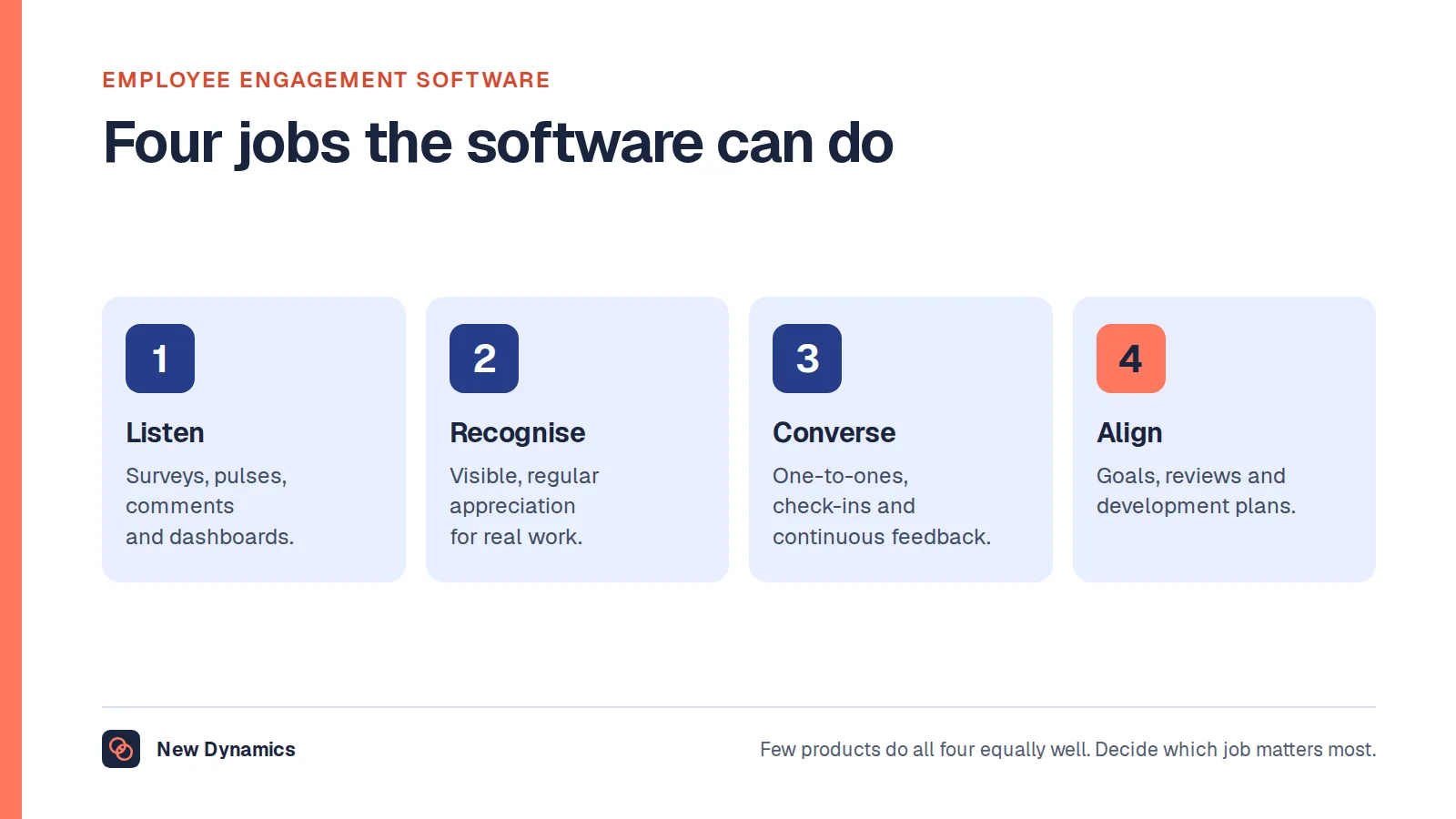
An ERP's HR module rarely does the conversation part of people management well. See how New Dynamics performance reviews handle the part that sits outside the record of employment.
The plain definition
ERP stands for enterprise resource planning: one system, with one database, covering an organisation's core operational and back-office processes, so that the same information is used by everyone rather than re-keyed between departments.
The National Audit Office puts the purpose plainly in its report on government shared services. The aim of sharing back-office functions "is to standardise processes and services, reducing costs while improving data consistency", and this "involves moving to a common IT system known as an Enterprise Resource Planning (ERP) system". The strategy is intended "to facilitate convergence, bringing government departments into alignment on procedures, processes, definitions and data standards".
That last phrase is the real definition. An ERP is an agreement about how to work, enforced by software.
What an ERP contains

Modules vary, but the core is consistent:
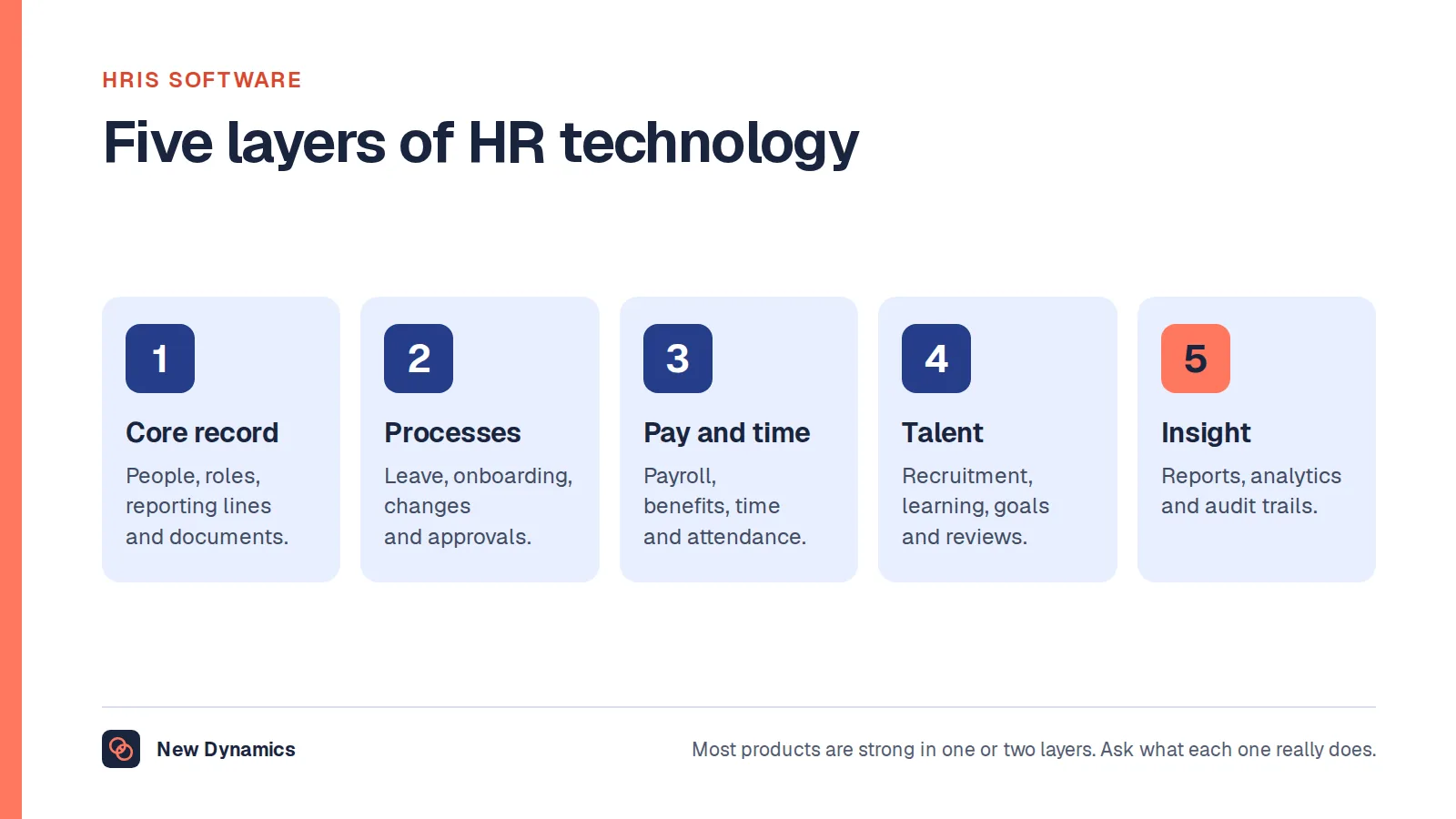
- Finance. General ledger, accounts payable and receivable, fixed assets, budgeting, month-end and statutory reporting.
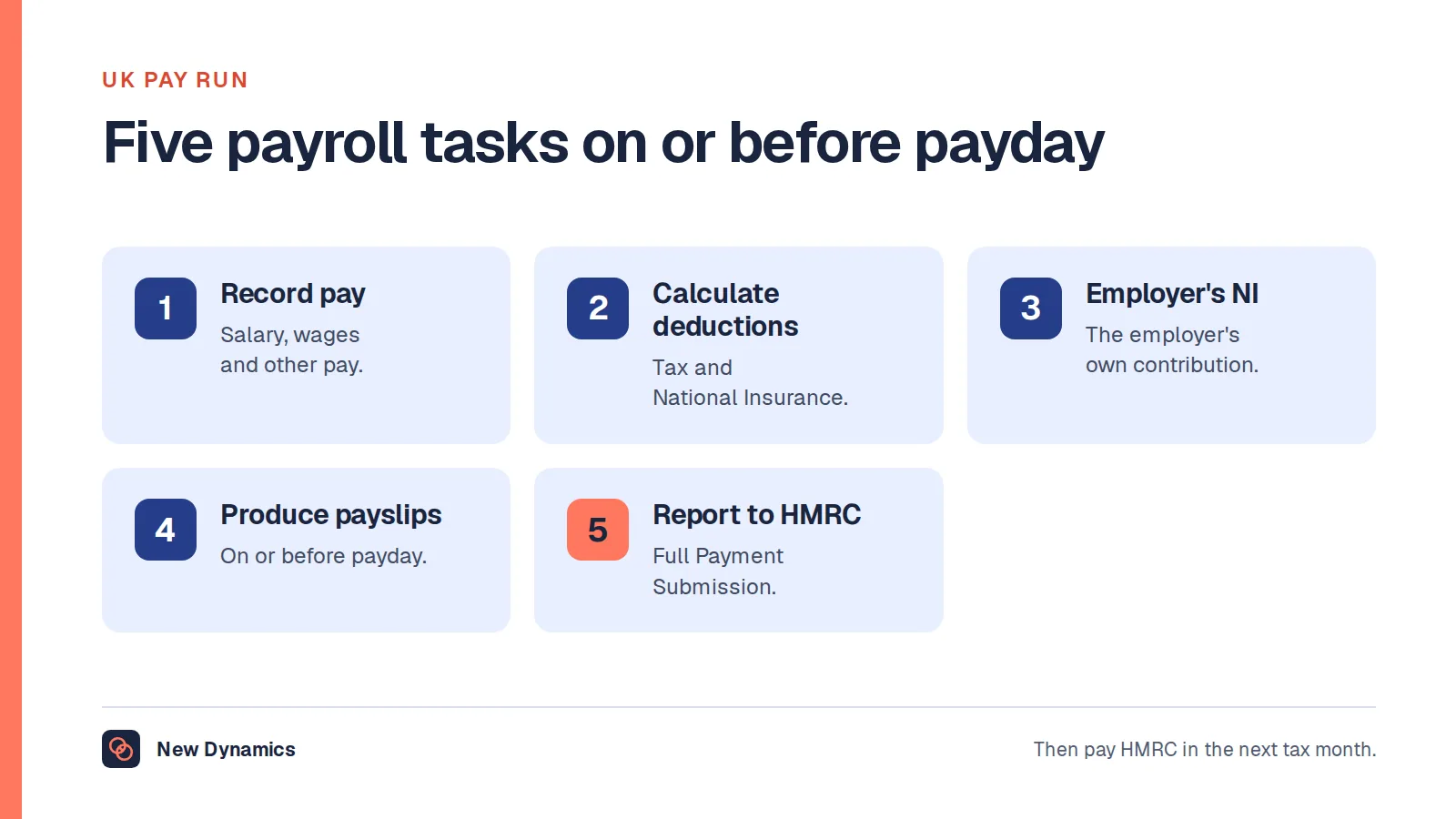
- HR and payroll. The employee record, contracts, absence, pay, pensions and statutory returns.
- Procurement. Requisitions, purchase orders, suppliers, contracts and invoice matching.
- Supply chain and operations. Inventory, orders, logistics, and in manufacturers, production planning.
- Reporting. One set of numbers, which is the entire point and the hardest part to deliver.
What "ERP examples" usually means
People searching for examples often want product names. The more useful answer is the processes an ERP runs end to end, because that is what you are buying:
- Procure to pay. Requisition, order, receipt, invoice, payment, matched automatically rather than by email.
- Order to cash. Customer order, fulfilment, invoice, payment, credit control.
- Hire to retire. Vacancy, contract, payroll, changes, absence, leaver.
- Record to report. Transactions through to the management accounts and statutory reporting.
If a programme cannot describe which of those four it is changing, and how they work today, it is not ready to choose software.
ERP against CRM, MRP and HR systems

- CRM manages relationships with customers and prospects: contacts, opportunities, pipeline, service cases. It faces outward. An ERP faces inward at operations and money. They are commonly integrated so that a won deal becomes an order, and asking for "CRM with ERP" usually means exactly that integration rather than a single product.
- MRP (material requirements planning) is the manufacturing calculation: what to make or buy, in what quantity, by when, given demand, stock and lead times. Historically MRP came first, and ERP grew around it by adding finance, HR and procurement. In most modern systems MRP is a module inside the ERP rather than a separate product.
- An HR system or HRIS covers people processes in depth: recruitment, onboarding, performance, learning, engagement. An ERP's HR module usually covers the record of employment and payroll well, and the conversational parts shallowly. Our post on HRIS software covers that boundary.
So: ERP for the back office and operations, CRM for customers, MRP inside the ERP for manufacturing, and specialist HR tools for the parts of people management an ERP does not reach.
Why organisations do it, and the scale
The case is standardisation: one process, one set of data, less reconciliation, fewer systems to maintain. The government's Synergy Programme business case shows what that looks like at scale. The programme "will transform back-office functions for c250,000 civil servants"; "the technology three of the four Synergy departments use is at end-of-life and support cannot be guaranteed past 2035"; and an Oracle Cloud ERP software-as-a-service product "has been procured for the Cluster".
The published numbers are worth knowing before anyone calls an ERP a quick win: total undiscounted programme costs of "approximately £2bn over the FBC2 period, consisting of £746.4m investment costs, and £1,315.4m future running costs", against a backdrop where "over £550 million is spent each year delivering HR, Finance, Payroll and Procurement" across the departments concerned.
Why ERP programmes go wrong

The NAO's conclusions on the government programme are an unusually candid list, and they generalise:
- No single owner. "There is no single owner in the centre of government with a clear mandate to secure departmental onboarding, which leaves buy-in uncertain and timelines at risk."
- No strong technical lead. "The absence of a strong technical lead has resulted in inconsistent ERP configurations and data convergence, undermining interoperability and data standards."
- Fragmented governance of interdependencies, which combined with the above "creates a real risk that the strategy will not be delivered to time or budget".
- Convergence is the product. Where each department or division configures the system to preserve its own way of working, the organisation pays for a single platform and keeps the old fragmentation.
The fourth is the one that catches commercial organisations. Every request to customise is a request to keep a local practice, and each one is individually reasonable.
What it means for HR
Three practical consequences when an ERP arrives:
- The employee record moves, and with it payroll, absence and reporting. Data quality work lands on HR before go-live and is usually underestimated.
- Processes get standardised, which means someone has to decide the single way a leaver, a contract change or an overtime claim is handled across the organisation.
- The conversational tools may not come with it. Performance, one-to-ones, engagement and development often stay separate or need integrating, and that decision is easier made deliberately than discovered in month nine.
Our HRIS selection guide covers evaluating that boundary properly.
What to ask before agreeing to one
- Which of the four end-to-end processes are changing, and who owns each afterwards?
- Who is the single accountable owner, and who is the technical lead?
- What are we standardising, and which local practices are being given up?
- What happens to data, who cleans it, and by when?
- What is not in scope, and what will we still need alongside it?
Frequently asked questions
What is an ERP system?
Enterprise resource planning: a single system covering an organisation's core back-office and operational processes (typically finance, HR and payroll, procurement, and often supply chain) using one set of data so that information is not re-keyed between departments.
What does ERP mean in business?
It means both the software and the discipline behind it. The National Audit Office describes moving to a common ERP system as the way organisations standardise processes and services to reduce costs and improve data consistency, bringing teams into alignment on procedures, definitions and data standards.
What are examples of ERP systems?
The more useful answer is the processes they run end to end: procure to pay, order to cash, hire to retire and record to report. We do not publish rankings of ERP products, because coverage, licensing and suitability vary enormously by sector and size.
What is the difference between ERP and MRP?
MRP, material requirements planning, is the manufacturing calculation of what to make or buy, how much and by when. ERP is the wider system that surrounds it, adding finance, HR, procurement and reporting. In most modern systems MRP is a module within the ERP rather than a separate product.
What is the difference between ERP and CRM?
CRM faces outward: customers, prospects, pipeline and service. ERP faces inward: money, people, purchasing and operations. Most organisations run both and integrate them, so a won opportunity in CRM becomes an order in ERP. "CRM with ERP" usually describes that integration.
Why do ERP projects fail?
Rarely because of the software. The National Audit Office's findings on government's programme point to the usual causes: no single owner with a mandate, no strong technical lead, fragmented governance of interdependencies, and inconsistent configuration that undermines the standardisation the programme exists to deliver.
Your next step: name the owner and the standard
- Write down which end-to-end processes are in scope.
- Name one accountable owner and one technical lead, not a committee.
- Decide what is being standardised, and say which local practices end.
- Plan the data work, and resource it before go-live rather than during it.
For evaluating where an ERP ends and people systems begin, read and download our HRIS selection guide. The guide is free to read, and the PDF uses our short download form.
Want reviews, one-to-ones and objectives handled properly alongside the system of record? Book a New Dynamics demo and bring your current systems map. You can also email contact@new-dynamics.com.