TL;DR
- Sourcing means the act of getting something, especially products or materials, from a particular place, in the Cambridge Dictionary's definition. In work it has three common senses: talent sourcing in recruitment, the search for candidates before anyone applies; procurement sourcing, choosing where and from whom to buy; and the insourcing versus outsourcing decision, whether work is done by your own employees or by another organisation.
- In recruitment, sourcing is the stage before screening. O*NET lists among HR specialists' tasks performing searches for qualified job candidates using databases, networking, Internet recruiting resources, adverts, job fairs, recruiting firms or employee referrals. A sourcer finds and engages people, many of whom are not looking; a recruiter takes them from first conversation to offer.
- Insourcing is the fact of work being done by the employees of a company rather than another organisation being employed to do it. Decide it on four questions: is the work core to what you do, do you have or can you build the skills, what does each option really cost including management time, and what control and risk does each carry.
A recruiter says the role is “in sourcing”. A buyer talks about “strategic sourcing”. A finance director asks whether payroll should be “insourced”. The same word, three different decisions. What does sourcing mean? At root, finding where to get something. This article gives the definition, then explains the three senses HR and managers meet most, with the practical questions each one raises.
The definitions come from the Cambridge Dictionary; the recruitment tasks from the US O*NET occupational database.
Whichever sense you mean, the process that follows should be your own. See how New Dynamics workflows let you shape the stages, forms and approvals of your hiring and review processes rather than adopting a template.
Sourcing definition
The Cambridge Dictionary defines sourcing as “the act of getting something, especially products or materials, from a particular place”. To source something is to find where it comes from and obtain it from there. The word carries the idea of choice: you source from one place rather than another, for a reason.
At work the “something” is usually one of three things: people, goods and services, or the work itself.
Three senses of sourcing at work
| Sense | What is being sourced | Who does it | The decision |
|---|---|---|---|
| Talent sourcing | Candidates | Recruiters, sourcers, hiring managers | Where to find the people who could do the job |
| Procurement sourcing | Goods and services | Buyers, category managers | Where and from whom to buy, on what terms |
| Insourcing | The work | Leaders, finance, HR | Whether to do it with employees or buy it in |

Sourcing in recruitment
In recruitment, sourcing is the stage before screening: finding and engaging people who could do the job, whether or not they have applied. It is distinct from posting an advert and waiting. O*NET describes human resources specialists as people who “recruit, screen, interview, or place individuals within an organization”, and lists the sourcing task itself: “Perform searches for qualified job candidates, using sources such as computer databases, networking, Internet recruiting resources, media advertisements, job fairs, recruiting firms, or employee referrals.” A second task, to “develop or implement recruiting strategies to meet current or anticipated staffing needs”, is where sourcing becomes a plan rather than a scramble.
Sourcer vs recruiter
Larger teams split the work. A sourcer finds people: searches databases and professional networks, builds Boolean search strings, mines referrals and past applicants, and makes the first approach to candidates who are not looking. A recruiter takes it from there: the screening call, the interview process, the offer and the negotiation. In a small organisation one person does both, and the hiring manager often does the sourcing through their own network.
The sourcing funnel
- Define. The must-have skill, the synonyms candidates use for it, the locations and the exclusions.
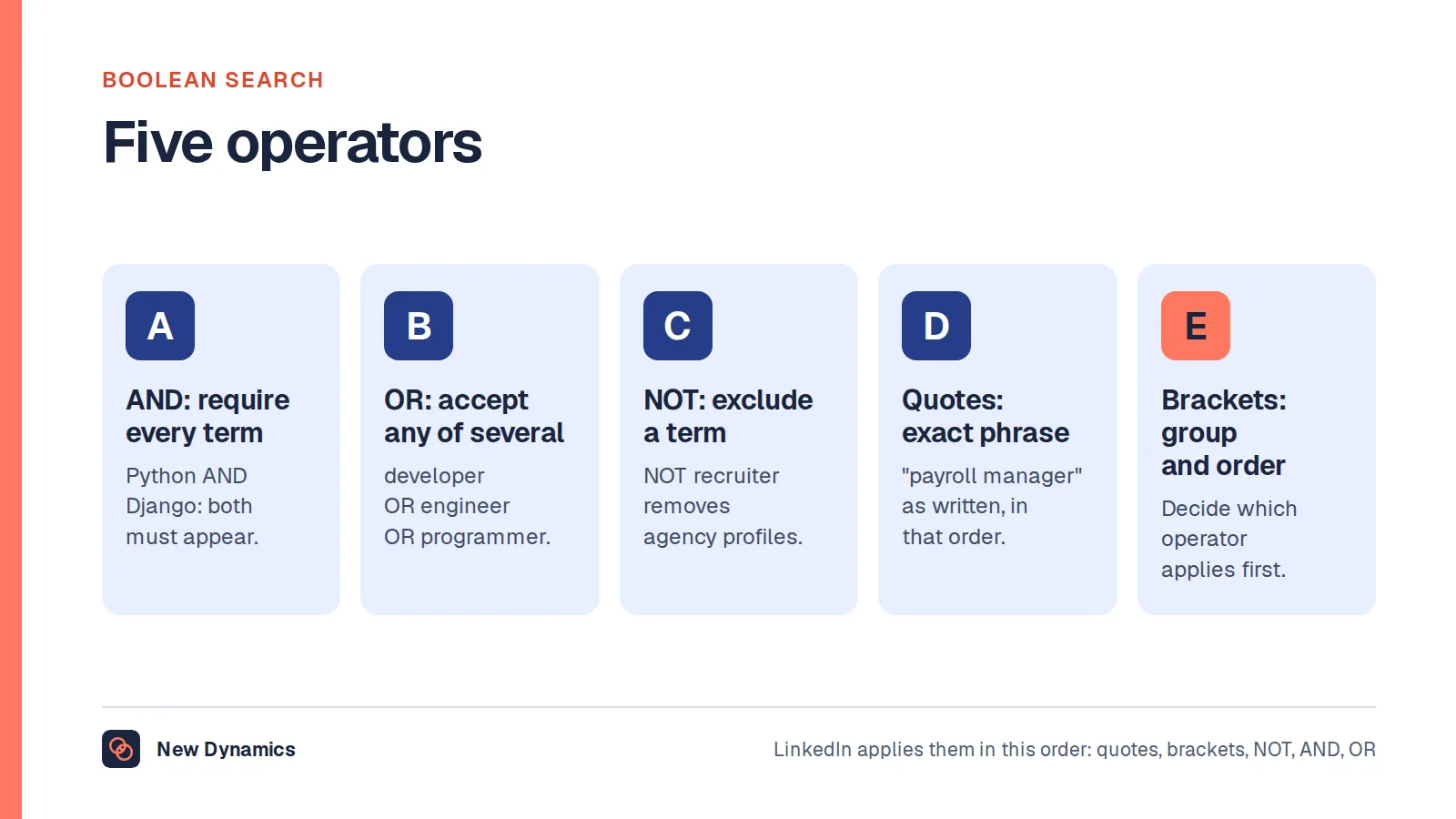
- Search. Internal databases and past applicants first, then professional networks, job boards' CV databases and the open web. The Boolean search guide covers the technique.
- Engage. A short, specific, honest message about the role, and a reply to everyone who answers.
- Hand over. Interested, qualified people go to screening; the rest into a talent pool with their consent, for the next role.

Sourcing is also where fairness starts. A sourcing strategy that draws only on one network, one university or one job board produces a shortlist that looks like that source. The talent acquisition guide covers the longer-term view of building pipelines.
Sourcing in procurement
In procurement, sourcing means deciding where and from whom to buy: analysing the supply market, identifying and evaluating suppliers, running the tender or negotiation and awarding the contract. Strategic sourcing extends the idea to the whole category of spend, looking at total cost, risk and value rather than the lowest price on the day, and is usually run by a category manager. The stage that follows is contract and supplier management, and the two are often confused: sourcing chooses the supplier; supplier management lives with the choice. Our post on the category manager explains that role.
Insourcing and outsourcing
The Cambridge Dictionary defines insourcing as “the fact of work being done by the employees of a company rather than another organization being employed to do it”. Outsourcing is the reverse: employing another organisation to do the work. Insourcing also describes bringing work back in-house after a period of outsourcing.
For HR the decision arises constantly: payroll, recruitment, training, employee helplines, occupational health, even the whole HR function. Four questions decide it.
- Is the work core? Work that defines what you offer, or that holds knowledge you cannot afford to lose, argues for insourcing. Work that is standard across every employer argues for buying it.
- Do you have, or can you build, the skills? Insourcing specialist work without specialists trades a supplier's cost for your own risk.
- What does each option really cost? Outsourcing has a visible fee and an invisible management cost; insourcing has salaries, systems, training and cover. Count both sides fully, including the cost of switching.
- What control and risk does each carry? Data protection, service levels, the ability to change quickly and the consequences of a supplier failing. Employment law also matters when work moves in either direction: in the UK, transfers of work can bring the people with them under TUPE, and both directions need advice.
Recruitment sits on this line too. Recruitment process outsourcing is buying the recruitment process; building an in-house sourcing team is insourcing it.

Frequently asked questions
What does sourcing mean in simple terms?
Finding where to get something and obtaining it from there. The Cambridge Dictionary defines it as the act of getting something, especially products or materials, from a particular place. At work it usually means finding candidates, choosing suppliers or deciding whether to do work in-house.
What is sourcing in recruitment?
The stage before screening: finding and engaging people who could do the job, including people who have not applied, using databases, networks, referrals, job boards and the open web. The US occupational database lists performing searches for qualified candidates among the tasks of human resources specialists.
What is the difference between a sourcer and a recruiter?
A sourcer finds and makes the first approach to candidates, many of whom are not looking. A recruiter runs the process from the screening call to the offer. In small organisations one person does both.
What is insourcing?
Work being done by a company's own employees rather than by another organisation employed to do it, in the Cambridge Dictionary's definition. It also describes bringing work back in-house after outsourcing it. The decision turns on whether the work is core, whether you have the skills, the full cost of each option and the control and risk each carries.
Is sourcing the same as procurement?
No. Sourcing is the part of procurement that decides where and from whom to buy: market analysis, supplier selection, tender and award. Procurement also covers ordering, contract and supplier management and payment.
Your next step: name the sense before you act
- Say which sourcing you mean: people, goods and services, or the work itself.
- For talent sourcing, write the search definition first and widen the sources deliberately.
- For a procurement decision, separate choosing the supplier from managing it.
- For an insourcing decision, answer the four questions in writing before the meeting.
For the fair process that follows the search, read and download our recruitment and selection guide. The guide is free to read, and the PDF uses our short download form.
Want your hiring and review processes, insourced or not, to run to your own stages with visible completion? Book a New Dynamics demo and bring your current workflow. You can also email contact@new-dynamics.com.