TL;DR
- Talent acquisition is the part of HR that sets the strategy for finding, selecting and hiring people. Recruitment is the activity of filling a vacancy. Talent acquisition decides how that activity is planned and run.
- Full-cycle recruiting covers six stages: plan the need, define the role, attract candidates, select, offer, and onboard.
- Acquiring talent well depends on looking inside first, knowing which skills the strategy needs, and measuring quality of hire as well as speed.
Someone resigns on Friday. By Monday the manager has dusted off the old job advert and asked HR to “get someone in quickly”. That is recruitment at its most reactive, and it is how many organisations hire most of the time.
This article explains what talent acquisition means, how it differs from recruitment, the six stages of full-cycle recruiting, the roles in a talent acquisition team, including the talent acquisition coordinator, and how to tell whether you are acquiring talent well.
Hiring is only the start. See how New Dynamics onboarding brings tasks, early goals and manager conversations into a clear path for a new starter.
What is talent acquisition?
The open textbook Principles of Management, published by OpenStax, gives a clear definition in its section on building an organization for the future: “Talent acquisition is the area within human resource management that defines the strategy for selection, recruiting, and hiring processes”.
It also explains why the term exists. “Often, the recruiting and hiring processes happen reactively—someone leaves the organization and then people scramble to fill the gap. Very few companies take a longer-term, proactive approach and work to create a strategic plan for talent acquisition.”
The CIPD makes the same point in its factsheet on recruitment: “Effective resourcing is not just about filling an immediate vacancy but about impacting the long-term success of the business, using workforce planning data to understand the skills needed for organisational performance.”
To acquire talent, then, is more than to hire. It means knowing which skills the organisation will need, building ways to find them and bringing people in who will succeed. For what the word talent covers, see our article on the definition of talent at work.
Talent acquisition and recruitment: the difference
| Recruitment | Talent acquisition | |
|---|---|---|
| Starts when | A vacancy opens | The strategy is set |
| Time horizon | Weeks | One to three years |
| Main question | Who can fill this job? | Which skills will we need, and where will they come from? |
| Typical work | Advertise, screen, interview, offer | Workforce planning, employer brand, talent pools, process design, and recruitment itself |
| Measured by | Time and cost to fill | Quality of hire, retention and readiness for future needs |
Recruitment sits inside talent acquisition. OpenStax's Introduction to Business defines it in its section on employee recruitment: “Recruitment is the process of attracting qualified people to form an applicant pool.” Selection follows: “the process of determining which people in the applicant pool possess the qualifications necessary to be successful on the job”.
In a small organisation the same person does both, and the title matters less than the habit of thinking ahead.
Full-cycle recruiting: six stages
Full-cycle recruiting means owning the whole hiring process, from the first conversation about a need to the new person's first weeks. It has six stages.
- Plan the need. Decide whether the role should be filled at all, and in what form. OpenStax reports three “critical actions”. The first is: “Anticipate your future leadership needs based on your strategic business plan.” Our guide to strategic workforce planning covers the method.
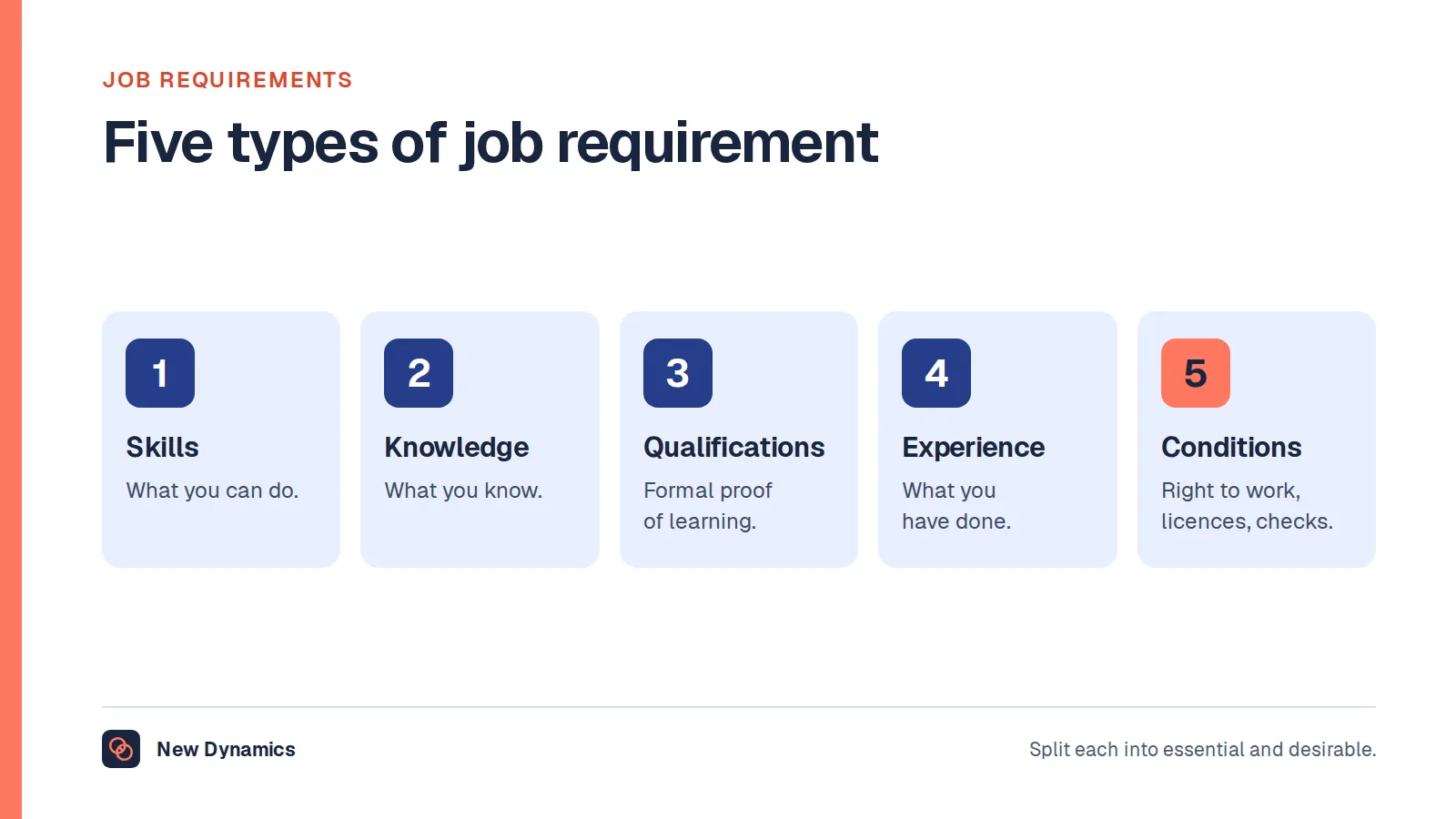
- Define the role. The second action is: “Identify the specific competencies required in each position you need to fill.” Write the tasks, then the requirements that follow from them. See our guide to job requirements.
- Attract candidates. The third action is: “Develop a sufficiently large candidate pool.” OpenStax names two sources: the internal labour market of current employees, and the external market. Look inside first.
- Select. Screen against the requirements, and use structured interviews and work samples. Every candidate should meet the same questions and the same scoring.
- Offer. Move quickly, be clear about pay and the whole package, and keep unsuccessful candidates informed.
- Onboard. Hiring is not finished when the contract is signed. Our 30-60-90 day plan gives a template for the first three months.

Who does what in a talent acquisition team
Titles vary, and in a small organisation one person may cover them all.
| Role | What the person does |
|---|---|
| Head of talent acquisition | Sets the hiring strategy, agrees plans with leaders, owns the budget, the process and the measures |
| Recruiter, or talent acquisition partner | Runs vacancies from brief to offer, advises hiring managers and manages candidates |
| Sourcer | Finds and approaches people who have not applied, and builds talent pools |
| Talent acquisition coordinator | Keeps the process moving: schedules interviews, posts adverts, keeps the tracking system accurate, prepares offers and looks after candidates' practical needs |
| Hiring manager | Defines the need, interviews, decides and onboards. The manager owns the decision |
Our guide to the hiring manager covers that role in full.
The talent acquisition coordinator is often an entry-level route into HR. The job suits someone who is organised, accurate and good with people, and it shapes candidates' experience more than any other role, because coordinators send most of the messages that candidates receive.
OpenStax adds a note on outsourcing. Parts of the process are often given to external recruiters, but “there must be internal HR/talent acquisition employees responsible for creating the overall strategic plan for the recruiting function”. Our guide to BPO meaning covers recruitment process outsourcing.
Five principles for acquiring talent well
- Look inside first. OpenStax notes that promotions and transfers are the most common results of internal recruiting. They are often faster and cheaper than an external hire, and they show other employees that there is a way up.
- Hire for the skills that the strategy needs. Replacing like with like assumes that the job has not changed.
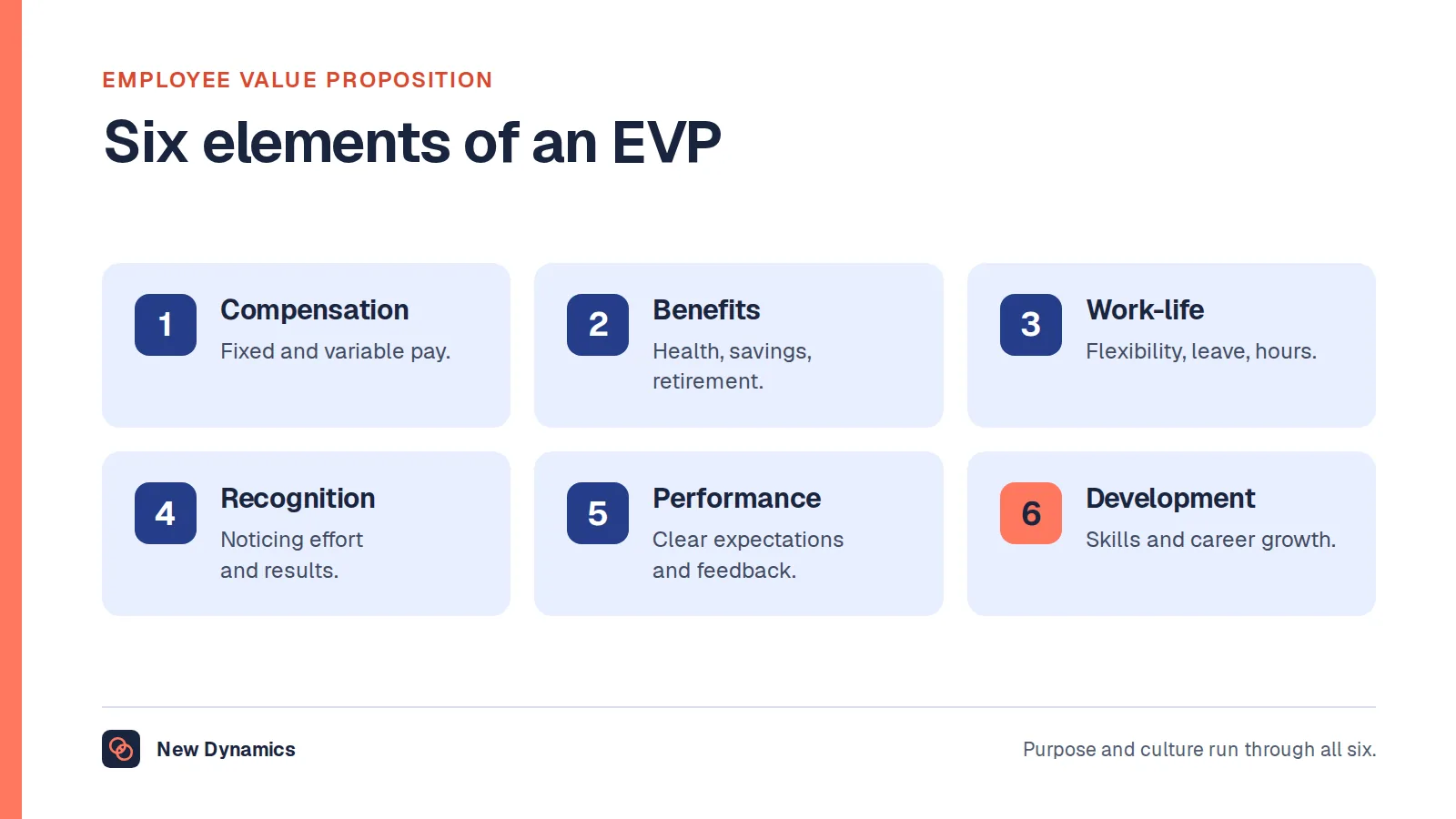
- Be honest about the offer. Candidates who were sold a job that does not exist tend to leave. Our guide to the employee value proposition explains how to describe the real one.
- Make selection fair and structured. The same criteria, questions and scoring for everyone give better decisions and lower legal risk.
- Treat candidates as customers. Reply to everyone, keep to the timetable that you gave, and give feedback to people you interviewed.

How to measure talent acquisition
Five measures give a balanced picture.
- Time to fill, from approval to accepted offer. Useful, and dangerous if it is the only measure.
- Quality of hire: performance and manager satisfaction at six and twelve months.
- First-year retention: the share of hires still in post after a year.
- Internal fill rate: the share of vacancies filled by current employees.
- Candidate experience, from a short survey of everyone interviewed.
Two checks sit alongside them: the offer acceptance rate, and fairness, meaning who applies, who is shortlisted and who is hired across different groups.
Quality of hire is the one that matters most and is measured least, because it needs performance data. If goals and reviews are recorded consistently, the link is easy to make.

Frequently asked questions
What does talent acquisition mean?
Talent acquisition is the area of human resource management that sets the strategy for recruiting, selecting and hiring people. It looks ahead at the skills the organisation will need, and designs how they will be found.
What is the difference between talent acquisition and recruitment?
Recruitment is the activity of filling a vacancy: advertising, screening, interviewing and making an offer. Talent acquisition is wider and longer-term. It includes workforce planning, employer brand, talent pools and the design of the hiring process, as well as recruitment itself.
What is full-cycle recruiting?
Full-cycle recruiting means managing the whole hiring process: planning the need, defining the role, attracting candidates, selecting, making the offer and onboarding. A full-cycle recruiter owns every stage.
What does a talent acquisition coordinator do?
A talent acquisition coordinator supports the hiring process. Typical duties are scheduling interviews, posting adverts, keeping the applicant tracking system up to date, preparing offer paperwork and keeping candidates informed. It is a common entry-level role in HR.
How do you acquire talent?
Start from the skills that the strategy needs, look at current employees first, define each role through its tasks, build a wide candidate pool, select with structured and fair methods, make an honest offer and onboard people well.
How do you measure talent acquisition?
Five common measures are time to fill, quality of hire, first-year retention, internal fill rate and candidate experience, with offer acceptance and fairness across groups as further checks. Quality of hire matters most, and needs performance data.
Your next step: look one year ahead
- List the roles you expect to hire in the next twelve months, including likely leavers.
- For each one, name any current employee who could be ready with development.
- Pick the two roles that will be hardest to fill, and start building a pool now.
- Choose one measure of quality, and start recording it for every hire.
For a fair and structured process, read and download our recruitment and selection guide. The guide is free to read, and the PDF uses our short download form.
Want new hires to have clear goals and early feedback, so that quality of hire can be measured? Book a New Dynamics demo and bring your hiring plan. You can also email contact@new-dynamics.com.