TL;DR
- “Certified” covers three different things: a regulated qualification, a scheme or manufacturer certificate, and a certificate confirming someone turned up. Only the first can be checked on a public register.
- GOV.UK's Register of Regulated Qualifications exists to “find out if a qualification is regulated (officially recognised)”, to see detail about it and to “compare similar qualifications”, covering vocational qualifications as well as GCSEs and A levels.
- Whatever the certificate says, the employer's obligation is competence. HSE's brief guide sets out five steps, ending with the one most organisations skip: “check that the training has worked”.
A new starter arrives with a certificate. It has a logo, a date and a signature, and it tells you almost nothing until you know which of three things it is.
This article explains what certified training means, how to check whether a qualification is recognised, what an attendance certificate is worth, and what an employer should record instead of filing paper.
Training records are a process with owners, dates and renewals. See how New Dynamics workflows let you define stages, forms and approvals with a completion view instead of a spreadsheet.
Three things "certified" can mean

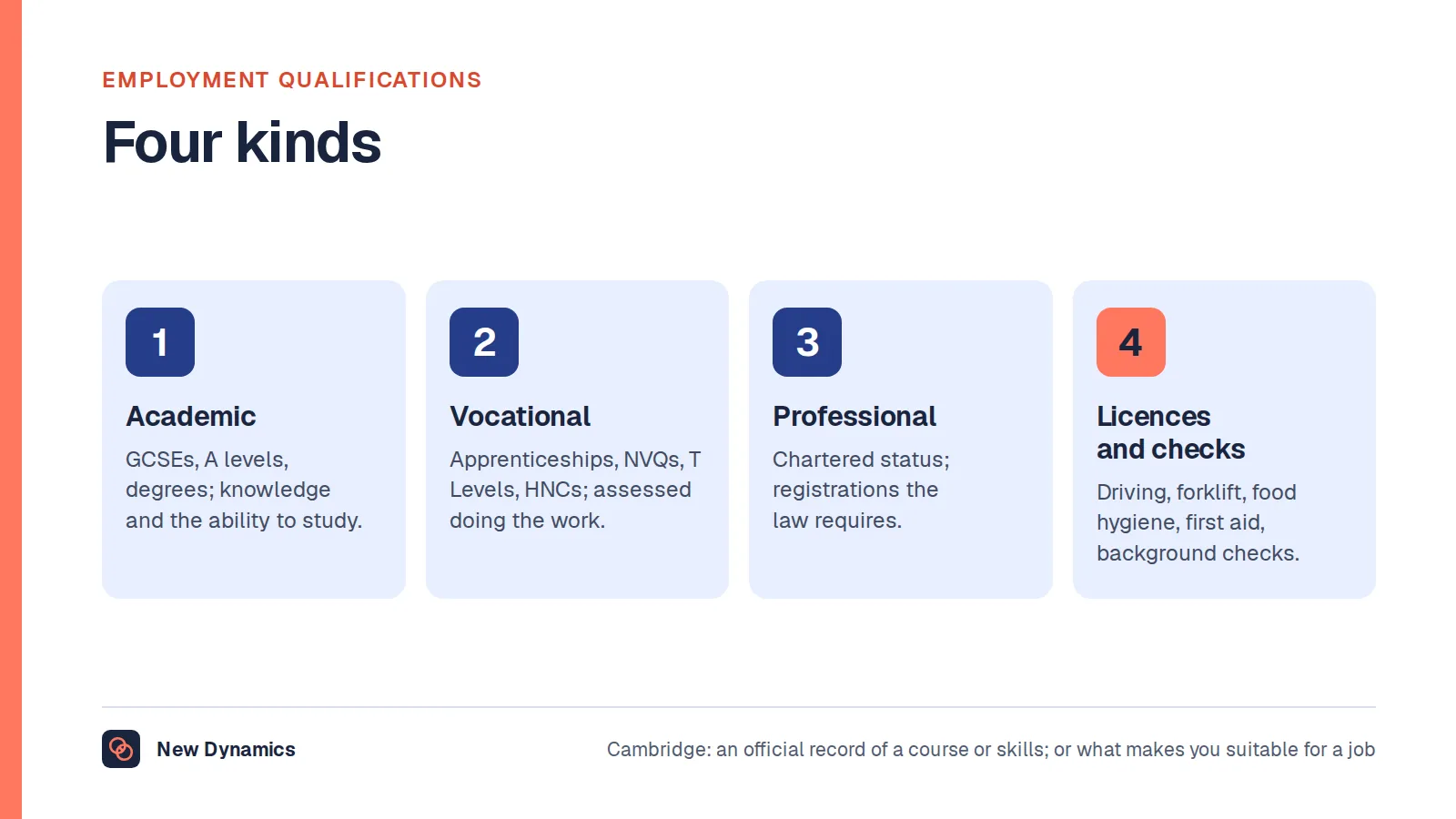
- A regulated qualification. Officially recognised, with a level, an awarding organisation and an entry on a public register.
- A scheme or manufacturer certificate. Issued under an industry scheme, a professional body or an equipment maker. Often exactly what a job requires, and its value depends entirely on who runs the scheme.
- An attendance certificate. Confirmation that a person was present for a session. Useful as a record, and no evidence of competence on its own.
All three can be described as "certified training" in a brochure. Only the first is checkable independently.
How to check whether a qualification is recognised
GOV.UK provides the Register of Regulated Qualifications, which lets you "find out if a qualification is regulated (officially recognised)", "see detailed information about a qualification" and "compare similar qualifications". It covers "GCSE, A level, AS level and vocational (work related) qualifications in England and Northern Ireland", with equivalents for Wales and Scotland, and there is a separate search for regulated awarding organisations.
Levels are worth understanding too. GOV.UK's guidance on what qualification levels mean explains that "most qualifications have a difficulty level. The higher the level, the more difficult the qualification is", and warns that "qualifications at the same level sometimes cover different amounts of the same subject", its example is that AS and A levels are both level 3 but cover different ground. Our employment qualifications post covers how to write qualification requirements into a job description without excluding good candidates.
If a certificate is not on the register and not issued under a scheme you recognise, treat it as an attendance record.
What employers have to do anyway

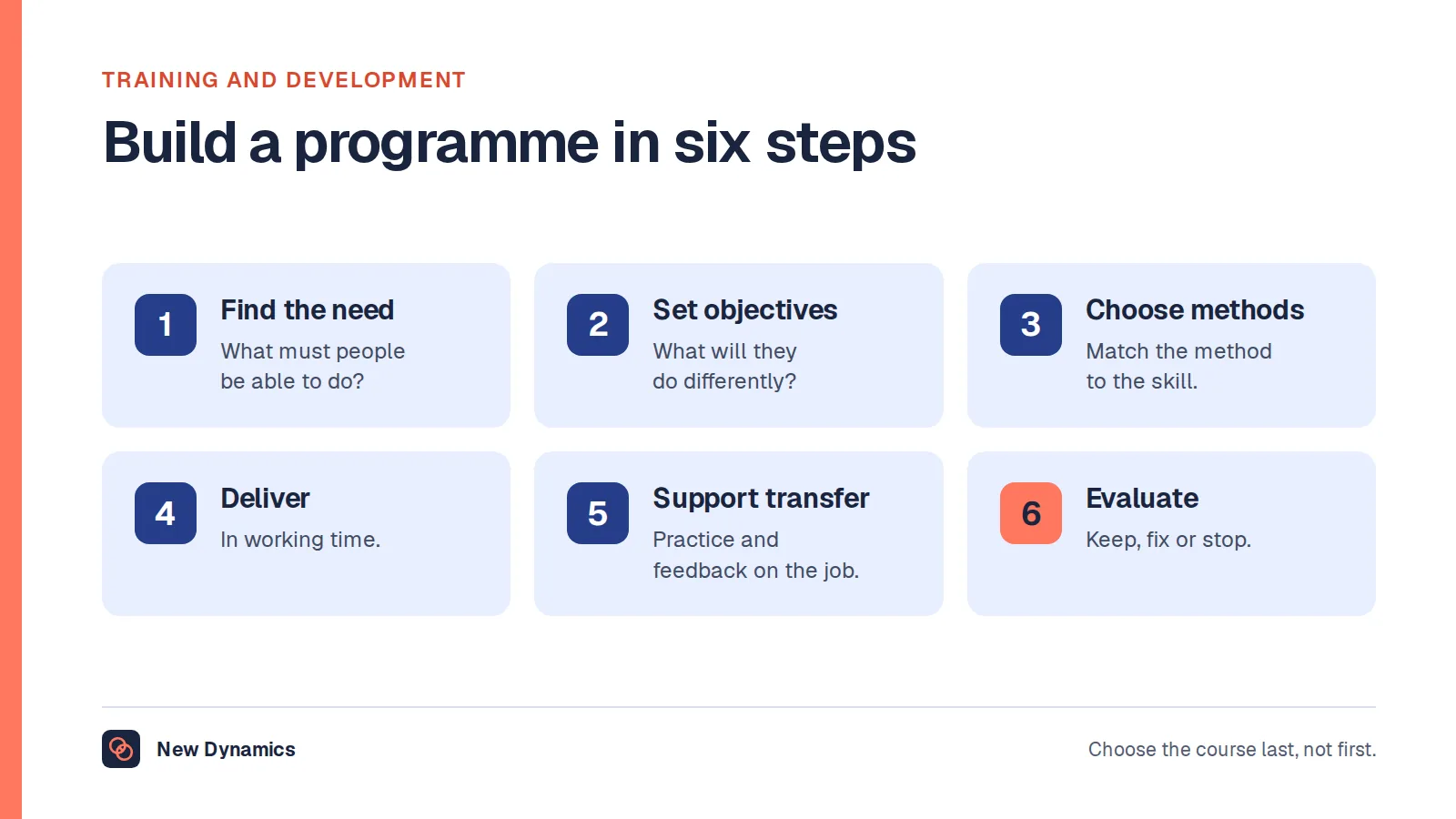
The certificate is not the obligation. HSE's brief guide to health and safety training, written "for owners and managers of businesses", explains "the importance of health and safety training and why it is needed" and gives "advice on who may need training, what form the training may take and how to organise it", in a five-step approach:
- Decide what training your organisation needs.
- Decide your training priorities.
- Choose your training methods and resources.
- Deliver the training.
- Check that the training has worked.
HSE notes the guide was revised "to make clearer what an employer must do to comply with the law". Step five is the one that gets skipped, and it is the difference between a person who holds a certificate and a person who can do the job safely. This is general information rather than legal advice; what your organisation needs depends on its work and its risk assessment.
Refreshers and expiry
Some certificates expire, some schemes require periodic revalidation, and some skills decay faster than any certificate acknowledges. Three practical rules:
- Track the renewal, not just the certificate. A training record without a next-due date is an archive.
- Treat long gaps as a competence question, not an administrative one. Someone who has not done the task for two years may hold a valid certificate and still need supervision.
- Record what changed. New equipment, a new process or a new risk usually requires training regardless of when the last certificate was issued.
Buying training without being sold a certificate
Five questions that cut through the marketing:
- Is the qualification regulated, and at what level?
- Who awards the certificate, and what do they require of the trainer?
- What is assessed? Multiple choice at the end of the day is not an assessment of practice.
- What does the delegate leave with besides paper, a checklist, a method, something they will use on Monday?
- How will we check it worked in four weeks, on the job?
What to record

- Who was trained, on what, and when, with the provider and the certificate reference.
- What the training covered, so that a gap can be identified later without guessing.
- The assessment or sign-off, including who observed the person doing the task.
- The next review or renewal date, with an owner.
That record answers the two questions that actually get asked: after an incident, "was this person trained?", and before a promotion, "can they do it?". Our skills gap analysis guide covers turning those records into a picture of what the organisation can and cannot do.
Frequently asked questions
What does certified training mean?
It can mean three things: a regulated qualification recognised on a public register, a certificate issued under an industry or manufacturer scheme, or a certificate confirming attendance at a course. Only the first can be verified independently, so ask which one a course provides.
How do I check whether a qualification is recognised?
Search the Register of Regulated Qualifications on GOV.UK, which shows whether a qualification is regulated, gives detail about it and lets you compare similar qualifications. Wales and Scotland have their own registers, and you can also check whether an awarding organisation is regulated.
Is an attendance certificate worth anything?
As a record, yes: it shows who attended what and when. As evidence of competence, no. HSE's five-step approach to training ends with checking that the training has worked, which means observing the person doing the task rather than filing the certificate.
What training records should an employer keep?
Who was trained, on what, when, by whom and under what certificate; what the training covered; any assessment or sign-off including who observed the task being done; and the next renewal or review date with a named owner.
Do training certificates expire?
Some do, some schemes require periodic revalidation, and expiry dates vary by scheme, so check the specific certificate. Treat a long gap since someone last did the task as a competence question regardless of what the certificate says.
How do you know whether training worked?
Check on the job a few weeks later: can the person do the task to the standard, without prompting? HSE's fifth step is exactly this, and it is the only one that distinguishes training from attendance.
Your next step: record the renewal, not the certificate
- Ask which of the three kinds of certificate a course provides.
- Check regulated qualifications on the public register.
- Add an assessment step, observed on the job.
- Record the next renewal date with an owner.
For turning training records into a view of organisational capability, read and download our skills gap analysis guide. The guide is free to read, and the PDF uses our short download form.
Want training, renewals and sign-offs tracked with owners and dates rather than in a folder? Book a New Dynamics demo and bring your current training matrix. You can also email contact@new-dynamics.com.