TL;DR
- Managers rarely miss review deadlines out of indifference. The usual causes are a form that takes longer than the time they have, dates that arrived after the diary was full, no visible list of who is outstanding, a belief that the review changes nothing, and a quiet signal from above that it is optional.
- Chase in a ladder, not a broadcast: a visible list, then a private nudge naming the people still waiting, then a short conversation about what is blocking it, then the manager's own manager, then the executive sponsor. Each step is specific, named and dated. All-staff reminders punish the people who already finished.
- The Behavioural Insights Team's EAST framework is a better guide than persistence: make it easy, attractive, social and timely. Most chasing exists because the cycle asked for something hard, at a bad moment, with no social proof and no deadline anyone believed.
Two weeks after the deadline, a spreadsheet of outstanding reviews is circulating, HR is sending a third all-staff reminder, and the managers who finished on time are reading it along with everyone else. Somewhere in that list is a manager avoiding one difficult conversation, another who never saw the dates, and a third who genuinely has not had a free hour.
Chasing works, in the sense that the number eventually goes up. It is also the most expensive way to run a cycle, and the fact that it is needed is the finding, not the problem. This article covers why managers miss the deadline, what the chasing costs, a five-step escalation ladder with the wording for each step, and how to design a cycle that barely needs it.
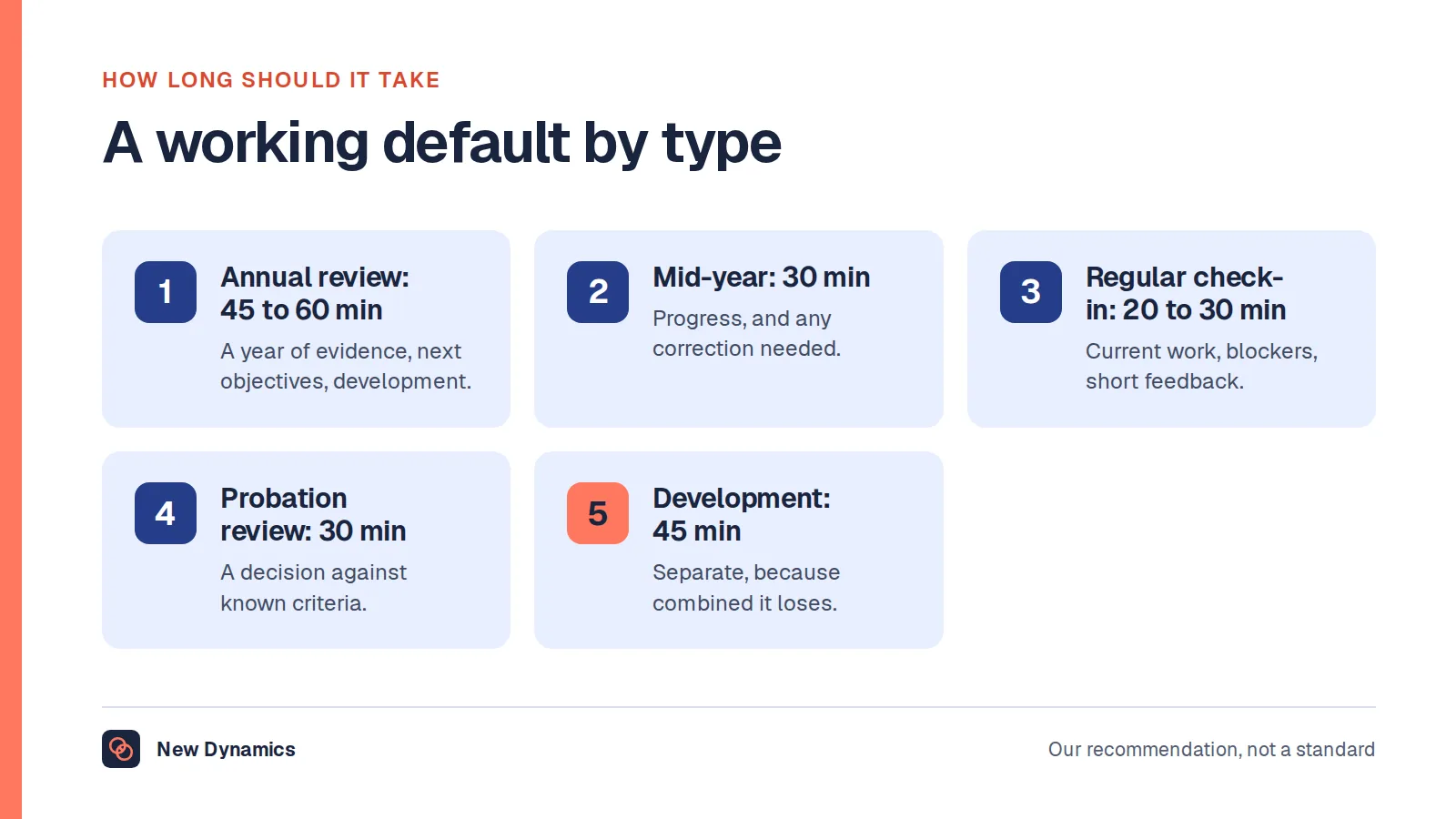
The fastest way to stop chasing is to make the work visible to the person who owes it. See how New Dynamics performance reviews bring goals, feedback and development into one fair discussion. For the wording to use at each rung of the ladder below, see our six performance review reminder email templates. And before blaming the calendar, our guide to how long a performance review takes totals the hours a cycle actually asks each manager for.
Why managers miss the deadline
Start here, because the fix follows from the cause and the causes are not the same manager to manager. In our experience six account for almost all of it.
- The form takes longer than the time anyone has. A manager with eight reports and a form that takes ninety minutes each is being asked for twelve hours. That is not a reminder problem.
- The dates arrived after the diary was full. Review meetings need an hour with a named person, booked weeks ahead. A cycle announced three weeks before it closes is competing with commitments already made.
- Nobody can see what is outstanding. If a manager cannot tell at a glance which of their people are done, the task has no edge and no end.
- They believe it changes nothing. If last cycle's ratings did not affect pay, progression or anything the manager could point to, the review is paperwork, and paperwork loses to customers.
- The signal from above says optional. If the executive team's own reviews are late, every manager below them has their answer.
- One conversation is being avoided. The manager is not stuck on the form; they are stuck on telling one person something difficult, and the whole batch stalls behind it.
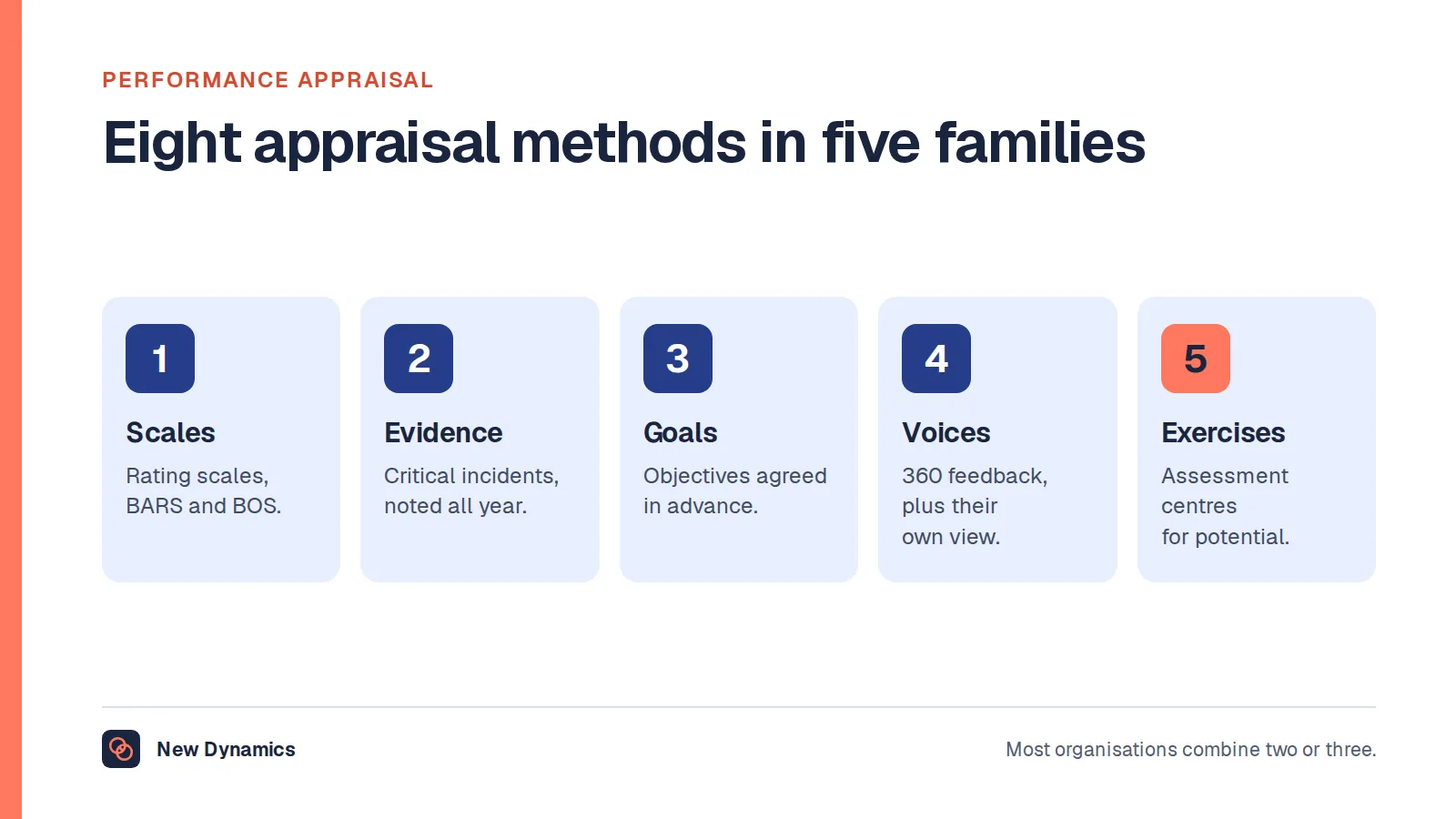
The first five are design problems. Only the sixth is really about the individual, and it needs help rather than pressure. Our guide to performance appraisal covers how to prepare for the conversation itself.

What chasing actually costs
- It moves the work to the wrong people. An HR team spending three weeks chasing is doing the managers' job while its own stops.
- It punishes the compliant. Every all-staff reminder is read mostly by people who have already finished, and it teaches them that the first deadline was not real.
- It buys the form, not the conversation. Pressure produces a submitted form in the last hour. It does not produce preparation, evidence or a useful discussion.
- It makes the next cycle worse. Managers learn the true deadline is the one HR stops emailing at, so next time they wait for that one.
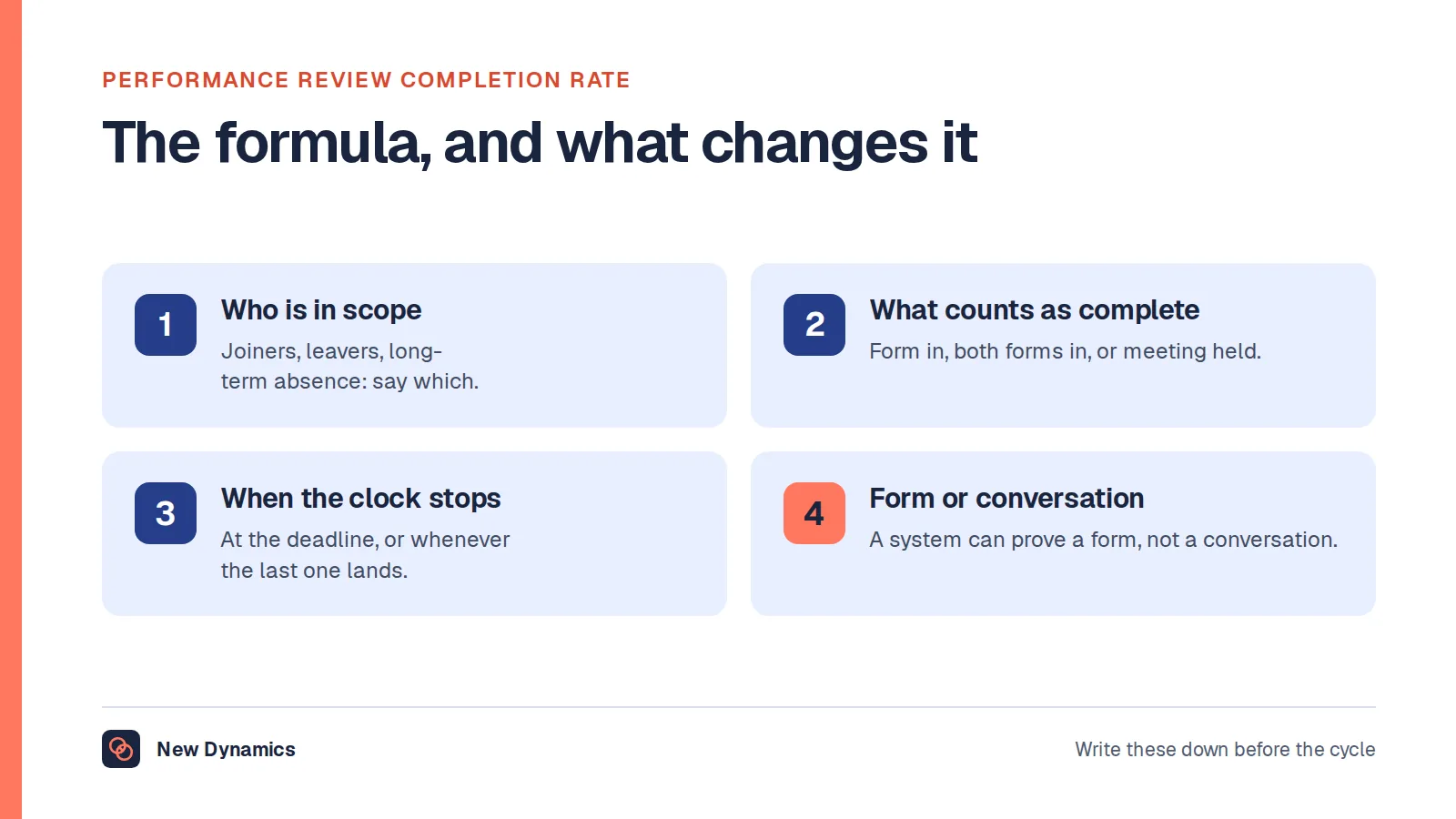
Measuring the result honestly matters here. Our guide to the performance review completion rate explains why a rate achieved by three weeks of chasing should not be reported the same way as one achieved by the deadline.
The escalation ladder
Chase in steps, each one more personal and more specific than the last. Move up a rung only when the one below has had time to work.
- A visible list, before the deadline. Not a message: a place each manager can see their own outstanding names and the date. This is the step most organisations skip, and it removes a surprising share of the chasing.
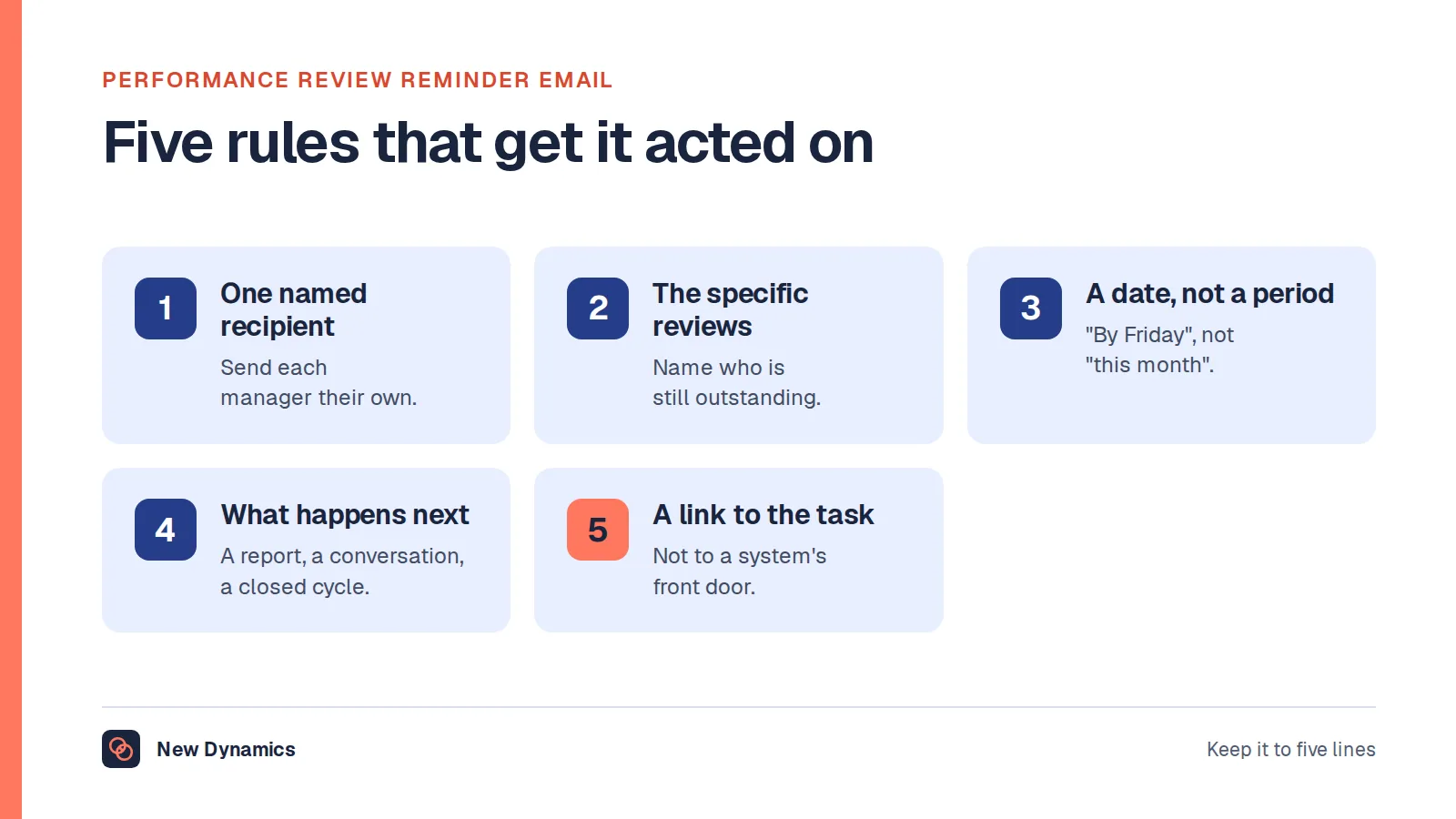
- A private, named nudge. To one manager, naming the people still waiting and the date. Never to a group. "Priya and Tom are still outstanding; the cycle closes on Friday" is a different message from "reviews are due".
- A short conversation, not another message. Ask what is in the way. The answer tells you which of the six causes you are dealing with, and most of them are things you can fix today.
- Their own manager. Not as a complaint, as information: "three of Sam's eight are outstanding and the cycle closes Friday." Completion is a line-management responsibility, so it belongs in a line-management conversation.
- The executive sponsor. For the handful that reach this rung, and only with the facts: who, how many, how late, what was offered.
Two rules make the ladder work. Keep every message specific — names, dates, what happens next — because "please complete your reviews" is easy to file away. And keep a record of what was asked and when, which you will want if lateness turns into a performance conversation of its own.

Design the cycle so chasing is barely needed
The Behavioural Insights Team distilled the evidence on getting people to do things into four principles: "make a behaviour Easy, Attractive, Social, and Timely". It is a better guide to review completion than persistence is.
- Easy. Cut the form to the fields someone will act on. Pre-fill what the system already knows — objectives, the dates of one-to-ones already held, last cycle's notes. Every field a manager has to retype is a reason to stop.
- Attractive. Show managers what they get: a written record, a basis for pay and promotion decisions, and fewer surprises later. Attach the review to a decision the manager cares about and it stops being administration.
- Social. Show team-level completion, not a league table of individuals. Knowing that most of your peers have finished is a stronger prompt than another reminder, and it works without shaming anyone.
- Timely. Publish dates a quarter ahead, stage them — self-assessments, then drafts, then meetings — and prompt at the moment the manager can act, not days before or after.
Add two practical habits: hold the cycle at the same point every year so managers plan around it, and hold a short clinic in the first week for managers stuck on wording, which drains the avoidance cases before they become late ones.
Who owns completion
A quiet disagreement sits under most chasing: HR thinks it is chasing on the line's behalf, and the line thinks reviews are an HR process. Acas is clear that this is management work. It says that "Employers should conduct regular performance reviews for anyone with the legal status of employee", that it is a good idea to do them at least once a year, and that managers should also talk to employees about performance informally and regularly, through feedback, coaching and one-to-ones.
Settle it in writing before the cycle: HR owns the process, the dates, the tooling and the reporting; the line owns completion for their own people; the executive sponsor owns the consequence when a part of the business does not finish. Published once, that removes most of the argument the chasing is standing in for.

When chasing is the wrong answer
- When the form is the problem. Shorten it mid-cycle if you must; a shorter form completed beats a longer one abandoned.
- When the manager is drowning. A manager who has just taken on a second team needs their deadline moved, not a reminder.
- When the same names appear every cycle. That is a management issue to handle as one, not an administrative one to chase harder.
- When the review would be dishonest. A rushed form written to clear a list is worse than a late conversation done properly. Move the date and say why.
Frequently asked questions
How do you chase managers for performance reviews?
In steps. Give every manager a visible list of their outstanding reviews before the deadline, then send a private nudge naming the people still waiting and the date, then have a short conversation about what is blocking it, then involve the manager's own manager, then the executive sponsor. Keep each message specific and never chase a group for the faults of a few.
Why do managers miss performance review deadlines?
Usually because the form takes longer than the time available, the dates arrived after diaries were full, nobody can see what is outstanding, the manager believes the review changes nothing, senior leaders treat their own as optional, or one difficult conversation is holding up the whole batch.
Should you send all-staff reminders about reviews?
Rarely. They are read mostly by people who have already finished, and they teach everyone that the published deadline was not the real one. A private message naming the specific people still waiting does more and costs less goodwill.
Who is responsible for making sure reviews get done?
Line managers, for their own people. Acas describes performance reviews as something employers should conduct regularly for employees, with records kept and shared. HR owns the process, the dates and the reporting; completion itself is line-management work, and that split is worth publishing before the cycle opens.
How do you get managers to complete reviews on time?
Make it easy, attractive, social and timely, as the Behavioural Insights Team's EAST framework puts it: a short pre-filled form, a clear link to decisions the manager cares about, visible team-level progress, and dates published far enough ahead to be booked into a full diary.
What if a manager still will not do them?
Treat it as a management issue rather than an administrative one. Establish whether it is capacity, confidence or avoidance, offer the matching help, record what was asked and when, and escalate to their manager with facts. Repeated refusal to carry out a core management duty belongs in that manager's own review.
Your next step: find the cause before the next reminder
- List the managers who were late last cycle and ask each which of the six causes applied.
- Cut the form by the fields nobody acted on.
- Publish the next cycle's dates a quarter ahead, staged rather than as one deadline.
- Give every manager a visible list of their own outstanding reviews from day one.
For an operating model that makes the cycle finishable, read and download our modern performance management guide. The guide is free to read, and the PDF uses our short download form.
Want every manager to see their own outstanding reviews without anyone sending a reminder? Book a New Dynamics demo and bring your current review calendar. You can also email contact@new-dynamics.com.