TL;DR
- A home health aide, called a home care worker or domiciliary care worker in the UK, visits people in their own homes to help with personal care, medication, meals, mobility and daily living, so that they can live as independently and safely as possible.
- The job has six duties: personal care, medication support, food and drink, mobility and safety, companionship and communication, and recording and reporting. Most of the work is done alone, in someone else's home.
- Employers look for kindness, reliability, observation and clear communication, and must carry out safer recruitment checks. In England, the CQC's fundamental standards set the floor for the care that workers provide.
Many people would rather be cared for at home than in a hospital or a care home. The person who makes that possible is the home care worker: in the United States, the home health aide. It is skilled, intimate and largely unseen work, done alone, in other people's kitchens and bedrooms, against the clock.
This home health aide job description explains what the job involves, sets out six duties, describes the skills and checks that employers look for, summarises the standards that apply to care at home in England, gives a template that you can adapt and suggests how to describe the work on a CV.
Care workers spend their days alone with the people they support, and their managers rarely see the work. See how New Dynamics continuous feedback supports check-ins between managers and their teams, so that lone workers are heard and not just scheduled.
What is a home health aide?
A home health aide helps a person who is older, ill or disabled with personal care and daily living in the person's own home. The title is American. In the UK the same work is done by a home care worker, domiciliary care worker, care assistant or personal assistant, and the Cambridge Dictionary's plain word is carer: “someone who takes care of a person who is young, old, ill, or disabled”.
Skills England's listing for the Adult care worker apprenticeship standard, a level 2 standard, describes the occupation like this: “Adult Care Workers are the frontline staff who help adults with care and support needs to live as independently and safely as possible.” Its job roles include home care support worker, key worker in domiciliary services and personal assistant.
Three things distinguish home care from care in a hospital or care home.
- The worker is a guest. The home, the routine and the choices belong to the person being cared for.
- The worker is usually alone. There is no colleague in the next room, so observation, judgement and reporting matter more.
- The day is a round of visits. Travel between calls, visits of thirty minutes to a few hours, and a rota that changes.
Home health aide duties: six responsibilities
- Personal care. Help with washing, bathing, dressing, toileting, continence care and oral care, in the way the person prefers and with their dignity protected.
- Medication support. Prompt, assist with or administer medication as the care plan allows, and record what was taken and what was refused.
- Food and drink. Prepare meals and drinks to the person's tastes and dietary needs, help them to eat where needed and watch for poor appetite or difficulty swallowing.
- Mobility and safety. Help the person to move, transfer and walk safely, use hoists and other equipment as trained, and keep the home free of avoidable hazards.
- Companionship and communication. Talk, listen, support the person's interests and contact with others, and involve family where the person wishes.
- Recording and reporting. Write an accurate note of every visit, report changes in health or mood, concerns about safety or abuse, and anything the care plan does not cover.
Some roles add light housework, shopping, escorting to appointments, or, with training, tasks delegated by a nurse. The advert should say which.

The standards that apply in England
Home care agencies in England are regulated by the Care Quality Commission. The CQC's fundamental standards are, in its words, “the standards below which your care must never fall”. Five of them shape a care worker's daily practice.
- Person-centred care. Care or treatment “that is tailored to you and meets your needs and preferences”.
- Dignity and respect. The person “must be treated with dignity and respect at all times” while receiving care.
- Consent. The person, or somebody legally acting for them, “must give your consent before any care or treatment is given”.
- Safety. The person “must not be given unsafe care or treatment or be put at risk of harm that could be avoided”.
- Safeguarding from abuse. The person “must not suffer any form of abuse or improper treatment while receiving care”.
The standards also require providers to employ fit and proper staff and to have enough suitably qualified, competent and experienced staff. That is why the checks below are not optional.
Wales, Scotland and Northern Ireland have their own regulators and worker registration schemes, and in the United States the training and certification required of home health aides differs between states and between agencies. This article is general information, not legal advice. Check the rules where you operate.

Skills and qualities employers look for
The NHS's careers page for the closely related healthcare assistant role lists the qualities needed: “caring and kind”, “cheerful and friendly”, “willing to be hands-on with patients”, willing to do personal care tasks, “able to follow instructions and procedures” and “able to work in a team but use their own initiative”, together with communication, organisation and observational skills. It says there are “no set entry requirements”. Home care asks for the same qualities, with three added.
- Reliability. A missed visit can mean a missed meal or missed medication. Timekeeping is a safety matter.
- Observation. The care worker is often the only professional who sees the person that day. Noticing a change and reporting it is the job.
- Boundaries. Warm, but professional: the worker follows the care plan, keeps confidences and does not take on tasks they are not trained for.
New care workers in England usually work towards the Care Certificate, the set of induction standards for health and social care support workers, during their first months.
Checks before starting
Care roles involve vulnerable adults, so employers carry out safer recruitment checks before a worker starts: identity, right to work, references and a criminal record check. GOV.UK's guidance on checking someone's criminal record explains that an employer can request “an enhanced check with barred lists, which shows the same as an enhanced check plus whether the applicant is on the list of people barred from doing the role”. Roles that involve driving between visits usually need a licence and an insured car. Say in the advert which checks apply and who pays.
Home health aide job description template
Adapt the template to your service. Keep every line true.
Job title: Home care worker (home health aide)
Reports to: Care coordinator or registered manager
Hours: [Full-time, part-time or bank], including early mornings, evenings and alternate weekends
Purpose of the role: To support people to live as independently and safely as possible in their own homes, with care that follows their care plan and respects their choices.
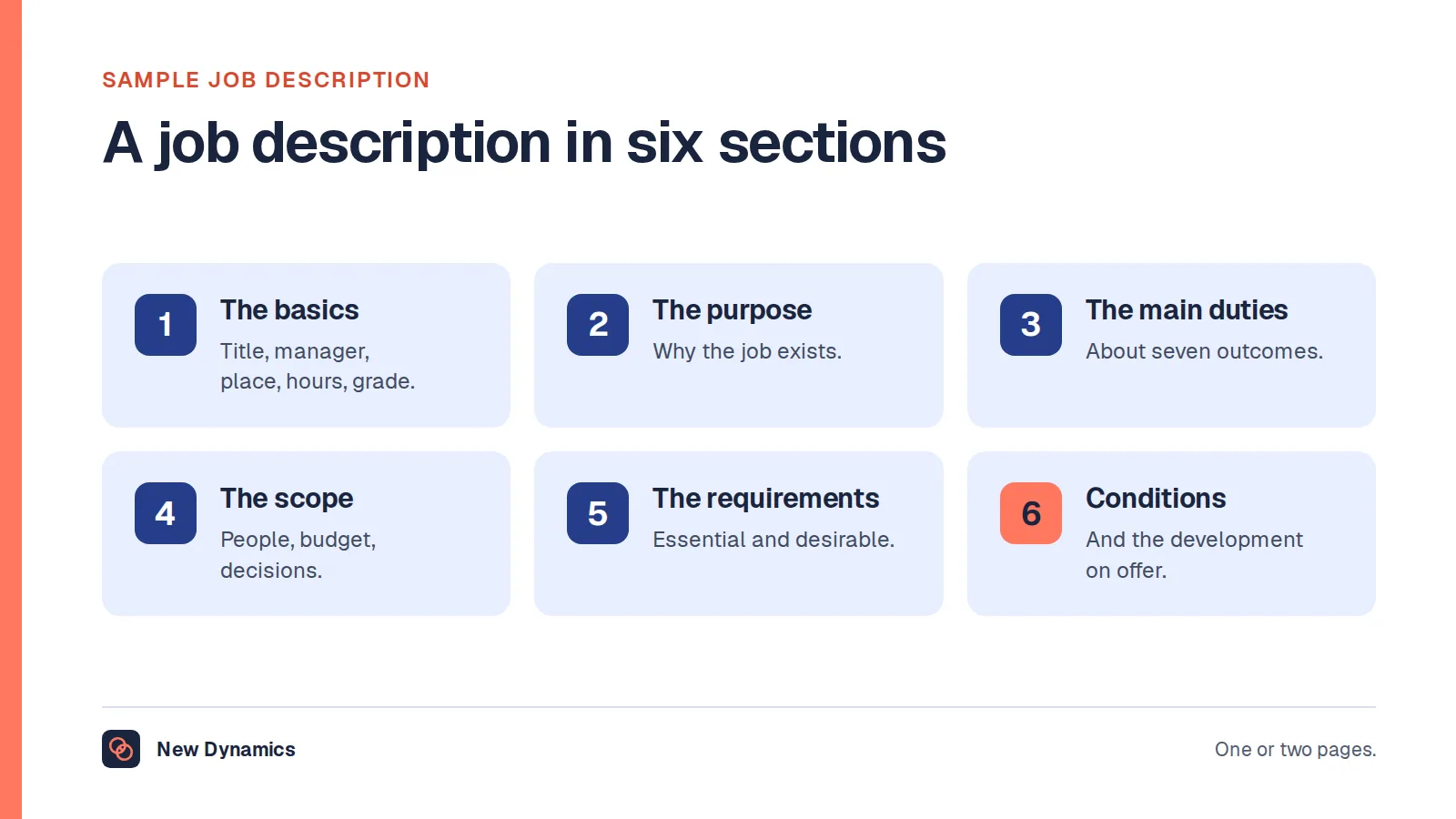
Main duties:
- Provide personal care with dignity, in the way each person prefers
- Prompt, assist with or administer medication as the care plan allows, and record it
- Prepare food and drink and support people to eat and drink well
- Support safe moving and handling, using equipment as trained
- Offer companionship and support people's contact with family and community
- Keep accurate visit records and report changes and concerns promptly
- Follow safeguarding, infection control and lone working procedures
Skills and experience:
- Kind, patient and reliable
- Clear spoken and written English for records and handovers
- Able to work alone and use judgement, and to ask for help when needed
- Experience is welcome but not required; full training and the Care Certificate are provided
- [Driving licence and access to a car, if visits require it]
Checks: Enhanced criminal record check with adults' barred list, references and right to work
We provide: Paid induction and training, paid travel time between visits, a named supervisor, regular one-to-ones and support for qualifications.
Say plainly how travel time and mileage are paid, how long visits are, and whether the rota is fixed. Our job description template explains the structure, and our guide to the registered nurse job description covers the professional role that care workers most often work alongside.
How to describe care work on a CV
Write duties as evidence of trust and judgement. The lines below are invented examples, to show the form.
- State the scope. “Supported eight people with personal care, medication and meals across a daily round of visits.”
- Show judgement. “Noticed and reported a change in a client's mobility that led to an occupational therapy review.”
- Show reliability. “Completed a two-year rota with no missed visits.”
- Name the training. The Care Certificate, moving and handling, medication, safeguarding, first aid and any qualification.
- Name the conditions you have supported people with, such as dementia, stroke or learning disability, without naming individuals.
If you have cared for a relative, say so. It is relevant experience, and employers know it.
Common mistakes in home care job adverts
Hiding the hours. Split shifts, early starts and alternate weekends should be in the first paragraph, not discovered at interview.
Silence on travel. Whether travel time and mileage are paid is the first question most applicants have. Answer it.
Advertising for saints. Care work needs kindness, and it also needs training, supervision, fair pay and enough time per visit. Adverts that lean on vocation to excuse the rest lose good people.
No supervision plan. Lone workers need a named supervisor, a way to raise concerns and regular one-to-ones. Say what yours are.
Treating the induction as paperwork. The first weeks decide whether a new care worker stays. Shadowing, a gradual round and a check-in after every week make the difference.

Frequently asked questions
What does a home health aide do?
A home health aide, or home care worker, visits people in their own homes to help with personal care, medication, food and drink, safe movement and daily living, provides companionship and records and reports each visit, so that the person can live as independently and safely as possible.
What is the difference between a home health aide and a home care aide?
In everyday use the titles overlap. Home health aide tends to be used where the work includes health-related tasks under a nurse's direction, and home care aide or home care worker for support with daily living. In the UK both are usually called home care or domiciliary care workers. Check what the advert actually asks the worker to do.
What qualifications do you need to be a home care worker?
Usually none to start. Employers provide training, and in England new workers work towards the Care Certificate. Requirements differ in Wales, Scotland and Northern Ireland, which have their own regulators, and in the United States they differ between states and agencies.
What checks are needed for home care jobs?
In England employers carry out identity, right to work and reference checks, and a DBS criminal record check, usually an enhanced check with barred lists, before a care worker starts. Roles that involve driving between visits usually need a licence and insured car.
What skills make a good home care worker?
Kindness, patience, reliability, observation, clear communication in speech and writing, the ability to work alone and use judgement, and professional boundaries. The NHS careers page for healthcare assistants lists similar qualities and says there are no set entry requirements.
What should a home care job description include?
The title, who the worker reports to, hours including early, late and weekend work, the purpose of the role, six or seven main duties, the skills needed, the checks required, how travel time and mileage are paid, and the training and supervision provided.
Your next step
If you are hiring, write down what a care worker in your service does on a typical Tuesday, including the travel, and turn that into the advert. If you are applying, rewrite one line of your CV as evidence of judgement or reliability.
For a plan that turns a new care worker's first week into a confident first month, read and download our onboarding guide. The guide is free to read, and the PDF uses our short download form.
Want lone workers to have regular one-to-ones and a voice that reaches their manager? Book a New Dynamics demo and bring your current approach. You can also email contact@new-dynamics.com.