TL;DR
- The National Careers Service names nine skills for an HR officer, and they are less glamorous than the job's reputation: administration, employment law knowledge, attention to detail and written communication among them.
- The skills worth developing first are the ones with an external standard attached. Following the Acas Code in a discipline or grievance case is checkable; being approachable is not.
- Three skills appear on no list and decide most HR careers: writing plainly, saying no to a senior person, and holding a confidence without becoming useless.
Ask what makes someone good at HR and you will get adjectives: approachable, organised, a people person. Ask what the job requires and you get a different list, two items of which are about paperwork.
This article sets out the HR skills the role actually needs, which of them can be tested against an external standard, the three nobody mentions, and how to build them.
Half of HR is evidence that somebody wrote down at the time. See how New Dynamics feedback keeps that record continuous rather than reconstructed.
What the job is for

Skills exist to deliver work. The National Careers Service's profile for a human resources officer lists the tasks:
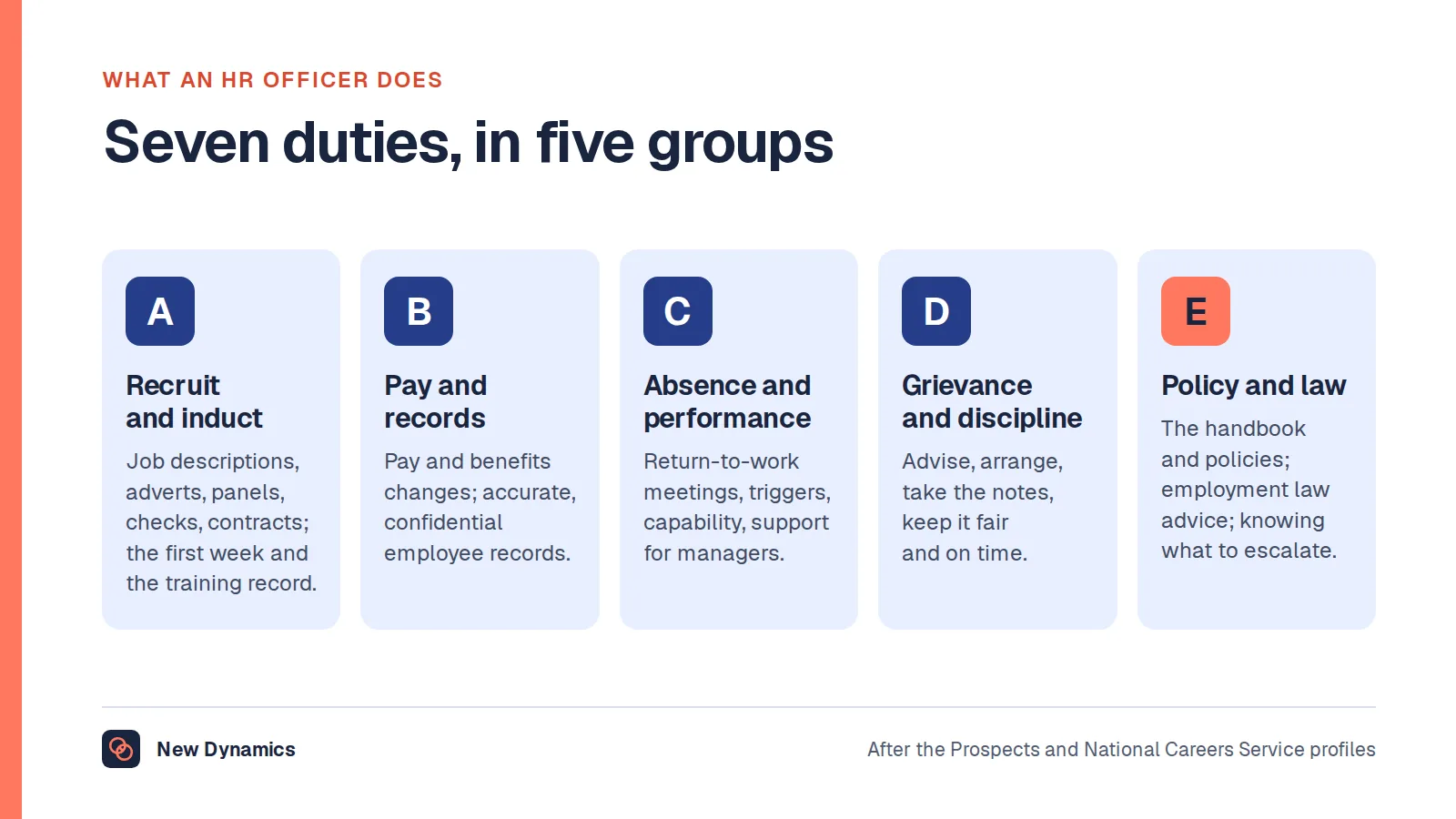
- Hiring and development: "help to recruit new employees" and "plan staff training and development activities".
- Pay and benefits: "make sure employees have the right pay and benefits", and "advise on pay negotiations, redundancy and employment law".
- Cases and absence: "handle complaints and disciplinary procedures", "deal with work absence and staff performance issues", and "arrange employee support services like welfare and counselling".
- Policy and records: "develop company HR policies and procedures" and "maintain confidential employee records".
Read that list and the skills follow. Our HR officer post covers the role itself in more detail.
The nine skills the profile names
"You'll need", it says:
- Administration skills.
- Knowledge of human resources and employment law.
- To be thorough and pay attention to detail.
- The ability to work well with others.
- The ability to monitor your own performance and that of your colleagues.
- Excellent written communication skills.
- Business management skills.
- Sensitivity and understanding.
- To be able to use a computer and the main software packages confidently.
Two of the nine are essentially about accuracy and records. One is about writing. That is not what most people picture when they say they want to work with people, and it is the honest description of the job.
The skills with an external standard

Most skills on any list are asserted. A few can be checked against something published, which makes them the ones worth developing first, and the ones worth testing when hiring.
Following a fair procedure. The Acas Code of Practice on disciplinary and grievance procedures "is the minimum an employer should follow for handling these issues at work". Employers "should follow a fair procedure in line with the Acas Code of Practice for any discipline or grievance case", and "the procedure an employer follows and an employee's actions will be taken into account if the case reaches an employment tribunal". Knowing the steps, in order, is a testable skill with consequences attached.
Knowing who is covered. The Code "mainly applies to anyone legally classed as an employee", although employers "might want to use the same procedure for anyone legally classed as a worker". Employment status decides which rules apply to whom, and getting it wrong invalidates otherwise careful work.
Making support real. HSE's Support standard expects an organisation to have "policies and procedures to adequately support employees", systems "to enable and encourage managers to support their staff", employees who "know what support is available and how and when to access it", and employees who "receive regular and constructive feedback". Each of those is a thing you can check for rather than an attitude.
Keeping records properly. Confidential employee records are personal data, and how long they are kept and who can see them are decisions, not habits.
This is general information rather than legal advice.
The three nobody lists
Writing plainly. Most HR output is text somebody reads under stress: an outcome letter, a policy, a note of a meeting. The skill is writing something a worried person can understand once, without a second reading.
Saying no to a senior person. A large share of HR's value is stopping decisions that would be unfair, unlawful or simply unexplainable later. Doing that without becoming the department of no is the hardest skill in the job and appears on no job advert.
Holding a confidence without becoming useless. People tell HR things. Knowing what must be escalated, what can be held, and how to say which is which at the start of a conversation is what makes somebody trusted rather than merely discreet.
Building them

- Start with the procedure. Read the Acas Code end to end, then read your own policy against it and list the differences.
- Write more, and get it marked. Ask a colleague to read one outcome letter a month for clarity rather than correctness.
- Sit in on cases before you run them, and afterwards write down what you would have done differently.
- Learn the systems properly. The person who can extract a clean report is the one whose advice gets used.
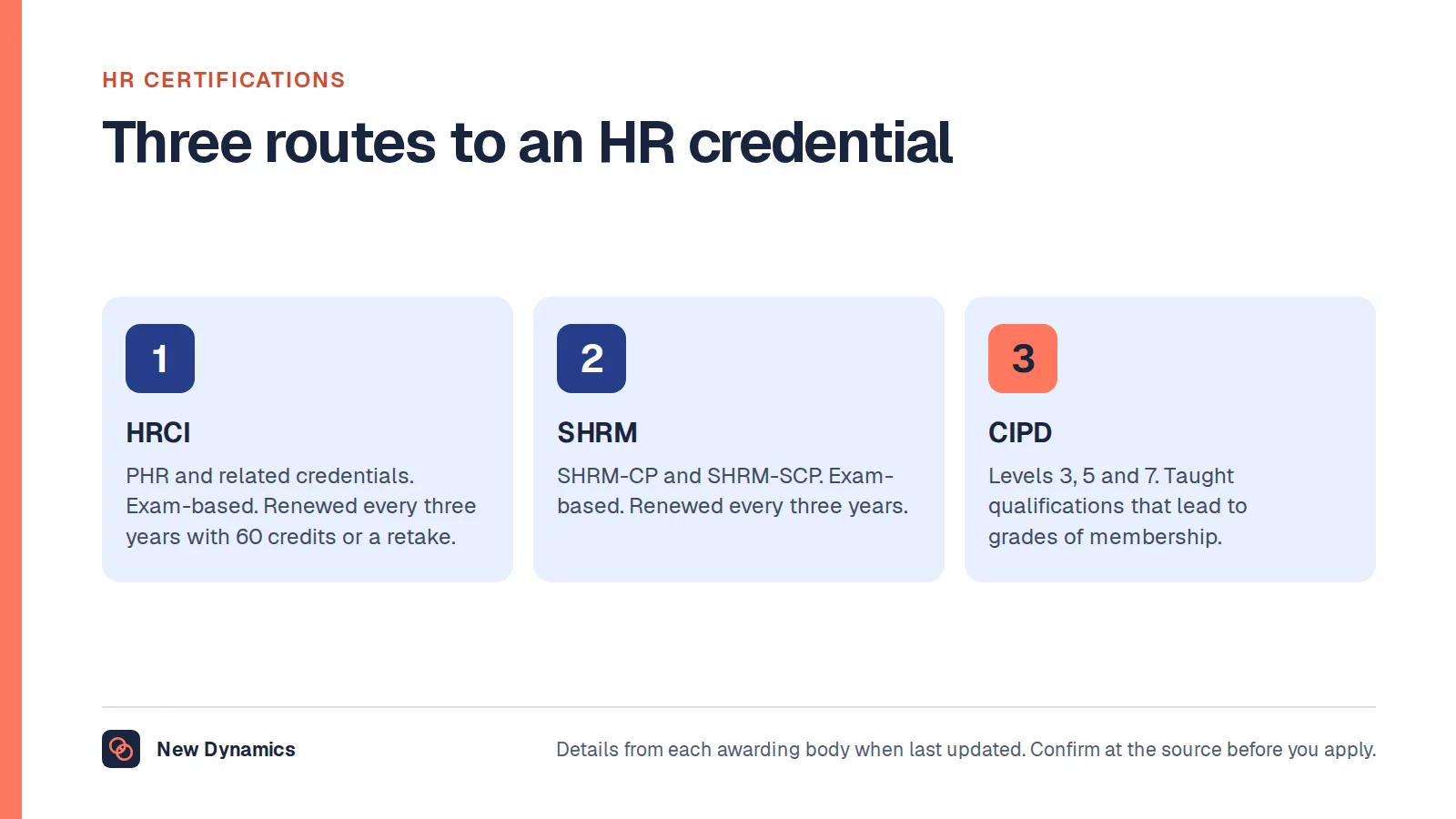
Formal qualifications help with the knowledge half (our HR certifications post covers the routes) but none of them teach the second and third items on the previous list.
Testing for them when hiring
Ask for the work rather than the adjective. Give a short written scenario and ask for the outcome letter. Ask what the first three steps of a grievance are. Ask about a time they told a senior person no, and listen for whether the decision changed or only the relationship did.
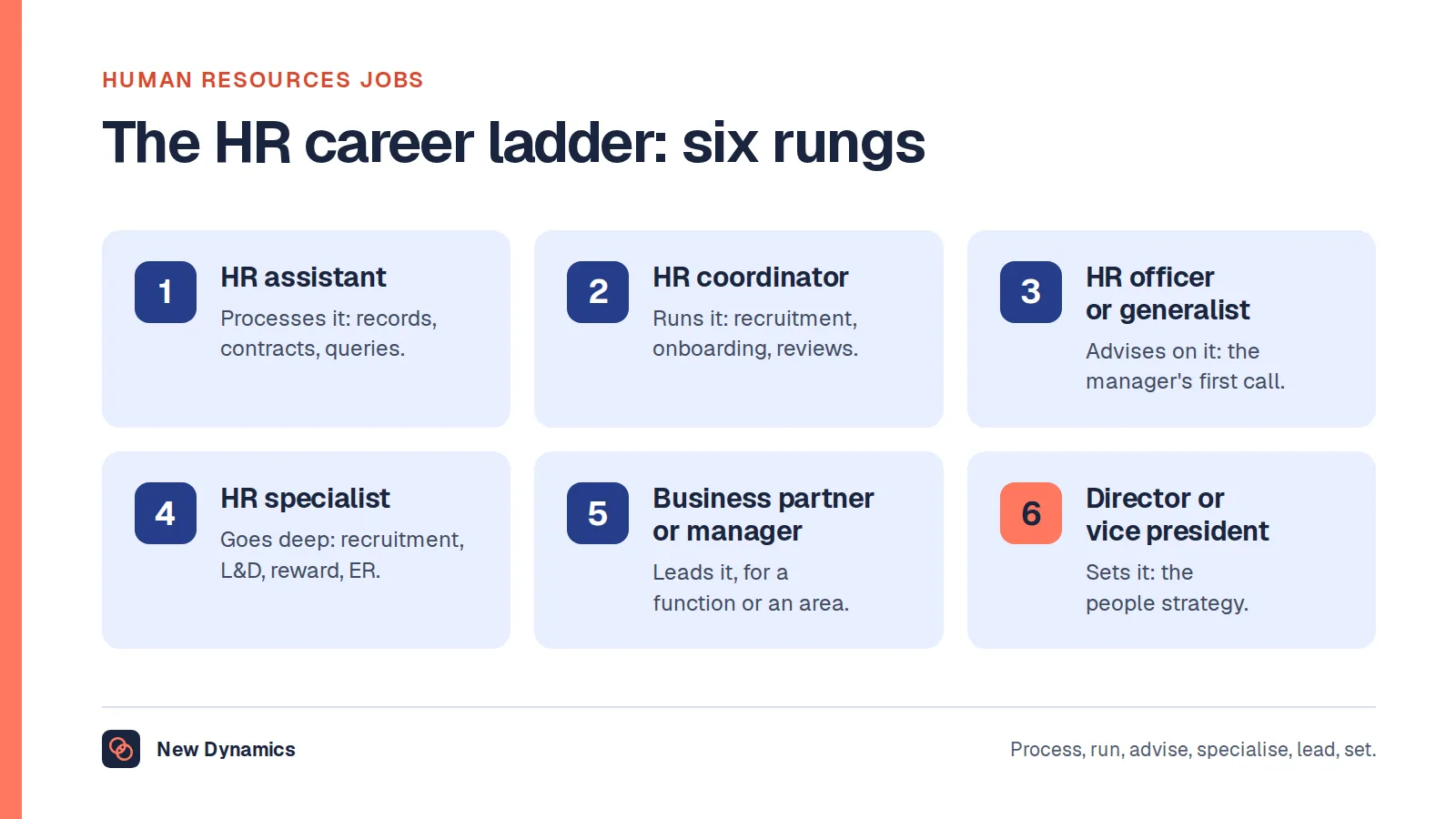
Our HR jobs post covers the levels these skills map to.
Frequently asked questions
What skills do you need for HR?
The National Careers Service lists nine for an HR officer: administration, knowledge of HR and employment law, thoroughness and attention to detail, working well with others, monitoring performance, excellent written communication, business management skills, sensitivity and understanding, and confident use of computers and software.
What are the most important HR skills?
The ones with an external standard attached, because they can be tested and their failure is visible: following the Acas Code in discipline and grievance cases, knowing which rules apply to employees and workers, making support genuinely available, and handling confidential records properly.
Do you need employment law knowledge to work in HR?
Yes, at the level of knowing which procedure applies and when to get advice. The National Careers Service names knowledge of HR and employment law directly. It does not mean being a lawyer; it means recognising the point at which a decision needs one.
What soft skills does HR need?
Sensitivity and understanding, and the ability to work well with others, are the two the profile names. Less often listed but just as decisive: writing plainly under pressure, declining a senior person's request, and being clear about what can and cannot be kept confidential.
How do you develop HR skills?
Read the Acas Code and compare it with your own policies, get your written work reviewed for clarity, observe cases before running them, and learn your HR systems well enough to produce clean reports. Qualifications cover the knowledge; the rest comes from supervised practice.
What technical skills does HR need?
Confident use of everyday software, the ability to get accurate data out of an HR system, and enough understanding of pay and benefits administration to check that people are paid correctly. Records and reporting take up more of the job than most descriptions admit.
How do you test HR skills in an interview?
Ask for work rather than descriptions: a short outcome letter from a scenario, the first three steps of a grievance procedure, and an account of a time they told a senior person no. Listen for whether the decision changed, not only the conversation.
Your next step: read the Code against your policy
- Read the Acas Code end to end.
- Read your own disciplinary and grievance policy alongside it and list the differences.
- Ask a colleague to review one letter you have written for clarity.
- Write down which of the nine skills you would struggle to evidence.
For the wider function these skills sit inside, read and download our human resources management guide. The guide is free to read, and the PDF uses our short download form.
Want the evidence behind HR decisions in one place rather than in inboxes? Book a New Dynamics demo and bring a current case process. You can also email contact@new-dynamics.com.