TL;DR
- A lump sum payment is an amount of money paid in one large amount on one occasion, in the Cambridge Dictionary's words, rather than in instalments. At work the term covers eight common payments: sign-on bonuses, annual and one-off bonuses, retention payments, back pay and arrears, redundancy and severance pay, settlement payments, relocation allowances and pension lump sums.
- Whether to pay a sum at once or in instalments depends on who carries the risk: a lump sum on day one favours the employee, instalments with conditions favour the employer, and clawback clauses sit between. Tax treatment differs by kind and by country: most employment lump sums are taxed as earnings through payroll, while in the UK part of a genuine redundancy payment can be tax free; check the current rules.
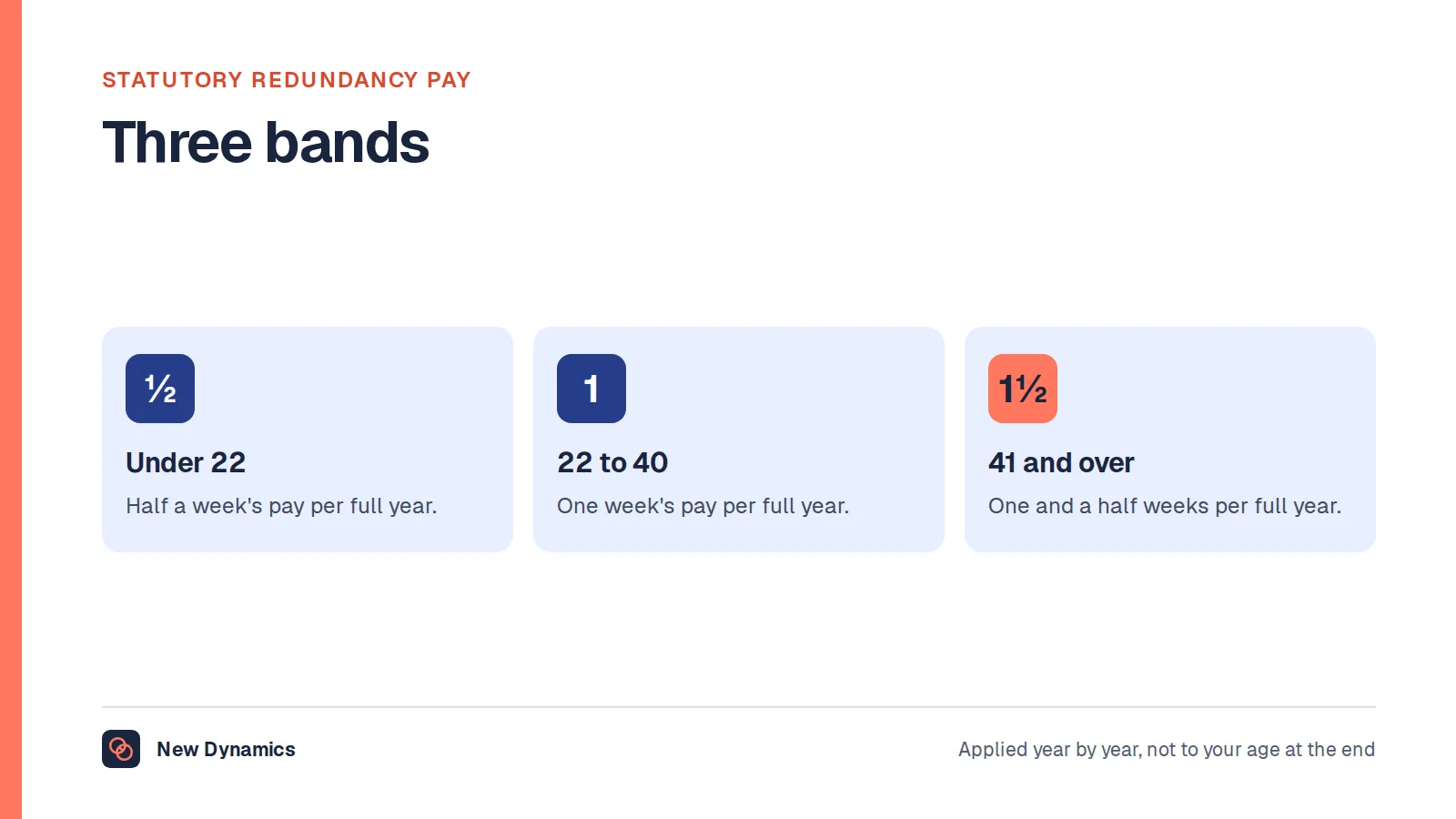
- The UK statutory redundancy payment is a lump sum with a formula: after two years' service, half a week's pay for each full year under 22, one week for each year from 22 to 40 and one and a half weeks for each year from 41, with service capped at 20 years and weekly pay capped at a figure that changes each April. HR should decide lump sums under a written policy, record them in writing, time them with payroll and state any conditions.
“We can offer that as a lump sum.” The phrase appears in offer letters, redundancy consultations, settlement negotiations and pension statements, and it means something slightly different in each. What is a lump sum payment? At root, money paid in one amount on one occasion instead of spread over time. What matters at work is which kind it is, because the kind decides the tax, the conditions and the paperwork.
This article gives the definition, the eight kinds of lump sum employers make, when a lump sum beats instalments, a worked example of the UK statutory redundancy formula from GOV.UK, and how HR should decide, document and pay them. Tax and employment rules differ by country and change each year; this is general information, not tax or legal advice.
Lump sums tied to performance are only as fair as the evidence behind them. See how New Dynamics performance reviews bring goals, feedback and ratings together before bonus decisions are made.
Where the reward is not money at all, our post on fringe benefits covers what HMRC expects to be reported.
Lump sum payment meaning
The Cambridge Dictionary defines a lump sum as “an amount of money that is paid in one large amount on one occasion”, or “a single payment of an amount rather than several payments of smaller amounts”. A lump sum payment is therefore defined by its timing, not its purpose: the whole amount, once, rather than monthly, quarterly or over years.
The opposite is payment by instalments: the same total spread over time, often with conditions attached to each part.
Eight kinds of lump sum at work
| Kind | Paid when | Why employers use it |
|---|---|---|
| Sign-on bonus | On or shortly after starting | To win a candidate without raising base pay; often repayable if they leave early |
| Annual or one-off bonus | After a year or a project | To reward results without a permanent cost |
| Retention payment | On a future date, if still employed | To keep people through a sale, a project or a restructure |
| Back pay and arrears | When an underpayment or a pay award is settled | To correct pay that should have been paid earlier |
| Redundancy or severance | On leaving through redundancy | Statutory entitlement plus any enhanced scheme |
| Settlement payment | On leaving under an agreement | To resolve a dispute or end employment by agreement |
| Relocation allowance | On moving for the job | To cover moving costs, sometimes tax-advantaged within limits |
| Pension lump sum | At retirement or on drawing the pension | A part of the pension taken as cash rather than as income |
Each has its own rules. A sign-on bonus is usually conditional and repayable; a retention payment is conditional on a date; redundancy pay has a statutory floor; a settlement payment needs a formal agreement and, in the UK, independent legal advice for the employee; a pension lump sum is governed by pension rules, not employment ones.

Lump sum or instalments?
The choice is about risk and incentive.
- A lump sum on day one gives the employee certainty and the employer no protection. If a new hire leaves in month two with a sign-on bonus, only a repayment clause gets it back.
- Instalments with conditions give the employer protection and the employee less: a retention payment in two parts, at six and twelve months, only pays in full to someone who stays.
- A lump sum with a clawback sits between: paid at once, repayable in stated circumstances, such as leaving within a year or misconduct.
Employees usually prefer the lump sum; employers usually prefer instalments for anything designed to change behaviour. Whichever you choose, write the conditions down before the money moves.

A worked example: the UK statutory redundancy lump sum
Statutory redundancy pay in the UK is a lump sum with a published formula. GOV.UK says that “you'll normally be entitled to statutory redundancy pay if you're an employee and you've been working for your current employer for 2 years or more”, and that you get “half a week's pay for each full year you were under 22”, “one week's pay for each full year you were 22 or older, but under 41”, and “one and half week's pay for each full year you were 41 or older”. Length of service is capped at 20 years, weekly pay is the average of the 12 weeks before notice, and weekly pay and the total are capped at figures that change each April; check the current ones.
An example, using invented figures: an employee aged 45 with 10 full years' service, of which 6 were at 41 or older and 4 between 22 and 40, earning 500 a week, would be entitled to 6 × 1.5 + 4 × 1 = 13 weeks' pay, or 6,500, before any cap and before any enhanced scheme the employer offers. Many employers pay more than the statutory minimum under their own policy; the statutory figure is the floor.
How lump sums are taxed, in general terms
Most lump sums paid because of employment, including bonuses, sign-on and retention payments, back pay and relocation allowances above any exempt limit, are earnings and are taxed through payroll like salary, with the tax and contributions due in the period they are paid. In the UK, part of a genuine redundancy payment can be paid free of income tax up to a limit, and payments in lieu of notice and settlement payments have their own rules. Pension lump sums follow pension rules. The details change and differ by country; take advice on anything above routine and tell the employee how the payment will be taxed before they accept it.
How HR should handle a lump sum
- Decide under a policy. Who can authorise which kind and up to what amount; what conditions apply; how it is recorded. A lump sum decided in a corridor is a fairness problem waiting to happen.
- Put it in writing. The amount, the reason, the date, the conditions and any repayment or clawback terms, signed or acknowledged by the employee. Settlement payments need a formal agreement.
- Time it with payroll. Tell payroll the kind of payment, because the kind decides the tax treatment; pay it in a stated period; show it separately on the payslip.
- Check fairness and consistency. Similar people in similar situations should receive similar sums. Lump sums that go only to some groups invite equal pay and discrimination claims.
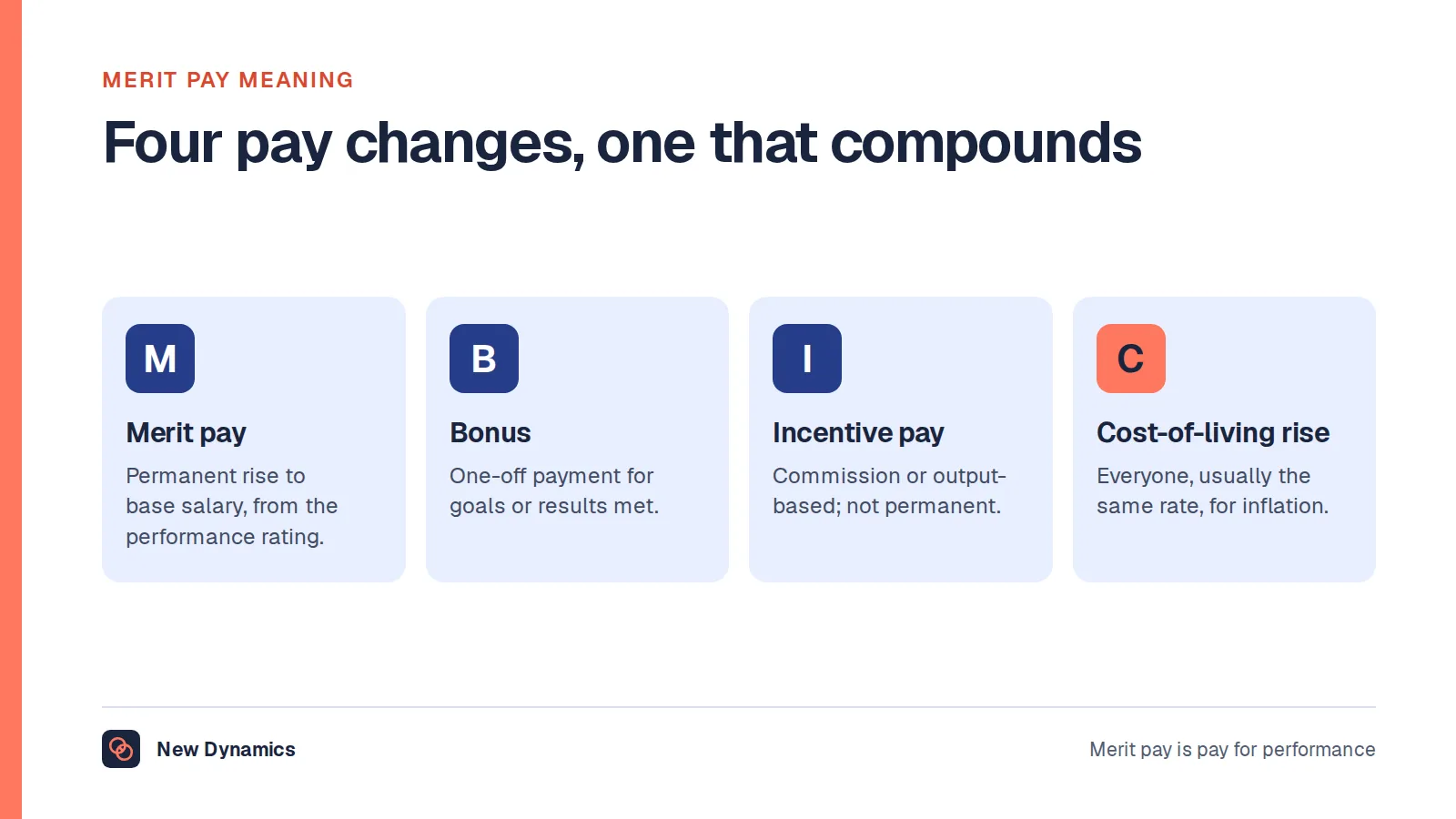
Our compensation policy guide covers the policy the decisions should sit under, and our post on merit pay the difference between a one-off award and a permanent increase.

Frequently asked questions
What does lump sum payment mean?
Money paid in one amount on one occasion rather than in instalments. The Cambridge Dictionary defines a lump sum as an amount of money paid in one large amount on one occasion. At work it covers bonuses, sign-on and retention payments, back pay, redundancy and severance, settlements, relocation allowances and pension lump sums.
Is a bonus a lump sum payment?
Usually, yes. An annual or one-off bonus paid in a single amount is a lump sum. Some bonuses are paid in instalments or deferred over years, particularly in financial services, in which case they are not.
Is redundancy pay a lump sum?
Yes. In the UK, statutory redundancy pay is a lump sum calculated from age, length of service and weekly pay, with caps that change each April, and employers may add an enhanced payment under their own scheme. Part of a genuine redundancy payment can be tax free up to a limit; check the current rules.
Is a lump sum better than instalments?
For the employee, a lump sum gives certainty. For the employer, instalments with conditions protect against someone leaving early. A lump sum with a written clawback is the usual compromise for sign-on and retention payments.
How is a lump sum payment taxed?
Most employment lump sums are taxed as earnings through payroll in the period they are paid. Redundancy payments, payments in lieu of notice, settlements and pension lump sums have their own rules that differ by country and change over time. Tell the employee how the payment will be taxed before they accept it and take advice on anything unusual.
Your next step: name the kind before you name the amount
- Decide which of the eight kinds the payment is; the kind decides the rules.
- Check the policy for who can authorise it and what conditions apply.
- Write the amount, reason, date and conditions down and have the employee acknowledge them.
- Brief payroll on the kind so the tax treatment is right.
For a policy that sets out how pay decisions, including lump sums, are made and explained, read and download our compensation policy guide. The guide is free to read, and the PDF uses our short download form.
Want the performance evidence behind bonus decisions kept in one place, so a lump sum can be explained? Book a New Dynamics demo and bring your current review process. You can also email contact@new-dynamics.com.