TL;DR
- Merit pay is pay for performance: a permanent increase to base salary awarded on the strength of an employee's performance rating, usually once a year after the review cycle. It differs from a bonus, which is a one-off payment, from incentive pay such as commission, which is tied to output, and from a cost-of-living rise, which everyone gets.
- OpenStax's business textbook states the logic plainly: compensation is closely connected to performance appraisals, and employees who perform better tend to get bigger pay raises. The link only motivates if people believe the rating is accurate and the increase is worth having.
- Run merit pay from a calibrated rating, a published matrix, a fixed budget and a manager conversation that explains the number. Small, undifferentiated increases and ratings nobody trusts are the two ways it fails.
Every year, after the reviews are done, someone opens a spreadsheet and turns ratings into pay. The column that does that is merit pay: the part of a salary increase that depends on how well the person performed, rather than on inflation, tenure or the market. It is the most common way organisations link pay to performance, and the most argued about.
This article explains what merit pay is, how it differs from bonuses, incentive pay and cost-of-living rises, the case for and against it, how a merit matrix works, and a six-step process for running it fairly. It is general information about pay practice, not legal or financial advice; the rules on pay differ by country and contract.
Merit pay is only as good as the review behind it. See how New Dynamics performance reviews bring goals, feedback and development into one fair discussion.
An increase that tracks prices rather than contribution is a different decision; our post on the cost of living adjustment covers whether one is owed and how the percentage is chosen.
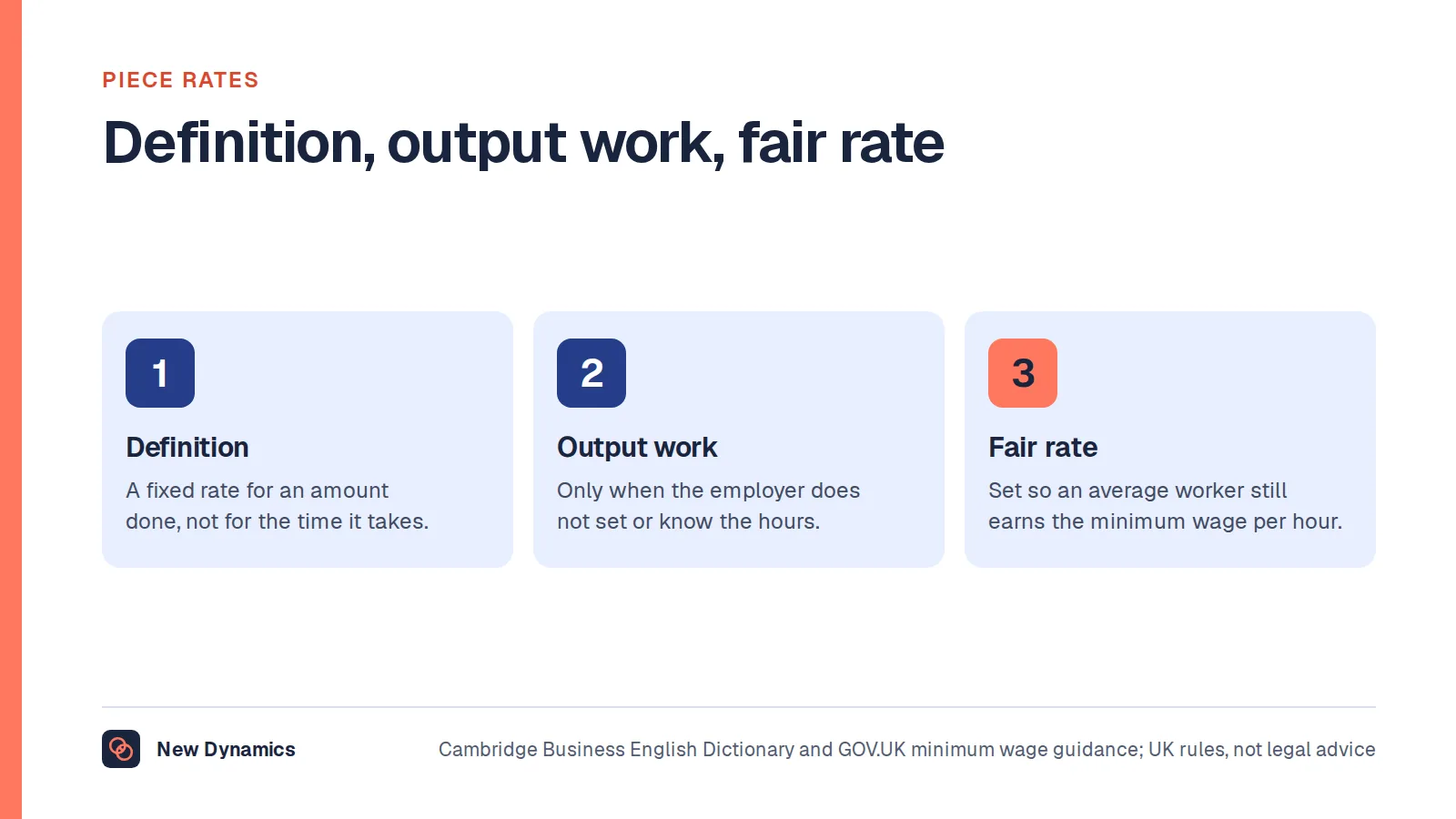
Where output can be counted rather than judged, employers sometimes pay per unit instead; our guide to piece rates explains the meaning, the UK fair rate rules and the trade-offs.
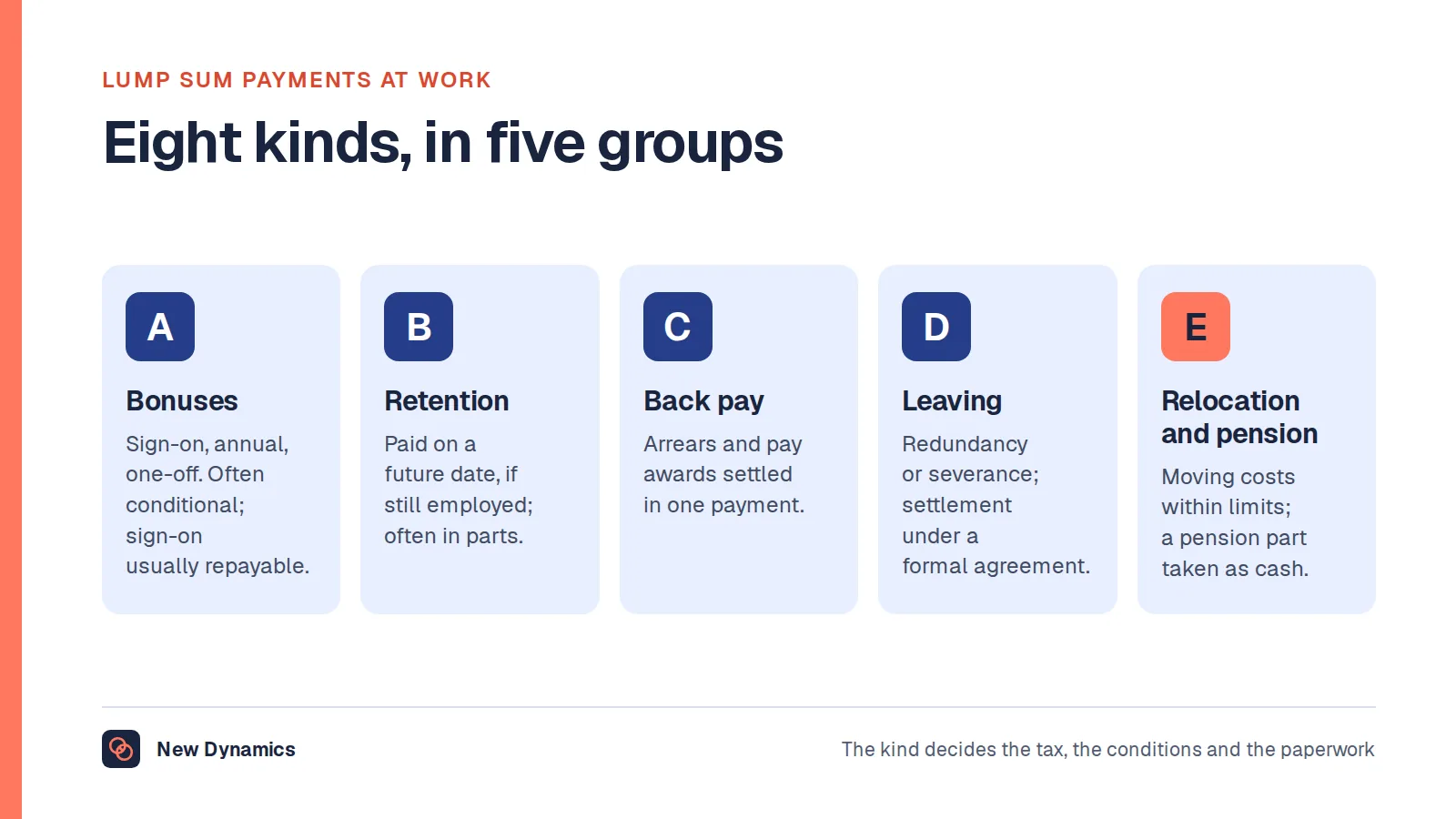
Where a one-off award is paid instead of a permanent increase, it is a lump sum; see what a lump sum payment is for the kinds, the conditions and the paperwork.
What is merit pay?
The Cambridge Business English Dictionary defines merit pay in three words: “pay for performance”. In practice the term means a merit increase or merit raise: a permanent increase to base salary, awarded to an individual on the strength of their performance over a review period, usually a year.
The open textbook Introduction to Business, published by OpenStax, describes the logic in its section on employee compensation and benefits: “Compensation, which includes both pay and benefits, is closely connected to performance appraisals. Employees who perform better tend to get bigger pay raises.” It defines the thing being raised: base pay is “an amount of pay received by the employee regardless of output level”, such as an hourly rate or a monthly salary.
The idea is older than the term. OpenStax's Principles of Management traces performance management back to the US military's merit rating system of the First World War, and notes that while seniority rules determined pay increases for unionised workers, “strong performance management scores meant good advancement prospects for managers”.
Merit pay vs bonus, incentive pay and cost-of-living rises
The four are often confused, and the confusion causes most of the arguments.
| Pay change | Permanent? | Based on | Who gets it |
|---|---|---|---|
| Merit pay | Yes | Individual performance rating | Those rated at or above target |
| Bonus | No | Goals met, company or team results | Varies by scheme |
| Incentive pay | No | Output: sales, units, savings | Roles with measurable output |
| Cost-of-living rise | Yes | Inflation, market movement | Everyone, usually the same rate |
OpenStax describes incentive pay as commission earned on sales, and bonuses paid “for reaching certain monthly or annual performance goals or achieving a specific cost-saving objective”, with profit-sharing paid once a year from company results. Merit pay is different in kind: it compounds. A 4 percent merit increase is paid every year for the rest of the person's employment and raises the base for every future increase. That is why it is the most valued form of recognition and the most carefully budgeted.
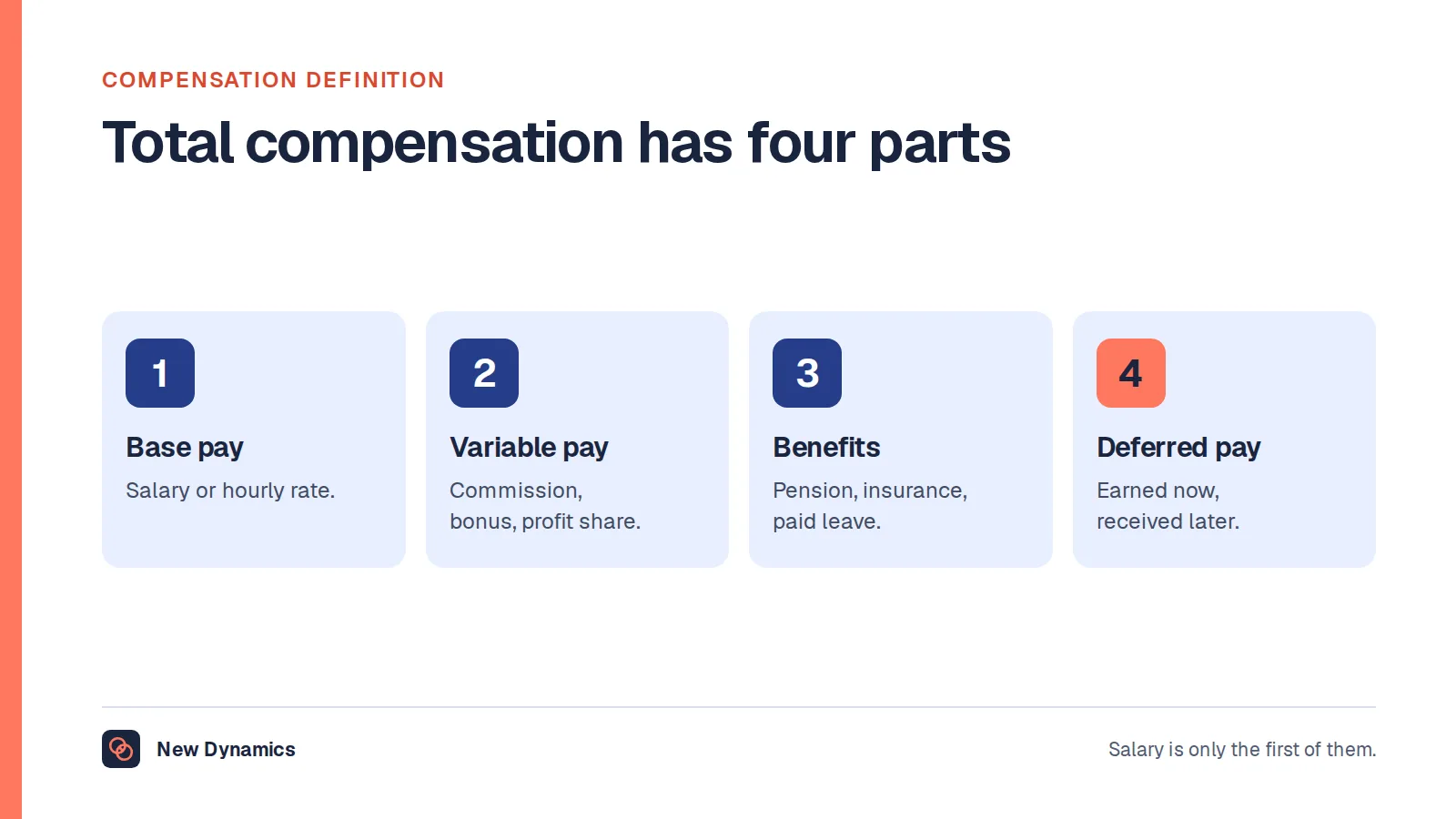
Many employers combine them: a general or cost-of-living rise for all, a merit increase on top for strong performers, and a bonus for exceptional results. Our guide to the definition of compensation sets out the whole package.

The case for merit pay
- It says performance matters. A pay system that treats the best and the weakest performer the same tells both of them something.
- It retains the people you most want to keep. High performers have options; a differentiated increase is one reason to stay.
- It gives the review cycle consequences. Ratings that affect pay are taken more seriously by managers and employees alike.
- It is fairer than the alternatives when the alternatives are seniority, favouritism or negotiation skill.
The case against, and what it really argues for
- The rating may not be accurate. If managers rate leniently, inconsistently or with bias, merit pay pays for the rating, not the performance.
- The differences are often too small to notice. A merit budget of 3 percent spread as 2.5 percent for most and 4 percent for the best is a difference of a few pounds a week after tax.
- It can crowd out teamwork and development. OpenStax records that companies backed away from forced ranking because it “negatively fostered internal competition and undermined collaboration and teamwork”, and that in one survey 58 percent of executives believed their performance management approach drove neither engagement nor high performance.
- It fixes the year's judgement into the salary for ever. A bad year for a good performer, or a lucky year for an average one, compounds.
Most of these are arguments against bad ratings and small budgets rather than against merit pay itself. The fix is the process below, not abandoning the link between pay and performance.
How a merit matrix works
A merit matrix turns two inputs into an increase: the performance rating, and where the person sits in the salary range for the job (the compa-ratio). The idea is that a strong performer paid below the range midpoint gets the largest increase, and a strong performer already at the top of the range gets a smaller one, or a lump sum instead, because the range is doing its job.
| Rating \ Position in range | Below midpoint | Around midpoint | Above midpoint |
|---|---|---|---|
| Exceeds expectations | 5 to 6% | 4 to 5% | 2 to 3% |
| Meets expectations | 3 to 4% | 2 to 3% | 1 to 2% |
| Below expectations | 0 to 1% | 0% | 0% |
The figures are examples; each organisation sets its own to fit its budget. What matters is that the matrix is published, applied consistently and explained to the people it affects.
Running merit pay fairly: six steps
- Fix the budget first. Decide the merit pool as a percentage of payroll before any ratings are known, and hold to it.
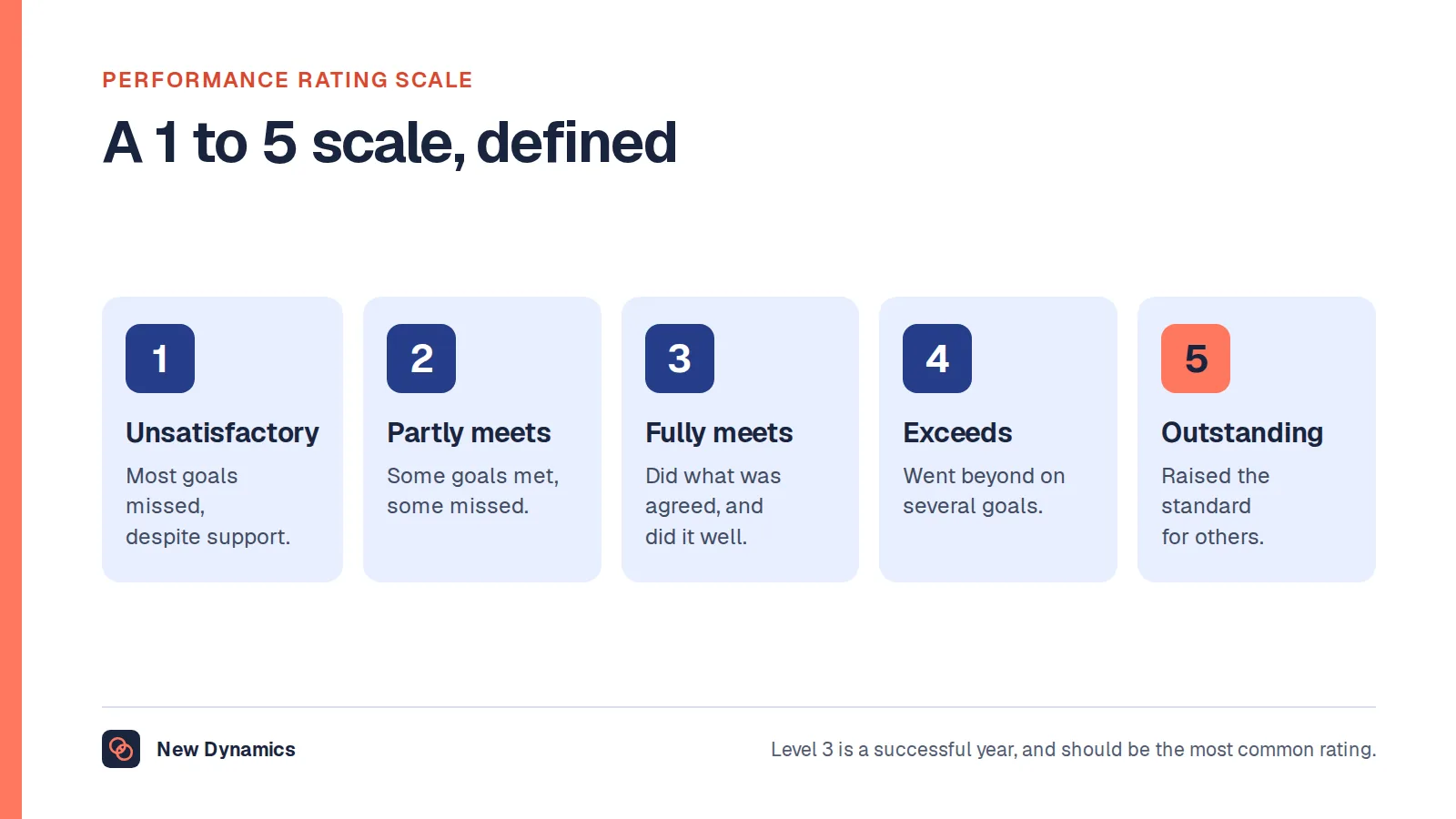
- Rate against written standards. Use a rating scale with defined levels and evidence from the whole year, not the last month. Our guide to the performance rating scale shows how.
- Calibrate. Managers compare ratings across teams before they are final, so that a "meets" means the same everywhere. Our performance calibration guide explains the meeting.
- Apply the matrix, then check the pattern. Look at the increases by grade, gender, ethnicity, age, part-time status and tenure before they go out. Unexplained gaps are a fairness and, in many countries, a legal problem.
- Tell people the number and the reason. The manager, not the payslip, should deliver the increase, with the rating, the matrix cell and what would earn more next year.
- Separate merit from the rest. State the cost-of-living element, the merit element and any bonus separately, so people can see what performance earned.

Common mistakes
- Peanut-buttering. Spreading the budget almost evenly to avoid difficult conversations, which turns merit pay into a cost-of-living rise with extra paperwork.
- Rating to the budget. Deciding the increase first and choosing the rating to justify it.
- Surprises. A rating and an increase that the year's one-to-ones did not foreshadow.
- Ignoring the range. Paying a merit increase to someone already above the range maximum, year after year.
- No record. Ratings, matrix cells and exceptions that are not written down cannot be defended.

Frequently asked questions
What is merit pay?
Merit pay is pay for performance, as the Cambridge Business English Dictionary defines it: a permanent increase to an employee's base salary awarded on the strength of their performance rating, usually once a year after the review cycle. It is also called a merit increase or merit raise.
What is the difference between merit pay and a bonus?
Merit pay is a permanent increase to base salary that compounds in every future year. A bonus is a one-off payment for reaching goals or results and does not change base pay. Many employers use both: merit pay for sustained performance, bonuses for exceptional results.
How is a merit increase calculated?
Usually through a merit matrix that combines the performance rating with the person's position in the salary range: strong performers paid below the midpoint receive the largest percentage, those at the top of the range the smallest, within a fixed merit budget. The percentages differ by organisation.
Does merit pay improve performance?
It can, when people believe the rating is accurate and the increase is meaningful; OpenStax notes that employees who perform better tend to get bigger pay raises. It fails when ratings are inconsistent, differences are too small to notice, or it undermines teamwork. The process matters more than the principle.
What is a typical merit increase?
There is no single figure; it depends on the organisation's budget, inflation and the market for the role. What matters more than the average is the spread between the strongest and the average performer, and whether that spread is large enough to notice.
Is merit pay the same as performance-related pay?
Merit pay is one form of performance-related pay: the form that raises base salary. Performance-related pay also includes bonuses, commission, incentive schemes and profit-sharing, which are usually one-off and tied to output or results rather than to a rating.
Your next step: check the review before the spreadsheet
- Confirm the merit budget and the matrix before ratings are final.
- Calibrate ratings across teams.
- Check the pattern of increases for unexplained gaps.
- Brief managers to explain the number and the reason in person.
For a fair rating process to base merit pay on, read and download our performance calibration guide. The guide is free to read, and the PDF uses our short download form.
Want ratings, calibration and the review cycle in one place so that merit pay rests on evidence? Book a New Dynamics demo and bring your current merit matrix. You can also email contact@new-dynamics.com.