TL;DR
- A one-to-one is a regular, private conversation between a manager and a team member. It belongs to the employee as much as to the manager, and it is not a status meeting.
- Good questions are open, specific and followed by silence. Choose three or four for each meeting from the 85 in this article, and do not try to cover every theme every time.
- End every one-to-one with agreed actions and a request for feedback on yourself. The questions matter less than what you do with the answers.
The one-to-one is on the calendar. You both sit down. “So, how is everything?” “Fine.” “Good. Anything you need from me?” “Not really.” Ten minutes later you are discussing the status of a project that you could have read about in the tracker.
Better questions fix most of this. This article gives you 85 one-to-one meeting questions, 70 for managers and 15 for employees, grouped by purpose, along with a simple agenda and advice on using them well.
Notes, actions and feedback from each conversation are easier to keep when they live in one place. See how New Dynamics continuous feedback supports regular check-ins.
What is a one-to-one meeting for?
A one-to-one, also written 1:1 or one-on-one, is a regular, private conversation between a manager and a member of their team.
Google reports, in its guide to effective 1:1 meetings, that its higher-scoring managers are more likely than lower-scoring managers to hold frequent one-to-ones. It says that such meetings “can identify issues early” and provide “a forum for the manager to give feedback and guidance”. It suggests a consistent time, “generally lasting 30-60 minutes, every week or two”, and a shared agenda to which both people contribute.
Acas lists regular check-ins, “sometimes known as one-to-ones”, among the ways in which managers should talk to employees about performance alongside formal reviews.
A one-to-one is for the things that do not fit anywhere else: how the person is, what is in their way, how they are developing and what each of you could do better. Status updates belong in the tracker.
A simple one-to-one agenda
- Check in (5 minutes). How are you?
- Their topics (10 to 15 minutes). Whatever the employee wants to raise comes first.
- Progress and obstacles (10 minutes). Priorities, blockers and decisions needed.
- Feedback, both ways (5 to 10 minutes). Something for them, and something for you.
- Actions (5 minutes). Who will do what, by when.
Add a development conversation once a month. Our one-to-one meeting guide has a fuller method and a worksheet.

70 one-to-one questions for managers
Pick three or four for each meeting. Nobody wants to be interviewed.
Opening and wellbeing
- How are you, really?
- What has been the best part of your week?
- What is on your mind at the moment?
- How is your energy, on a scale of one to five, and why?
- How is your workload feeling: too much, too little or about right?
- Is anything outside work affecting you that it would help me to know about?
- What would make next week a good week?
- What would you like to make sure we cover today?
Progress and priorities
- What are you most proud of since we last spoke?
- What are your top three priorities for the next fortnight?
- Is there anything on your list that you think should not be a priority?
- Where are you ahead, and where are you behind?
- What is the most important thing you will finish this week?
- Which decision are you waiting for, and from whom?
- How confident are you about the deadline, and what would raise that confidence?
- What have you said no to recently? What should you say no to?
- Is it clear how your work connects to the team's goals?
- What have you learned since we last spoke?
Obstacles and support
- What is getting in your way?
- What is taking longer than it should?
- Which process or tool frustrates you most?
- Where do you need a decision, an introduction or some air cover from me?
- Is there anything you are worried about and have not mentioned?
- Who else do you need help from, and can I unblock that?
- What would you do differently if you had one more person or one more week?
- Is there a risk that I should know about before it becomes a problem?
- What is one thing I could take off your plate?
- If you could change one thing about how the team works, what would it be?
Feedback for the employee
- Would you like some feedback on the presentation, the report or the project?
- What do you think went well, and what would you do differently?
- How do you think the client, or the other team, experienced that?
- What feedback have you had from others recently?
- Is there a piece of work on which you would like a second opinion?
- What is one skill that you would like me to watch and comment on this month?
- How do you prefer to receive feedback: in the moment, in writing or in our one-to-ones?
- What did you take from the feedback I gave you last time?
Feedback for the manager
- Is there anything I should be doing for you that I am not doing?
- What is one thing I could do differently that would make your work easier?
- Do you get enough context from me about decisions?
- Am I giving you too much direction, too little or about the right amount?
- When have I been most helpful to you, and when least?
- Is there anything I do that makes it harder to raise problems with me?
- How could I make better use of this meeting?
- What should I be telling my own manager about what the team needs?
Development and career
- What would you like to be doing in two years' time?
- Which parts of your job give you the most energy? Which drain you?
- Which skill would you most like to build this year?
- Whom in the organisation would you like to learn from?
- What kind of project would stretch you in the right way?
- Do you feel that you are growing here? What would help?
- What would you like to be known for?
- Is there a course, a conference or an experience that you would like to pursue?
- What is one step towards your next role that we could take this quarter?
- How can I support your development more effectively?
- What progress have you made on your development goal since we last spoke?
- Would a mentor help? Who might be a good one?
Team and culture
- How do you feel about the team at the moment?
- Who has helped you recently, and deserves thanks?
- Is there any tension in the team that I should know about?
- Do you feel comfortable speaking up in team meetings?
- What is one thing we should start, stop or continue as a team?
- How well do we work with the other departments? Where does it go wrong?
- How did the recent change land with you? What is still unclear?
- Do you feel that your work is recognised?
- What do you think I might not be seeing?
- If you were in my job, what would you change first?
Closing
- What are the actions from today, and who owns each?
- What else? Is there anything that we have not covered?
- Was this a good use of your time? What would make it better?
- What should be at the top of the agenda next time?
Question 37 comes from Google's guide, which also recommends the simplest question on the list, number 68: “What else?” It notes that it is surprising what can come up as an afterthought.
For wording when you give feedback, see our colleague feedback examples. For development conversations, see our personal development goals examples.

15 one-to-one questions for employees to ask their manager
The meeting belongs to you as well. Bring two or three questions of your own.
- What are the most important things for me to achieve this quarter?
- How does my work fit into the team's goals?
- What is one thing I could do differently that would make the biggest difference?
- What did you think of my last project? What should I keep, and what should I change?
- How am I doing against your expectations?
- What would you need to see from me to consider me for the next level?
- Which skills should I focus on developing this year?
- Is there a stretch project coming up that I could take on?
- What is changing in the wider organisation that I should know about?
- What are you most worried about for the team at the moment?
- How can I make your job easier?
- Whom should I get to know better?
- Can I have your help with a blocker?
- How would you like me to keep you updated?
- Is there any feedback that you have been meaning to give me?
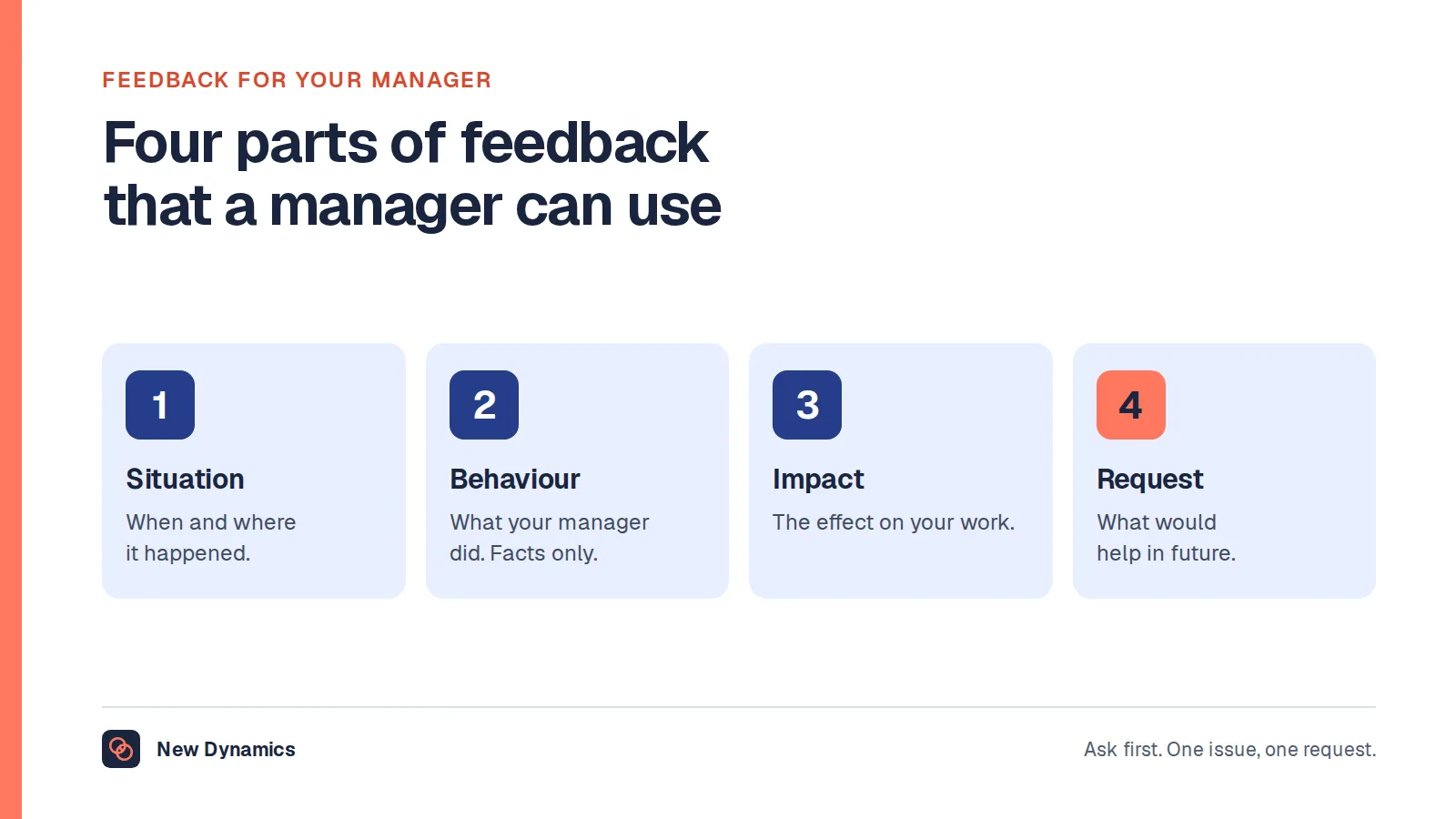
For ways to give your manager feedback, see our feedback for your manager examples.
Questions for particular situations
A new team member's first one-to-one. How do you like to work? How do you prefer to receive feedback? What did your best manager do that you would like me to do? What should I know about you that would help me to support you?
A remote colleague. Do you have what you need at home? Do you hear news at the same time as everyone else? Whom have you not spoken to for a while? What would make you feel more connected?
After a setback. What happened, as you see it? What did you learn? What would you do differently? What do you need from me now?
Someone who has gone quiet. I have noticed that you have been quieter in meetings lately. How are things? Is there anything that is making it harder to speak up?
A high performer. What would keep you here for the next three years? What are you not learning that you would like to learn? Which part of my job would you like to try?
How to ask good questions in a one-to-one
- Let them go first. Their topics before yours.
- Ask open questions. “What is getting in your way?” invites more than “Is everything all right?”
- Wait. Count to five after you ask. The useful answer often comes after a pause.
- Follow up. “Tell me more”, “What makes you say that?” and “What else?” do more work than any clever question.
- Do not interrogate. Three or four questions are plenty. The aim is a conversation.
- Write down actions, and start the next meeting by checking them.
- Do not cancel. Moving a one-to-one tells the person where they rank. If you must move it, rebook it the same day.
- Ask for feedback on yourself, every time. Google's guide suggests: “Is there anything I should be doing for you that I am not doing?”
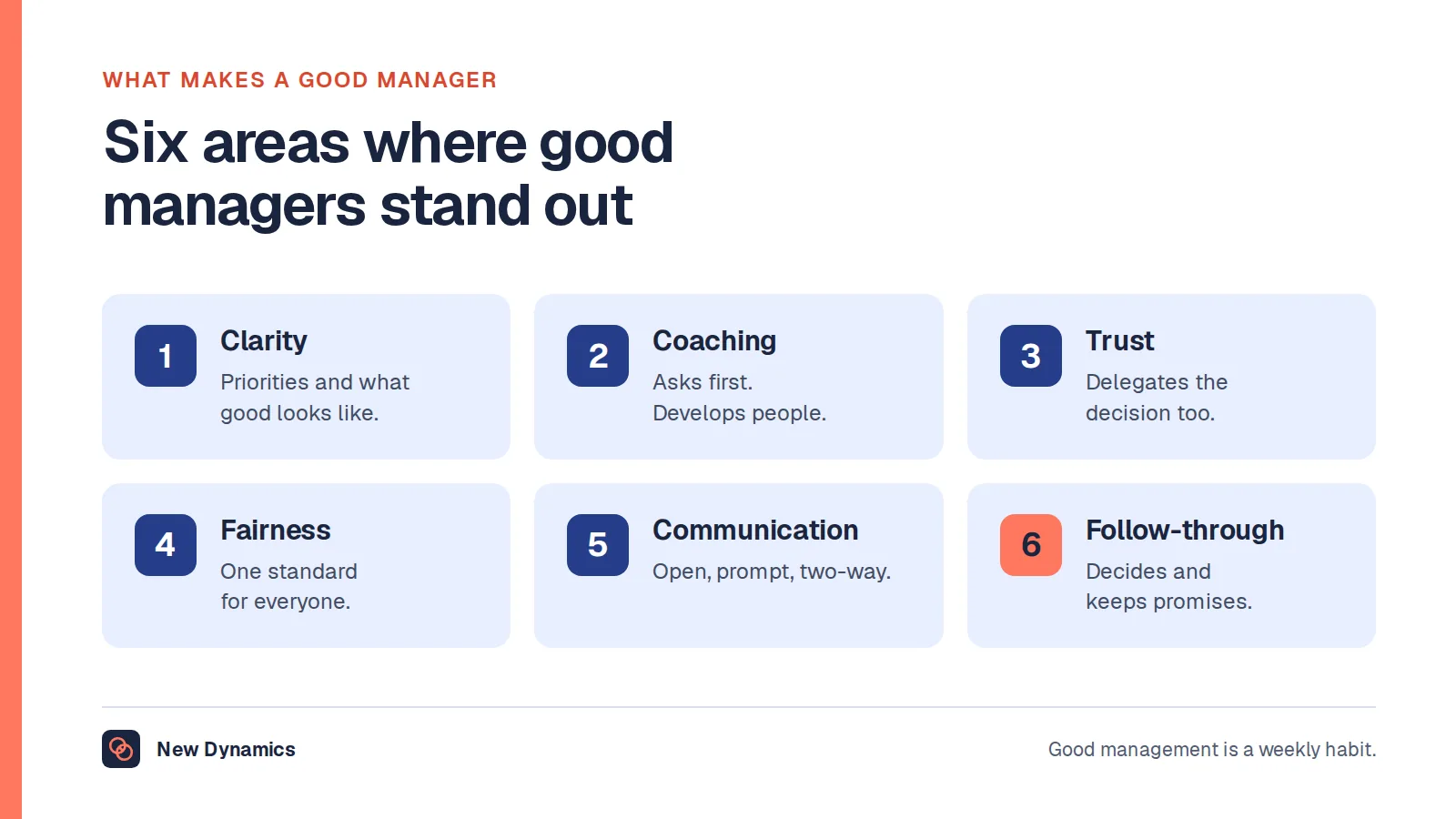
Our guide to what makes a good manager explains why this routine sits at the centre of the job.
Common mistakes
A status meeting in disguise. If the conversation could be replaced by reading the tracker, change the agenda.
The manager talks most. Aim to listen for more than half the time.
The same three questions every week. Vary them, or people will stop thinking before they answer.
No notes and no actions. Without them, the same issues return, and trust fades.
Saving feedback for the review. The one-to-one is where feedback belongs. See performance reviews: the good, the bad and the ugly.
Avoiding the hard topic. If something is wrong, name it kindly and early.
Cancelling when busy. Busy periods are when people most need the conversation.

Frequently asked questions
What are good questions to ask in a one-to-one meeting?
Good questions are open and specific, such as: what is on your mind? What is getting in your way? What are you most proud of since we last spoke? What is one thing I could do differently? What would you like to be doing in two years' time?
What should a manager ask in a 1:1?
Cover five areas over time: how the person is, their progress and priorities, their obstacles and the support they need, feedback in both directions, and their development. Choose three or four questions for each meeting, and let the employee's topics come first.
What should I ask my manager in a one-to-one?
Ask about priorities, feedback and growth. For example: what are the most important things for me to achieve this quarter? What one thing could I do differently? What would you need to see from me for the next level? How can I make your job easier?
How often should one-to-one meetings happen?
Weekly or fortnightly suits most teams. Google's guide suggests a consistent time of 30 to 60 minutes, every week or two. Monthly is usually too infrequent for problems to surface early.
How long should a one-to-one be?
Thirty minutes is enough for most weeks, with a longer session once a month for development. It is better to hold a short meeting reliably than a long one that keeps being cancelled.
What is the difference between a one-to-one and a performance review?
A one-to-one is frequent, informal and looks forward. A performance review is periodic, formal and summarises a whole period. Good one-to-ones mean that the review contains no surprises, because feedback has been given all along.
Your next step: change three things next week
- Send your team member the agenda in advance, and ask them to add their topics first.
- Choose three questions from this list that you have never asked.
- End with actions, and with “What is one thing I could do differently?”
- Start the next meeting by reviewing those actions.
For an agenda, a worksheet and a worked example, read and download our one-to-one meeting guide. The guide is free to read, and the PDF uses our short download form. You can also use our open manager 1:1 template.
Want check-ins, notes, actions and feedback in one place for every manager? Book a New Dynamics demo and bring your current one-to-one habits. You can also email contact@new-dynamics.com.