TL;DR
- A public relations manager builds, protects and manages an organisation's reputation through media relations, communication campaigns, content and stakeholder engagement, and leads the PR team or agency relationship.
- The job has seven duties: set the PR strategy, run media relations, lead campaigns and content, manage events and community relations, lead crisis communication, measure coverage and sentiment, and manage the team, agency and budget.
- Most PR managers have come up through PR officer or account executive roles. In the UK the CIPR and PRCA offer professional qualifications, and a level 4 PR and communications assistant apprenticeship standard exists, though its first version was retired in April 2025.
When a journalist calls, a product fails in public or the chief executive wants a profile piece, the same person gets the message. What a public relations manager does is easy to describe in one line, reputation, and hard to write into a job description that attracts the right person.
This article explains what a PR manager does, sets out seven duties, separates in-house and agency roles, lists the skills employers ask for, covers qualifications and the professional route in the UK, and gives a template and the mistakes that weaken PR job adverts.
Reputation is built on commitments kept, inside the organisation as much as outside. See how New Dynamics Goals & OKRs keep targets and progress in one place.
What does a public relations manager do?
Prospects, the UK graduate careers service, describes the profession in its public relations officer profile: PR officers “manage and protect an organisation's reputation and public image, ensuring effective communication with its target audience and maintaining a positive public profile”. The work is done, it says, “through strategic communication campaigns, media relations and stakeholder engagement”, communicating key messages to defined audiences, externally and internally, “to establish and maintain goodwill and understanding and to manage reputational risk”.
The PR manager does that work at the level of strategy and leadership. The UK National Careers Service's public relations officer profile lists PR manager as the usual next step: with experience, a PR officer could “become a PR manager, social media manager or head of communications”, or move to freelance consultancy, advertising, marketing or journalism.
In practice a PR manager owns the plan, the relationships that matter most, the response when something goes wrong, and the people or agency who do the daily work.
PR manager duties: seven responsibilities
- Set the PR strategy. Decide what the organisation needs to be known for, by whom, and how success will be measured. Prospects lists planning, developing and implementing PR strategies as the first task of the role.
- Run media relations. Build relationships with journalists and editors, answer media enquiries, place stories, and brief spokespeople. Prospects lists building strong relationships and networks with the media and answering enquiries from the media and other organisations.
- Lead campaigns and content. Research, write and distribute press releases; write and edit articles, speeches, case studies and annual reports; oversee publicity material and video. Prospects lists all of these.
- Manage events and community relations. Press conferences, launches, open days and exhibitions, sponsorship and community initiatives, which Prospects also lists.
- Lead crisis communication. Prepare the plan, the holding statements and the spokespeople before anything happens; run the response when it does. Prospects puts it as managing “the PR aspect of a potential crisis situation”.
- Measure coverage and sentiment. Collate and analyse media coverage and monitor media, including social media, for opportunities and risks. The NCS lists monitoring data to understand the public and media's opinion of your clients.
- Manage the team, agency and budget. Set priorities for PR officers and executives, brief and hold the agency to account, and manage spend.

In-house or agency: two versions of the job
Prospects notes that job titles vary: PR officer is used more commonly for in-house roles, and in an agency the equivalent is a PR account executive. The same split applies one level up.
| Version | What the manager does |
|---|---|
| In-house PR manager | Leads PR for one organisation; reports to a head of communications or marketing director; owns the reputation over years |
| Agency account manager or director | Leads PR for several clients; manages account teams, budgets and client relationships; sells new business |
The duties overlap almost completely. The difference is depth against breadth, and who the manager answers to. Say which yours is in the first line of the advert.
Skills employers ask for
Prospects lists the skills a PR professional needs: verbal and written communication “to write clear and effective messages that engage target audiences”; interpersonal, negotiation and influencing skills and the self-confidence to build relationships with colleagues, clients, journalists and stakeholders; “creativity, imagination and initiative to develop innovative PR campaigns”; organisation and time management across competing deadlines; flexibility, determination and the ability to cope under pressure; research skills covering the audience, the market, the media landscape and current affairs; and IT and social media skills. The NCS adds persistence, attention to detail and “the ability to accept criticism and work well under pressure”.
For a manager, add four things.
- Judgement. Knowing which story to chase, which to decline and which enquiry needs the chief executive in the next ten minutes.
- Calm. A crisis is managed by the person who slows the room down.
- Commercial sense. Coverage is a means. The manager should connect PR activity to what the organisation is trying to achieve.
- Leadership. Briefing well, editing kindly and developing officers into managers.

Qualifications and the route into PR management
Degree and experience. Prospects says work experience is essential in a competitive field, with experience in PR, communications, marketing and journalism particularly useful. The NCS suggests work experience with PR departments and consultancies, volunteering to promote charities, and writing for student media.
Professional qualifications. Both profiles point to the Chartered Institute of Public Relations. The NCS lists the CIPR's Foundation Certificate for beginners and Professional PR Certificate for graduates or those with at least two years' experience; Prospects adds the professional PR diploma and courses from the PRCA and the Chartered Institute of Marketing, and notes that membership of these bodies gives access to training, events and networks.
Apprenticeship. The NCS lists a level 4 public relations and communications assistant higher apprenticeship. Skills England's apprenticeship listing shows that standard, summarised as “Building, protecting and maintaining a positive reputation for brands, organisations and individuals.”, with its first version retired on 29 April 2025; check the listing for the current version.
Progression. Prospects observes that promotion can be rapid for those who show outstanding ability and commitment, and that CPD matters because the field changes with technology, politics and business models. Most PR managers have three to six years as an officer or account executive behind them.
Requirements differ in other countries. Check the rules where you work.
PR manager job description template
Adapt the template to your organisation. Keep every line true.
Job title: Public relations manager
Reports to: Head of communications or marketing director
Direct reports: PR officer; agency relationship
Location and hours: [Site], with [hybrid working]; [37.5] hours a week, with occasional evenings for events and out-of-hours cover for media enquiries on a rota
Purpose of the role: To build and protect the organisation's reputation with [customers, partners, regulators, the public] through planned communication, media relations and a tested response to reputational risk.
Main duties:
- Develop and deliver the annual PR plan, with objectives and measures agreed with [the leadership team]
- Build and maintain relationships with [trade, national, regional] media; handle enquiries and brief spokespeople
- Write and edit press releases, articles, speeches and statements; oversee publicity material
- Plan and run launches, press events and community activity
- Maintain the crisis communication plan and lead the response when it is activated
- Monitor and report coverage, sentiment and campaign results monthly
- Manage the PR officer, the agency and the PR budget
Skills and experience:
- [Four] or more years in PR, in-house or agency, with examples of campaigns delivered and coverage secured
- Excellent writing and editing, with samples
- Experience of media handling under pressure, ideally including a live issue
- CIPR or PRCA qualification, or equivalent experience
- Able to brief, edit and develop others
We provide: CIPR membership and CPD, a seat in the leadership team's planning meetings, [hybrid working] and a clear route to head of communications.
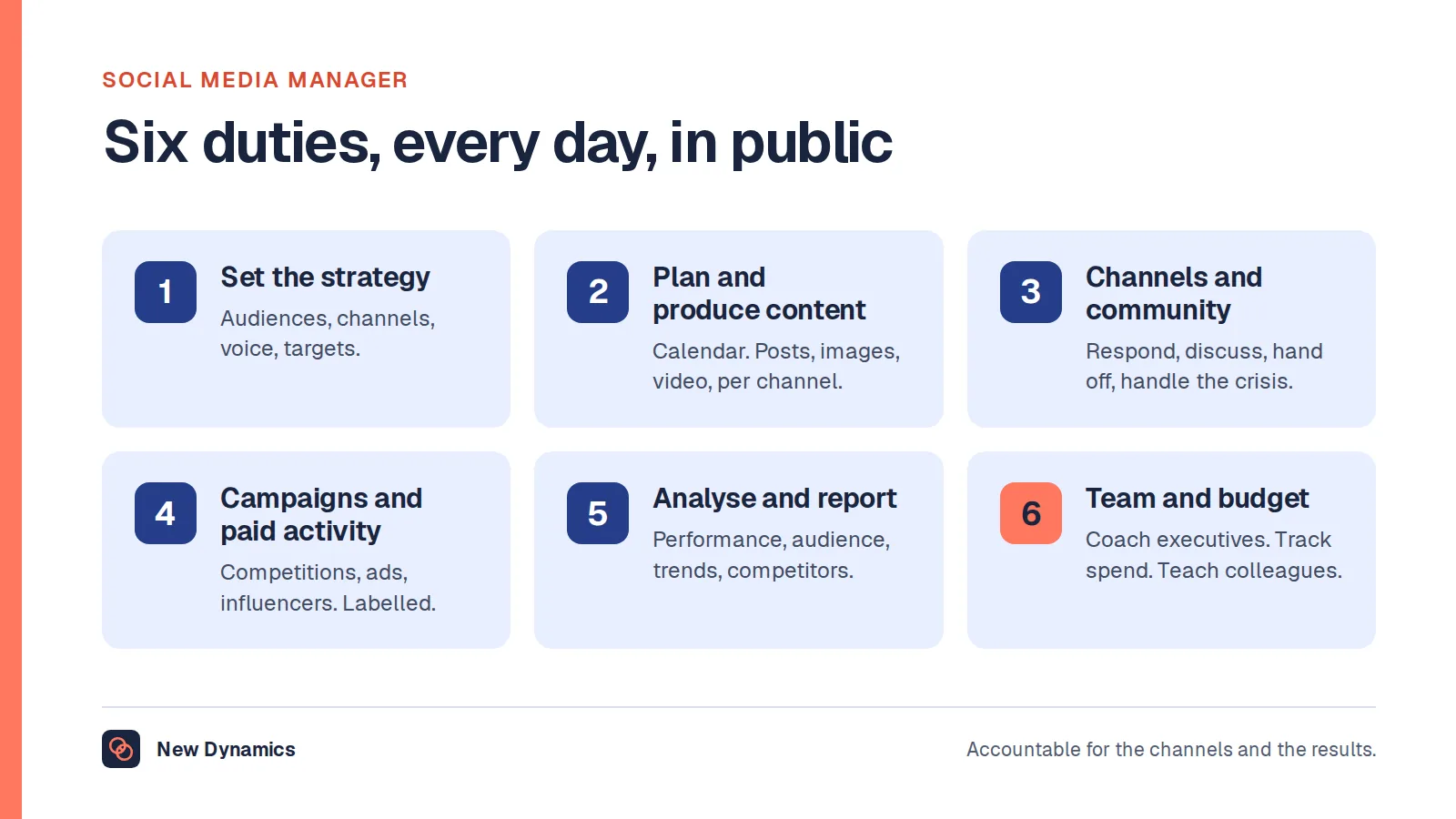
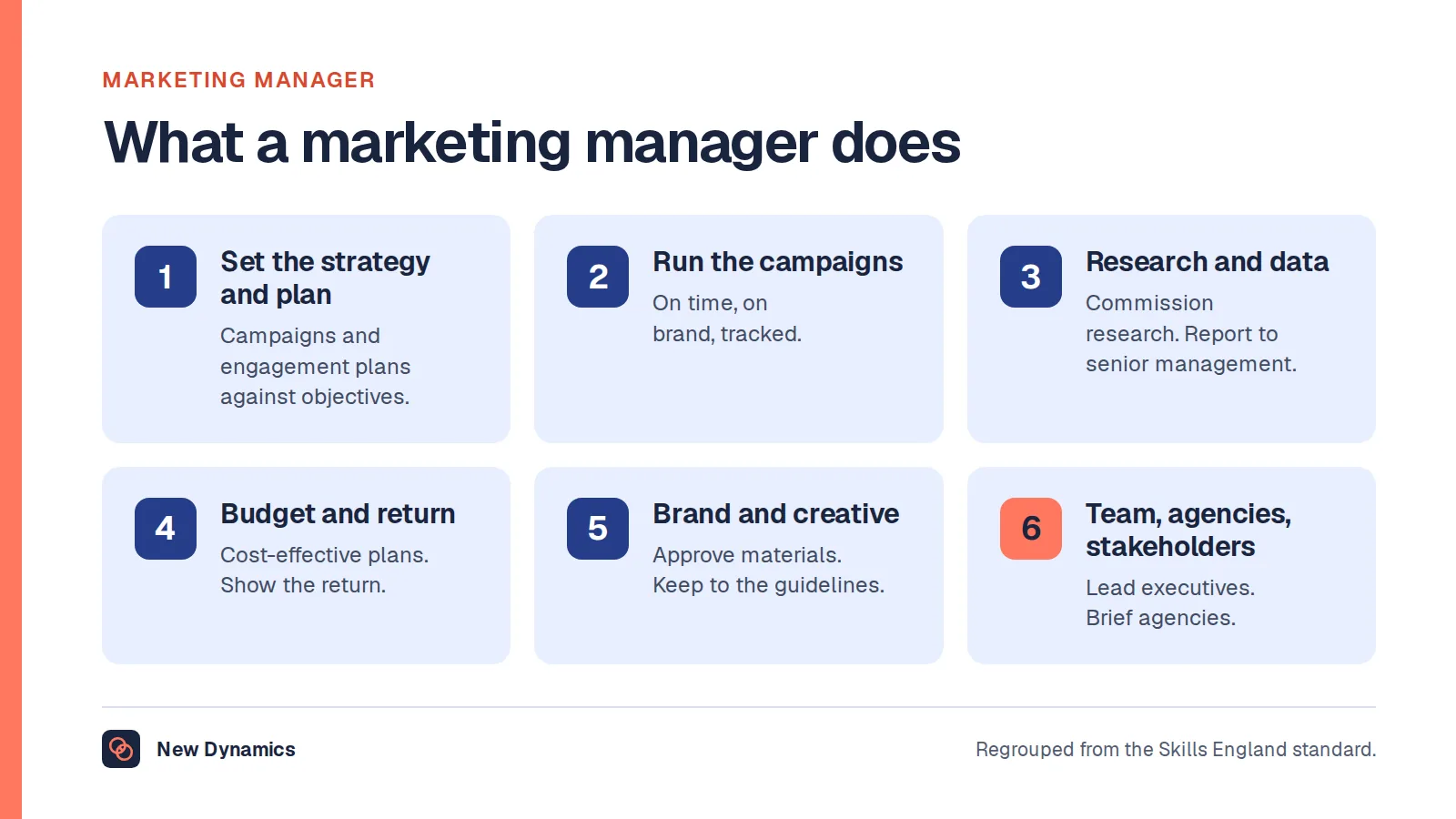
Name the sectors and the media that matter to you; PR people search by them. Our job description template explains the overall structure, and our marketing manager job description and social media manager job description cover the neighbouring roles.

Common mistakes in PR manager job adverts
Confusing PR with marketing. Marketing sells; PR builds understanding and manages reputation. The two work together, but a job that is really campaign marketing should say so.
No word on crisis. If the manager will be first call at 11pm when something goes wrong, say it, and say what the rota is.
Writing samples not requested. Writing is the job. Ask for two pieces.
A social media job in disguise. Running the organisation's channels day to day is a social media manager's role. If the PR manager is expected to do both, the advert should say so, and the pay should reflect it.
Vague measures. “Raise our profile” is not an objective. Coverage in named outlets, share of voice, sentiment and enquiries generated are.
Frequently asked questions
What does a public relations manager do?
A PR manager builds and protects an organisation's reputation. They set the PR strategy, run media relations, lead campaigns and content, manage events and community relations, lead crisis communication, measure coverage and sentiment, and manage the PR team, the agency and the budget.
What is the difference between a PR manager and a PR officer?
A PR officer does the daily work: writing releases, monitoring media, organising events and handling enquiries. A PR manager sets the strategy, owns the key relationships, leads the response to a crisis and manages the officers, the agency and the budget. The National Careers Service lists PR manager as the usual progression from PR officer.
What skills does a PR manager need?
Clear writing and editing, strong relationships with media and stakeholders, creativity, organisation across competing deadlines, calm under pressure, research and current-affairs awareness, and social media competence. As a manager, add judgement, commercial sense and the ability to lead and develop others.
What qualifications does a PR manager need?
There is no legal requirement. Most have a degree and several years' experience as a PR officer or account executive. In the UK the CIPR offers a Foundation Certificate, Professional PR Certificate and diploma, the PRCA and CIM offer courses, and a level 4 PR and communications assistant apprenticeship standard exists.
What is the difference between in-house and agency PR?
In-house PR managers lead reputation for one organisation over the long term. Agency account managers and directors lead PR for several clients, manage account teams and budgets and win new business. Prospects notes that titles differ: PR officer in-house, account executive in an agency.
How is a PR manager's performance measured?
By agreed objectives rather than volume: coverage in named outlets, share of voice against competitors, sentiment, campaign results, the speed and quality of crisis response and the development of the team. Our SMART goals guide shows how to write such objectives.
Your next step
- Decide whether the job is in-house or agency, and whether it includes social media, and say so in the first two lines.
- Write the seven duties for your organisation, with the crisis rota made explicit.
- Ask for two writing samples and one campaign story in the application.
- Agree the first year's measures before the advert goes out.
For a method for those measures, read and download our SMART goals guide. The guide is free to read, and the PDF uses our short download form.
Want PR objectives, feedback and development kept in one place for the whole communications team? Book a New Dynamics demo and bring your current job description. You can also email contact@new-dynamics.com.