TL;DR
- Jurisdiction: United States. Form 1094-C is the transmittal and the employer-level return; Form 1095-C is the per-employee statement. The IRS says Form 1094-C "must be used to report to the IRS summary information for each Applicable Large Employer (ALE Member)" and "to transmit Forms 1095-C to the IRS", and that one (and only one) Form 1094-C must be identified on line 19 as the Authoritative Transmittal.
- An applicable large employer is one with 50 or more full-time employees including full-time equivalents in the previous year. The IRS counts full-time equivalents by combining the hours of all non-full-time employees for a month, "but do not include more than 120 hours of service per employee", then dividing by 120.
- For calendar year 2025 the IRS instructions give a filing date of March 2, 2026 on paper, or March 31, 2026 electronically, with electronic filing compulsory at 10 or more information returns in the aggregate, and a penalty of $340 per return subject to a calendar year cap of $4,098,500.
Somebody in HR is handed a spreadsheet in January and told to "do the 1095s". By the time the codes in Part II are being filled in, three people disagree about whether a month counts, and nobody is sure which of the two forms the IRS actually treats as the return.
Jurisdiction: United States. Forms 1094-C and 1095-C are federal Internal Revenue Service forms under sections 6055 and 6056 of the Internal Revenue Code. They exist because of the Affordable Care Act's employer shared responsibility provisions. There is no United Kingdom equivalent, and nothing in this article applies outside the US federal tax system. This is general information about reporting rules, not legal or tax advice. Every figure below is quoted from an IRS page with the tax year or revision it belongs to, and these amounts and dates change each year.
Annual filings go wrong because they are remembered rather than scheduled. See how New Dynamics workflows give each step of a reporting cycle an owner, a due date and a visible status.
The two forms, and how they relate

The IRS states the split plainly in the Instructions for Forms 1094-C and 1095-C (2025), under Purpose of Form: "Form 1094-C must be used to report to the IRS summary information for each Applicable Large Employer (ALE Member) (defined below) and to transmit Forms 1095-C to the IRS. Form 1095-C is used to report information about each employee to the IRS and to the employee."
So the relationship is one of cover sheet to contents, with one important twist.
- Form 1095-C is per employee. The IRS page About Form 1095-C says it "is filed and furnished to any employee of an Applicable Large Employers (ALE) member who is a full-time employee for one or more months of the calendar", and that "ALE members must report that information for all twelve months of the calendar year for each employee". One employee, one form, twelve columns.
- Form 1094-C is per employer. The IRS page About Form 1094-C describes it in a single line: "This form is the transmittal form that must be filed with the Form 1095-C."
- One of those transmittals is the real return. An employer may split its Forms 1095-C across several Forms 1094-C. The instructions require that "one (and only one) Form 1094-C filed by the ALE Member must be identified on line 19, Part I, as the Authoritative Transmittal, and, on the Authoritative Transmittal, the ALE Member must report certain aggregate data for all full-time employees and all employees".
That last point is the one worth remembering. The Authoritative Transmittal carries the employer-level certifications and monthly counts. The others carry only a count of the forms attached to them. The instructions are equally clear in the other direction: "Do not file a return correcting information on a Form 1094-C that is not the Authoritative Transmittal."
Both forms also feed two separate decisions at the IRS. The instructions say they "are used in determining whether an ALE Member owes a payment under the employer shared responsibility provisions under section 4980H", and that "Form 1095-C is also used in determining the eligibility of employees for the premium tax credit". The employee's copy is not a courtesy. It is the document an individual uses when their Marketplace coverage is reconciled.
Who must file
The duty sits with an ALE Member. The instructions say an ALE Member "must file one or more Forms 1094-C (including a Form 1094-C designated as the Authoritative Transmittal, whether or not filing multiple Forms 1094-C), and must file a Form 1095-C for each employee who was a full-time employee of the ALE Member for any month of the calendar year. Generally, the ALE Member is required to furnish a copy of the Form 1095-C (or a substitute form) to the employee."
Two consequences catch employers out.
First, aggregation. Where employers are under common control they form an Aggregated ALE Group, and the instructions state that each member files separately: "Each ALE Member is required to file Forms 1094-C and 1095-C reporting offers of coverage to its full-time employees (even if the ALE Member has fewer than 50 full-time employees of its own)." They also say "Each ALE Member must file its own Forms 1094-C and 1095-C under its own separate EIN", and "No Authoritative Transmittal should be filed for an Aggregated ALE Group."
Second, self-insured plans. An employer offering coverage through a self-insured plan reports each covered individual. For an ALE Member, the instructions say "this information must be reported on Form 1095-C, Part III, for any employee who is enrolled in coverage (and any spouse or dependent of that employee)".
What an applicable large employer is, and how the IRS counts to 50

The IRS page on determining if an employer is an applicable large employer sets out the test. Status "is determined each calendar year, and generally depends on the average size of an employer's workforce during the prior year". If an employer "has at least 50 full-time employees, including full-time equivalent employees, on average during the prior year, the employer is an ALE for the current calendar year, and is therefore subject to the employer shared responsibility provisions and the employer information reporting provisions".
The arithmetic has four parts, and the full-time-equivalent step is where most spreadsheets drift.
- Define full time by hours, not by contract. The IRS: "A full-time employee for any calendar month is an employee who has on average at least 30 hours of service per week during the calendar month, or at least 130 hours of service during the calendar month."
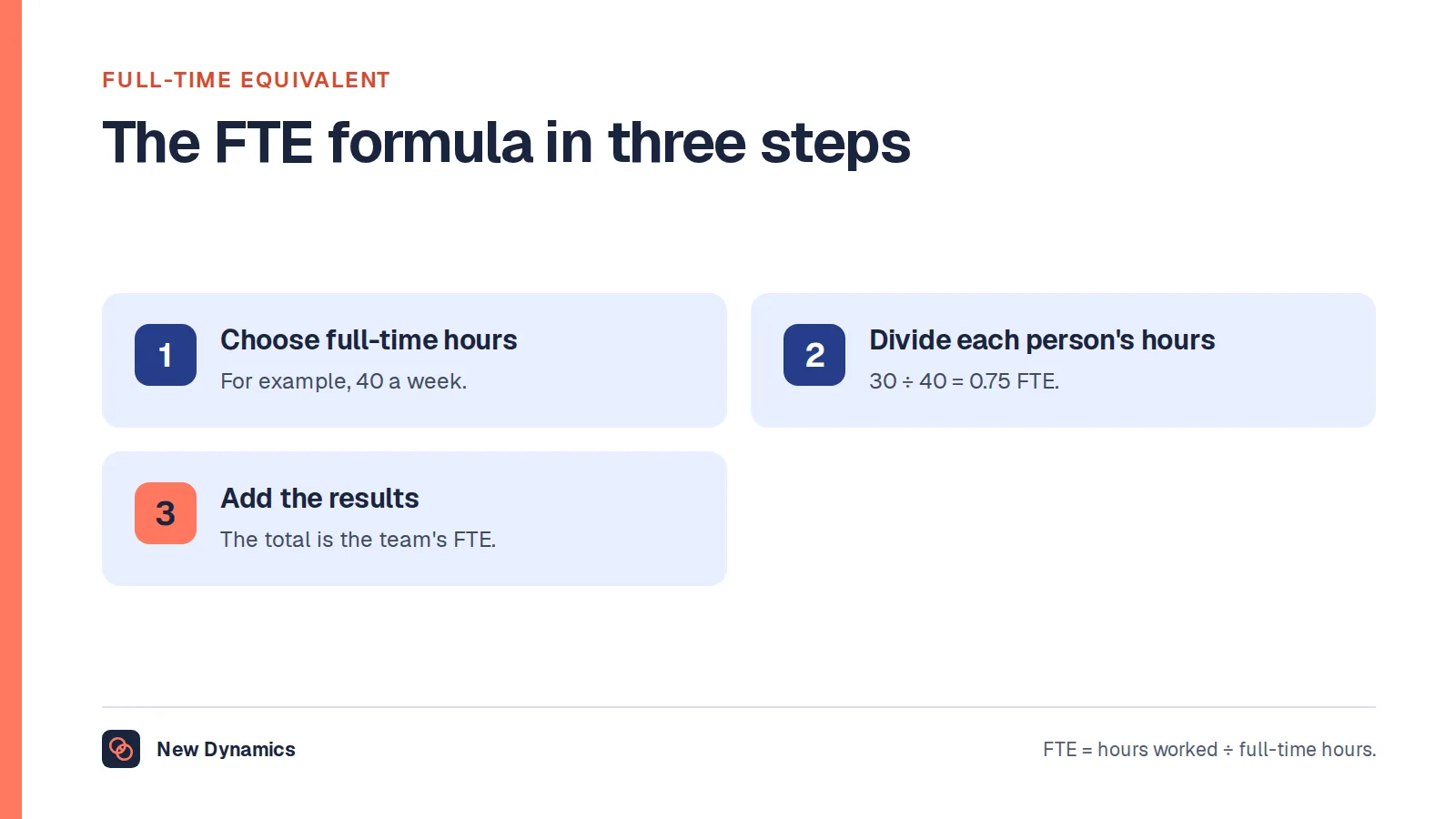
- Convert everyone else into equivalents, with a cap. The IRS gives two steps for each month: "Combine the number of hours of service of all non-full-time employees for the month but do not include more than 120 hours of service per employee", then "Divide the total by 120."
- Average the year, not the month. "To determine its workforce size for a year an employer adds its total number of full-time employees for each month of the prior calendar year to the total number of full-time equivalent employees for each calendar month of the prior calendar year and divides that total number by 12."
- Check the seasonal exception. An employer is not treated as having more than 50 if both apply: the workforce "exceeds 50 full-time employees (including full-time equivalent employees) for 120 days or fewer during the calendar year", and "the employees in excess of 50 employed during such 120-day period are seasonal workers".
The 120-hour cap is the detail that moves the answer. A part-timer working 150 hours in a month counts as 120, not 150. Our post on full-time equivalent works through the general formula and why this statutory version differs from the one used for budgets and headcount.
One more distinction the IRS makes explicitly, because it reverses a common assumption: "An employer's number of full-time equivalent employees (or part-time employees) is only relevant to determining whether an employer is an ALE. An ALE need not offer minimum essential coverage to its part-time employees to avoid an employer shared responsibility payment." Equivalents get you over the threshold. They do not then have to be covered.
What goes on Form 1094-C
Lines 20 to 22 and Parts III and IV are completed only on the Authoritative Transmittal. The pieces that matter most:
- Line 20 is the total number of Forms 1095-C filed by or on behalf of the ALE Member, including any filed under a separate transmittal.
- Line 22 is where an employer certifies that it is using the Qualifying Offer Method or the 98% Offer Method. Each changes how Form 1095-C is completed, so the box and the codes have to agree.
- Part III, column (a) asks, month by month, whether minimum essential coverage was offered "to at least 95% of its full-time employees and their dependents". There is a small-employer allowance written into the instructions: if coverage was offered to all but five full-time employees and their dependents, and five is greater than 5% of the full-time employees, the employer "may report in column (a) as if it offered health coverage to at least 95%".
- Part III, column (b) is the section 4980H full-time employee count, excluding anyone in a Limited Non-Assessment Period. The instructions warn: "Be sure to use the section 4980H definition and not any other definition of the term 'full-time employee' that you may use for other purposes."
- Part III, column (c) is the total employee count, and the employer must pick one measuring day (the 1st, the last, the 12th, or the first or last day of the first payroll period starting in the month) "and must use that day for all months of the year".
Part II of Form 1095-C: the codes, and where employers go wrong
Part II is three lines per month, repeated twelve times. Almost every correction notice traces back to them.
Line 14: what was offered
Line 14 takes a Code Series 1 indicator, which the instructions describe as specifying "the type of coverage, if any, offered to an employee, the employee's spouse, and the employee's dependents". There are codes for minimum value coverage offered to the employee only (1B), to the employee and dependents but not the spouse (1C), to the employee and spouse but not dependents (1D), to the employee, dependents and spouse (1E), for conditional spousal offers (1J and 1K), and a long block, 1L through 1U, for individual coverage HRAs.
Three rules on line 14 cause most of the trouble.
- Never leave it blank. "If an employee was not offered coverage for a month, enter code 1H. Do not leave line 14 blank for any month (including months when the individual was not an employee of the ALE Member)."
- A month is all or nothing. "An ALE Member offers health coverage for a month only if it offers health coverage that would provide coverage for every day of that calendar month." If cover ends mid-month, including on termination, that month is 1H.
- Code 1A has strings attached. Code 1A is the Qualifying Offer: minimum value coverage with an employee required contribution at or below 9.5 percent, as adjusted, of the mainland single federal poverty line, plus at least minimum essential coverage for spouse and dependents. Where 1A is used, line 15 must be left blank.
Line 15: the employee required contribution
Line 15 is completed only where certain Series 1 codes appear on line 14, and holds "the employee share of the monthly cost for the lowest-cost, self-only, minimum essential coverage providing minimum value that is offered to the employee". The instruction people miss: "If the employee is offered coverage but the Employee Required Contribution is zero, enter '0.00' (do not leave blank)."
Line 16: why no payment is due
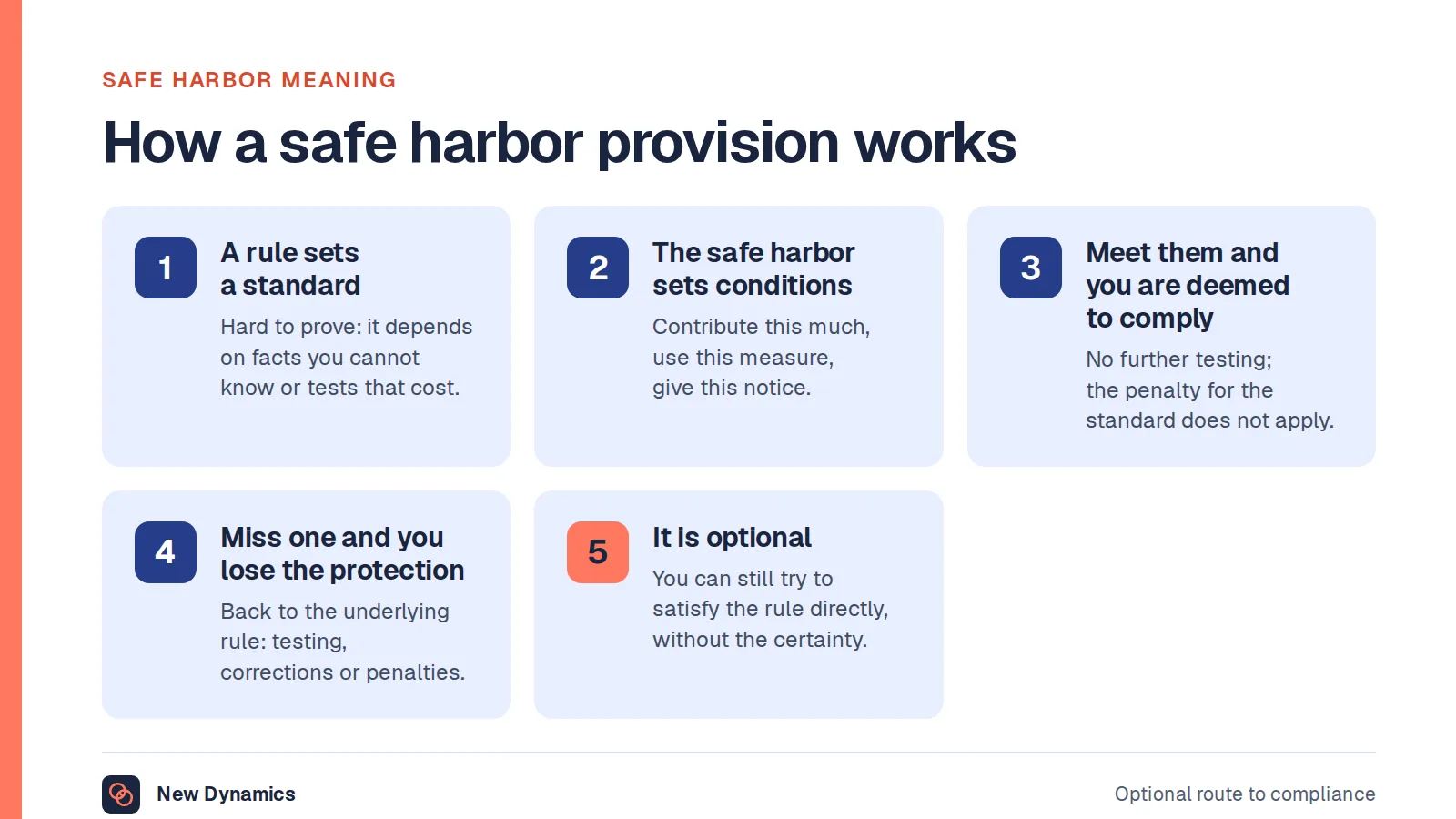
Line 16 takes a Code Series 2 code, and only one per month. It reports that the employee was not employed or not full time (2A, 2B), enrolled in the coverage offered (2C), was in a Limited Non-Assessment Period (2D), fell under multiemployer interim rule relief (2E), or that an affordability safe harbor applied: Form W-2 wages (2F), federal poverty line (2G) or rate of pay (2H). Our post on safe harbor explains those three in more detail.
Four things about line 16 are worth writing on the wall.
- Blank is a valid answer. "If none of the codes apply for a calendar month, leave the line blank for that month."
- There is no waiver code. The instructions say so in terms: "There is no code to enter on line 16 to indicate that a full-time employee offered coverage either did not enroll in the coverage or waived the coverage."
- Enrollment usually wins. Where more than one code could apply, code 2C for enrollment is generally used instead of the others, with named exceptions for multiemployer relief and for COBRA or other post-employment coverage after termination.
- A safe harbor code needs a 95% month. "An affordability safe harbor code should not be entered on line 16 for any month that the ALE Member did not offer minimum essential coverage, including an individual coverage HRA, to at least 95% of its full-time employees and their dependents." In other words, line 16 and Form 1094-C, Part III, column (a) have to be consistent.
On the percentage itself, the 2025 instructions say references to 9.5 percent in the section 4980H safe harbors and the Qualifying Offer Method are applied as indexed, and that the adjusted figure "is 8.39% for plan years beginning in 2024, and 9.02% for plan years beginning in 2025". It is set annually, so check the current instructions before you apply it to a later plan year.
The deadlines

Filing with the IRS. The 2025 instructions state the general rule and then the dated version: "Generally, you must file Forms 1094-C and 1095-C by February 28 if filing on paper (or March 31 if filing electronically) of the year following the calendar year to which the return relates. For calendar year 2025, Forms 1094-C and 1095-C are required to be filed by March 2, 2026, or March 31, 2026, if filing electronically." A 30-day extension is available on Form 8809, which "must be filed on or before the due date of the returns".
Furnishing to employees. Here the same IRS document says two things that have to be read together, and it is worth seeing both rather than picking one.
Under Furnishing Forms 1095-C to Employees, the 2025 instructions say: "An ALE Member must furnish a Form 1095-C to each of its full-time employees by March 2, 2026, for the 2025 calendar year." The reason is an automatic extension: "The due date for furnishing Form 1095-C is automatically extended from January 31, 2026, to March 2, 2026. Thus, no additional extensions will be granted."
Under What's New, the same instructions say: "Employers no longer have to automatically send Form 1095-C to individuals. The requirement for furnishing the statement is met if the employer responsible for providing the statements provides clear, conspicuous, and accessible notice on its website that an individual may request a copy of their statement and the copy is timely furnished. For this purpose, the statement is timely furnished if provided to the individual no later than the later of January 31, 2026, or 30 days after the date of the request." The IRS points to Notice 2025-15 in Internal Revenue Bulletin 2025-11 for the detail.
Both are current text in the tax year 2025 instructions. The automatic mailing route has a March 2, 2026 date; the website-notice route is keyed to the later of January 31, 2026 or 30 days from the request. An employer that posts a notice and still mails statements by the earlier of the applicable dates satisfies either reading, which is the practical answer. If you rely on the notice route, read Notice 2025-15 first.
There is also a separate alternative manner of furnishing for non-full-time employees and non-employees enrolled in self-insured coverage, under Regulations section 1.6055-1(g). Its conditions are specific. The employer must give "clear and conspicuous notice, in a location on its website that is reasonably accessible to all individuals", including an email address, a physical address and a telephone number. On timing the instructions say: "The employer must post the notice on its website by March 2, 2026, and retain the notice in the same location on its website through October 15, 2026." And the employer "must furnish the statement to a requesting individual within 30 days of the date the request is received".
Electronic furnishing needs consent. Statements go on paper by post or by hand "unless the recipient affirmatively consents to receive the statement in an electronic format", and the consent "must relate specifically to receiving the Form 1095-C electronically".
The electronic filing requirement
The threshold is low, aggregated, and not about these forms alone. The 2025 instructions: "If you are required to file 10 or more information returns during the year, you must file the forms electronically. The 10-or-more requirement applies in the aggregate to certain information returns. Accordingly, a filer may be required to file fewer than 10 Forms 1094-C and 1095-C, but still have an electronic filing obligation based on other kinds of information returns filed."
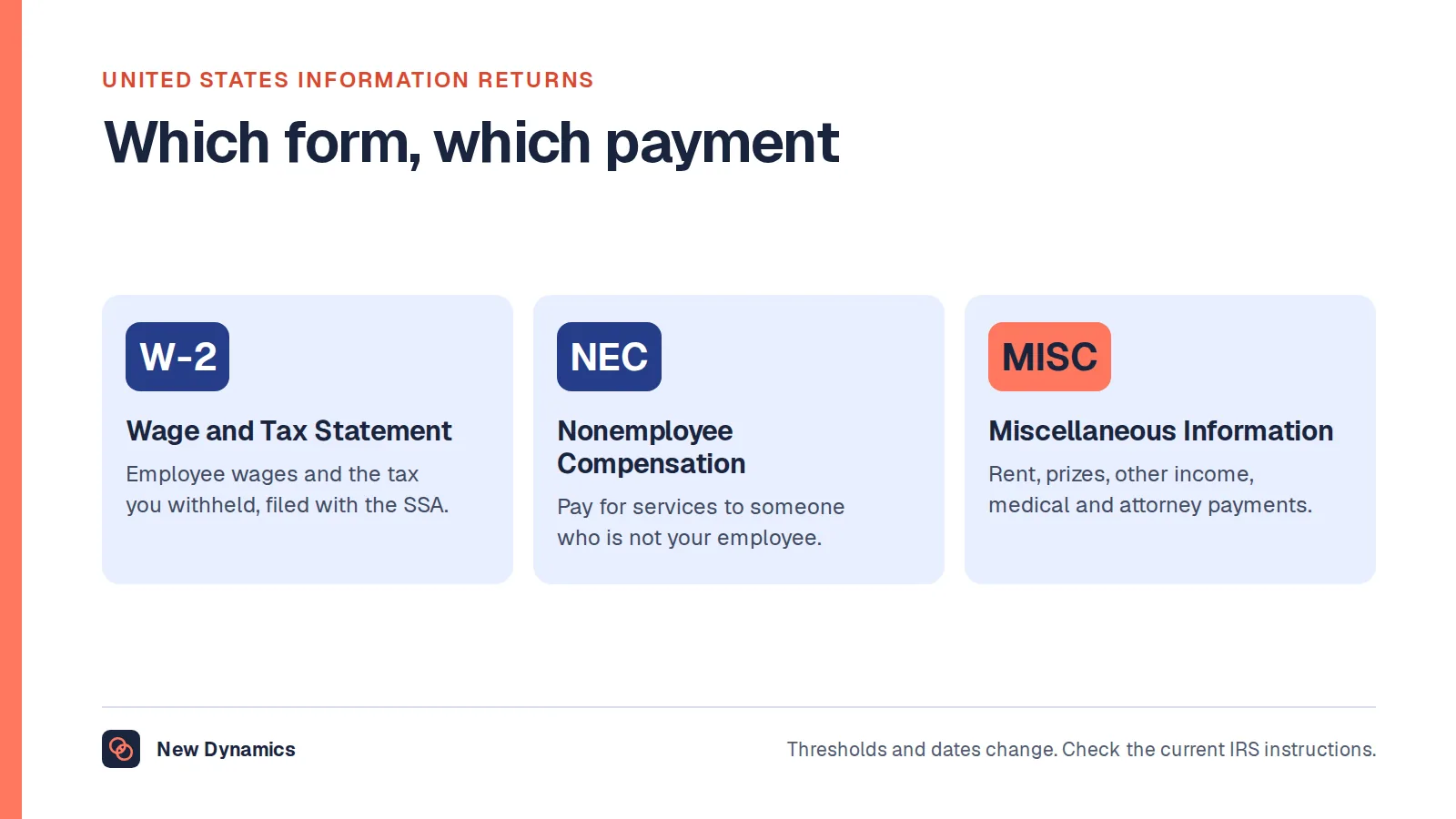
So Forms W-2 and the 1099 series count towards the same ten. Our post on IRS information returns covers that aggregate rule from the 1099 side. A hardship waiver is requested on Form 8508, and the IRS "encourages you to file Form 8508 at least 45 days before the due date of the returns, but no later than the due date of the return". Electronic filing for these forms runs through the ACA Information Return system described in Publication 5165.
Missing the requirement has its own charge. The instructions: "If you are required to file electronically but fail to do so, and you do not have an approved waiver, you may be subject to a penalty of $340 per return for failure to file electronically unless you establish reasonable cause."
Penalties for a late or incorrect return
The 2025 instructions state the general information reporting penalties, and label them precisely: "For returns required to be made and statements required to be furnished for 2025 tax year returns, the following apply."
- "The penalty for failure to file a correct information return is $340 for each return for which the failure occurs, with the total penalty for a calendar year not to exceed $4,098,500."
- "The penalty for failure to provide a correct payee statement is $340 for each statement for which the failure occurs, with the total penalty for a calendar year not to exceed $4,098,500."
- "Special rules apply that increase the per-statement and total penalties if there is intentional disregard of the requirement to file the returns and furnish the required statements."
Those are two separate penalties on the same employee, because filing with the IRS and furnishing to the individual are two separate duties. The instructions add that penalties "may be waived if the failure was due to reasonable cause and not willful neglect", citing section 6724 and the regulations under it. Both amounts are adjusted for inflation each year, so read them off the instructions for the tax year you are filing.
These reporting penalties are not the employer shared responsibility payment, which is a different thing entirely. The IRS page on the employer shared responsibility provisions describes the two types of payment and gives the statutory annual amounts as "$2,000 (indexed for future years) for each full-time employee, with the first 30 employees excluded from the calculation" for an employer that does not offer coverage to at least 95 percent of its full-time employees, and "$3,000 (indexed for future years)" for each full-time employee who receives the premium tax credit where coverage was offered but was unaffordable or lacked minimum value. The page is clear that an employer "is not obligated to calculate its liability, and should not make a payment without first being contacted by the IRS", which arrives as Letter 226J.
Five checks before you file
- One Authoritative Transmittal, and only one. Confirm line 19 is checked on exactly one Form 1094-C per EIN.
- Reconcile Part III, column (b) with the number of Forms 1095-C. Both come from the same section 4980H full-time population. If they disagree, one of them used the wrong definition of full time.
- Scan line 14 for empty months. Every month needs a code, and 1H is the code for none.
- Cross-check every safe harbor code against the 95% month. Codes 2F, 2G and 2H cannot sit in a month where column (a) says "No".
- Decide your furnishing route in December, not February. A website notice has its own posting and retention dates, and the alternative manner has conditions that cannot be met retrospectively.
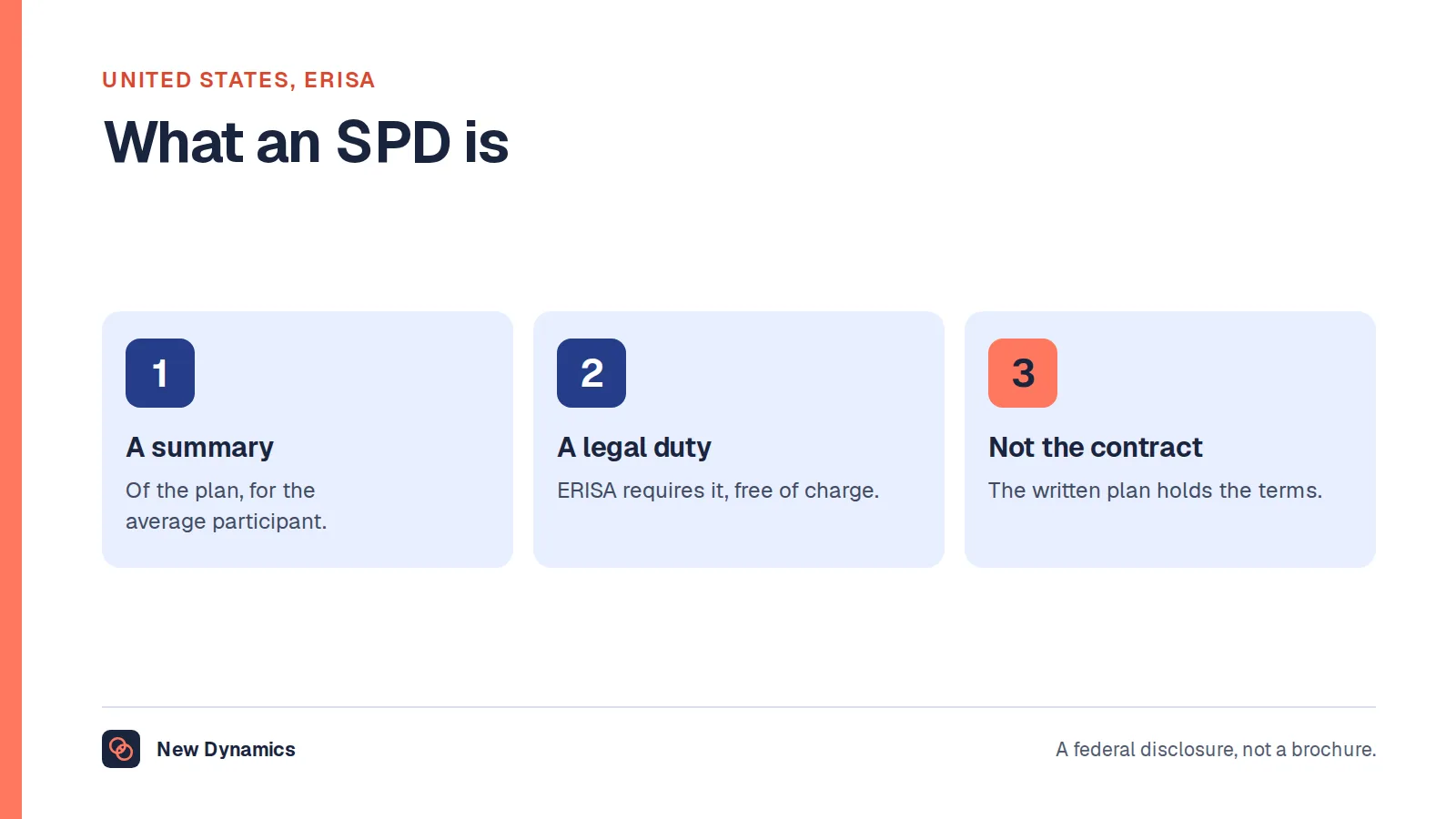
For the wider benefits documents that sit alongside this filing, see our post on the summary plan description, and for the coverage questions employees actually ask, secondary insurance.
Frequently asked questions
What is the difference between Form 1094-C and Form 1095-C?
Form 1094-C is the employer-level transmittal and summary return; Form 1095-C is the per-employee statement. The IRS instructions say Form 1094-C "must be used to report to the IRS summary information for each Applicable Large Employer (ALE Member)" and "to transmit Forms 1095-C to the IRS", while Form 1095-C "is used to report information about each employee to the IRS and to the employee". One employer files one Authoritative Transmittal and one Form 1095-C per full-time employee.
Who has to file Forms 1094-C and 1095-C?
Every ALE Member. The IRS defines an applicable large employer as, generally, an employer with 50 or more full-time employees, including full-time equivalent employees, in the previous year. Where employers are under common control they are aggregated, and each member still files under its own EIN, even if that member has fewer than 50 full-time employees of its own.
How does the IRS count full-time equivalent employees?
Monthly, with a cap. The IRS says to combine the hours of service of all non-full-time employees for the month "but do not include more than 120 hours of service per employee", then divide the total by 120. Add each month's full-time employees to each month's equivalents across the prior calendar year and divide by 12. A full-time employee for a month averages at least 30 hours of service a week, or at least 130 hours in the month.
When are Forms 1094-C and 1095-C due?
For calendar year 2025 the IRS instructions require filing by March 2, 2026 on paper, or March 31, 2026 if filing electronically, with a 30-day extension available on Form 8809 filed by the original due date. For furnishing Form 1095-C to full-time employees, the same instructions give March 2, 2026, the automatic extension from January 31, 2026. Dates shift each year, so check the current instructions.
Do I have to file these forms electronically?
If you file 10 or more information returns in total, yes. The IRS says the 10-or-more requirement "applies in the aggregate to certain information returns", so Forms W-2 and 1099 count towards the same ten, and an employer with fewer than 10 Forms 1095-C can still be required to e-file. A hardship waiver is requested on Form 8508. Failing to e-file when required can attract a penalty of $340 per return.
What are the penalties for a late or incorrect Form 1095-C?
For 2025 tax year returns the IRS states a penalty of $340 for each return where a failure to file a correct information return occurs, capped at $4,098,500 for the calendar year, and a separate $340 per statement for failure to provide a correct payee statement, with the same cap. Higher penalties apply for intentional disregard. Penalties may be waived for reasonable cause and not willful neglect.
Which codes go on lines 14 and 16 of Form 1095-C?
Line 14 takes a Code Series 1 indicator describing the type of coverage offered to the employee, spouse and dependents, and must never be blank: code 1H means no offer. Line 16 takes one Code Series 2 code, covering not employed (2A), not full time (2B), enrolled (2C), a Limited Non-Assessment Period (2D), multiemployer relief (2E), or the W-2, federal poverty line and rate of pay affordability safe harbors (2F, 2G, 2H). Line 16 may be left blank when no code applies.
Your next step
- Confirm your ALE status for the filing year using the IRS method. Prior calendar year, monthly, with the 120-hour cap on equivalents.
- Freeze one section 4980H full-time list. Use it for the Forms 1095-C and for Form 1094-C, Part III, column (b), so the two cannot disagree.
- Choose your line 16 safe harbor per employee, per year, and record why. The W-2 safe harbor in particular must be used for all months of the year in which coverage was offered.
- Pick a furnishing route and diarise its dates. Mailing, a website notice, or the alternative manner for self-insured non-full-time enrollees.
- Put the current year's figures on the file. The percentage, the penalty amounts and the due dates all change, and the instructions name the tax year on the front.
For a way of setting pay and benefits you can explain to the person affected, read and download our compensation policy guide. It is free to read, and the PDF uses our short download form.
Want every annual filing to have an owner, a deadline and a visible status instead of living in one person's memory? Book a New Dynamics demo and bring your reporting calendar, or email contact@new-dynamics.com.