TL;DR
- Secondary insurance is a United States idea. Where two health plans cover the same claim, one is the primary payer and the other pays afterwards. Medicare.gov describes the order: the primary payer "pays up to the limits of its coverage, then sends the rest of the balance to the 'secondary payer.'"
- A second plan is not a cost-sharing cure. The same medicare.gov page continues: "If the 'secondary payer' doesn't cover the remaining balance, you may be responsible for the rest of the costs." The secondary plan applies its own deductible, network and limits.
- There is no British equivalent, because the NHS is the primary route. The NHS Constitution for England says "NHS services are free of charge, except in limited circumstances sanctioned by Parliament", and employer-provided medical cover in the UK is a reportable benefit rather than a second payer.
An employee forwards an explanation of benefits to HR with a reasonable question. They are on the company plan and on their husband's plan, they assumed that meant nothing to pay, and a figure at the foot of the page says otherwise. Is the second plan broken?
It is worth saying plainly at the start: secondary insurance is an American idea. It belongs to a health system where several plans can cover one person, and where the order in which they pay is worked out claim by claim. Most of our readers are in the United Kingdom, where the National Health Service means the question barely arises. So this article does two jobs: the United States position first, from federal pages and the Code of Federal Regulations, then a separate section with the British answer.
Benefits questions tend to arrive in somebody's first fortnight. See how New Dynamics onboarding puts each step, owner and deadline in one visible path, so the question gets routed rather than absorbed.
This is general information about health coverage, not insurance, legal or tax advice. Plans differ, state law differs, and the only document that settles your case is your own plan document. Read it, and speak to the plan administrator.
What secondary insurance is, in one sentence

Jurisdiction: United States. Secondary insurance is a health plan that pays after another plan has paid, on the same claim. It is not a kind of policy. It is a position in a queue.
HealthCare.gov defines coordination of benefits as "A way to figure out who pays first when 2 or more health insurance plans are responsible for paying the same medical claim." The word doing the work is "same". The plans are not covering two different things. They are both looking at one bill.
Medicare.gov's page on how Medicare works with other insurance gives the sequence in the clearest official wording there is: "The 'primary payer' pays up to the limits of its coverage, then sends the rest of the balance to the 'secondary payer.' If the 'secondary payer' doesn't cover the remaining balance, you may be responsible for the rest of the costs." It names the order too: "This order of payment is called 'coordination of benefits.'"
So the secondary insurance meaning comes down to three facts. There is more than one plan. One is first. The second looks at what is left and decides for itself what to pay. Notice what the definition never says: that it pays the balance.
Coordination of benefits, and how the primary plan is decided
Jurisdiction: United States. The order is not chosen by the patient or the hospital. It follows from rules, and they come from different places depending on who the payers are.
Where Medicare is one of them the rules are federal and public. The Centers for Medicare and Medicaid Services says on its coordination of benefits and recovery overview that "Coordination of Benefits (COB) rules decide which entity pays first". The substance sits in the regulations. For somebody who keeps working past 65, 42 CFR 411.172 provides that "Medicare Part A and Part B benefits are secondary to benefits payable by a GHP", a group health plan, where the individual is aged, entitled to Part A, and "covered under a GHP of an employer that has at least 20 employees ... and coverage under the plan is by virtue of the individual's current employment status." The same applies to the aged spouse of a covered worker of any age. Employer size decides the order, and 42 CFR 411.170 sets the test at 20 or more employees "for each working day in each of 20 or more calendar weeks in the current calendar year or the preceding calendar year".
Where both plans are ordinary private ones there is no equivalent federal rule, which is why the next two sections carry fewer citations than a reader might want.
What secondary coverage does, and what it does not do

Jurisdiction: United States. The common misunderstanding is that a second plan removes cost sharing. It does not.
HealthCare.gov defines cost sharing as "The share of costs covered by your insurance that you pay out of your own pocket", including "deductibles, coinsurance, and copayments". A second plan has its own version of all of it: a deductible to meet, network rules, an out-of-pocket maximum.
The arithmetic is in 42 CFR 411.33, which fixes Medicare's secondary payment at "the lowest of" three amounts rather than at the balance. The regulation works its own example: a physician charges 175 dollars, the primary payer allows 150 and pays 120, the Medicare fee schedule is 125, and the deductible is already met. The three candidates come out at 55 dollars, 100 dollars and 30 dollars, and it concludes: "The Medicare payment is $30." The balance left was 55. The secondary payer paid 30.
A secondary plan pays under its own schedule, not against the gap, because coordination exists so that "the combined payments ... do not exceed the total charges", in the words of the military health rule at 32 CFR 199.8. No such system is built to pay one bill twice.
The same rule helps twice more. A second plan does not rescue a claim the first refused on procedure, since amounts denied "simply because a claim was not filed timely or because the beneficiary failed to meet some other requirement of coverage cannot be paid". And it does not let you skip the first plan: a beneficiary "may not elect to waive benefits under a double coverage plan".
What it does do is narrower than the hope but real: it can absorb a share of coinsurance and copayments on services both cover, and pick up a category the first treats thinly. Again, this is general information rather than insurance advice. What your own second plan pays is a question for the plan document and the administrator.
The three situations where it comes up

Jurisdiction: United States. Almost every case an HR team sees is one of three.
A spouse's or partner's plan
Somebody is covered as an employee under their own employer's plan and as a dependent under their spouse's, dependent coverage being HealthCare.gov's term for cover extended to "family members of the policyholder". Which plan pays first is set by the plans' own coordination provisions, so the answer sits in the documents, not in a rule of thumb.
Medicare alongside an employer plan
The best documented case. Where an employer has 20 employees or more and the person is covered by virtue of current employment, the group plan is primary and Medicare secondary, under 42 CFR 411.172. The same regulation holds a trap worth repeating to anybody about to decline the work plan: if the employee or spouse refuses it, "Medicare is primary payer for that individual" and "The plan may not offer that individual coverage complementary to Medicare." Medicare.gov adds a point from the other side: "If your group health plan or retiree coverage is the secondary payer, you may need to sign up for Medicare Part B before they'll pay."
A dependent child covered twice
Both parents work, both hold family cover, and the child is on both plans. HealthCare.gov's page on children under 26 sets the outer limit: "If a parent's health insurance plan covers dependents, you usually can be added to their plan and stay on it until you turn 26", generally even if the young adult turns down job-based coverage of their own. The page is candid that the detail is local: "Some states and plans have different rules. Contact your state's Department of Insurance for state-specific rules."
The birthday rule, and what we could not source
Jurisdiction: United States. When two parents' plans cover one child, the convention most people have heard of is the birthday rule: the plan of the parent whose birthday falls earlier in the calendar year pays first, the year of birth being irrelevant.
We are not going to state that as a federal rule, because we could not source it federally. A full-text search of the Code of Federal Regulations for the phrase "birthday rule" returns a single provision, and it concerns tax-favoured savings accounts rather than health coverage. None of the federal health sources used here states it either.
The accurate description is that it is a common coordination convention, set by state insurance law and written into plan documents, rather than a federal requirement. It may well be the rule that applies in a given case, but it is not something an HR team should assert. The same caution covers the adult ordering people repeat, that your own employer's plan pays before one you are on as a dependent: a common provision, but not one we could find in federal law.
What an employee should check before enrolling in both
Jurisdiction: United States. A second plan has a price, paid monthly whether or not it pays out. Five questions to answer in the plan documents before enrolment closes.
- Which plan will be primary, and on what basis? The coordination provision is in the plan document. Where two plans disagree, claims stall.
- What is the second plan's deductible, and does it start from zero? It can swallow most of what the plan would otherwise pay in a quiet year.
- Do the plans share a network, and what does the second one exclude? Coordination does not override an exclusion.
- What do the premiums come to over a year? Compare that with the cost sharing the plan would realistically absorb.
- Who do I call when a claim goes wrong? A named administrator and a number, in advance.
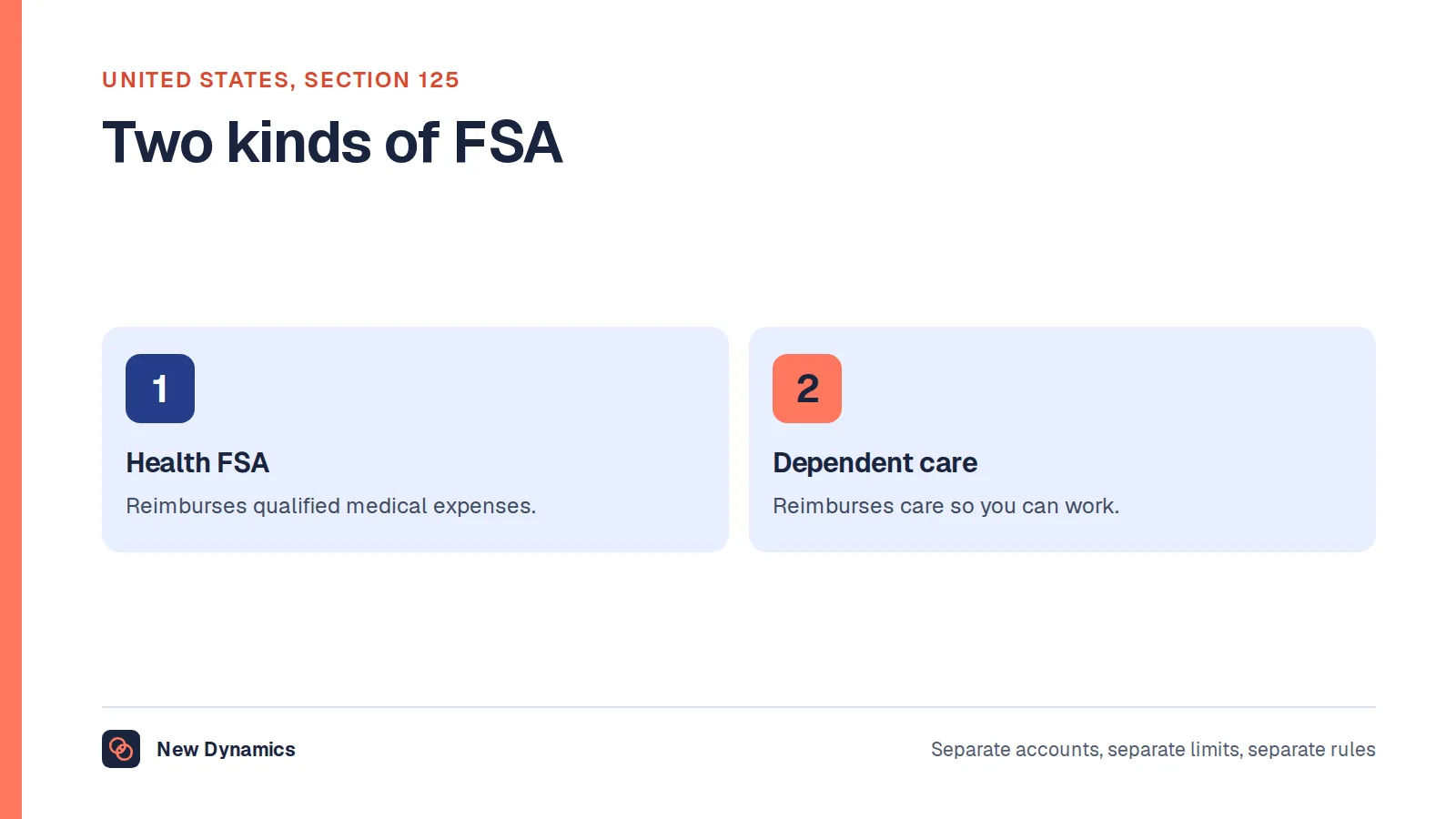
Eligibility for a health savings account also depends on the coverage held, and our flexible spending account post explains those accounts. Then take the answers to somebody qualified. None of this is insurance, legal or tax advice.
The employer's side: what you must tell people, and what you must not say
Jurisdiction: United States. For an HR reader this is the part that matters, because obligation and temptation point in opposite directions. The obligation is disclosure. The Department of Labor's page on plan information describes the central document, the summary plan description, of which "The plan administrator is legally obligated to provide to participants, free of charge, the SPD." Beside it sits the Summary of Benefits and Coverage, a "uniform template that uses clear, plain language to summarize key features of the plan, such as covered benefits, cost-sharing provisions and coverage limitations".
A coordination provision is the sort of term those rules are built around. 29 CFR 2520.102-3 requires a summary plan description to contain "a statement clearly identifying circumstances which may result in ... offset, reduction, or recovery ... of any benefits that a participant or beneficiary might otherwise reasonably expect the plan to provide". A term that reduces what a plan pays because another plan paid first is exactly that.
So the duty is to get the documents to people. You are not obliged to interpret them, and you should not. You do not have the facts, because whether a claim is paid turns on the other plan's terms, the provider's network status, the dates of service and the claim history, none of which sits in the HR record. A wrong answer is expensive for the employee, and "take both, you will pay nothing" is wrong often enough to be worth banning outright. And it is somebody else's job: the plan administrator exists for this.
Send them instead to:
- The summary of benefits and coverage for each plan, designed for comparison.
- The plan administrator or the insurer's member services line, for a specific claim.
- The Benefits Coordination and Recovery Center for Medicare ordering. Medicare.gov publishes its number and adds advice worth repeating: "Tell your doctor and other health care provider about any changes in your insurance or coverage when you get care."
- The state Department of Insurance, for anything turning on state law.
- A licensed adviser of the employee's choosing, for a recommendation. Not HR.
The useful HR contribution is routing, not answering. Write down which question goes where, put both documents where people can find them, and log who sent what. See how New Dynamics workflows give each step a named owner and a visible status. For the wider numbers worth tracking, see our HR statistics hub.
For a British reader: the NHS is the primary route
Jurisdiction: United Kingdom. The honest answer first: there is no direct British equivalent of secondary insurance, and the reason is structural rather than fiscal.
Secondary insurance exists because an American patient faces a bill one plan may not cover in full. In the UK there is usually no bill. The NHS Constitution for England states as its second principle that "Access to NHS services is based on clinical need, not an individual's ability to pay", adding that "NHS services are free of charge, except in limited circumstances sanctioned by Parliament." With nothing routinely to split, there is nothing for a second payer to pay after a first, so the American question does not arise.
The UK has three adjacent things instead, and none is a second payer.
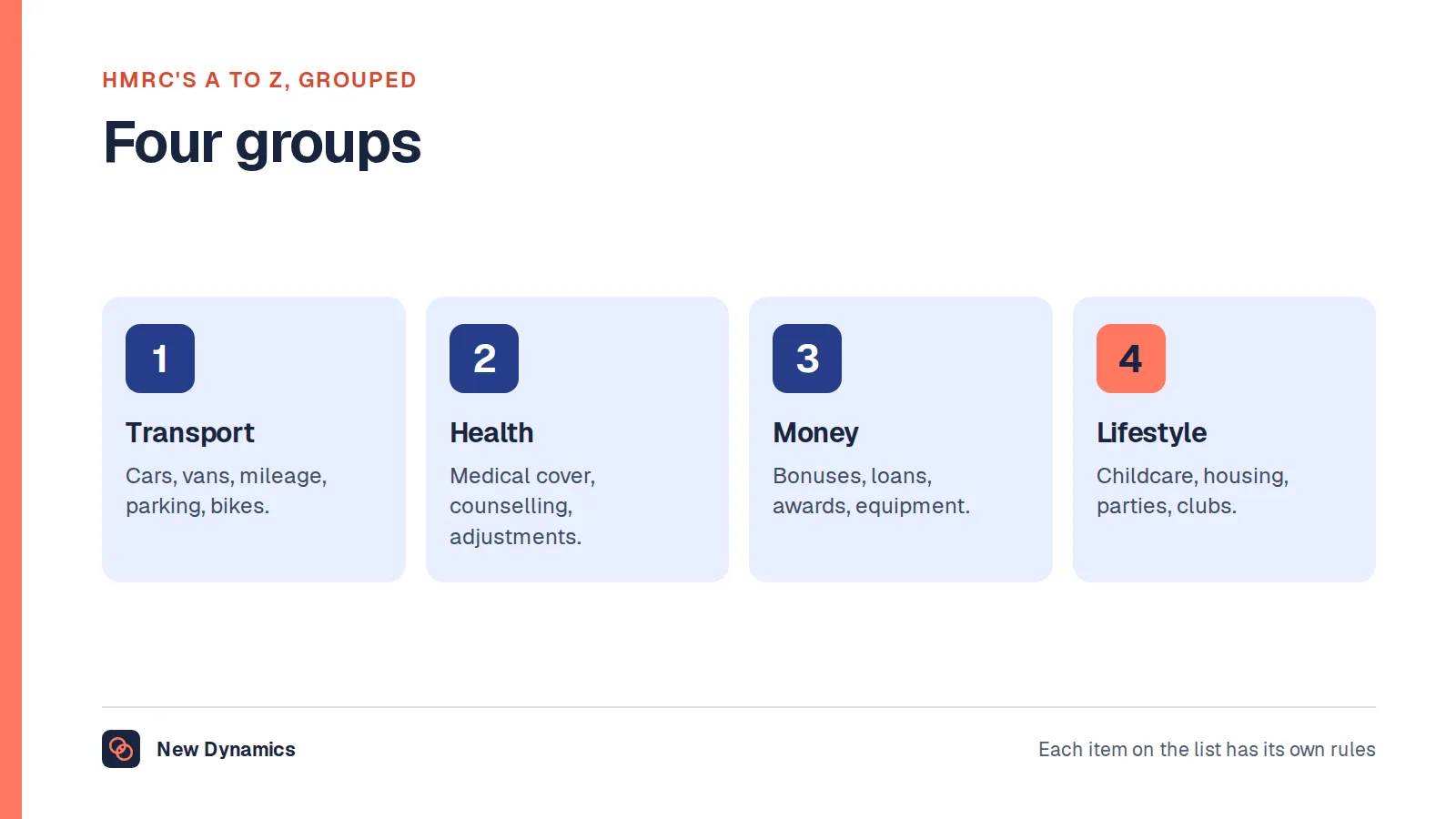
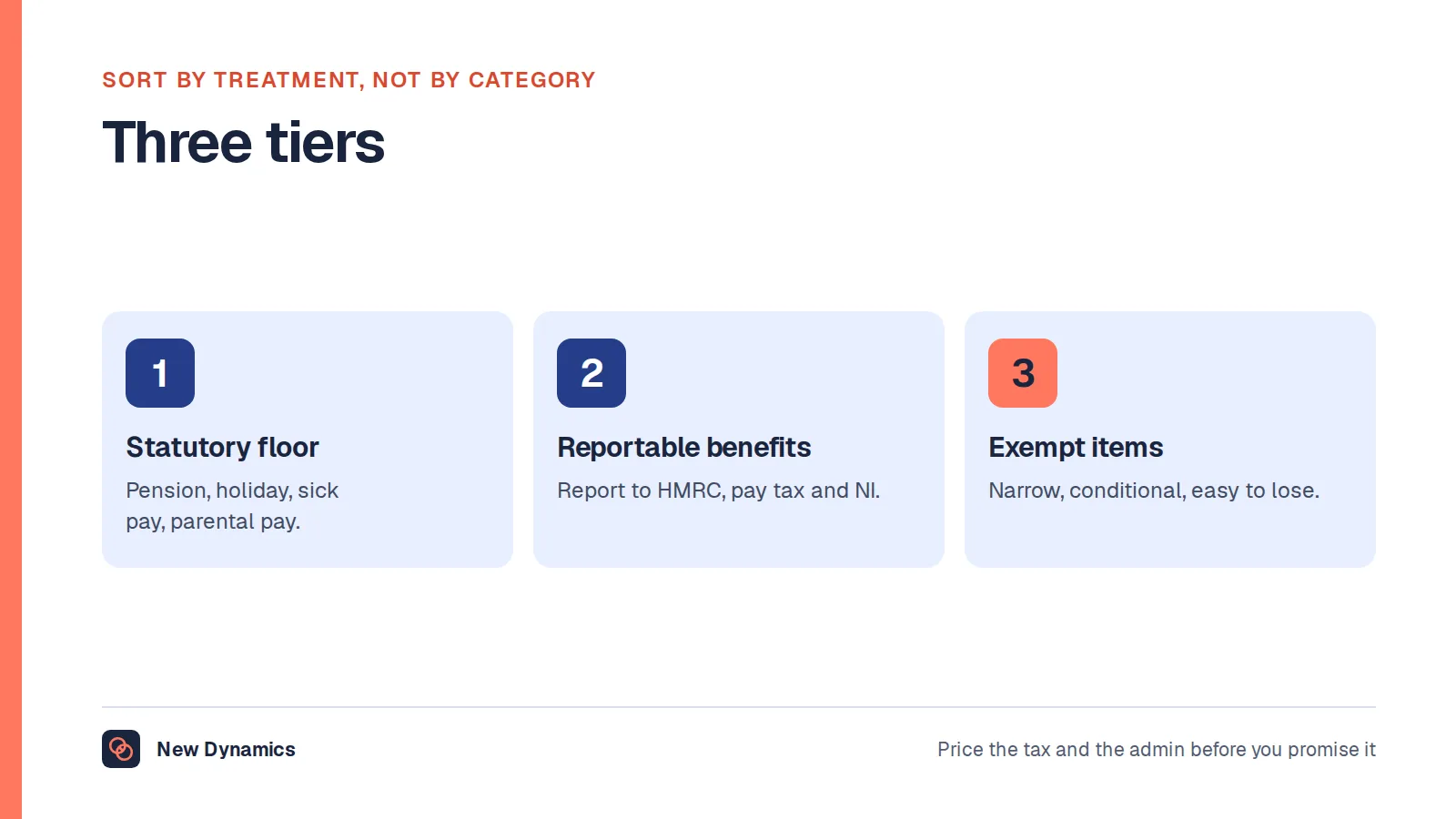
Private medical insurance as an employee benefit. Cover an employer buys, giving access to private treatment alongside continued NHS entitlement. In tax terms it is a benefit, and GOV.UK's guidance on medical or dental treatment and insurance opens with the obligation: "As an employer providing medical or dental treatment or insurance to your employees, you have certain tax, National Insurance and reporting obligations."
Cash plans and reimbursed routine costs. GOV.UK does not use the phrase "health cash plan", so we will not pretend it carries a special status. The treatment follows the mechanism, and the what to report and pay page splits it three ways. Arrange and pay the provider directly, and you "report it on form P11D" and "pay Class 1A National Insurance on the value of the benefit". Where the employee arranges it and you pay the provider, you report it on form P11D and add the value to their earnings for Class 1 National Insurance "(but not PAYE tax)". Reimburse the employee's costs and "This counts as earnings". The page closes firmly: "The same rules apply whether you provide your employee with a cash allowance or additional salary to meet medical costs."
The narrow exemptions. GOV.UK's what's exempt page says "You do not have to report anything to HMRC or pay tax and National Insurance on certain health benefits", and it is short and conditional. On work-related cover, "Only treatment or insurance related to injuries or diseases that result from your employee's work is exempt." Then the warning that catches employers out: "You do have to report your employees' medical or dental treatment or insurance if they are a part of a salary sacrifice arrangement." HMRC's EIM21760 agrees that a charge normally arises, though "No liability arises in respect of periodic medical check-ups".
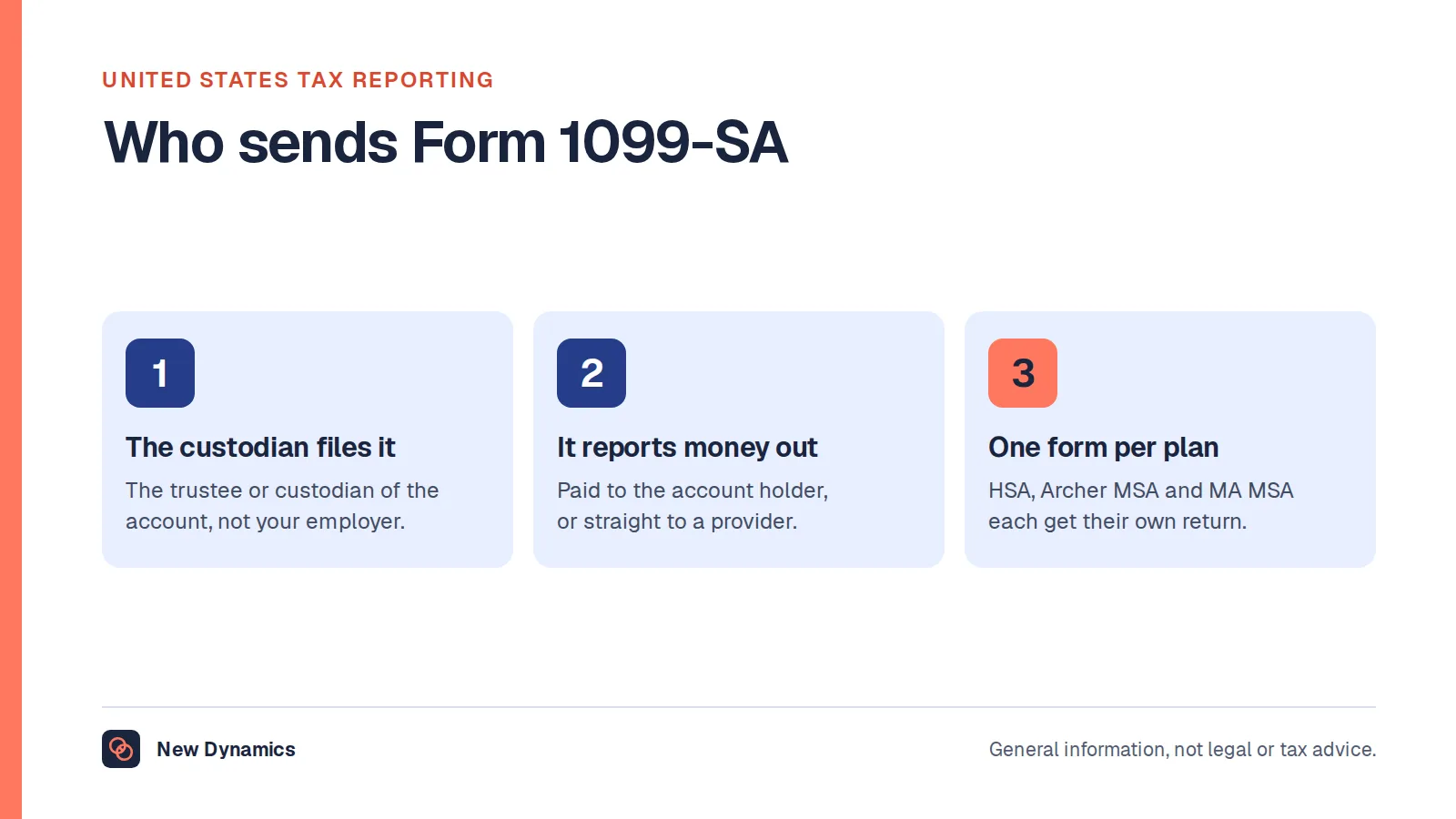
So the British question is not which plan pays first, but whether what you provide is reportable, and how. For the wider picture see our employee benefits guide and our post on fringe benefits, and if an American tax form has arrived about a medical account, Form 1099-SA explains what it reports. None of this is tax or legal advice, and rates and exemptions change, so check the current GOV.UK page before you promise anything.
Frequently asked questions
What is secondary insurance?
A health plan that pays after another plan has paid on the same claim, in the United States. HealthCare.gov defines coordination of benefits as "A way to figure out who pays first when 2 or more health insurance plans are responsible for paying the same medical claim", and medicare.gov describes the order: the primary payer "pays up to the limits of its coverage, then sends the rest of the balance to the 'secondary payer.'" It is a position in a queue, not a type of policy. Not insurance advice, so check your own plan documents.
What does secondary insurance cover?
Whatever its own terms cover, applied to what the first plan left. That can mean a share of coinsurance and copayments on services both cover, or a category the first plan treats thinly. It does not mean the balance. Medicare.gov is explicit: "If the 'secondary payer' doesn't cover the remaining balance, you may be responsible for the rest of the costs." The second plan still applies its own deductible, network rules and exclusions. Ask your plan administrator.
Does having two health plans mean I pay nothing?
No, and this is the most expensive misunderstanding in the subject. A second plan has its own deductible, network and out-of-pocket maximum. 42 CFR 411.33 shows the arithmetic: on the regulation's own figures a primary payer left a balance of 55 dollars and Medicare's secondary payment was 30 dollars.
How is the primary plan decided?
By rules, not by choice. Where Medicare is involved they are federal: under 42 CFR 411.172 Medicare is secondary to a group health plan where the employer has at least 20 employees and the person is covered by virtue of current employment. Where two private plans are involved there is no single federal rule, so the order comes from each plan's coordination provision and from state law.
Is there a UK equivalent of secondary insurance?
No direct equivalent, because the NHS is the primary route. The NHS Constitution for England says "NHS services are free of charge, except in limited circumstances sanctioned by Parliament", so there is no routine bill for a second payer to meet after a first. The nearest British things are private medical insurance as a benefit and the reimbursement of routine costs, both handled as reportable benefits: GOV.UK states that an employer providing medical treatment or insurance has "certain tax, National Insurance and reporting obligations". Not tax advice.
Your next step: route the question, do not answer it
- Put both documents within reach. The summary plan description and the summary of benefits and coverage for every plan, findable without emailing HR.
- Write down where each question goes. Claims to the plan administrator, Medicare ordering to the Benefits Coordination and Recovery Center, state rules to the Department of Insurance, recommendations to a licensed adviser.
- Agree what benefits staff will not say. No view on enrolling in two plans, and no prediction about what a claim will pay.
- Make the double-cover question part of enrolment, so somebody already on a spouse's plan compares the two before the window closes.
- Keep the two jurisdictions apart in writing. A British manager reading an American benefits pack is where most of this confusion starts.
For a way of setting pay and benefits you can explain to the person affected, read and download our compensation policy guide. It is free to read, and the PDF uses our short download form.
Want every benefits task to have an owner, a deadline and a visible status? Book a New Dynamics demo and bring your benefits calendar, or email contact@new-dynamics.com.