TL;DR
- An analyst studies something in detail to understand it and, often, to predict it. In a business the analyst gathers and checks data, analyses it, turns the result into reports and recommendations and helps the people who decide. The title is prefixed by the field: data, business, financial, reporting, security, systems.
- The job has six duties: understand the question, gather and clean the data, analyse and model, interpret and check, report and visualise, and recommend and follow up. A senior analyst does the same with harder questions, less supervision and responsibility for other analysts; a reporting analyst specialises in the regular reports and dashboards a business runs on.
- Employers look for numeracy, curiosity, rigour, tool skills and the ability to explain a finding to someone who did not do the analysis. In England the data analyst and business analyst apprenticeships are level 4 standards.
Analyst may be the most common word on organisation charts and the least explained. Data analyst, business analyst, financial analyst, reporting analyst, senior analyst, sr analyst. The prefix tells you the field; the word analyst tells you the job, and the job is the same shape in every field.
This article explains what an analyst does, sets out six duties, separates the analyst from the senior analyst and the reporting analyst, describes the main specialisms, maps the role to the UK level 4 standards, lists the skills employers ask for and gives a job description template.
Analysts are judged on questions answered, and the questions should be visible and prioritised. See how New Dynamics Goals & OKRs keep targets and progress in one place.
What is an analyst?
The Cambridge Dictionary defines an analyst as “someone whose job is to study or examine something in detail, in order to discover or understand more about it and often to make predictions”, and gives data analyst and financial analyst as examples. In a business, the analyst is the person who takes what the organisation records, in numbers, processes or systems, and turns it into something the organisation can act on.
Prospects, the UK graduate careers service, describes the two most common versions. A data analyst will “translate numbers and data into useful information that can be used by an organisation to solve business problems”, interpreting data into insights on key trends, anomalies and patterns. A business analyst will “work to understand how an organisation operates so you can identify opportunities for improvement and help deliver practical solutions”. Both profiles say the same thing about communication: the analysis is worth nothing until it is explained to someone who can use it.
What an analyst does: six duties
- Understand the question. Find out what the decision maker needs to know, why, and by when, and turn a vague request into a question that data or investigation can answer. Prospects lists gathering and documenting detailed business requirements among the data analyst's tasks.
- Gather and clean the data. Collect the data or the evidence, check its quality and integrity, identify errors and clean it, and document where it came from.
- Analyse and model. Manipulate, analyse and interpret the data set, build the model or the process map, and test what the numbers actually show rather than what was expected.
- Interpret and check. Decide what the result means, check it against other sources and against common sense, and separate the finding from the noise.
- Report and visualise. Produce the report, the dashboard or the presentation, in a form the audience can read, with the caveats stated. Prospects lists producing visualisations and reports and establishing and monitoring KPIs.
- Recommend and follow up. Say what should be done, gain agreement, and track whether the recommendation was acted on and what happened. Prospects' business analyst profile puts it as gaining agreement, usually from senior management, on the best method of introducing recommendations.

Analyst, senior analyst and reporting analyst
| Title | What changes |
|---|---|
| Analyst | Does the six duties on defined questions, with a senior analyst or manager reviewing the work |
| Senior analyst | Takes the harder, less defined questions, works with less supervision, reviews and coaches other analysts, owns a subject area and speaks to senior people directly |
| Reporting analyst | Specialises in the regular reports, dashboards and KPIs the business runs on: builds them, automates them, keeps them accurate and explains them |
| Principal or lead analyst | Sets the methods and standards for the analysis function, leads the biggest pieces of work and may manage the team |
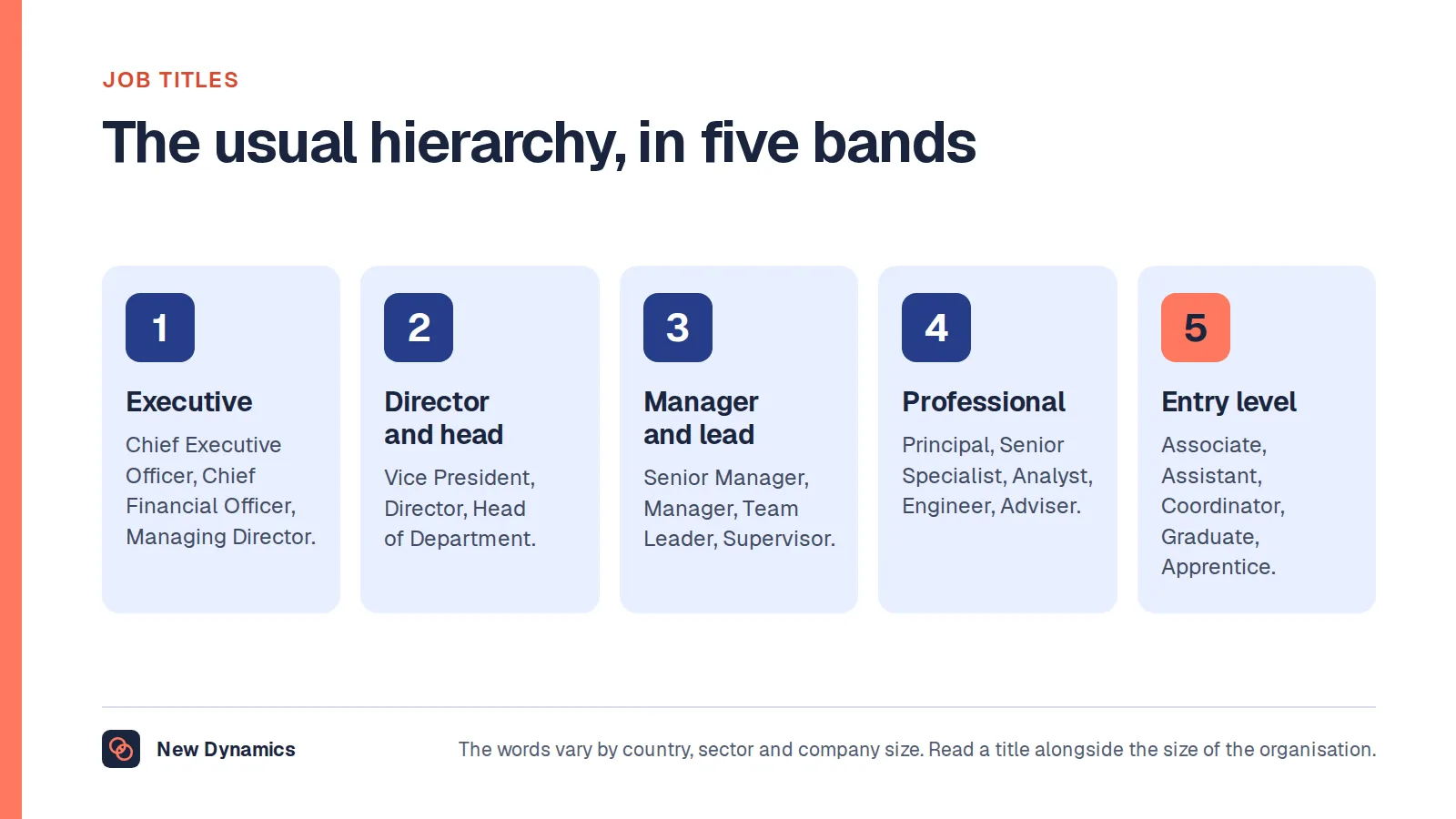
Senior analyst, often written sr analyst in American job adverts, is a level, not a different job. The senior analyst does the same six duties with three differences: the questions are harder and less well defined, the supervision is lighter, and other analysts' work passes across their desk. Many senior analysts have no direct reports and progress to principal or lead analyst rather than to manager; our guide to job titles explains how levels and functions combine.
Reporting analyst is a specialism rather than a level. The reporting analyst owns the organisation's regular reporting: the monthly pack, the dashboards, the KPI tracking and the data feeds behind them. Prospects lists data analysis and reporting, process automation and KPI tracking among the data analyst's key areas, and the reporting analyst is the person for whom those are the whole job. The value they add is accuracy, automation and explanation: a dashboard nobody trusts is worse than none.

The main analyst specialisms
- Data analyst. Data collection, analysis, visualisation and KPIs across any function, as Prospects describes. In England, Skills England's data analyst apprenticeship standard, a level 4 standard typically taking 24 months, describes the occupation as “Collect, organise and study data to provide business insight”.
- Business analyst. Processes, systems and requirements, usually in support of a change or a project. Skills England's business analyst standard, also level 4, describes it as “Working with organisations to improve their information systems”, and Prospects lists the titles it goes by, from business systems analyst to requirements engineer and product owner.
- Financial analyst. Budgets, forecasts, variances and investment cases, usually within finance. Our accounting manager job description describes the team it often sits in.
- Reporting, MI or insight analyst. The regular reporting and the dashboards, as above.
- Systems, security and other technical analysts. The same six duties applied to systems, networks and risks.
Skills employers ask for
- Numeracy and rigour. Prospects says a data analyst career suits people with strong mathematical and analytical skills who are curious and enjoy problem solving.
- Tool skills. Spreadsheets at least; query languages, statistics tools and visualisation tools depending on the specialism. Name the ones the job uses.
- Questioning. Turning what someone asked for into what they need to know.
- Scepticism. Checking the surprising result before reporting it.
- Communication. Prospects calls it essential: clear visual, written and verbal communication to a range of stakeholders.
- Business understanding. Knowing what the numbers describe, and what the organisation will do with the answer.
- Data handling discipline. Security, quality and compliance, which Prospects lists among the data analyst's responsibilities.
Qualifications
Many analysts are graduates, often in numerate or business subjects, but employers hire on demonstrated analysis and the ability to explain it. In England the level 4 data analyst and business analyst apprenticeships offer work-based routes. Senior analysts are promoted on the record of questions answered well and of other people's work improved.
Analyst job description template
Adapt the specialism, the tools and the level.
Job title: [Data / business / financial / reporting] analyst [or senior analyst]
Reports to: [Head of analytics, finance manager, product manager]
Purpose of the role: To answer the questions [the function] needs answered, by gathering, analysing and interpreting [data, processes, systems] and presenting findings and recommendations that people can act on.
Main duties:
- Work with stakeholders to define the questions and document the requirements
- Gather, validate and clean data from [systems], and document its sources and limits
- Analyse and model the data using [tools], and test the findings
- Interpret the results, check them and state the caveats
- Produce reports, dashboards and presentations for [audiences], and maintain the regular reporting
- Make recommendations, gain agreement and track what happens
- [Senior: review and coach other analysts' work, own [subject area] and present to senior management]
Skills and experience:
- Strong numeracy and analytical rigour, with experience of [specialism]
- Proficient in [spreadsheets, query language, visualisation tool, statistics tool]
- Clear written, visual and verbal communication to non-specialists
- Curious, sceptical and organised
- Degree in a numerate or business subject, a level 4 analyst apprenticeship, or equivalent experience
Measures of success: Questions answered on time and used, accuracy of reports and dashboards, stakeholder feedback, and [senior] the development of the analysts you review.
For the layout of the whole document, use our job description template.
Common mistakes in analyst adverts
No specialism. Data, business, financial and reporting analysts need different tools and backgrounds. Say which.
Tools instead of questions. A list of software tells candidates nothing about what they will be asked to find out.
Senior in name only. If the senior analyst reviews nobody's work and owns no subject, it is an analyst on a higher grade.
Communication forgotten. The advert asks for technical skills and never mentions explaining the result to a manager.

Frequently asked questions
What does an analyst do?
An analyst studies something in detail to understand it and often to predict it. In a business the analyst defines the question, gathers and cleans the data or evidence, analyses and models it, interprets and checks the result, reports and visualises it and recommends what to do. The prefix, such as data, business or financial, tells you the field.
What is a senior analyst?
A senior analyst is an analyst at a higher level: they take the harder, less defined questions, work with less supervision, review and coach other analysts' work, own a subject area and present to senior people. Sr analyst is the American abbreviation. Most senior analysts have no direct reports and progress to principal or lead analyst.
What is a reporting analyst?
A reporting analyst specialises in an organisation's regular reporting: the monthly packs, dashboards, KPI tracking and the data feeds behind them. They build and automate the reports, keep them accurate and explain what they show. It is a specialism, not a level, and exists at analyst and senior analyst grades.
What is the difference between a data analyst and a business analyst?
A data analyst works mainly with data: collecting, cleaning, analysing and visualising it to produce insight. A business analyst works mainly with processes, systems and requirements to improve how an organisation operates, often in support of a change project. Both are level 4 apprenticeship standards in England.
What skills does an analyst need?
Numeracy and rigour, the tools of the specialism, questioning, scepticism, clear communication to non-specialists, understanding of the business and disciplined data handling.
What qualifications does an analyst need?
Many analysts are graduates in numerate or business subjects, but employers hire on demonstrated analysis and explanation. In England the level 4 data analyst and business analyst apprenticeships offer work-based routes.
Your next step: write the questions into the advert
- Name the specialism and the three questions the analyst will be asked most often.
- List the tools, but after the questions.
- For a senior analyst, state the subject they will own and whose work they will review.
- Interview for explanation: ask the candidate to present a past finding to a non-specialist.
An analyst's first month is learning what the numbers describe. Read and download our employee onboarding guide. The guide is free to read, and the PDF uses our short download form.
Want analysts' priorities, goals and review notes visible to the people who ask the questions? Book a New Dynamics demo and bring your current approach. You can also email contact@new-dynamics.com.