TL;DR
- A job title is a short label that usually combines a level and a function, such as Senior Financial Analyst. It tells people inside and outside the organisation what someone does and how senior they are.
- Most organisations use a similar ladder: executive, director or head, manager, team lead, senior professional, professional, entry level. The words vary by country and company size.
- Write titles that are clear, searchable and consistent. A title does not define the job in law or in classification systems. The duties do.
A job title has to do a lot in three or four words. It tells candidates whether to apply, tells colleagues who to ask, tells customers who they are dealing with and tells the person holding it something about their standing. When titles are unclear or inflated, all four messages go wrong.
This article lists 150 job titles by level and department, explains the usual corporate hierarchy, covers titles for business owners and sets out how to write a good one.
Titles only make sense inside a structure. See how New Dynamics org charts show roles, reporting lines and the relationships between them.
What is a job title?
A job title is the name of a position. Most titles combine two pieces of information:
- Level: how senior the role is, such as Assistant, Senior, Lead, Manager, Director.
- Function: what the work is, such as Accountant, Software Engineer, HR Adviser.
“Senior Financial Analyst” tells you both at a glance.
You may also hear business title or work title. Some organisations keep two: an internal job title that maps to a pay grade, such as “Analyst III”, and an external business title used on email signatures and business cards, such as “Senior Data Analyst”. The internal one serves HR and pay. The external one serves customers and recruitment.
Job title hierarchy: the usual levels in a company
There is no universal standard, but most organisations use a ladder that looks like this. The example titles are typical, and usage differs by country, sector and company size.
| Band | Typical titles | Usual scope |
|---|---|---|
| Executive | Chief Executive Officer, Chief Financial Officer, Managing Director | The whole organisation or a major function |
| Senior leadership | Vice President, Director, Head of Department | A function, region or business unit |
| Management | Senior Manager, Manager | A team or several teams, with budget responsibility |
| First-line leadership | Team Leader, Supervisor | Day-to-day direction of a small team |
| Senior professional | Principal, Lead, Senior Specialist | Deep expertise, often guiding others without managing them |
| Professional | Analyst, Engineer, Adviser, Officer, Specialist | Independent delivery of skilled work |
| Entry level | Associate, Assistant, Junior, Coordinator, Administrator | Supported work while learning the role |
| Early careers | Apprentice, Graduate Trainee, Intern | Structured training |
Two warnings. “Director” means different things in different places: in some organisations it is a senior manager, in others a member of the board. “Vice President” is a very senior role in many companies, and in some sectors it can be a mid-level title. Always read a title alongside the size of the organisation.

Executive job titles
These are the corporate titles often called the C-suite, with what each usually covers.
- Chief Executive Officer (CEO): overall leadership and results.
- Chief Operating Officer (COO): day-to-day operations.
- Chief Financial Officer (CFO): finance, reporting and funding.
- Chief Technology Officer (CTO): technology strategy and engineering.
- Chief Information Officer (CIO): internal systems and information.
- Chief Information Security Officer (CISO): security of systems and data.
- Chief People Officer (CPO) or Chief Human Resources Officer (CHRO): people strategy and HR.
- Chief Marketing Officer (CMO): brand, marketing and demand.
- Chief Revenue Officer (CRO): sales, revenue and often customer success.
- Chief Commercial Officer (CCO): commercial strategy and partnerships.
- Chief Product Officer: product strategy and roadmap.
- Chief Customer Officer: customer experience and retention.
- Chief Legal Officer or General Counsel: legal affairs and compliance.
- Chief Data Officer: data strategy, governance and analytics.
- Chief Sustainability Officer: environmental and social strategy.
- Chair, President, Managing Director, Executive Director, Non-Executive Director: board and top leadership titles, whose meaning depends on the country and the company's legal form.
Management job titles
- Managing Director
- General Manager
- Vice President
- Director
- Associate Director
- Head of Department
- Senior Manager
- Manager
- Assistant Manager
- Regional Manager
- Area Manager
- Branch Manager
- Operations Manager
- Programme Manager
- Project Manager
- Product Manager
- Account Manager
- Office Manager
- Team Leader
- Supervisor
- Shift Manager
- Duty Manager
Job titles by department
Finance and accounting
- Finance Director
- Financial Controller
- Finance Manager
- Management Accountant
- Financial Analyst
- Accountant
- Payroll Manager
- Accounts Payable Clerk
- Credit Controller
- Internal Auditor
Human resources and people
- HR Director
- Head of People
- HR Business Partner
- HR Manager
- HR Adviser
- Talent Acquisition Manager
- Recruiter
- Learning and Development Manager
- Reward Manager
- People Analyst
- HR Administrator
Sales and business development
- Sales Director
- Head of Sales
- Sales Manager
- Key Account Manager
- Account Executive
- Business Development Manager
- Sales Development Representative
- Sales Operations Analyst
- Customer Success Manager
- Partnerships Manager
Marketing and communications
- Marketing Director
- Head of Marketing
- Marketing Manager
- Brand Manager
- Content Manager
- Digital Marketing Specialist
- SEO Specialist
- Social Media Manager
- Communications Manager
- Public Relations Officer
- Graphic Designer
Technology and engineering
- Engineering Director
- Head of Engineering
- Engineering Manager
- Principal Engineer
- Senior Software Engineer
- Software Engineer
- DevOps Engineer
- Quality Assurance Engineer
- Data Engineer
- Data Scientist
- Systems Administrator
- IT Support Technician
- Security Analyst
Product and design
- Head of Product
- Senior Product Manager
- Product Owner
- Business Analyst
- User Researcher
- User Experience Designer
- Product Designer
Operations and supply chain
- Operations Director
- Supply Chain Manager
- Logistics Coordinator
- Procurement Manager
- Buyer
- Warehouse Manager
- Production Planner
- Quality Manager
- Health and Safety Adviser
- Facilities Manager
Customer service
- Head of Customer Service
- Customer Service Manager
- Customer Support Team Leader
- Customer Service Adviser
- Technical Support Specialist
- Complaints Handler
- Contact Centre Agent
Legal, risk and compliance
- General Counsel
- Legal Counsel
- Paralegal
- Company Secretary
- Compliance Manager
- Risk Analyst
- Data Protection Officer
Administration and support
- Executive Assistant
- Personal Assistant
- Office Administrator
- Receptionist
- Project Coordinator
- Data Entry Clerk
Healthcare, education and public services
- Ward Manager
- Staff Nurse
- Healthcare Assistant
- Practice Manager
- Head Teacher
- Teacher
- Teaching Assistant
- Lecturer
- Policy Adviser
- Caseworker
Business owner titles
If you own the business, you choose your own title. It should reflect your role and the size of the company, and it should not confuse customers.
- Owner: simple and honest, and common for small local businesses.
- Founder or Co-Founder: signals that you started the company. Often combined with another title, such as Founder and CEO.
- Managing Director: common in the UK and Europe for the person running the company.
- Chief Executive Officer: suits a company with a leadership team. It can look inflated in a business of two people.
- President: more common in North America.
- Principal: often used in consultancies, architecture and professional practices.
- Partner or Managing Partner: used in partnerships such as law and accountancy firms.
- Proprietor: traditional, and still used for shops and hospitality.
- Director: in some countries this is also a legal role with duties under company law. Use it when it is accurate, and take advice if you are unsure.
- Freelancer, Consultant or your professional title: for a one-person business, “Independent HR Consultant” tells customers more than “CEO”.
Interesting and creative job titles: should you use them?
Titles such as “Customer Happiness Hero” or “Data Wizard” can signal a playful culture. They also carry costs:
- Candidates cannot find them. People search job boards for standard titles.
- They hide the level. Nobody can tell how senior a “Ninja” is.
- They travel badly. A future employer may not understand the role.
- They may exclude. Some styles of title may appeal to a narrow group of applicants.
A sensible compromise is a standard title for contracts, adverts and HR systems, with freedom to use something more personal on an internal profile.

How to write a good job title
- Combine level and function. “Senior Payroll Specialist” is clearer than “Payroll Lead III” or “Payroll Guru”.
- Use words candidates search for. Check how similar roles are advertised.
- Keep it short. Three or four words is usually enough.
- Avoid internal jargon and abbreviations that outsiders will not know.
- Do not inflate. Giving a “Director” title in place of a pay rise causes problems when that person compares notes with real directors.
- Use inclusive language. Prefer “Chair” to “Chairman” and “Salesperson” to “Salesman”.
- Be consistent. The same level word should mean the same thing in every department.
A title is not the job
Official systems classify work by what people do. The label is secondary.
- In the United States, the Bureau of Labor Statistics maintains the Standard Occupational Classification, which places all workers into one of 867 detailed occupations in 23 major groups. Occupations with similar job duties are grouped together.
- In the United Kingdom, the Office for National Statistics publishes SOC 2020, in which jobs are classified in terms of their skill level and skill content.
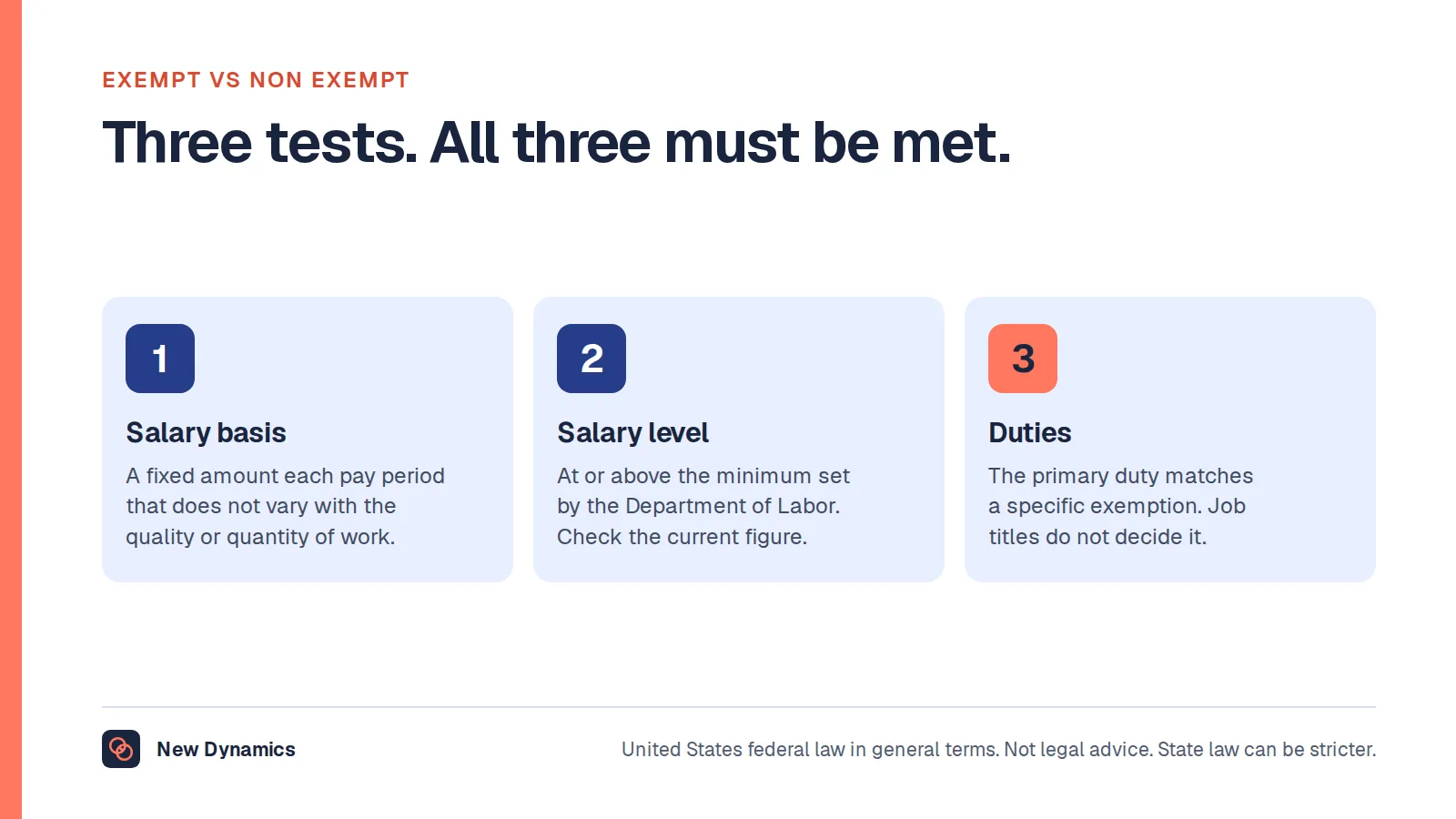
The same principle applies in employment law. The United States Department of Labor states plainly that “job titles do not determine exempt status”, as we explain in exempt vs non-exempt employees.
So a title should follow from the job, never the other way round. Start with the duties, the decisions the role makes and the skills it needs. Our job evaluation guide shows how to size roles fairly before you name them.
Titles, levels and performance
Clear titles and levels make performance management fairer:
- Expectations differ by level. A Senior Engineer and an Engineer should not be judged by the same standard. Write down what changes between levels.
- Progression becomes visible. People can see what the next step is and what it requires. For HR careers specifically, see our comparison of HR certifications. See what talent means at work.
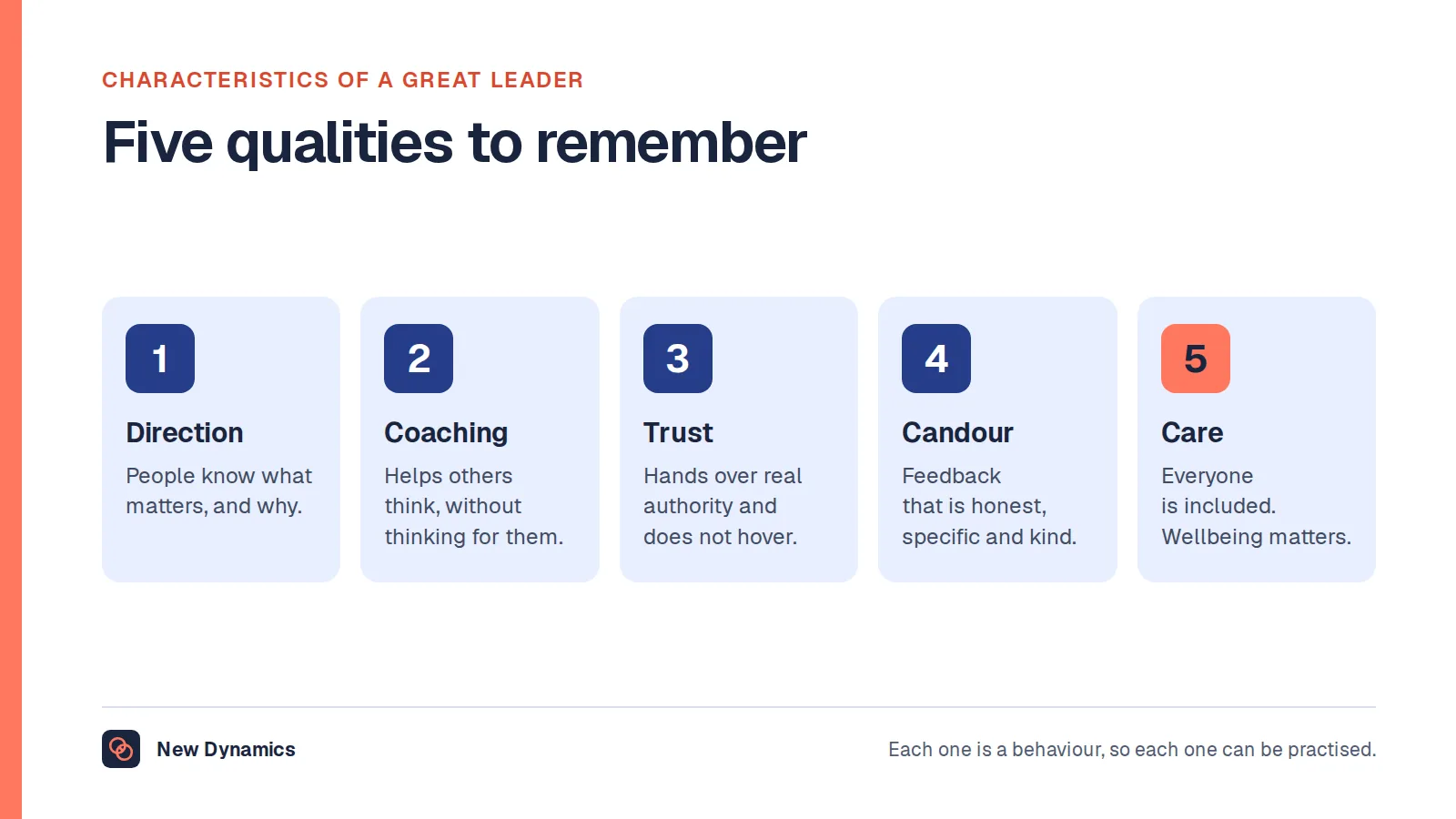
- Leadership is a separate track. Offer a senior professional route, so that excellent specialists do not have to become managers to progress. The skills differ, as we set out in characteristics of a great leader.
- Reporting lines stay accurate. Some people work for more than one manager. Keep the structure current so that the right people contribute to reviews.

Frequently asked questions
What is a job title?
A job title is the name of a position in an organisation. It usually combines a level and a function, as in Senior Financial Analyst or Customer Service Manager, and tells people what the person does and how senior they are.
What are examples of job titles?
Common examples include Chief Executive Officer, Finance Director, HR Manager, Marketing Manager, Project Manager, Software Engineer, Financial Analyst, Customer Service Adviser, Executive Assistant and Graduate Trainee. This article lists 150, grouped by level and department.
What is the hierarchy of job titles in a company?
A typical hierarchy runs from executive titles such as CEO, through directors and heads of department, managers, team leaders, senior professionals and professionals, to entry-level and early-career roles. The exact words vary by country, sector and company size.
What is the difference between a job title and a business title?
Some organisations use both. The job title is the internal name linked to a grade and pay band, such as Analyst III. The business title is the external name used with customers and candidates, such as Senior Data Analyst.
What title should a small business owner use?
Choose the title that honestly describes your role and suits the size of the business. Owner, Founder and Managing Director are common. For a one-person business, a professional title such as Independent Consultant often tells customers more than CEO.
Do job titles matter?
Yes. Titles affect who applies for a job, how colleagues and customers understand a role and how people see their own progress. But a title does not define the job. The duties, decisions and skills do.
Your next step: check five titles
- Pick five titles in your organisation.
- Ask whether each shows the level and the function clearly.
- Check that the same level word means the same thing across departments.
- Rewrite the weakest one, and test it by searching a job board for similar roles.
For a fair way to size roles before you name them, read and download our job evaluation guide. The guide is free to read, and the PDF uses our short download form.
Want roles, reporting lines and reviews kept in step? Book a New Dynamics demo and bring your organisation chart. You can also email contact@new-dynamics.com.