TL;DR
- Analytical thinking is examining something in detail to understand it: breaking a problem or a body of information into its parts, finding the relationships between them and drawing conclusions that the evidence supports. An analytical thinker is someone who habitually works that way.
- It runs in five steps: define the question, gather the information, break it down, find the patterns and relationships, and draw and test the conclusion. It sits beside critical thinking, which judges the quality of arguments and evidence, and creative thinking, which generates new options.
- Employers rank it among the most sought-after transferable skills and assess it with case questions, work samples and examples from experience. It is developed by practice: asking why, structuring problems, working with data and checking conclusions against what happened.
Two people look at the same monthly sales report. One says sales are down and something must be done. The other asks which products, which regions and which weeks, notices that the fall is in one product line in two regions and traces it to a stock problem. The second person is thinking analytically, and the first is not.
This article gives the definition of analytical thinking, sets out the five steps an analytical thinker follows, separates analytical from critical and creative thinking, gives examples at work, explains how employers assess it and describes how it can be developed.
Analytical thinking shows in the evidence people bring to a review, not in the word on the form. See how New Dynamics performance reviews bring goals, feedback and development into one fair discussion.
What is analytical thinking?
The Cambridge Dictionary defines analytical as “examining or liking to examine things in detail, in order to discover more about them”, with the example “He has a very analytical mind.” Analytical thinking is that examination applied to a problem or a body of information: breaking it into its parts, finding the relationships between them and drawing conclusions that the evidence supports.
The US Office of Personnel Management, whose competency models are used to select and assess federal employees, defines the closely related competency of reasoning as the ability that “Identifies rules, principles, or relationships that explain facts, data, or other information; analyzes information and makes correct inferences or draws accurate conclusions.” That is analytical thinking in one sentence: rules and relationships, analysis, correct inferences, accurate conclusions.
OPM defines a competency as “a measurable pattern of knowledge, skills, abilities, behaviors, and other characteristics that an individual needs to perform work roles or occupational functions successfully”. Analytical thinking is a competency in that sense: a pattern of behaviour that can be described, observed and developed, not a fixed trait.
An analytical thinker, then, is someone who habitually works this way: who asks what the question really is, wants the data before the opinion, breaks big problems into small ones and does not trust a conclusion until it has been checked.
Analytical thinking in five steps
- Define the question. What exactly needs to be understood or decided, and what would a good answer look like? Vague questions produce vague analysis.
- Gather the information. Collect the relevant facts, data and evidence, and note what is missing and how reliable each source is.
- Break it down. Separate the problem into its parts: components, causes, stages, categories, time periods. Most problems that look impossible are several problems that look manageable.
- Find the patterns and relationships. Compare, contrast, look for what changed, what correlates with what and what explains what. This is the step OPM's definition describes as identifying rules, principles or relationships.
- Draw and test the conclusion. State what the evidence supports, check it against other evidence and common sense, say how confident you are, and be ready to change it.

Analytical, critical and creative thinking
The three are often listed together and often confused. They are different tools for different moments.
| Kind of thinking | What it does | The question it asks |
|---|---|---|
| Analytical thinking | Breaks information down and finds the relationships and conclusions in it | What is going on here, and why? |
| Critical thinking | Evaluates arguments, evidence and assumptions, including your own | Should I believe this? What is wrong with it? |
| Creative thinking | Generates new ideas, options and approaches | What else could we do? |
OPM's competency definitions draw the same lines. Beside reasoning it defines creative thinking as using “imagination to develop new insights into situations” and applying “innovative solutions to problems”, and decision making as making “sound, well-informed, and objective decisions” and perceiving “the impact and implications of decisions”. A good problem solver uses all three in turn: analyses the situation, generates options, criticises them and decides.

Examples of analytical thinking at work
- A finance assistant reconciling a bank statement traces a persistent difference to a payment posted twice, rather than adjusting it away.
- A team leader whose team is missing its targets breaks the shortfall down by person, product and day, and finds that it is one product on Mondays, when the delivery arrives late.
- A nurse notices that three patients on a ward have developed the same infection and asks what they have in common before assuming coincidence.
- A marketing manager compares the cost per enquiry across channels and finds that the cheapest channel produces enquiries that never convert.
- An HR adviser looking at turnover finds that it is concentrated in people who joined in one quarter under one manager.
- A software engineer reproducing a bug narrows it down to one input and one code path rather than rewriting the module.
None of these people had special tools. They asked which, when, where and why, and followed the answer.
How employers assess analytical thinking
Prospects, the UK graduate careers service, reports in its article on what skills employers want that among the most sought-after transferable skills are critical thinking and analysis, and reasoning and problem solving. Employers test for them in four ways.
- Case and situational questions. Here is a set of figures or a scenario: what is going on and what would you do?
- Work samples and tests. A data set to interpret, a report to summarise, a numerical reasoning test.
- Examples from experience. Tell us about a problem you analysed: what was the question, what did you look at, what did you conclude, and were you right?
- How the candidate thinks aloud. Whether they define the question before answering it, ask for missing information and separate what they know from what they assume.

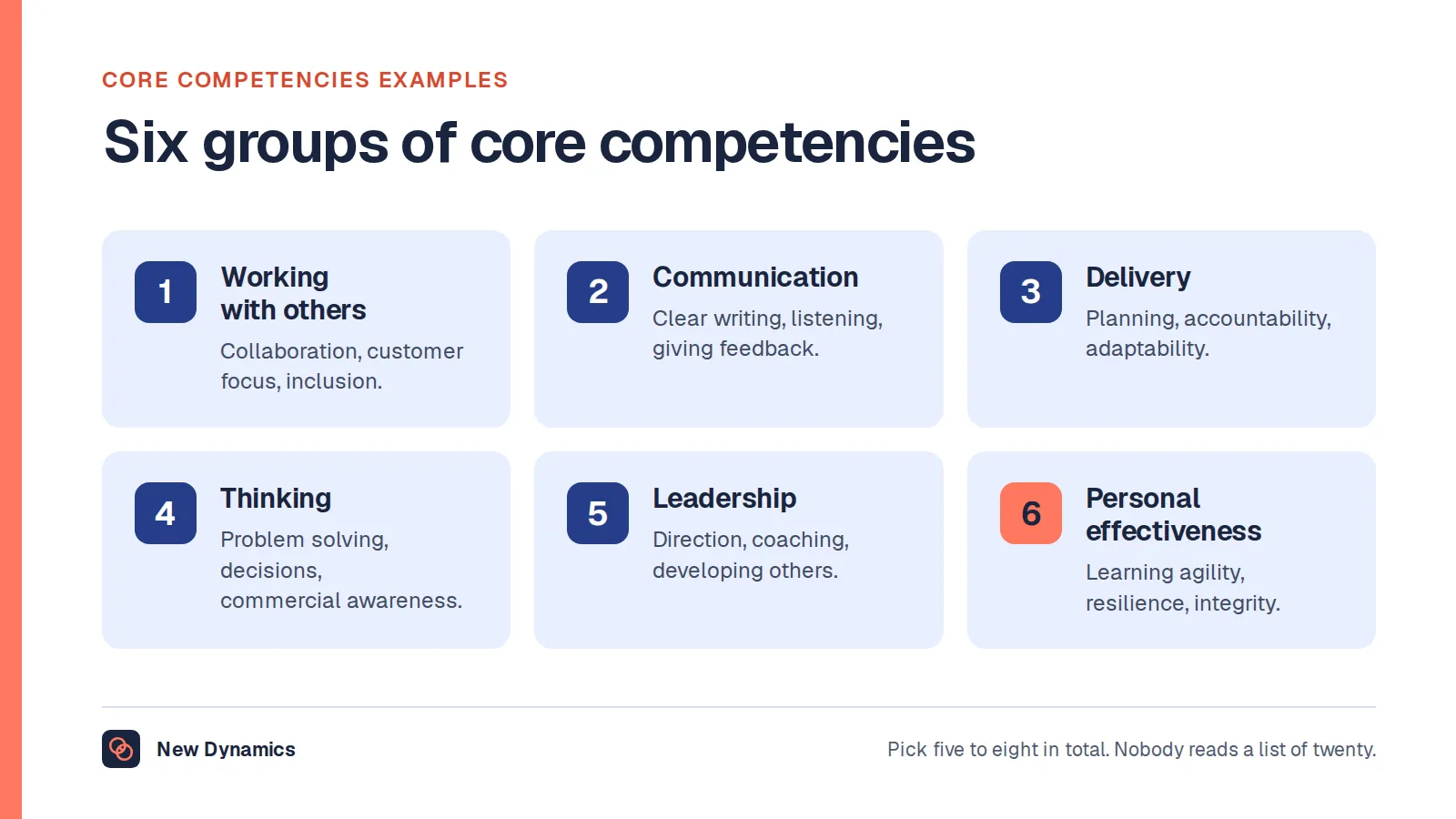
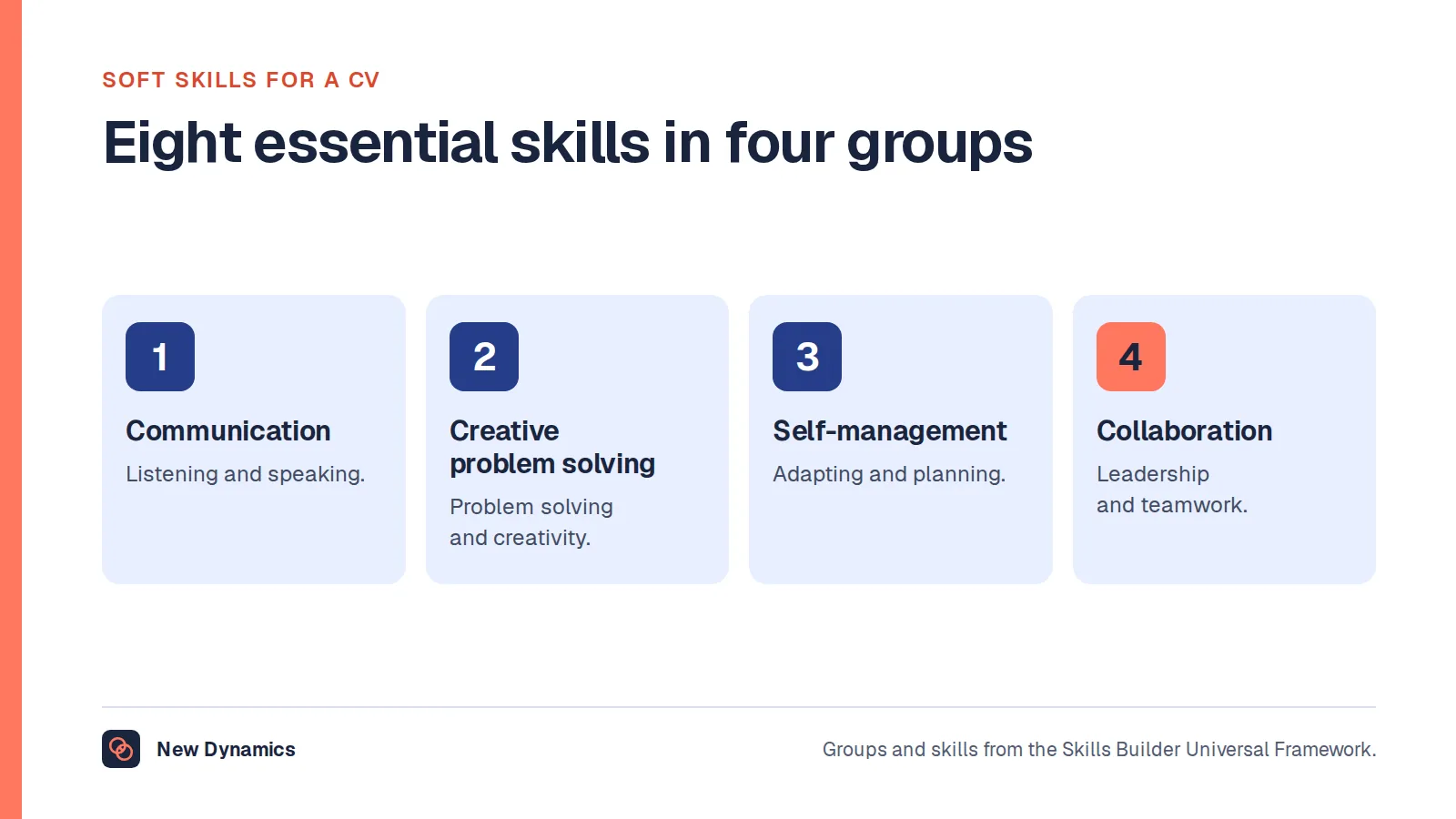
For a CV, the evidence is a specific problem, the analysis and the result. Our guide to soft skills for a CV shows the form, and our guide to core competencies explains how organisations describe skills like this as behaviours.
How to develop analytical thinking
Analytical thinking is a habit, and habits are built by practice.
- Ask why, and then why again. Do not stop at the first explanation.
- Write the question down before you start. Then check at the end that you answered it.
- Break every problem into a list. Parts, causes, options. A structure makes the analysis visible and the gaps obvious.
- Work with data. Spreadsheets, charts and simple statistics are the gym for analytical thinking.
- Check your conclusions against what happened. The analyst who predicted the fall and the one who explained it afterwards both learn from the comparison.
- Read analysis by people who are good at it, and notice how they structure it.
- Ask for feedback on your reasoning, not only on your conclusions. Our competency feedback guide shows how to give and receive it.
Common mistakes
Analysis without a question. Hours of examination that answer nothing because nobody defined what was being asked.
Conclusions before evidence. Deciding the answer and then looking for support.
Mistaking correlation for cause. Two things that move together are not necessarily connected.
Never finishing. Analysis is a means to a decision. At some point the conclusion has to be stated, with its uncertainty.
Ignoring what is missing. The data you do not have can matter more than the data you do.
Frequently asked questions
What is analytical thinking?
Analytical thinking is examining a problem or a body of information in detail to understand it: breaking it into its parts, finding the relationships between them and drawing conclusions that the evidence supports. OPM's related competency, reasoning, describes it as identifying rules, principles or relationships that explain facts and data, and making correct inferences.
What is an analytical thinker?
An analytical thinker is someone who habitually works analytically: defining the question, gathering the information, breaking the problem down, finding patterns and testing conclusions before acting on them. It is a pattern of behaviour that can be learned, not a fixed trait.
What is the difference between analytical and critical thinking?
Analytical thinking breaks information down to understand what is going on and why. Critical thinking evaluates arguments, evidence and assumptions to judge whether they should be believed. Analysis builds the picture; criticism tests it. Good problem solving uses both, with creative thinking to generate options.
What are examples of analytical thinking at work?
Tracing a reconciliation difference to a duplicate payment, breaking a missed target down by product and day to find the cause, comparing cost per enquiry across channels, finding that turnover is concentrated under one manager, or narrowing a software bug to one input and one code path.
How do employers assess analytical thinking?
With case and situational questions, work samples and reasoning tests, examples from experience and by listening to how a candidate defines the question, asks for missing information and separates knowledge from assumption. Prospects lists critical thinking and analysis among the transferable skills employers most want.
How can I develop analytical thinking?
By practice: asking why repeatedly, writing the question down, breaking problems into structured lists, working with data, checking conclusions against what actually happened, reading good analysis and asking for feedback on your reasoning.
Your next step: analyse one problem properly this week
- Pick one problem at work that people explain with a single word, such as “sales” or “morale”.
- Write down the question, then break the problem into parts by person, product, place or time.
- Find where the problem actually sits, and state the conclusion with your level of confidence.
- Check it next month against what happened.
To describe and assess skills like this fairly, read and download our competency feedback guide. The guide is free to read, and the PDF uses our short download form.
Want competencies, feedback and development goals in one place for every review? Book a New Dynamics demo and bring your current framework. You can also email contact@new-dynamics.com.