TL;DR
- Bereavement leave is time off work after the death of someone close. Employers also call it compassionate leave or special leave. In most cases the amount, and whether it is paid, depends on the employer's policy.
- In Great Britain, employees have two legal rights: reasonable unpaid time off when a dependant dies, and two weeks of parental bereavement leave if their child dies under the age of 18 or is stillborn after 24 weeks of pregnancy.
- Acas advises managers to say that they are sorry, to make clear that work comes second, to ask how the person wants to keep in touch and to follow up. A written policy makes all of this easier.
Sooner or later, every manager takes a call that begins with a long pause. Someone in the team has lost a parent, a partner, a child or a friend. What the manager says in the next two minutes will be remembered for years, long after the amount of leave has been forgotten.
This article explains the meaning of bereavement leave, sets out the rights to time off in Great Britain, summarises what Acas advises managers to say and do, lists what a bereavement policy should contain and notes the mistakes that do lasting damage.
Managers who talk with their people regularly find these conversations a little less hard. See how New Dynamics continuous feedback supports check-ins between managers and their teams.
What does bereavement leave mean?
Bereavement leave is time off work that an employer gives to an employee after the death of someone close to them. The Cambridge Dictionary defines bereavement as “the death of a close relation or friend”.
Employers use several names for the same thing. Acas, in its guidance on time off work for bereavement, notes that it “might be called compassionate leave, bereavement leave or special leave”. Compassionate leave is often a little wider. Cambridge defines it as time that a company allows you not to come to work “because a member of your family has died or is ill”.
The time is used for practical things, such as registering the death, arranging and attending the funeral and dealing with family and legal matters, and for grief itself. Acas reminds employers that “grief is not a linear process”, and that “there is no right or wrong way to grieve and it can affect people at different times following a death”.
Three routes to time off in Great Britain
Acas begins with the legal floor. “Anyone with the legal status of employee has a legal right to time off” if a dependant dies, or if their child is stillborn or dies under the age of 18. Beyond that, time off depends on the employer. So there are three routes, and a bereaved person may use a mix of them.
- Time off for dependants. An employee has the right to time off if a dependant dies. Acas lists who a dependant could be: a husband, wife, civil partner or partner, a child, a parent, a person who lives in the household, or a person who relies on them, such as an elderly neighbour. The law does not fix an amount. Acas explains: “It says the amount should be 'reasonable'.” It covers emergencies and includes leave to arrange or attend a funeral. There is no legal right for it to be paid.
- Parental bereavement leave. Acas states: “Employees have a right to 2 weeks off if their child dies under the age of 18.” GOV.UK's guide to parental bereavement pay and leave says that it also applies “if you have a stillbirth after 24 weeks of pregnancy”, and that eligible parents may get Statutory Parental Bereavement Pay. Employment rights are protected during the leave. GOV.UK notes that the eligibility rules differ for people employed in Northern Ireland where the bereavement was on or after 6 April 2026.
- The employer's own policy. For the death of anybody else, such as a sibling, a grandparent or a close friend, Acas is clear: “There's no legal right to time off in these circumstances.” It adds at once that employers should be compassionate towards a person's individual situation. This is where a bereavement or compassionate leave policy does its work.
Acas also mentions bereaved partner's paternity leave, which allows some fathers and partners extended time off if their partner dies in the first year after a birth or adoption.
Where there is no policy, Acas says that the employer and employee should discuss what leave is available, how much, and whether it will be paid. The time could be treated as sick leave or, if the employee asks, taken as holiday.
This section summarises Acas and GOV.UK guidance for Great Britain. It is general information, not legal advice, and the law differs in other countries. In the United States, for example, bereavement leave generally depends on the employer's policy and on state law.

How much bereavement leave do employers give?
There is no standard. The law gives two weeks for the death of a child, and a “reasonable” amount for a dependant. Everything else is for the employer to decide. Policies often give a set number of paid days for close relatives, fewer for others, and discretion for managers to add more.
Whatever the number, build in flexibility. Acas notes that a policy “should take into account that some workers may need more time off than others”, including a person who needs to travel abroad at short notice. It also asks employers to consider personal circumstances, including different religious and cultural practices. Some faiths expect a funeral very soon after a death, and some observe extended periods of mourning.
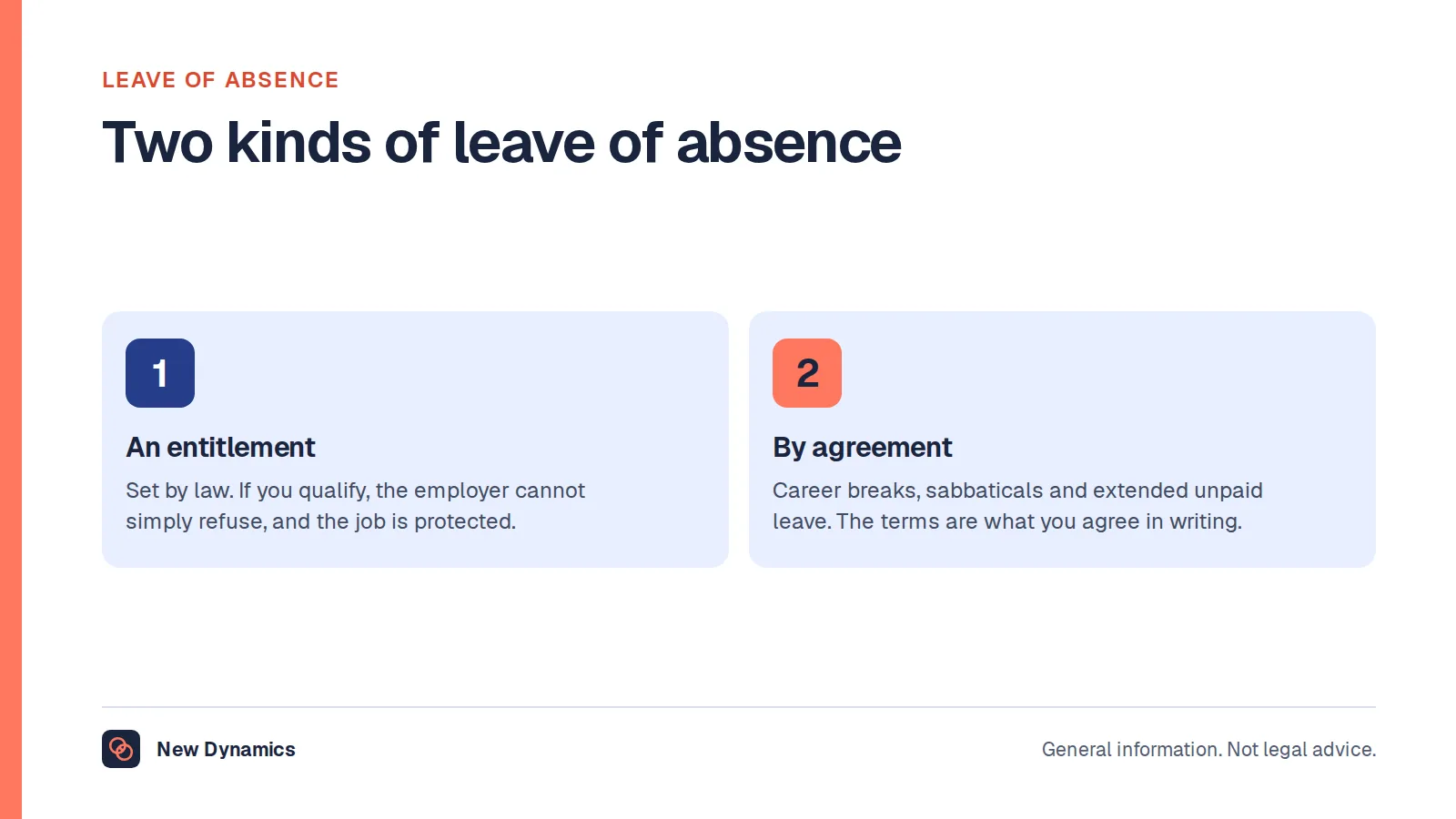
For the wider family of leave types, see our guide to a leave of absence.
When an employee tells you: five things to do
Acas's guidance on supporting someone after a death lists what it is good practice to do when a worker tells you about a death. The first four are from its list, and the fifth follows from its advice.
- Say that you are sorry. Simply, and first.
- Put time before work. Acas's wording is to tell them “they should take any time off they need, and make it clear that work should come second”.
- Ask how they would like to keep in touch, for example by phone or email.
- Ask about urgent work, if appropriate, so that someone else can cover it.
- Follow up. Acas notes that a person who is upset might not be able to talk for long, and that “it can help to follow up with an email, or call them a few days later”. Use that contact to confirm the leave and pay.
Ask, too, what they would like colleagues to be told. In Acas's example, the manager asks whether it is all right to tell other people in the team.
Acas gives the reasons for doing this well. Supporting a worker after a death can help them to feel valued, reduce their stress or anxiety, avoid or reduce sick leave and keep a good working relationship.

The return to work, and afterwards
Grief does not end with the leave. Acas points out that some people need support “soon after the death and also after they return to work”, and gives two examples: the anniversary of the death, or an inquest.
- Agree the return together. A phased return or reduced hours for a while may help. Acas lists this among the things that a policy should cover.
- Check in privately in the first weeks, without pressing.
- Be patient with performance. Concentration and energy can suffer for months.
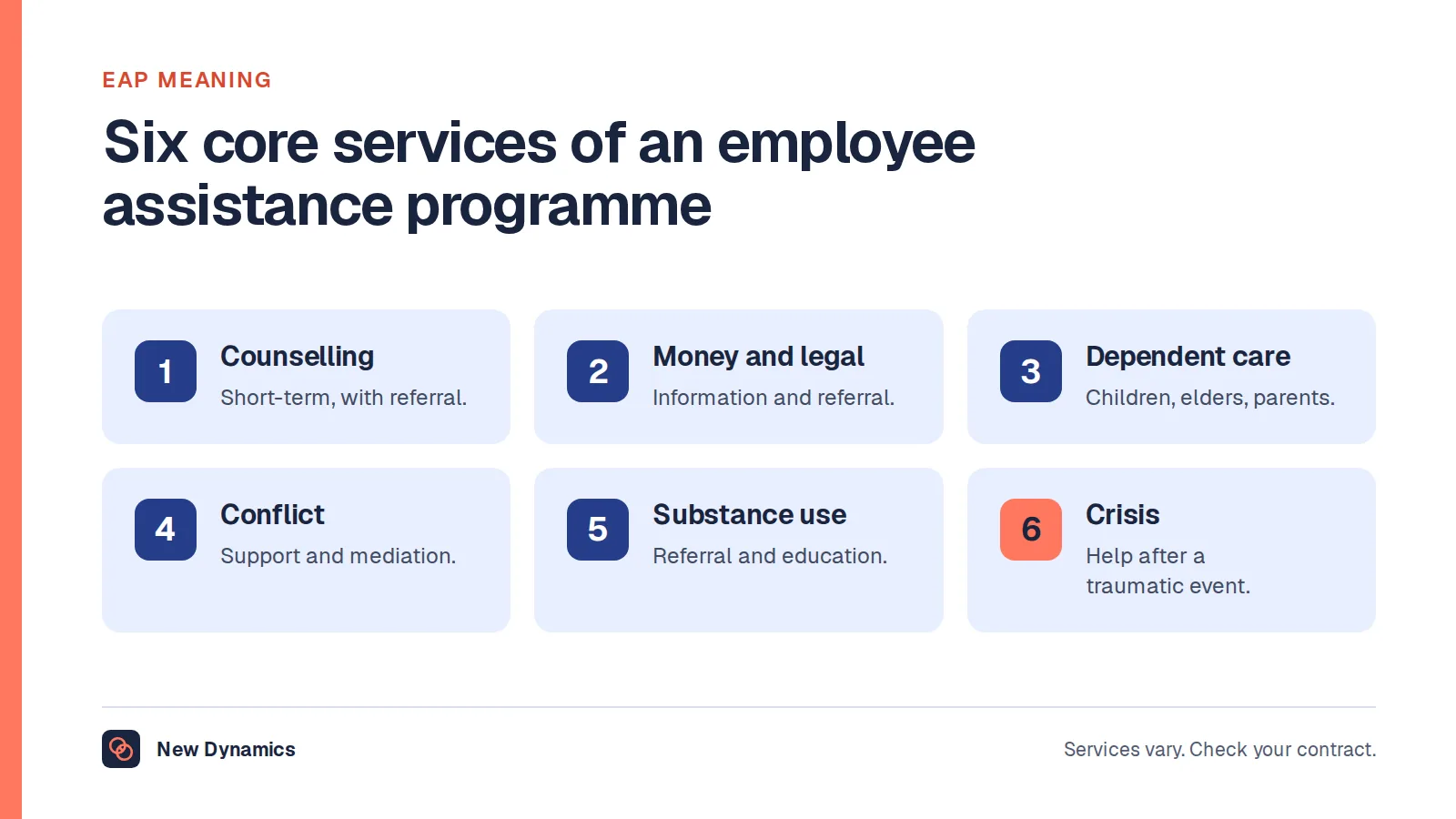
- Point to support. An employee assistance programme, which our guide to the meaning of EAP explains, a GP or a bereavement charity.
- Remember dates. A quiet word near an anniversary shows that the person has not been forgotten.
If longer absence follows, handle it with the same care. Our guide to absence management covers the process.
What a bereavement policy should include: six parts
Acas's page on having a bereavement policy says that a policy helps to make clear how much time off and pay workers are entitled to, and how managers can respond. It lists ten things that a policy should cover. We have grouped them into six parts.
- Reporting. How soon the death should be reported, who can report it, including a family member if the worker cannot, and to whom.
- Who is covered. What happens if the person who died is not a child or dependant, and whether leave and pay depend on employment status.
- Leave. How much is provided, and what the employer calls it.
- Pay. How much is provided.
- More time. What happens if someone needs more time off than the policy states.
- Return to work. How the return is managed, for example whether the person can return on reduced hours.
Acas adds a warning against rigid enforcement: “If a worker does not follow a policy exactly, there could be a good reason. An employer should be understanding and flexible.” A recently bereaved person may not feel able to telephone anybody for days.
Acas publishes a bereavement policy template that employers can adapt. Put your own policy in the staff handbook, where a person can find it without asking.

Common mistakes
Asking for proof. Demanding a death certificate from a grieving employee destroys trust for very little gain.
Ranking grief by family tree. A grandparent who raised someone, or a lifelong friend, may matter more than a distant parent. Give managers discretion.
“When will you be back?” in the first call. The question can wait.
Inconsistency. Acas asks employers to be consistent and clear, and to confirm decisions in writing. Two people in the same team who are treated differently will both notice.
Silence on return. Colleagues who say nothing, out of awkwardness, leave the person isolated. A brief “I was sorry to hear your news” is enough.
Forgetting the team. When a colleague dies, the whole workplace is bereaved. Acas has separate guidance for that situation.
Frequently asked questions
What does bereavement leave mean?
Bereavement leave is time off work that an employer gives after the death of someone close to the employee. It is used for the funeral, practical arrangements and grief. Employers also call it compassionate leave or special leave.
Is bereavement leave a legal right in the UK?
Partly. Acas says that employees have a legal right to time off if a dependant dies, or if their child is stillborn or dies under the age of 18. For other deaths there is no legal right, and time off depends on the employer's policy and discretion.
How long is bereavement leave?
Parental bereavement leave is two weeks. Time off for a dependant must be a reasonable amount, which the law does not define. For anything else the employer decides, and policies commonly give a set number of days with discretion to extend.
Is bereavement leave paid?
There is no legal right to pay for time off for dependants. Eligible parents may get Statutory Parental Bereavement Pay. Otherwise pay depends on the contract or the employer's policy, and many employers choose to pay for some days.
What is the difference between bereavement leave and compassionate leave?
They are often the same thing under different names. Where an employer distinguishes them, compassionate leave is usually wider, and covers serious illness or another family emergency as well as a death.
What should a manager say when an employee has been bereaved?
Acas advises managers to say that they are sorry, to tell the person to take the time that they need and that work comes second, to ask how they would like to keep in touch and whether any urgent work needs cover, and to follow up a few days later.
Your next step: read your own policy as a bereaved person would
- Find your bereavement policy. Note how long it took.
- Check it against the six parts above.
- Ask whether a manager could act on it at nine o'clock on a Monday without telephoning HR.
- Brief your managers on the five things to do in the first conversation.
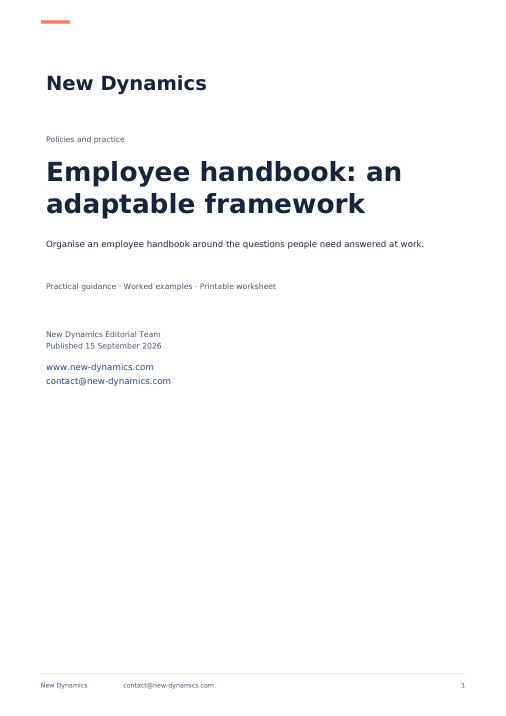
Policies like this belong in a clear handbook. Read and download our employee handbook guide. The guide is free to read, and the PDF uses our short download form.
Want managers and their teams to have regular, human conversations all year? Book a New Dynamics demo and bring your current approach. You can also email contact@new-dynamics.com.