TL;DR
- A dishwasher, called a kitchen porter or kitchen assistant in the UK, washes crockery, cutlery, glassware and cookware, keeps the kitchen clean and supports the chefs. The National Careers Service groups the role with kitchen assistants.
- The job has seven duties: run the dish area, wash pots and equipment, keep surfaces, floors and bins clean, handle deliveries and stores, support the chefs, follow food safety rules and close down.
- It is a first job for many people and a route to commis chef. Employers should train for wet work, hot water, chemicals and slips, which HSE flags as the main risks for kitchen staff.
No kitchen runs without the dish pit. When plates back up, the pass stops, servers wait and the chefs run out of pans. A dishwasher job description that treats the role as an afterthought produces adverts that attract nobody and new starters who leave in a week.
This article sets out what a dishwasher does, the seven duties of the role, the skills employers look for, the safety risks that training should cover, a template you can adapt and wording for a CV. In the UK the same job is usually advertised as kitchen porter or kitchen assistant, and we use the terms together.
Kitchen porters are often new to work, and their first shifts decide whether they stay. See how New Dynamics onboarding brings tasks, early goals and manager conversations into a clear path for a new starter.
What is a dishwasher?
The Cambridge Dictionary gives two meanings of dishwasher: the machine, and “a person who washes dishes”. The job takes its name from the machine it runs, and much of the work is loading, running and unloading a commercial dishwasher, along with everything the machine cannot do.
In the UK the National Careers Service describes the role in its profile of a kitchen assistant: “Kitchen porters or kitchen assistants prepare food, make sure chefs have everything they need and keep the kitchen clean.” It notes that you can apply directly to employers for a job “as a dish washer or general kitchen hand, then train while you're working”. Typical hours are 40 to 42 a week, and the profile says you could work evenings, weekends and bank holidays on shifts.
Titles vary by country and by kitchen: dishwasher and dish machine operator in the United States; kitchen porter, KP, kitchen assistant and kitchen hand in the UK; steward in hotels and on ships. The duties are much the same.
Dishwasher duties: seven responsibilities
- Run the dish area. Receive dirty items from the floor and the line, scrape and rinse, rack, run the machine, check results and return clean crockery, cutlery and glassware to where the next service needs them.
- Wash pots, pans and equipment. Heavy cookware, trays, mixers and utensils that the machine cannot take are washed by hand in the pot sink, often on a rolling basis through service.
- Keep the kitchen clean. Wipe work surfaces, sweep and mop floors, empty and clean bins, and clean walls, drains and equipment on a schedule. The NCS profile lists washing kitchen appliances, work surfaces, floors and walls among day-to-day tasks.
- Handle deliveries and stores. Unload deliveries, check them, rotate stock and organise the storeroom and fridges, again as the NCS lists.
- Support the chefs. Fetch, carry, peel, wash and prepare basic items, and make sure the line has the pans and tools it needs. The profile says a kitchen porter could wash, peel and prepare food items and provide support to chefs.
- Follow food safety and hygiene rules. Keep clean and dirty items separate, use the right chemicals at the right dilution, follow the cleaning schedule and record it where the kitchen's food safety system requires.
- Close down. Break down and clean the machine, clean the sinks and floors, take out waste and recycling, and set up the dish area so the next shift starts clean.

Skills and qualities employers look for
The National Careers Service lists the skills and knowledge a kitchen porter needs. Its list includes the ability to work well with others, patience and the ability to remain calm in stressful situations, the ability to work well with your hands, being thorough and paying attention to detail, the ability to organise your time and workload, the ability to use your initiative and physical fitness and endurance.
For a job advert, that translates into six things.
- Pace under pressure. The dish area runs at the speed of the restaurant, and the busiest hour is the one that matters.
- Stamina. Standing for a full shift, lifting racks and pots, working in heat and noise. The NCS notes that the working environment may be noisy and hot.
- Care. A chipped glass or a greasy pan that goes back out is the dishwasher's error, and the guest's problem.
- Organisation. Knowing where everything lives and keeping the flow moving without being told.
- Teamwork. Taking direction from chefs, helping servers, and asking when unsure.
- Reliability. A missing dishwasher is felt within an hour.
No qualifications are needed to start. Food hygiene training is normally given on the job, and a level 2 food safety certificate is a common early step.

Safety: what training must cover
The dish area carries most of the physical risks of a kitchen, and a job description should say that training is provided.
Wet work and chemicals. The UK Health and Safety Executive's guidance on work-related contact dermatitis in catering says that contact dermatitis “is one of the main causes of ill health for catering staff eg chefs, cooks and catering assistants”. Employers must assess the risk, and HSE's simple measures include providing gloves where necessary, providing moisturiser, and making sure staff check their hands regularly for itchy, dry or red skin and report symptoms early. HSE also suggests that employers, where appropriate, “use a dishwasher rather than washing up by hand”, which is one reason the machine is central to the job.
Slips. HSE's guidance on slips and trips in catering states that slips and trips “remain the single most common cause of major injury in UK workplaces”, and that the occupations most affected in catering are kitchen assistants, chefs and waiting staff. Water overflow and leaks, spills and wet floors are exactly the dish area's hazards. Non-slip footwear, drip trays, quick clean-up and fixing leaks are the basic controls.
Heat, sharps and lifting. Dish machines run hot, knives arrive in the sink under suds, and racks and stock are heavy. Cover safe handling of sharps, manual handling and the machine's own instructions in the first shift.
Legal note. HSE guidance applies in Great Britain. Employers elsewhere have their own rules, and this is general information rather than legal advice. Our article on workplace safety tips covers the wider basics.
Dishwasher job description template
Adapt the template to your kitchen. Keep every line true.
Job title: Dishwasher (kitchen porter)
Reports to: Head chef or kitchen manager
Hours: [Part-time or full-time], on shifts including evenings, weekends and bank holidays
Purpose of the role: To keep the kitchen supplied with clean crockery, cutlery, glassware and cookware throughout service, and to keep the kitchen clean, safe and ready for the next shift.
Main duties:
- Scrape, rack, wash and return crockery, cutlery and glassware, using the dish machine
- Wash pots, pans, trays and equipment by hand
- Clean surfaces, floors, walls, drains and bins to the cleaning schedule, and record it
- Unload and put away deliveries; rotate stock and keep the storeroom tidy
- Help the chefs with basic preparation and fetching when asked
- Follow food safety, chemical safety and allergen rules
- Break down, clean and set up the dish area at close
Skills and experience:
- Able to work at pace, on your feet, in a hot and busy kitchen
- Careful, organised and reliable
- Works well in a team and takes direction
- Experience welcome but not required; full training provided
We provide: Training on the dish machine, chemicals, food hygiene and safe lifting; gloves and non-slip footwear; meals on shift; and a clear route to commis chef for those who want it.
State the real hours and the shift pattern, say how breaks work in a long service, and be honest about the physical demands. Our job description template explains the structure, and our guide to job requirements shows how to separate essentials from extras.

Career path: from the dish pit to the line
The NCS profile says that with experience and further training a kitchen porter could become a trainee or junior chef, and could also move into management, bar work or food service. Many chefs started here. Apprenticeships give a formal route: the profile lists the level 2 commis chef and food and beverage team member apprenticeships, and a catering and hospitality foundation apprenticeship for those aged 16 to 21.
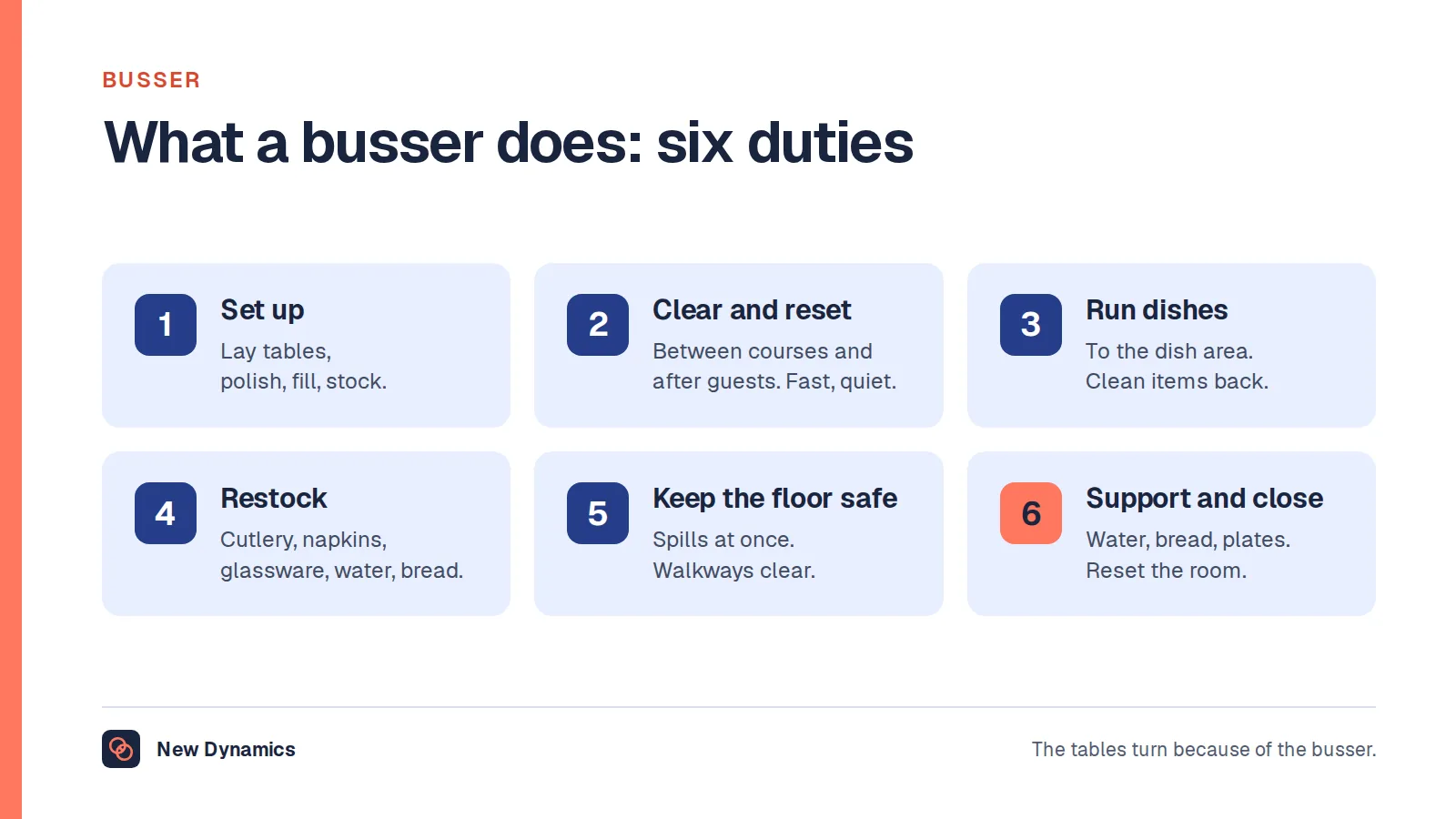
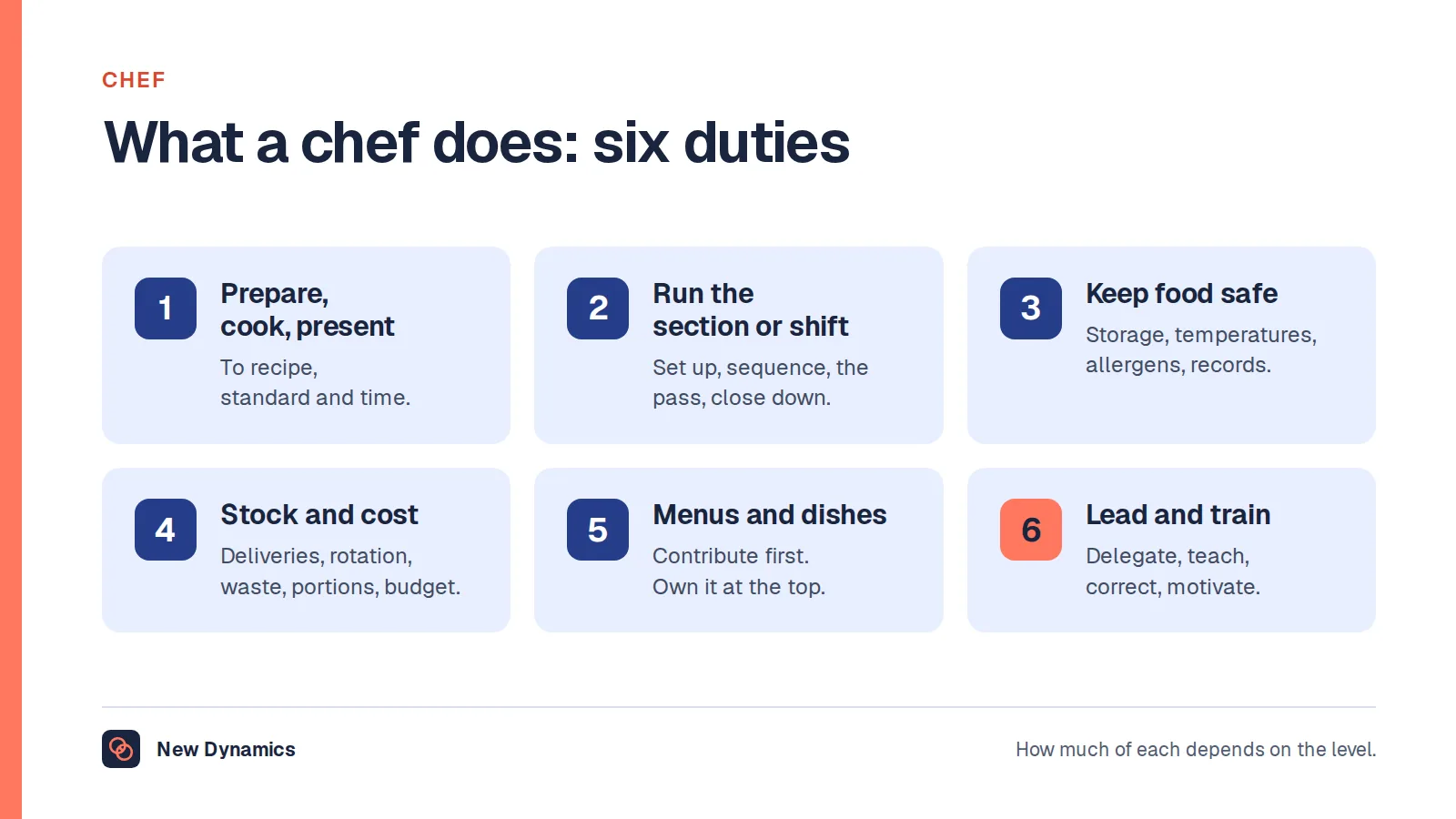
A good employer says this in the advert and means it. Pairing a kitchen porter with a chef for an hour of preparation a week costs little and keeps people. Our chef job description shows what the next step looks like, and our busser job description covers the equivalent role on the floor.
How to describe dishwasher work on a CV
Write what you did and what it made possible, not just the title.
- “Ran the dish area for a 120-cover restaurant on Friday and Saturday services.”
- “Washed pots and equipment for a six-chef line, keeping the pass supplied through service.”
- “Held a level 2 food safety certificate and completed the kitchen's cleaning schedule and records.”
- “Trusted to open the kitchen, receive deliveries and rotate stock.”
- “Trained two new kitchen porters on the machine, chemicals and closing down.”
Those five lines are our own examples. Employers reading them see pace, reliability, hygiene knowledge and the beginnings of leadership.
Common mistakes in dishwasher job adverts
A one-line advert. “Dishwasher wanted” tells a candidate nothing about hours, pay or what the kitchen is like.
Hiding the hard parts. Heat, wet hands, late finishes and heavy lifting are real. People who know what they are signing up for stay longer.
No training promise. New starters need the machine, the chemicals and the cleaning schedule shown to them, not assumed.
No route onward. The candidate who wants to cook will go to the kitchen that offers a way to the line.
Missing pay. State it. The role is entry-level, and candidates compare quickly.
Frequently asked questions
What does a dishwasher do?
A dishwasher washes crockery, cutlery, glassware and cookware, runs the dish machine, keeps surfaces, floors and bins clean, helps with deliveries and stores, supports the chefs with basic preparation and closes the dish area down at the end of service.
What are the duties of a dishwasher?
The seven main duties are running the dish area, washing pots and equipment by hand, keeping the kitchen clean, handling deliveries and stores, supporting the chefs, following food safety and hygiene rules and closing down.
What is the difference between a dishwasher and a kitchen porter?
Very little. Dishwasher is the usual American title and kitchen porter, KP or kitchen assistant the usual British one. The National Careers Service profile for kitchen assistants notes that you can apply directly for a job as a dish washer or general kitchen hand.
What skills does a dishwasher need?
Pace under pressure, stamina, care, organisation, teamwork and reliability. The National Careers Service lists working well with others, staying calm in stressful situations, attention to detail, organising your workload and physical fitness among the skills for a kitchen porter.
Do you need qualifications to be a dishwasher?
No. Employers usually train on the job. A level 2 food safety certificate is a common early step, and in England apprenticeships such as commis chef and food and beverage team member offer a formal route onward.
Is dishwasher a good first job?
For many people, yes. It needs no experience, teaches how a kitchen works and is the traditional first step to commis chef. The main risks are dermatitis from wet work and slips on wet floors, which a good employer trains for and equips against.
Your next step: write an honest advert
- Use the template above, and add the real hours, pay and shift pattern.
- Say what training and equipment you provide, including gloves and non-slip footwear.
- Describe the route to the line, and name someone who has taken it.
- Plan the first shift as an induction, not a baptism.
Then plan the first month. Read and download our employee onboarding guide. The guide is free to read, and the PDF uses our short download form.
Want onboarding tasks, early goals and check-ins for every new starter in one place? Book a New Dynamics demo and bring your current induction. You can also email contact@new-dynamics.com.